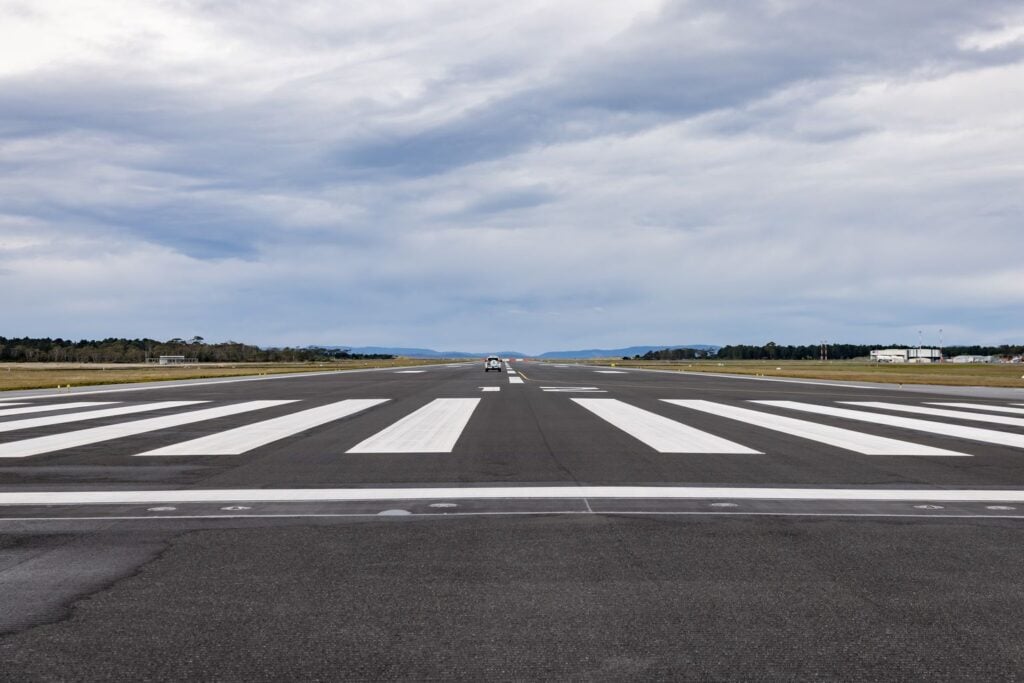
A Royal Flying Doctor Service plane struck a taxiway light at Hobart Airport after the pilot mistook edge markings for centreline guidance, a safety investigation has found.
The Beechcraft B200 King Air was taxiing for a flight to Launceston on the evening of July 1, 2025, when its right propeller hit the light during a turn.
Two pilots and a paramedic were on board. No one was injured.
The Australian Transport Safety Bureau (ATSB) released its final report into the incident last week.
It found the pilot flying was operating under supervision ahead of their final line check when the collision occurred.
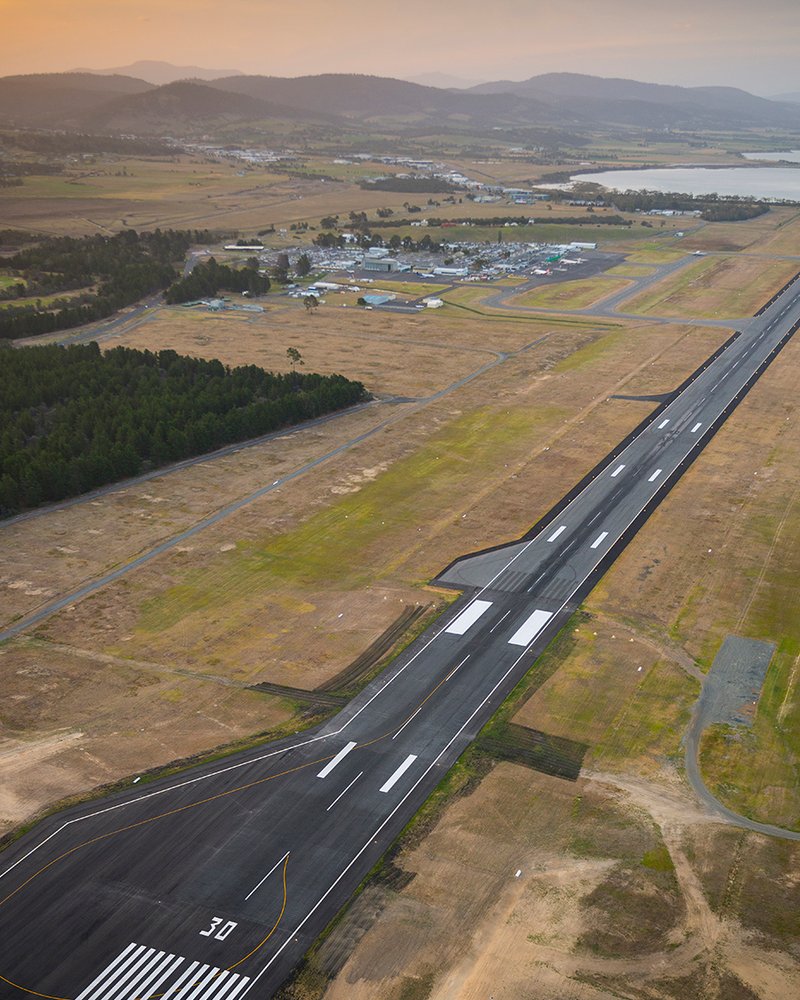
Conditions were dark with little moonlight but visibility was good.
The aircraft had backtracked along runway 30 and was making a 180-degree turn at the threshold when things went wrong.
ATSB Director of Transport Safety Dr Stuart Godley said the pilot had become disoriented during the manoeuvre.
“The flight crew reported the common technique for taxiing and turning the King Air B200 is to make a wide arc turn to reduce stress on the undercarriage,” he said.
“But during the turn in this case, the pilot flying steered the aircraft away from the centreline taxiway ground markings, toward the right runway edge.”
The pilot later reported they had “subconsciously mistaken the blue taxiway edge lights and double yellow line as taxi centreline guidance”.
The supervising pilot noticed the aircraft drifting toward the edge lighting but did not intervene in time.
Dr Godley said the incident highlighted the importance of crew communication.
“Effective monitoring in a multi-crew environment is paramount to aircraft safety,” he said.
“Bringing deviations to the early attention of the pilot flying promptly ensures the aircraft remains on a desirable track.”
A post-shutdown inspection revealed damage to the right propeller. The aircraft was grounded for repairs.
Dr Godley said pilots needed to remain vigilant about their position on the ground.
“The airport environment contains numerous visual aids, markings, signals and signs to help pilots remain situationally aware of their location, traffic and intended ground tracks to avoid obstacles,” he said.