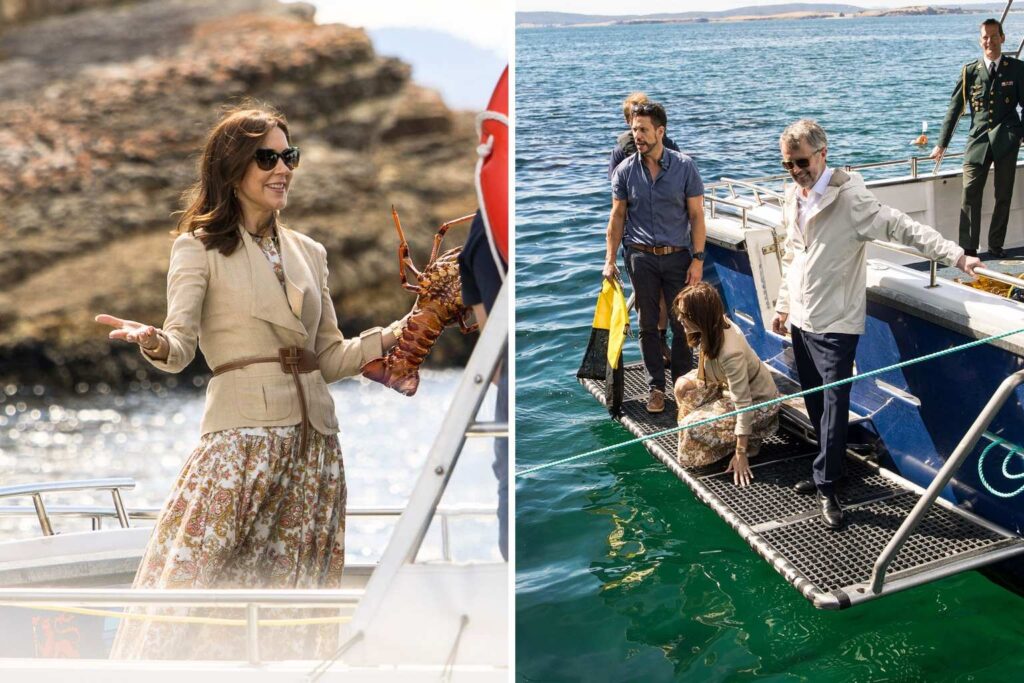
King Frederik and Queen Mary of Denmark joined marine scientists from the University of Tasmania on Hobart’s River Derwent today to witness groundbreaking efforts to restore Tasmania’s giant kelp forests.
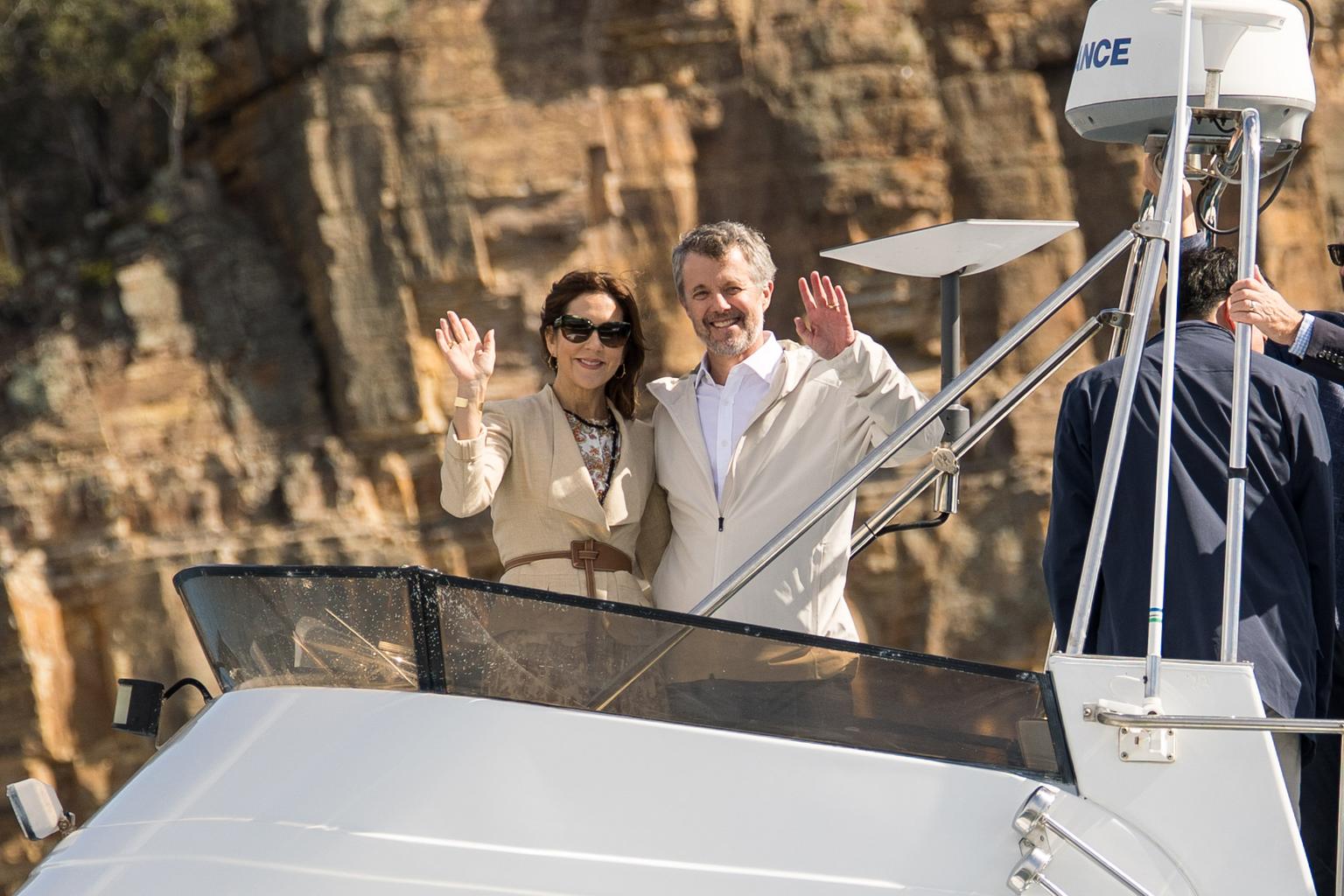
The royal couple boarded research vessel Noctiluca with Premier Jeremy Rockliff and researchers, travelling to a remnant kelp patch near Alum Cliffs.
The trip held special significance for Tasmanian-born Queen Mary, who grew up in nearby Taroona and studied at Taroona High School and the University of Tasmania before eventually moving to Denmark.
As the vessel headed toward the kelp patch, Queen Mary took a moment to look and wave to her former high school.
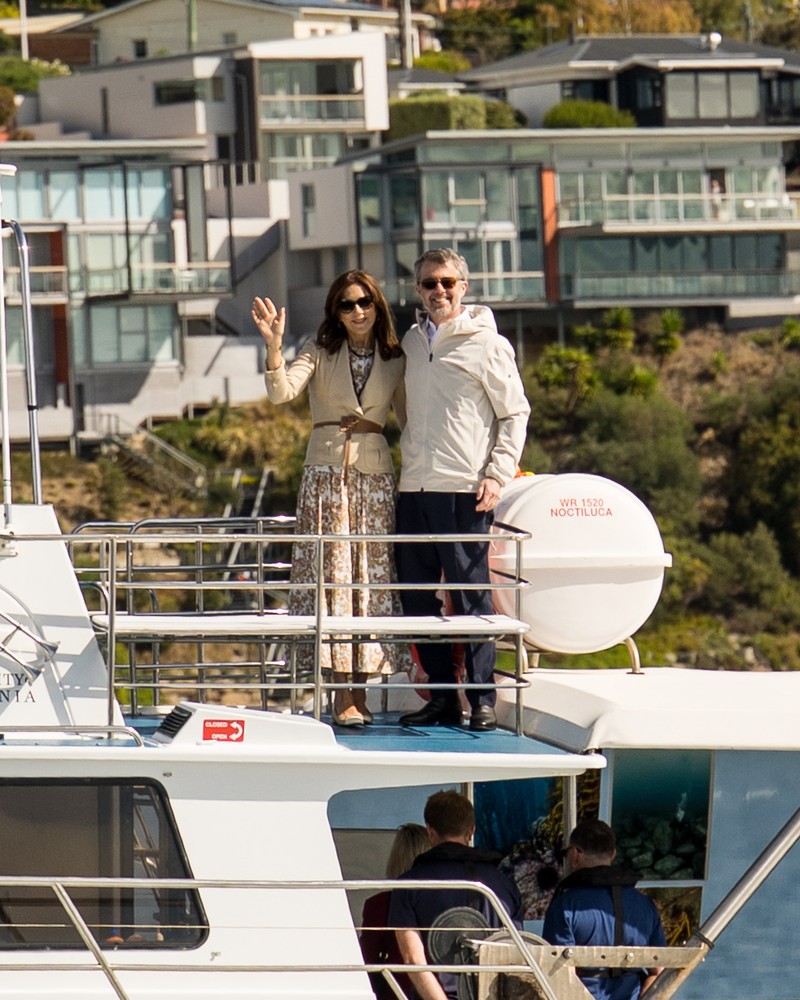
Hobart-born royal said some “good memories popped up” as she passed Taroona High.
UTAS Vice-Chancellor Professor Rufus Black said the visit showcased collaborative conservation work between the university, industry and government.
“The rehabilitation of giant kelp is an example of what you can achieve when you bring science, business, government and the community together,” he said.
Professor Scott Ling from the Institute for Marine and Antarctic Science explained how Tasmania’s kelp forests have been devastated by sea urchins in warming waters.
“This is an ecosystem that has been reduced from extensive, rich and dense forests to a few isolated patches in just a few decades,” he said.
The royals watched underwater footage captured by a remotely operated vehicle, showing divers collecting kelp reproductive material for propagation at a Triabunna hatchery.
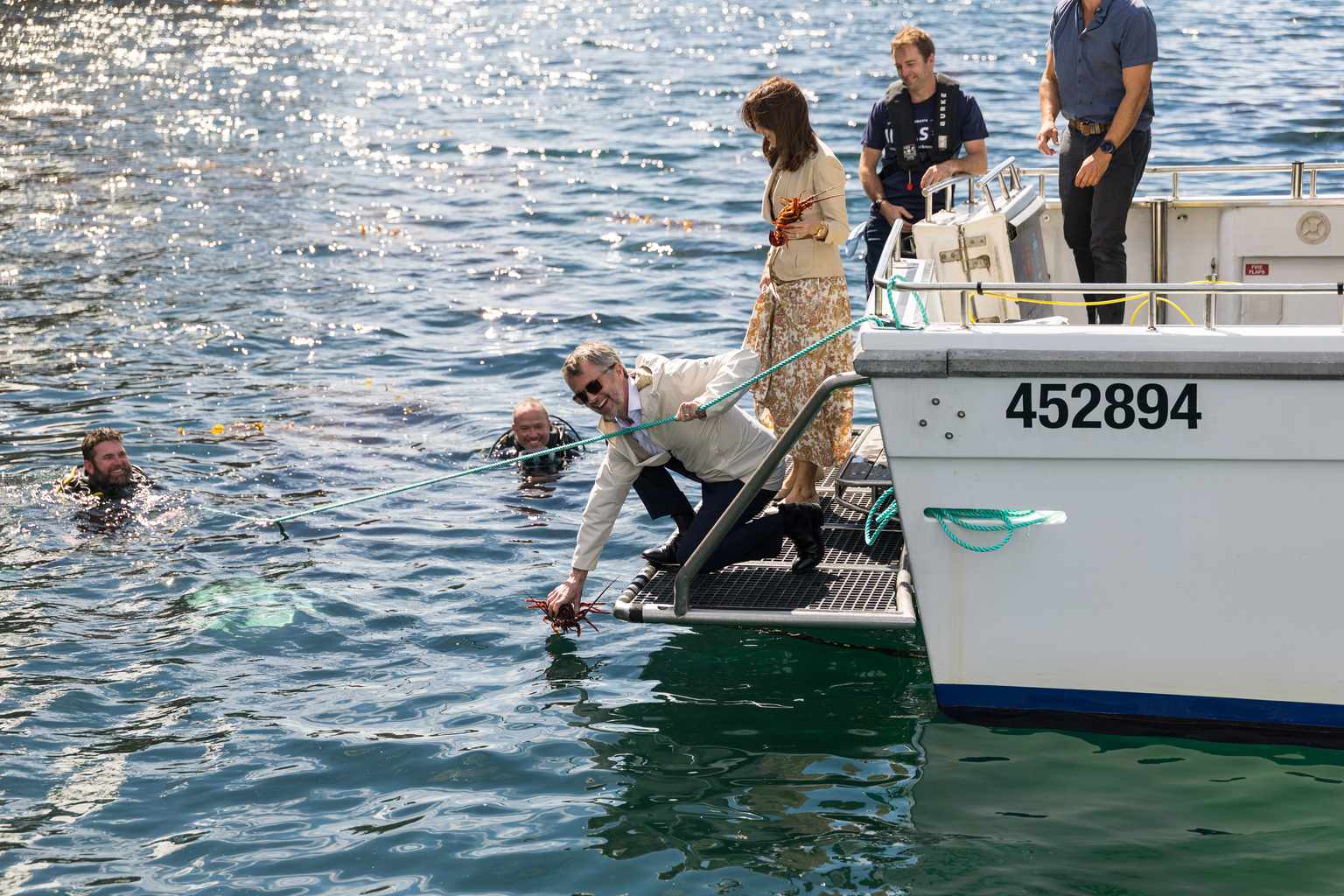
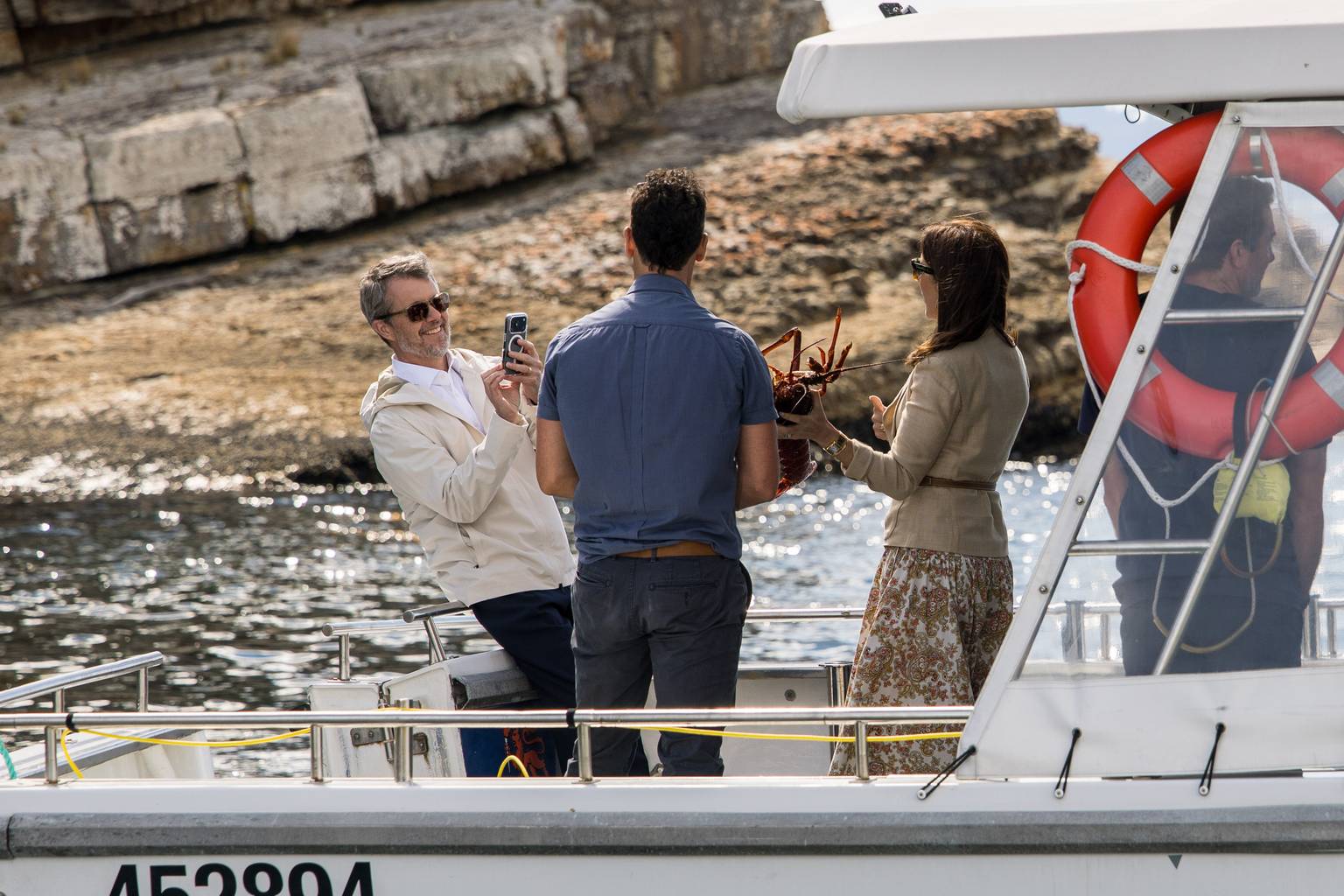
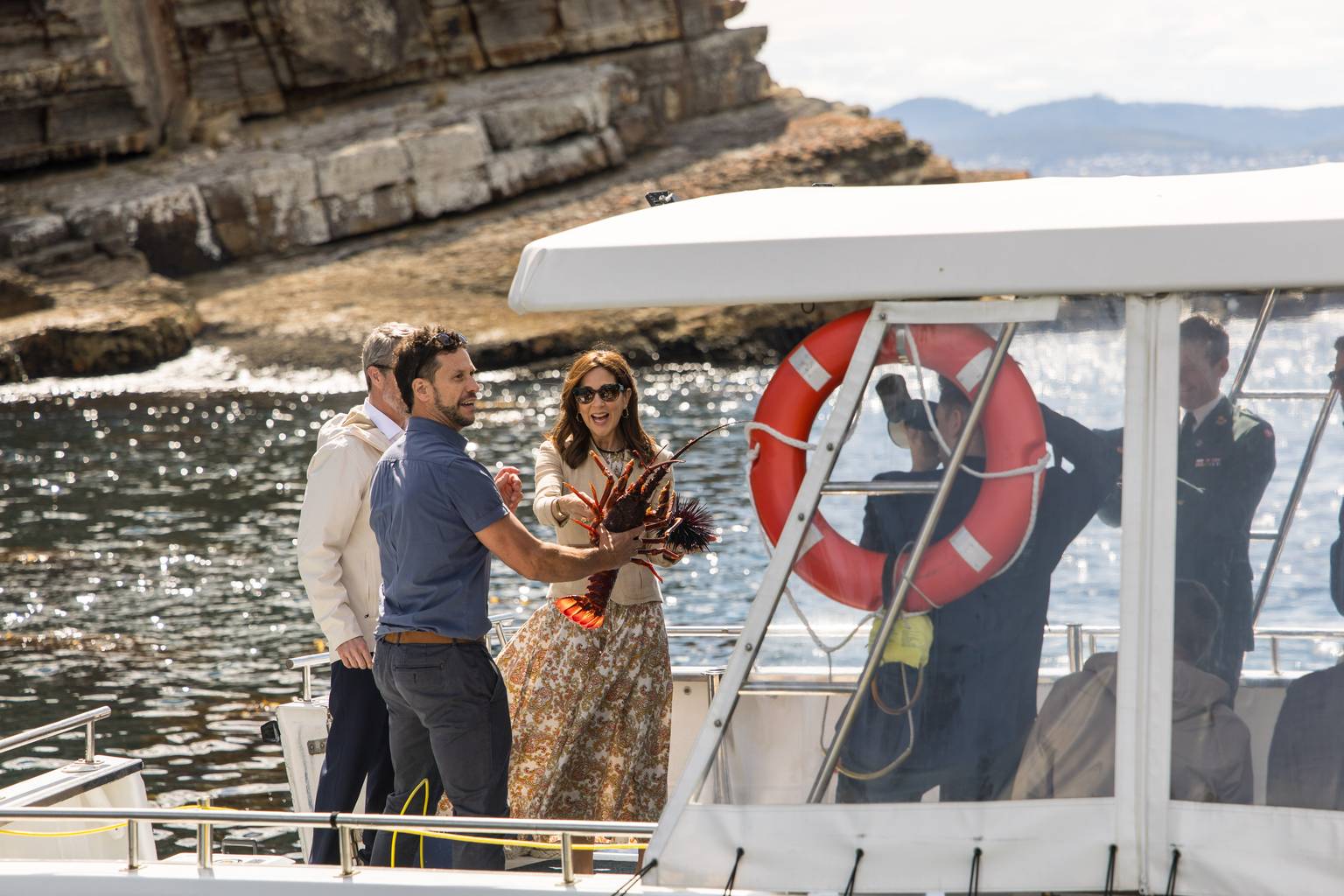
Professor Ling showed them long-spined sea urchins that overgraze the kelp, alongside rock lobsters that naturally prey on the destructive species.
The King and Queen were seen holding the sea species, with Pulse images capturing King Frederik taking a photo of Queen Mary holding a lobster.
Recent commercial harvesting of sea urchins and rebuilding lobster stocks may have helped this kelp patch re-emerge, he explained.
The restoration project involves partnerships with Sea Forest, The Nature Conservancy and Aboriginal communities, plus commercial divers and fishers.
“It’s a partnership focused on creating capacity for local restoration initiatives and industries to bring back giant kelp forests,” Professor Ling said.
The collaborative effort has received support from the Australian government’s Saving Native Species program and works under permits with the Tasmanian government.
Professor Ling described the experience as “fantastic”, highlighting the unique whole-of-reef ecosystem approach achieving promising results in marine conservation.