A joint venture has won the final major contract to build the $3.5 billion Marinus Link, bringing the long-debated undersea power cable a step closer to construction.
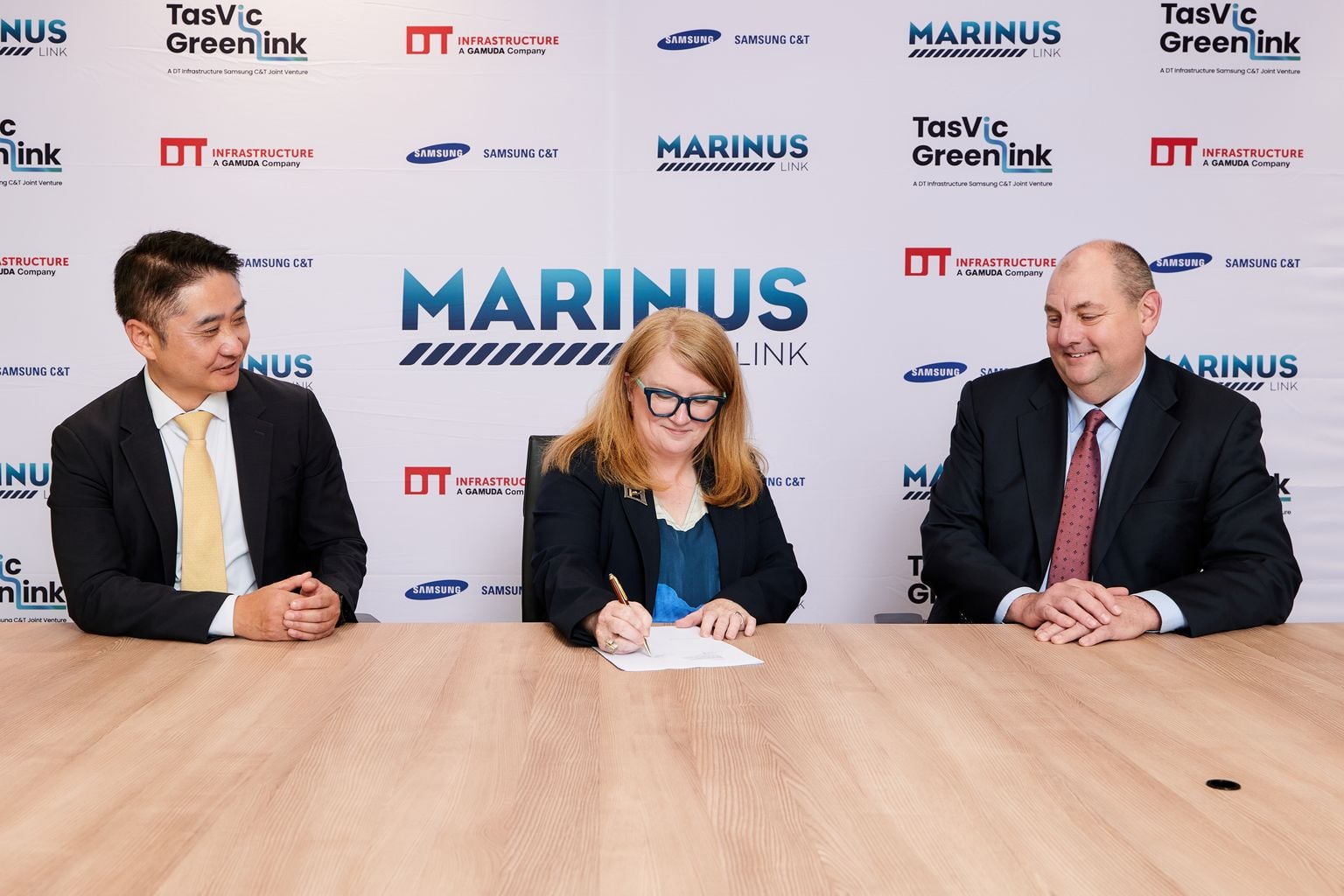
TasVic Greenlink – a partnership between DT Infrastructure and Samsung C&T Corporation – will receive $994 million to build converter stations and lay 90 kilometres of underground cable across Gippsland.
DT Infrastructure is part of Malaysia’s Gamuda Group. CEO John Anderson said the contract provided certainty for both the project and the broader community.
“Today marks a significant moment for DTI,” he said.
“Together with our partner Samsung C&T, we are committing to deliver a truly once-in-a-generation project for the regions of north-west Tasmania and Gippsland.”
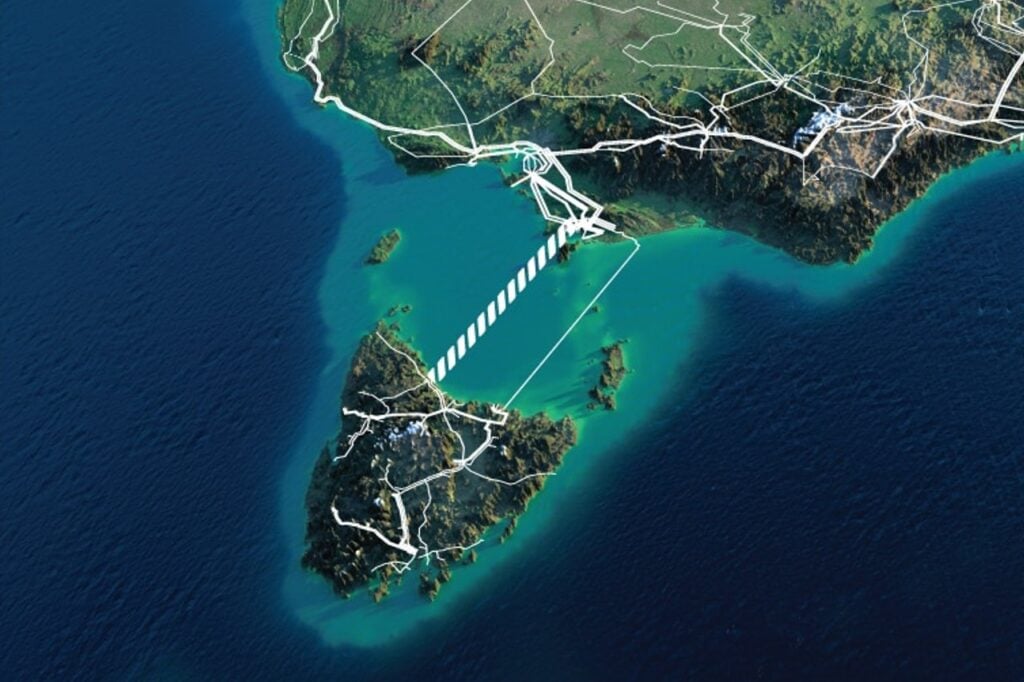
The deal marks the last major contract needed before construction begins on stage one of the interconnector, which will run 345 kilometres between Tasmania’s north-west coast and the Latrobe Valley.
Marinus Link has been plagued by cost blowouts and delays for years, before finally securing a green light from the Commonwealth, Tasmania and Victoria in August.
The Clean Energy Finance Corporation later tipped in $3.8 billion in concessional loans – its largest-ever investment – to get the project over the line.
Supporters say the link is critical to Australia’s energy transition, allowing Tasmania’s hydro and wind power to flow to the mainland while providing backup during periods of high demand.
Critics, however, have questioned whether consumers will ultimately foot the bill for cost overruns on a project whose price tag has already ballooned.
Marinus Link CEO Stephanie McGregor said the contractor line-up was now complete.
“We have secured both our cable and converter technology suppliers, our integrated delivery partner and now our lead contractor for the substantial civils and construction campaign,” she said.
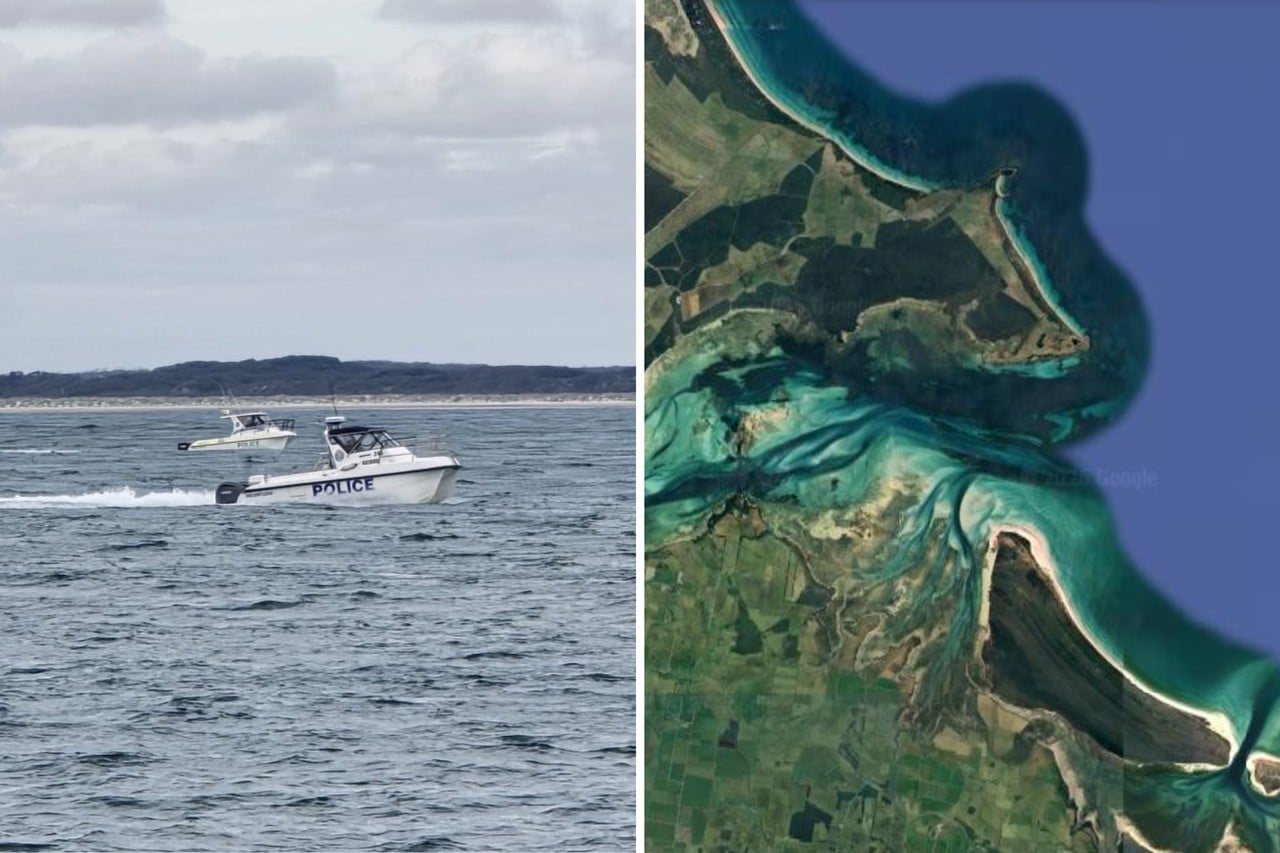
Early works are slated for Waratah Bay and Heybridge in the first months of 2026, pending final environmental approvals.
Stage one is due for completion by 2030 and will carry 750 megawatts – enough to power about 750,000 homes.
A second stage could eventually double that capacity, although it remains subject to market conditions and further approvals.