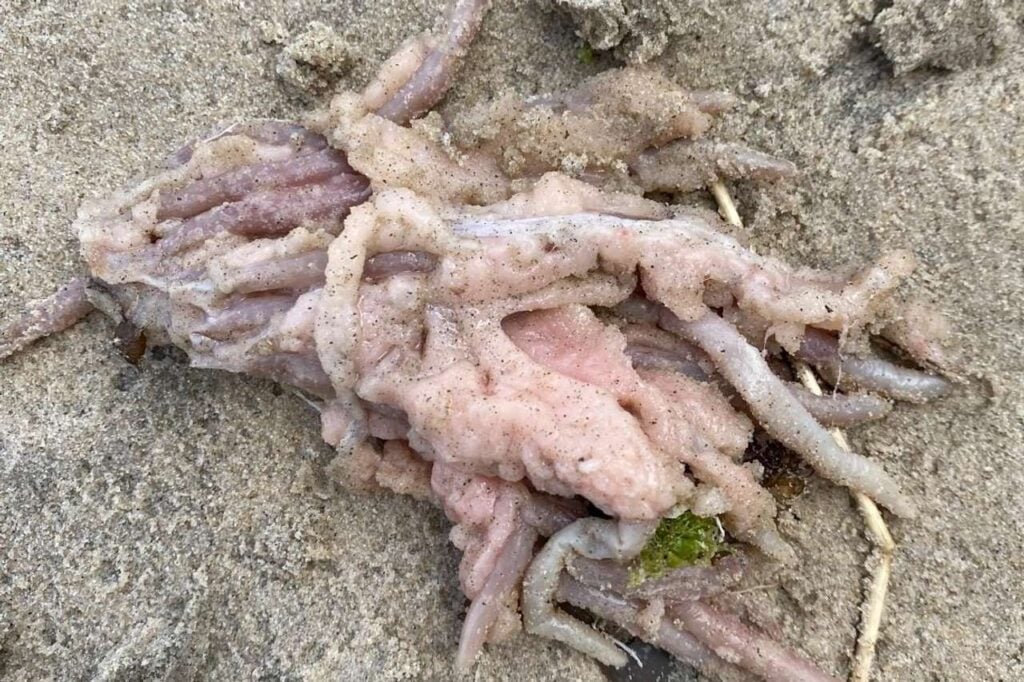
Fish remains found on a southern Tasmanian beach on Christmas Day were not the result of a salmon farm mortality event, according to the state’s environmental regulator.
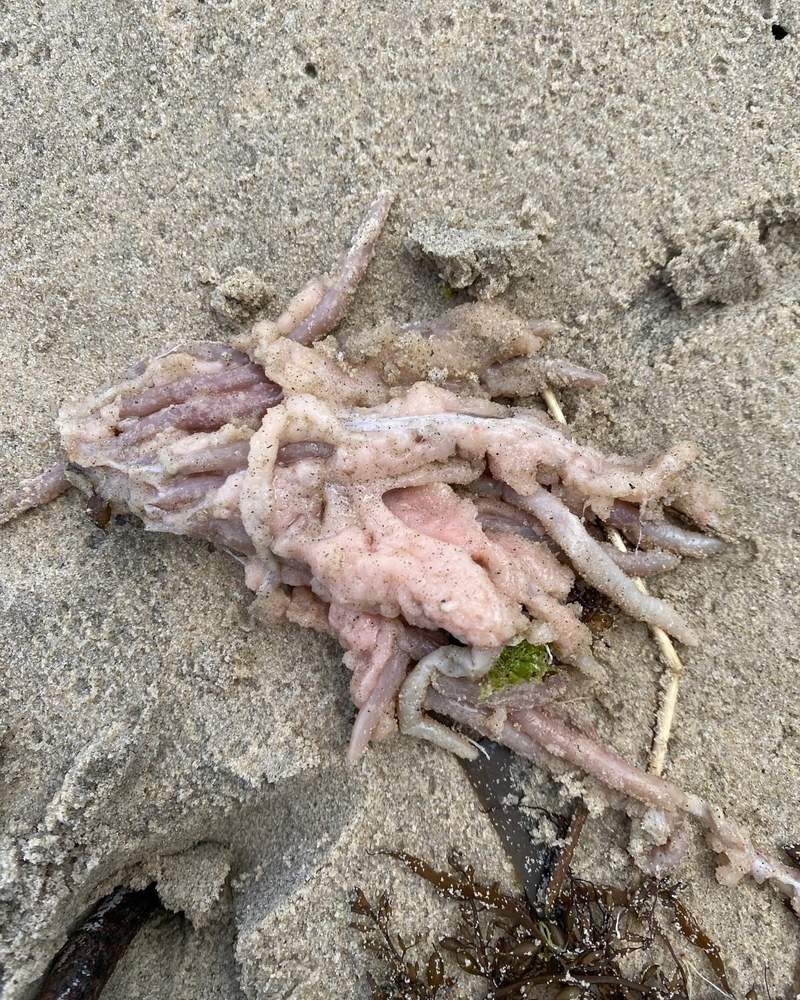
The Environment Protection Authority (EPA) said testing confirmed the remains discovered at Verona Sands were gut tissue from one or two small fish, most likely farmed Atlantic salmon.
Laboratory analysis found no trace of the antibiotic florfenicol, which had been a key concern for local residents who reported the discovery.
EPA director Catherine Murdoch said the findings should reassure the community.
“Based on comprehensive scientific analysis by both AST and IMAS, the EPA is confident that the fish remains reported at Verona Sands are not indicative of a mortality event involving farmed salmon,” she said.
The investigation followed reports from two members of the public on December 25, as well as subsequent comments from independent Franklin MP Peter George.
EPA officers, along with staff from the Department of Natural Resources and Environment Tasmania, inspected the site that day and found a single specimen.
A follow-up inspection on Boxing Day found no further remains.
The Institute of Marine and Antarctic Studies (IMAS) assessed the specimen and estimated it came from a fish weighing between 850 and 1,150 grams.
IMAS said the condition of the remains was inconsistent with a whole-fish mortality event, which would have shown more extensive degradation.
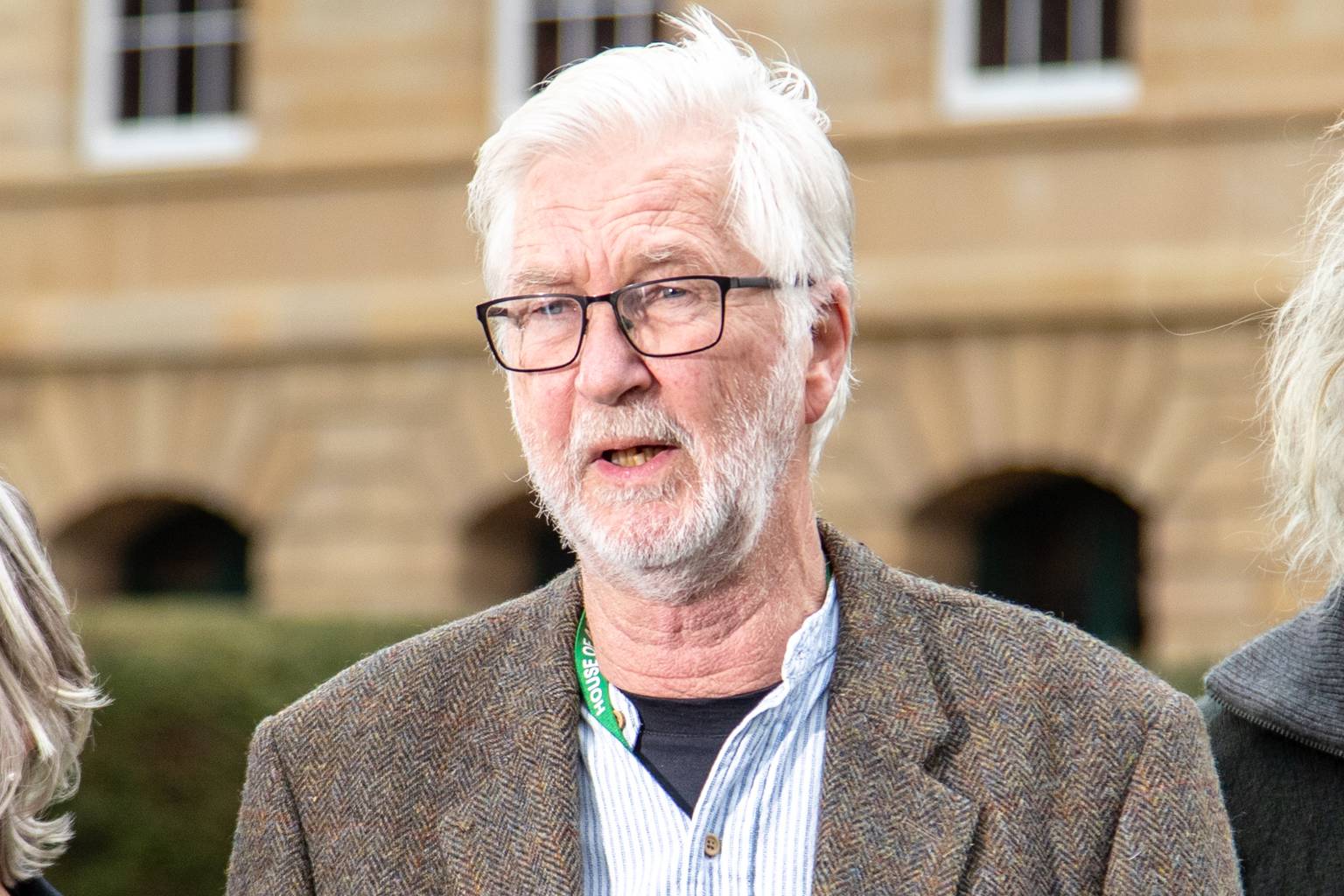
Following the discovery, George wrote to Environment Minister Madeleine Ogilvie and Primary Industries Minister Gavin Pearce, calling for an investigation.
He said residents were “deeply concerned” the remains may have come from diseased salmon recently treated with antibiotics.
“I call on the government and the responsible ministers to ensure an immediate, full and transparent investigation with no cover-ups,” he said on December 26.
George also accused salmon companies of being responsible, describing the incident as a “Christmas Day horror” and a potential “salmon industry-driven outrage”.
Ogilvie on Friday said speculative claims made by opponents of the salmon industry were doing “real harm” to the state.
“It undermines confidence, damages Tasmania’s brand and places unnecessary pressure on businesses, workers and regional communities who rely on trust in our regulatory systems,” she said.
“The EPA, Analytical Services Tasmania and the Institute of Marine and Antarctic Studies have all independently confirmed the remains found at Verona Sands were not indicative of a farmed salmon mortality event.”
“Just as testing showed the bloom observed in waters of southern Tasmania were naturally occurring Noctiluca scintillans or sea sparkles and not an algal bloom harmful to marine life.”

“Science must come before speculation. Misinformation, such as that heard from people without any level of expertise in the field, does nothing more than unnecessarily alarm the community.”
Murdoch said the EPA would continue to respond to reports from the public.
“We take all reports from the community seriously and our response demonstrates our commitment to transparent, evidence-based regulation,” she said.