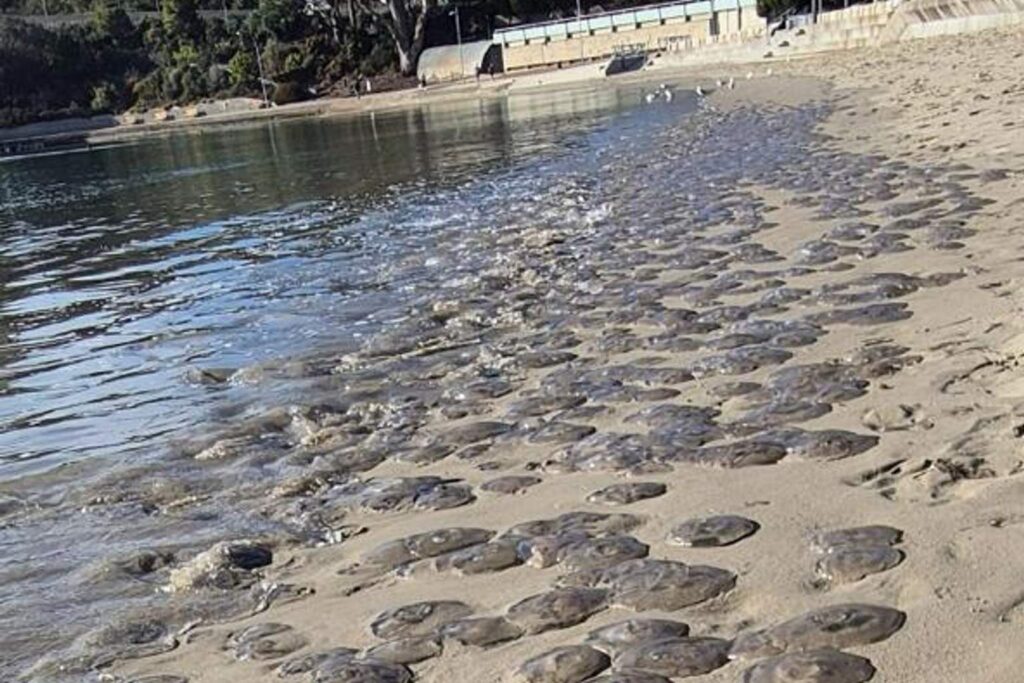
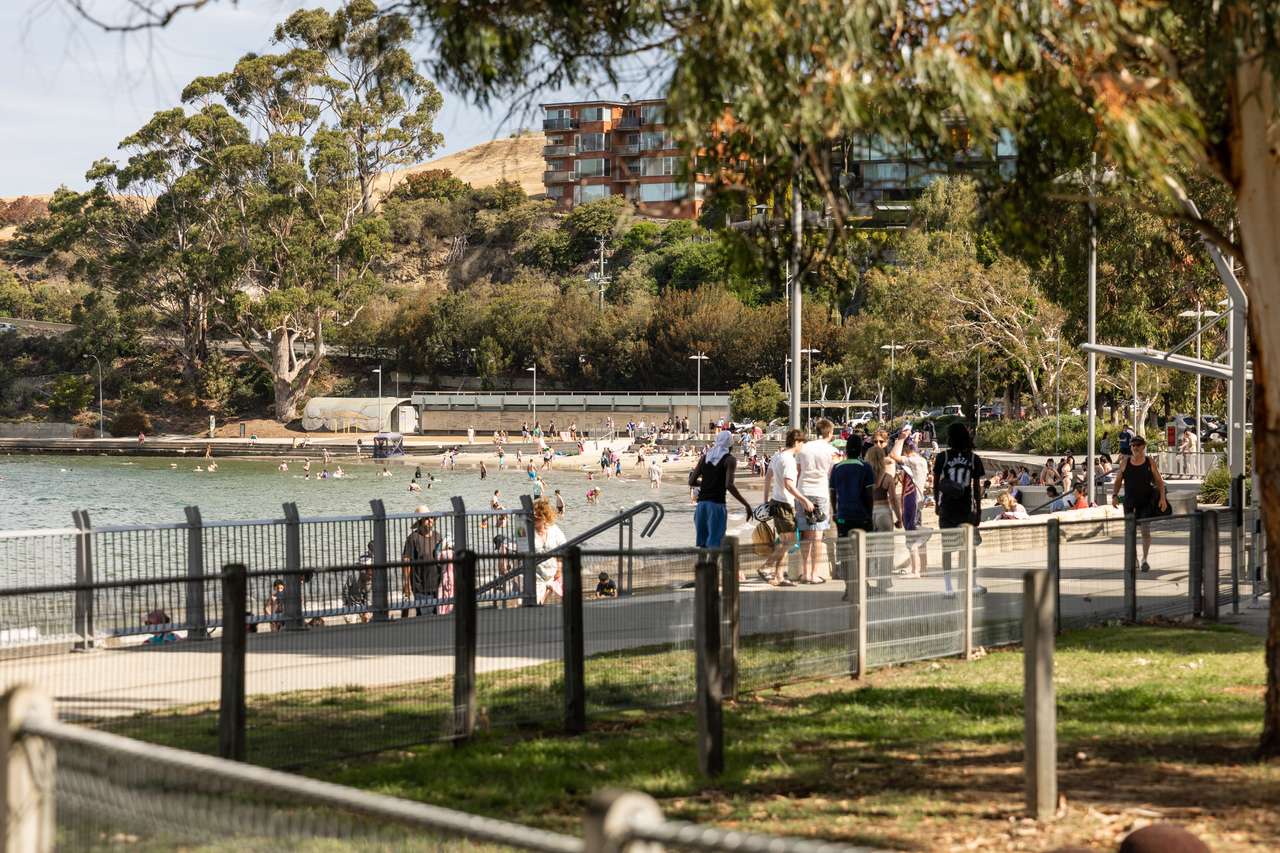
Hundreds of moon jellyfish washed ashore at Sandy Bay yesterday, turning the popular beach into a minefield.
Beachgoers at Long Beach were unable to walk on the sand due to the mass of jellyfish scattered across the shoreline.
The creatures drew crowds of curious onlookers who kept their distance.
A Department of Natural Resources and Environment Tasmania (NRE) spokesperson said moon jellies naturally occur in Tasmanian coastal waters and the mass stranding wasn’t cause for alarm.
“From time to time, conditions favour their growth particularly when their food is plentiful,” they told Pulse.
“Calm, stable conditions can also allow jellyfish to remain aggregated and feed efficiently in coastal waters.”
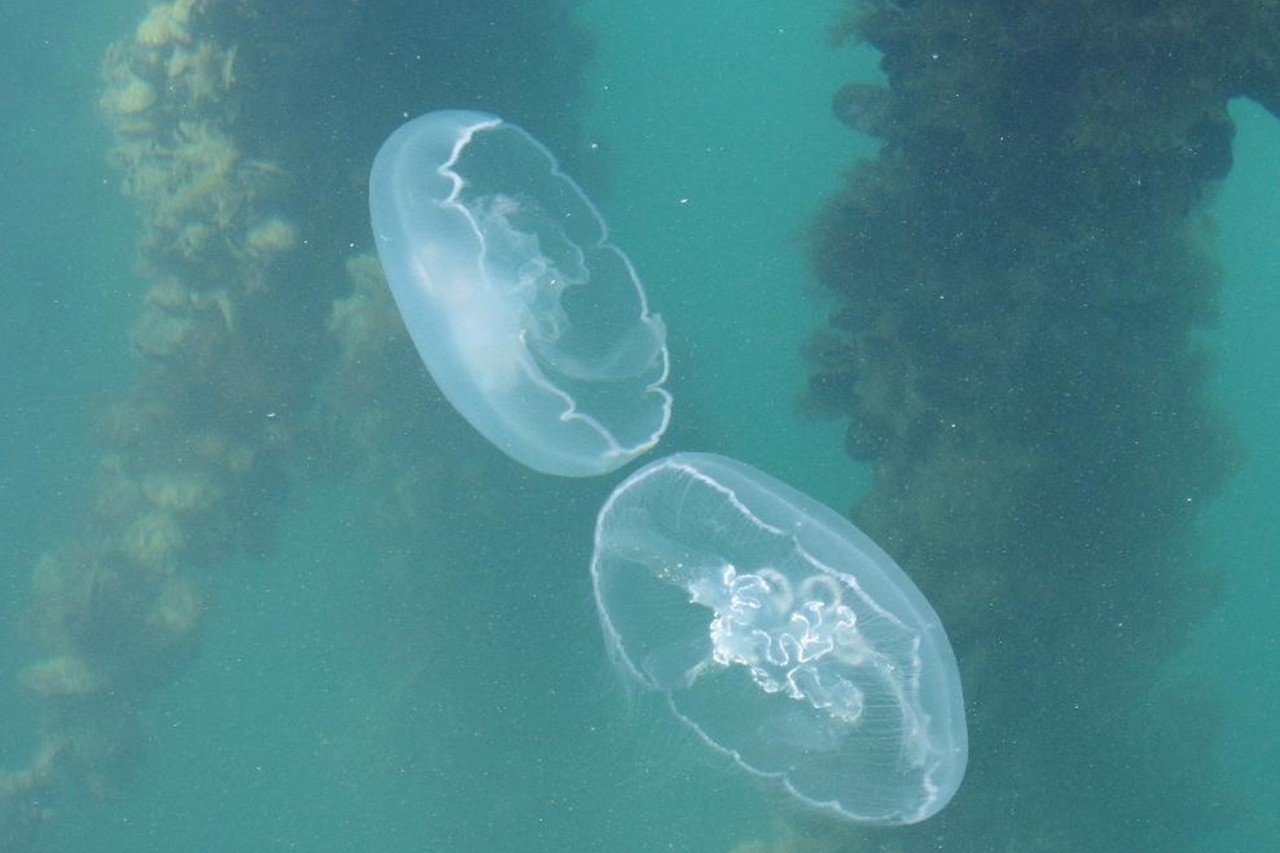
The spokesperson said that when ideal conditions align, jellyfish populations can surge rapidly.
“When this happens, their numbers can increase quite quickly,” they said.
Despite the dramatic appearance of the stranding, authorities reassured the public that moon jellies pose minimal threat to swimmers.
NRE said the jellyfish are generally harmless to people, causing only mild or negligible stings if touched.
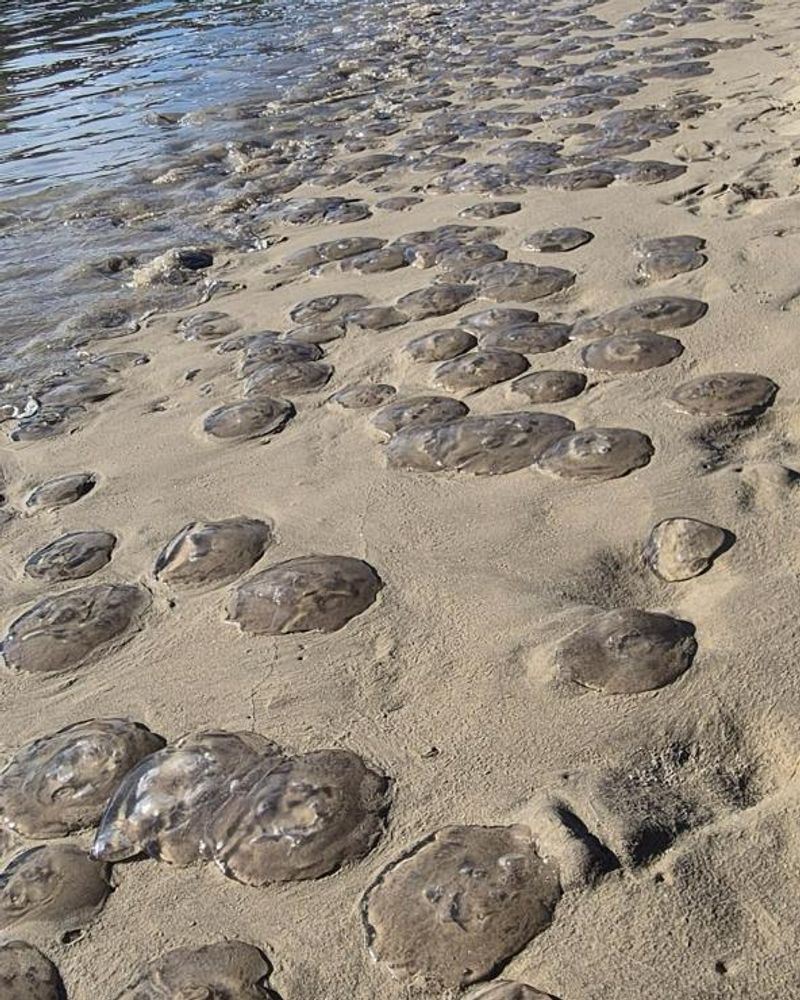
While the beach remained accessible, visitors were advised to watch their step and avoid direct contact with the stranded creatures.
The jellyfish are expected to naturally decompose or be swept back out to sea with changing tides and weather conditions.
Similar mass strandings occur periodically along Australian coastlines when environmental conditions create perfect storms for jellyfish population booms.
Sandy Bay is expected to return to normal once tidal movements clear the remaining jellyfish from the shoreline.