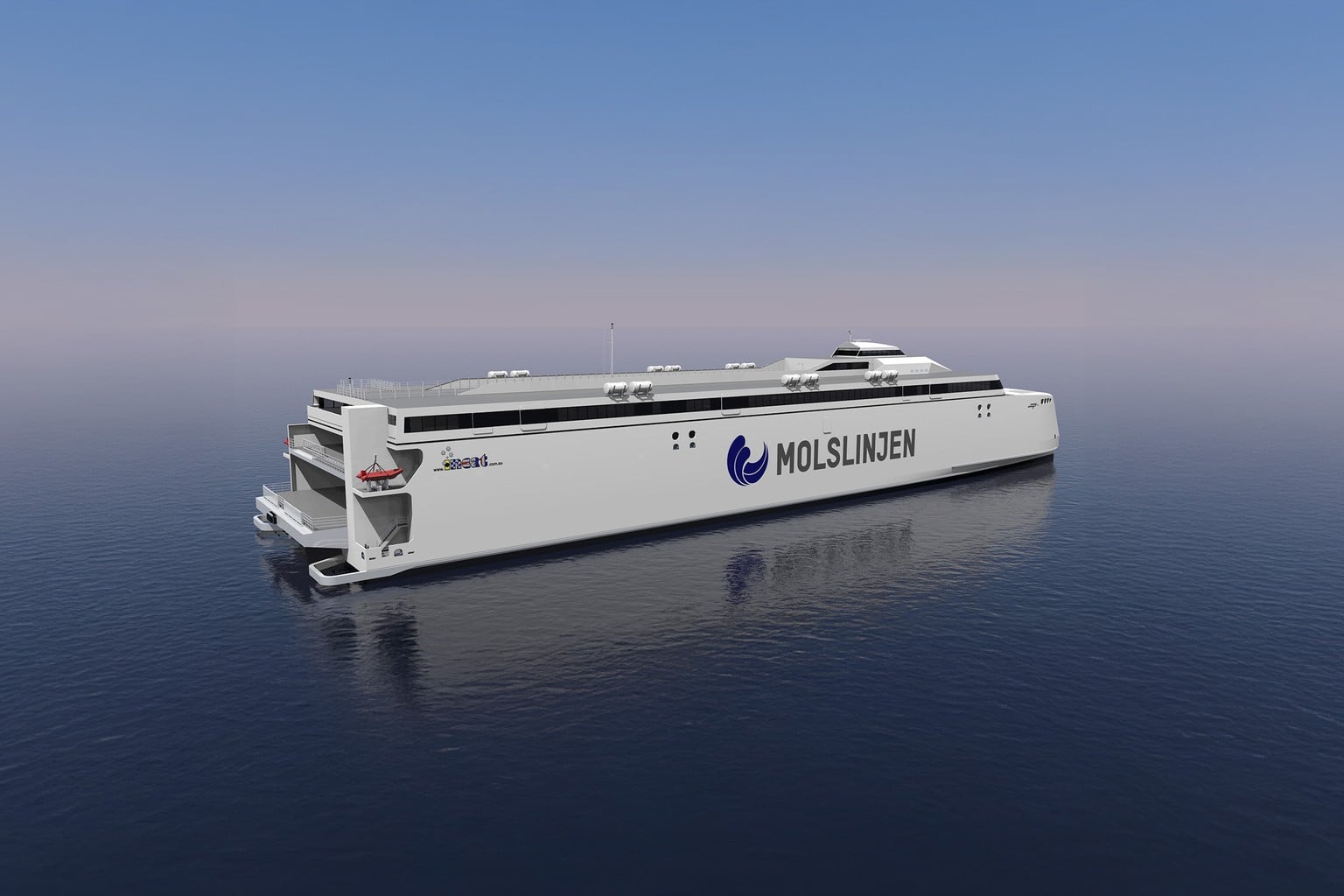
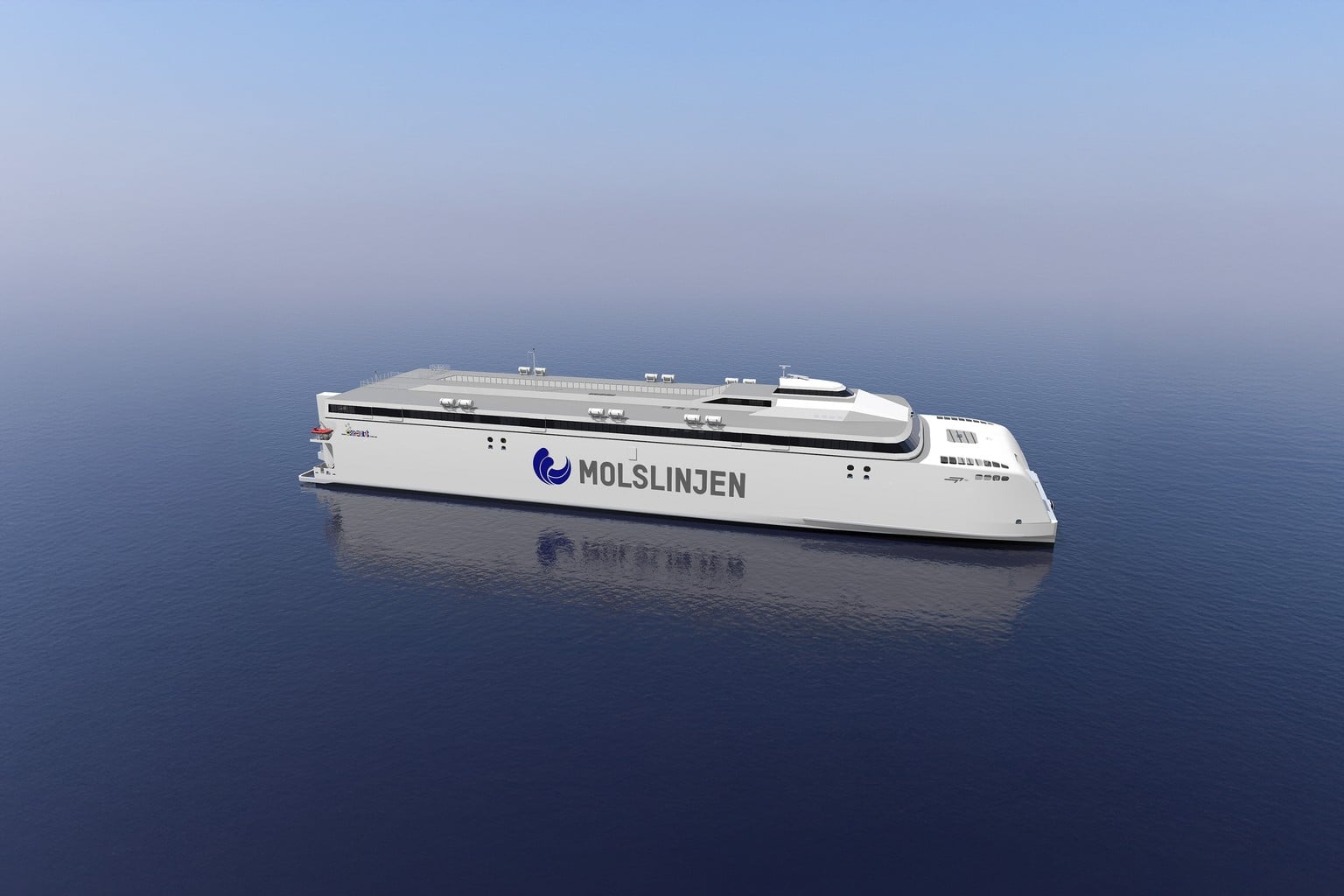
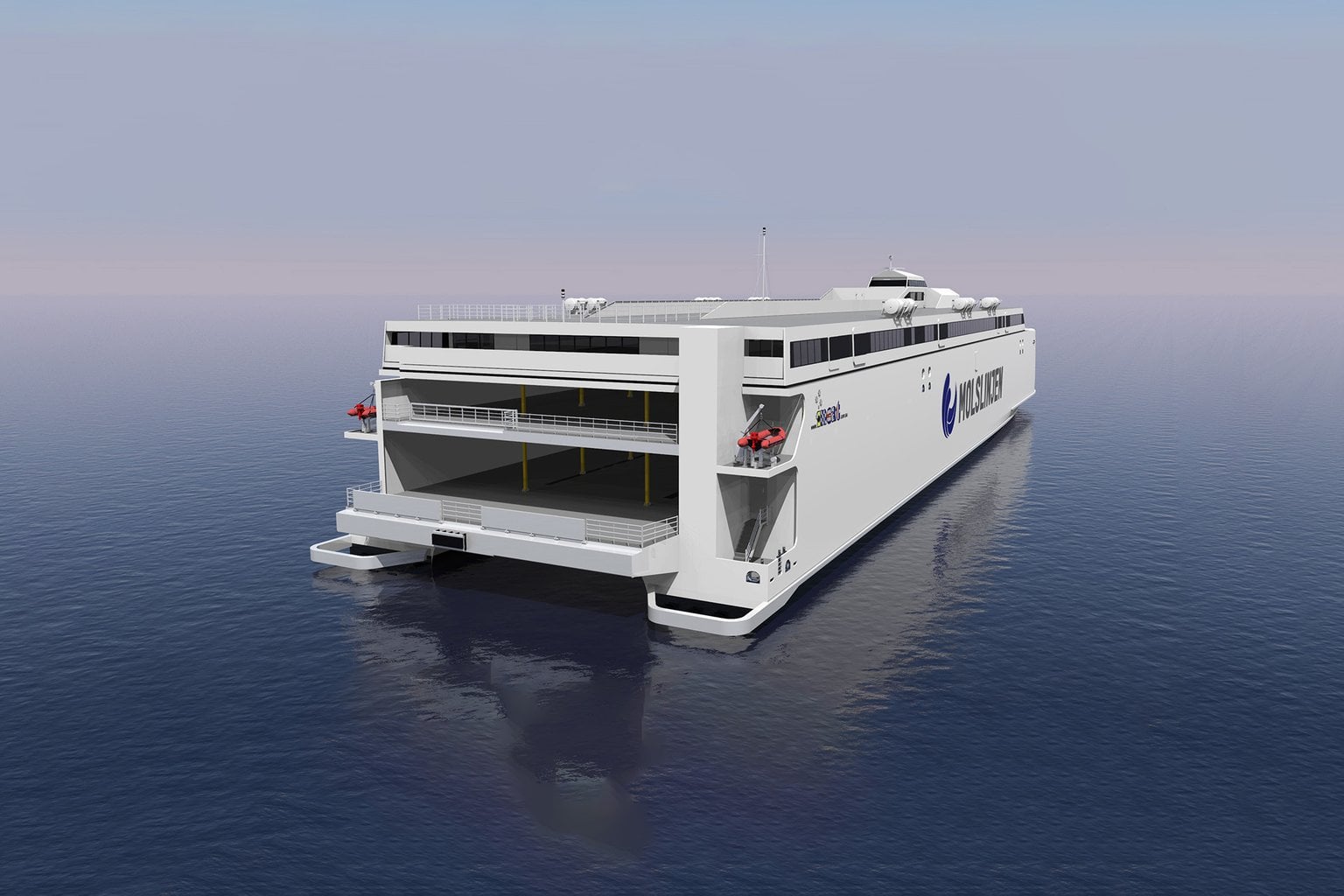
Tasmanian shipbuilder Incat has locked in a contract for a third battery-electric high-speed ferry with Danish operator Molslinjen, expanding what is being called the world’s largest electrification project at sea.
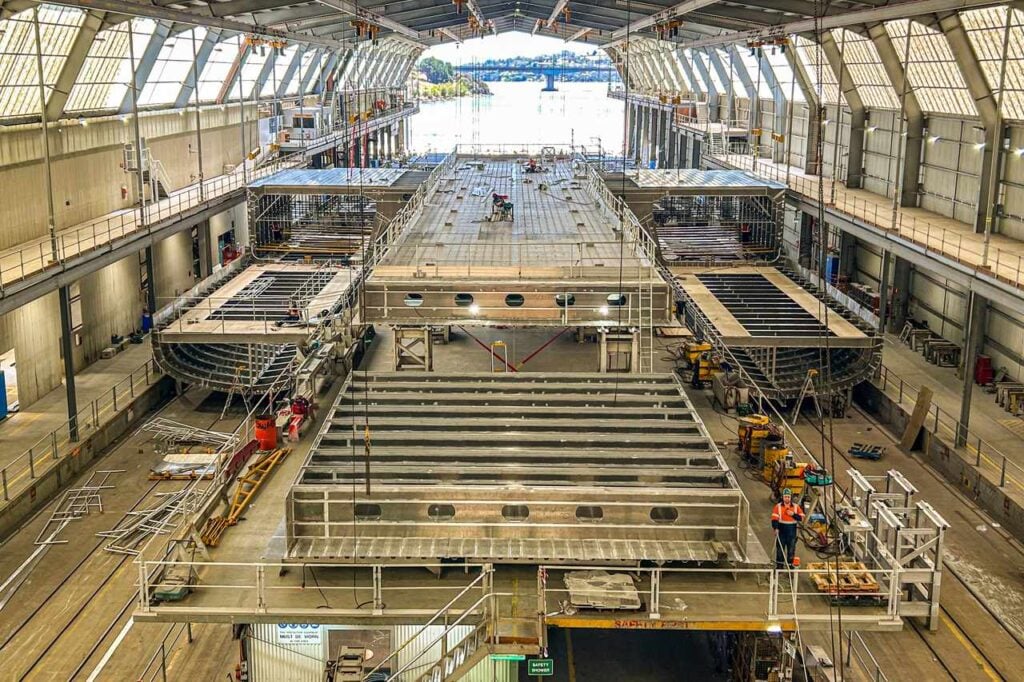
The 129-metre vessel will join two identical ferries already under construction at Incat’s Hobart shipyard.
All three ships will run entirely on battery power, carrying passengers and vehicles across Denmark’s busy Kattegat strait between Jutland and Zealand.
The fleet will service two routes: Aarhus-Odden and Ebeltoft-Odden.
Incat Tasmania CEO Stephen Casey said the third order shows strong confidence in the partnership and the viability of large-scale electric ferries.
“This is an important milestone for both organisations,” he said.
“Molslinjen is leading the way in the decarbonisation of high-speed ferry services in Europe and we are proud to be delivering vessels that will play a central role in Denmark’s clean-transport future.”
Casey said the deal reflects trust in Incat’s workforce and its ability to build cutting-edge electric vessels.
“Together, we are showing what’s possible when innovation, ambition and real-world operational needs come together,” he said.
Molslinjen CEO Kristian Durhuus said building all three ferries at the same shipyard offers “clear advantages” and “valuable learning”.
“And it is also important for us to have a stable and reliable partner, as we do with Incat,” he said.
“We and our owners are taking the lead and trying to show the way forward in the green transition using technology that, until recently, simply did not exist.”
Each ferry will carry up to 1,483 passengers and 500 cars at speeds exceeding 40 knots, powered by 45,000 kWh battery systems.
The three-ship program is estimated at around DKK 3.5 billion (approximately A$800 million), including shore-based charging infrastructure.
When fully operational, the fleet is expected to eliminate up to 132,000 tonnes of CO2 emissions annually.
Construction on all three vessels is already underway in Hobart, with deliveries scheduled over the coming years.
The contract cements Incat’s position as a global leader in electric shipbuilding, alongside its work on Hull 096 for South American operator Buquebus – currently the world’s largest battery-electric ship.