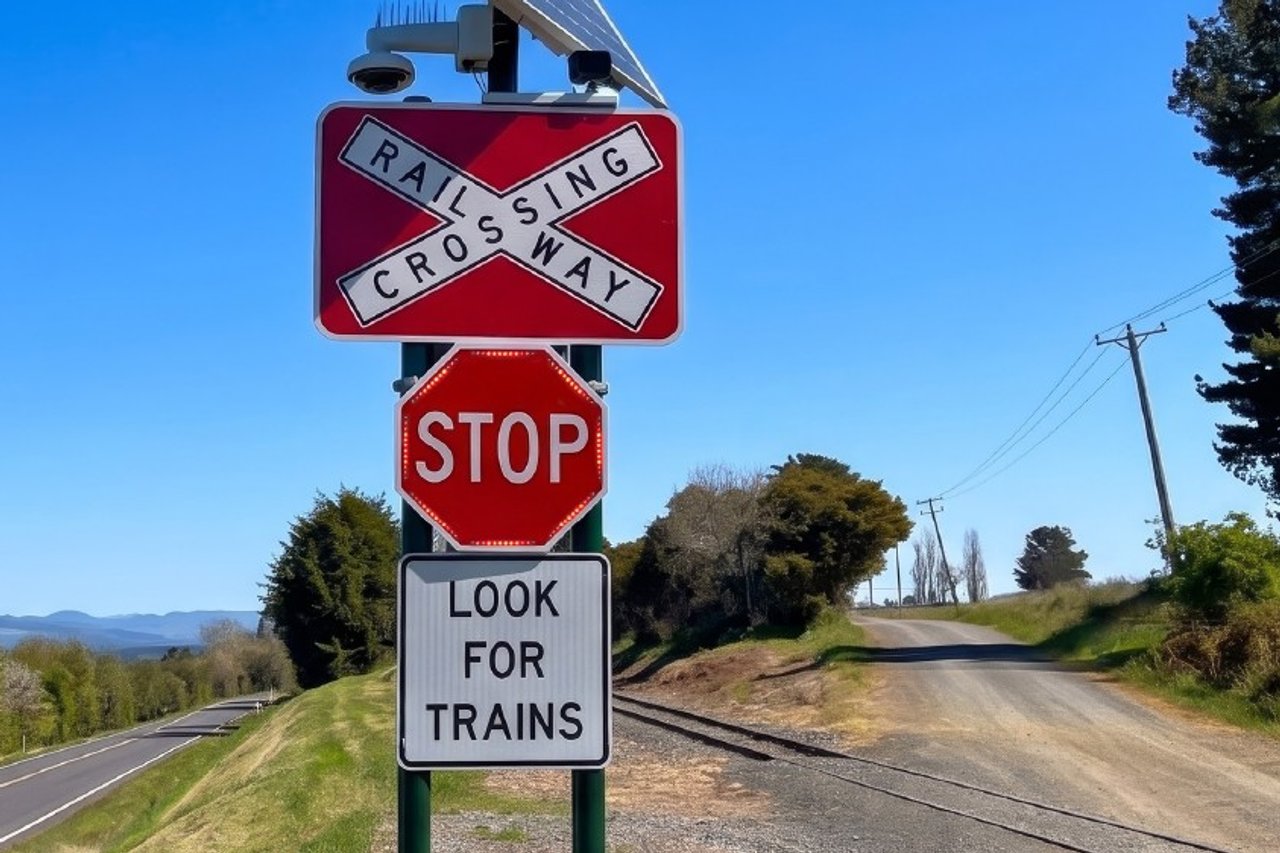
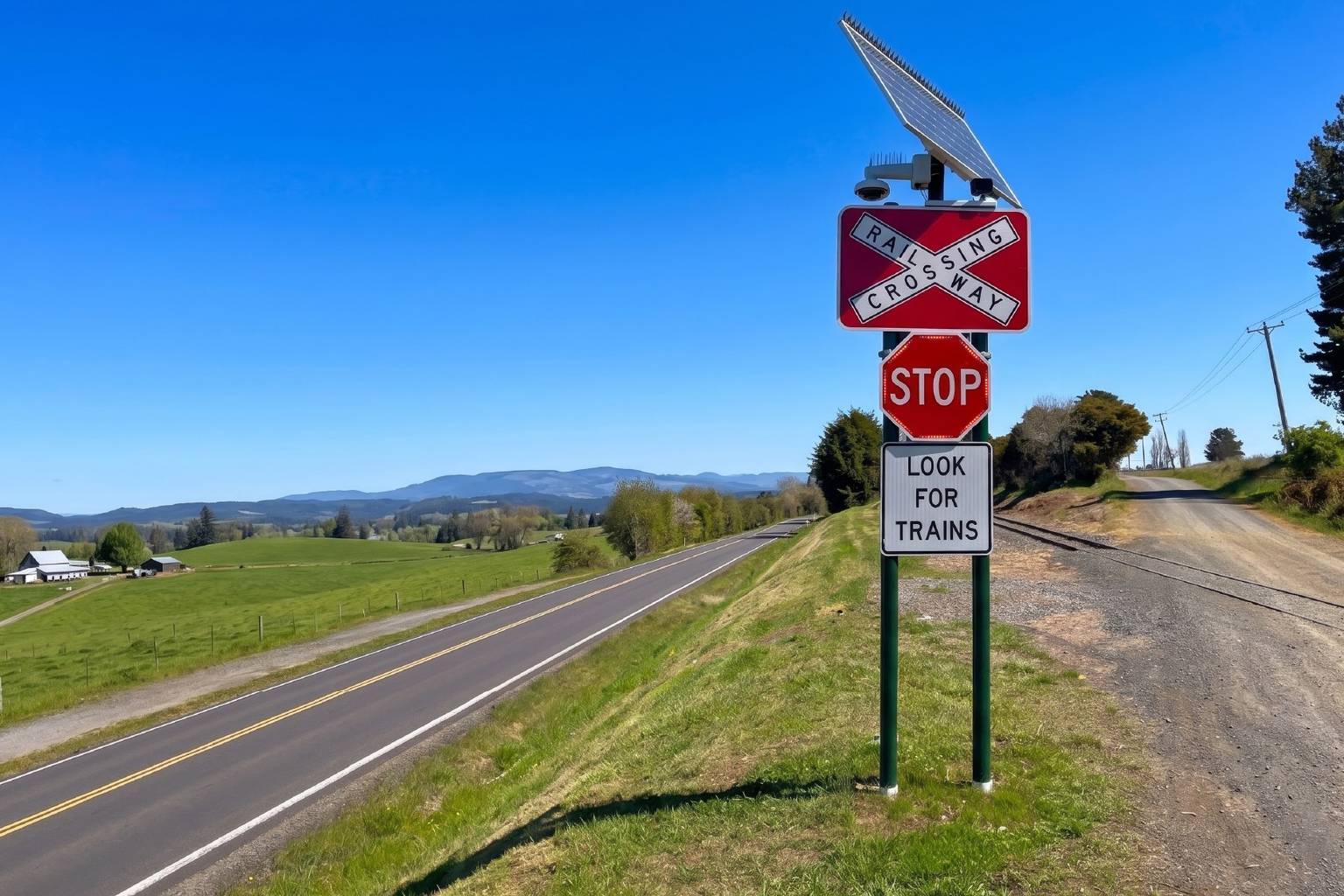
Flashing LED stop signs will be switched on at five regional level crossings across Tasmania next month in a bid to get drivers to slow down and stop.
The signs will go live on July 1 at sites in the state’s north and north-west.
The new signs use sensors to detect approaching vehicles and trigger flashing lights.
They are not activated by trains, with TasRail stressing that a flashing sign does not mean a train is coming.
TasRail said drivers must always stop, look, listen and think before crossing the rail line.
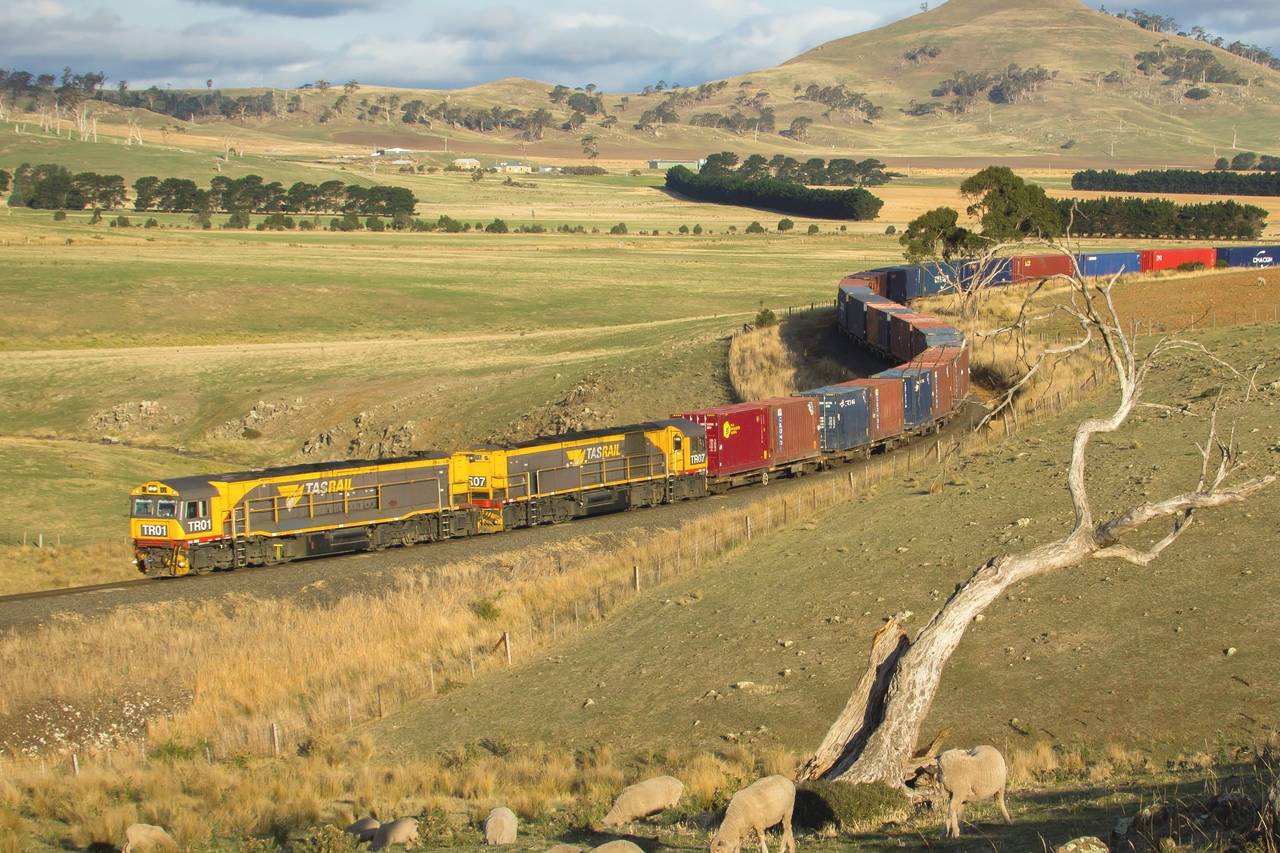
The project targets stop sign-controlled crossings, where safety relies entirely on drivers slowing down, stopping and checking for trains.
CCTV has also been installed at the sites. TasRail said the cameras would support system operation, safety monitoring and incident reviews, and that footage would be used for safety and operational purposes only.
The first crossings to receive the signs are Marriott Street at Westbury, two on Deviation Road at Westbury, Old Bell Bay Road at George Town and Picnic Point Road at Ulverstone.
The work is funded under the regional level crossing upgrade fund, a national program offering up to $40 million a year between 2023 and 2027.
TasRail secured $5 million in 2025, made up of $4 million from the federal government and $1 million from the state government.
In 2024–25, reported instances of motorists failing to stop or give way at Tasmanian level crossings rose from 68 to 137, with two collisions recorded during the period.
A further $10 million has been committed for the next phase, with $8 million from the federal government and $2 million from the state government.