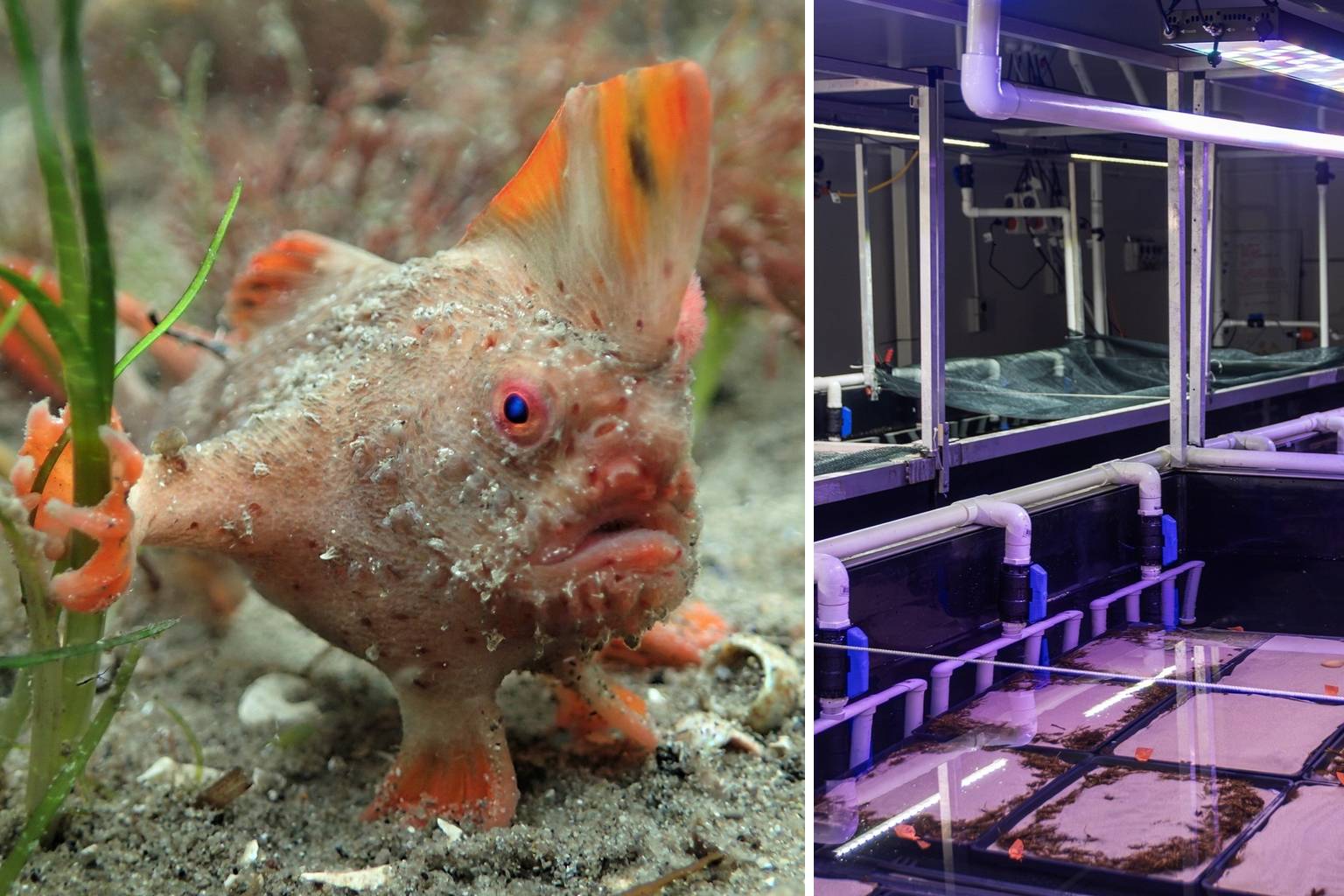
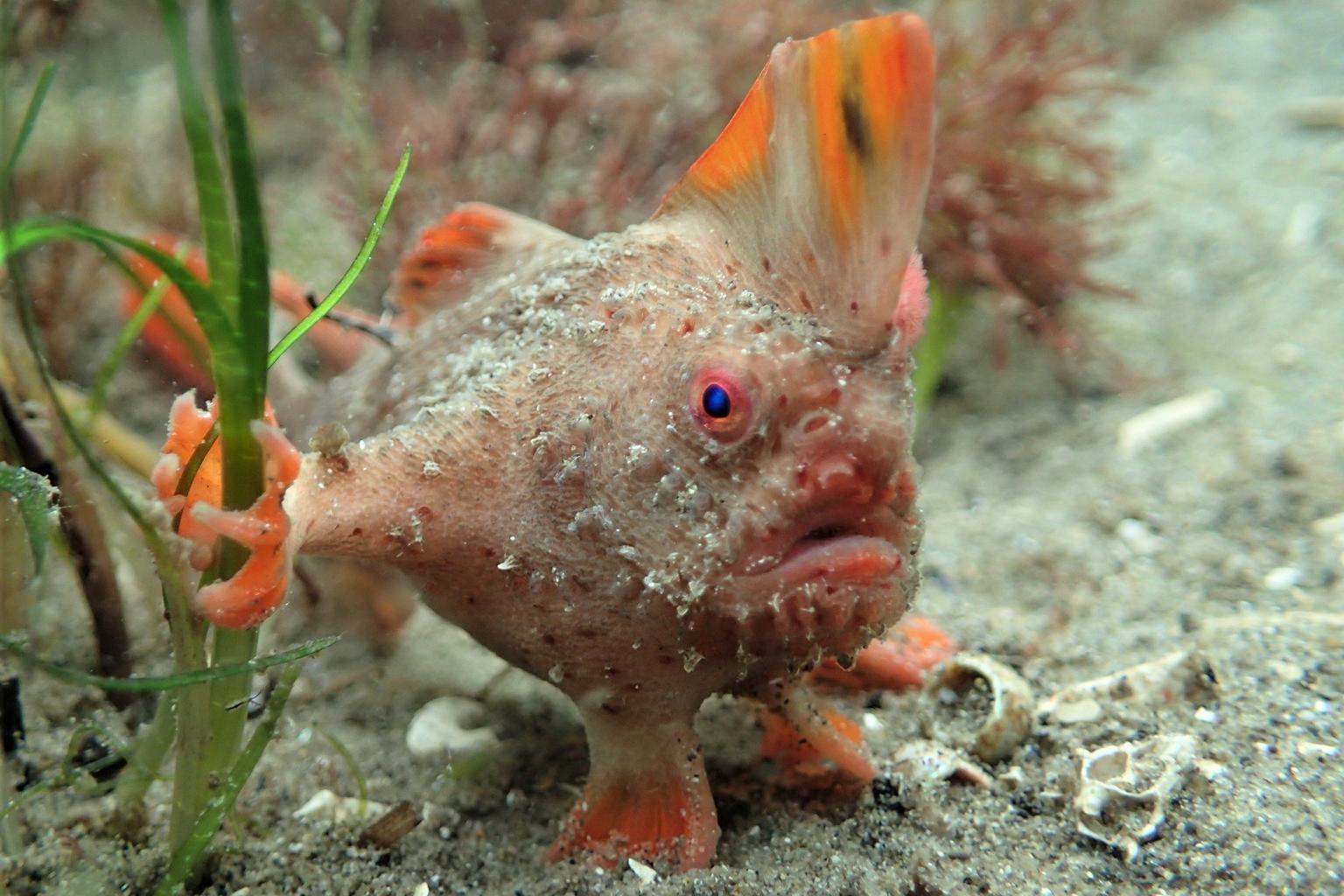
For the handful of red handfish left in the wild, a new nursery in southern Tasmania could mean the difference between survival and extinction.
The tiny, critically endangered fish – which walks along the ocean floor on hand-like fins – depends on seagrass meadows that have been disappearing for decades.
Recent estimates suggest only about 100 adults remain in the wild, confined to two small patches of reef in south-eastern Tasmania.
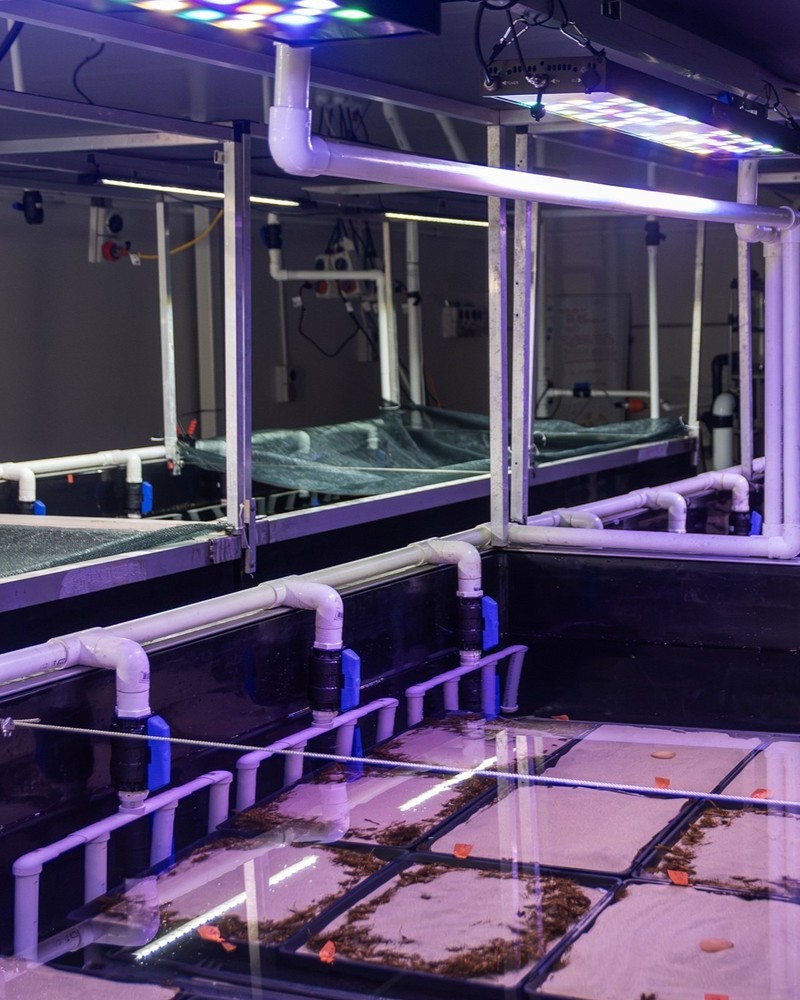
Tasmania’s first seagrass restoration nursery was officially launched this month at the University of Tasmania’s Institute for Marine and Antarctic Studies (IMAS) facility at Taroona.
IMAS marine ecologist Jemina Stuart-Smith, who co-leads the seagrass restoration program, said the meadows were vital to the fish’s last remaining population.
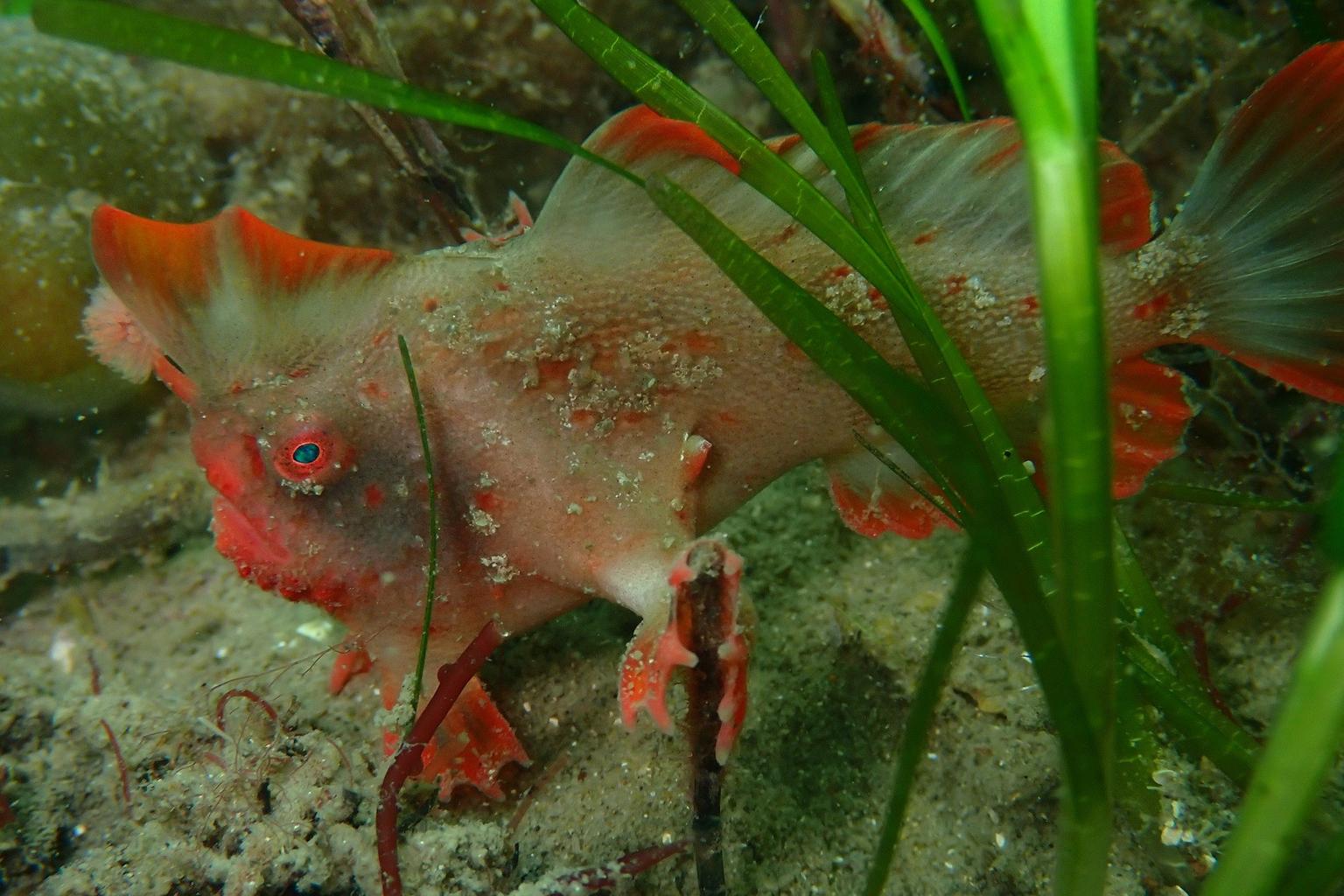
“Seagrass meadows are an incredibly important marine ecosystem and, in Tasmania, they also provide crucial habitat for the last remaining population of red handfish,” she said.
“We will also be working with our local community on habitat restoration trials in the wild.”
IMAS postdoctoral fellow Elizabeth Andrews said Tasmania’s seagrass loss had been severe.
“Historical mapping estimated Tasmania lost nearly a quarter of its seagrass between 1950 and 1990,” she said.
“Over the last 30 years significant declines have continued to be observed, including at sites critical to the survival of the red handfish.”
Andrews said seagrass was threatened by coastal development, urban pollution, invasive species and climate change.
The nursery will develop techniques for collecting, storing and propagating seeds, with funding from the federal government’s Saving Native Species program.
Associate professor Andrew Trotter, who also co-leads the program, said the work was part of a broader effort to protect the species and its habitat.
“Together, we’re giving this little creature and the habitat it depends on, a better chance of survival,” he said.
“Through a combination of conservation aquaculture and ecological studies, we will also be improving our preparedness for the climate change and human impacts on Australia’s marine ecosystems.”