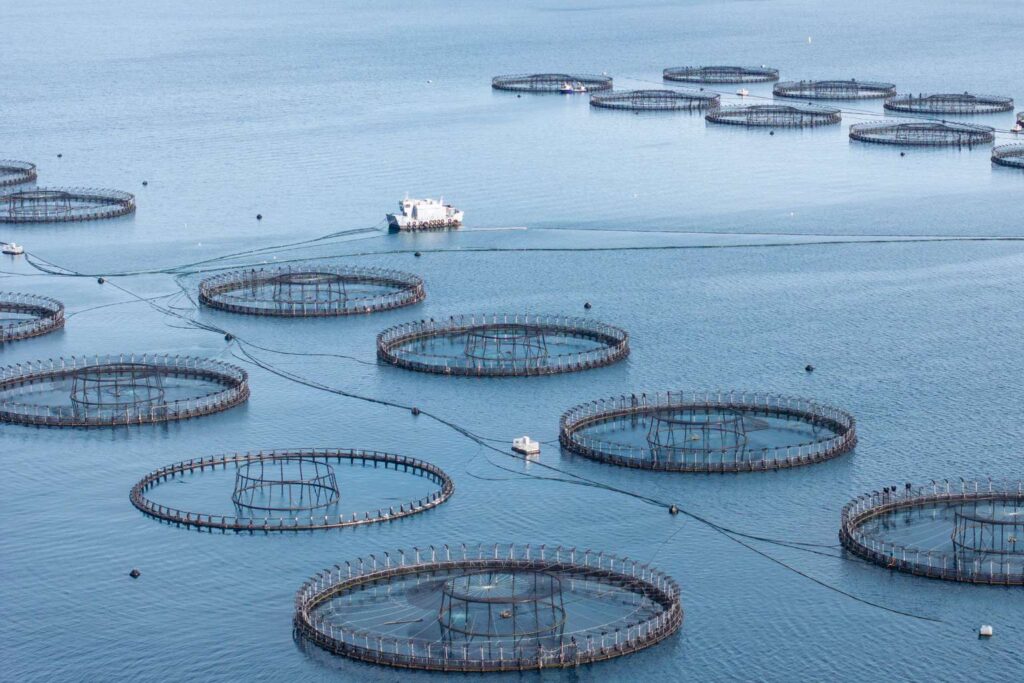
Australia’s veterinary medicines regulator has pulled the plug on an emergency antibiotic permit granted to Tasmania’s salmon farming industry.
The Australian Pesticides and Veterinary Medicines Authority announced on Thursday it had suspended the industry’s access to florfenicol.
The regulator cited concerns about the antibiotic leaching into the marine environment and affecting other species.
The APVMA said the permit was revoked “on the basis of unacceptable risk of residue exposure” to wildlife.
The industry has been “advised that the permit has been suspended and that the product can no longer be used under the provisions of the permit”, the authority said in a statement.
The decision follows testing that detected traces of the antibiotic in wild fish near salmon farms.
The Tasmanian Department of Natural Resources and Environment provided data to the APVMA showing “very low-level detections of florfenicol amine in some non-target/wild fisheries species” at various distances from salmon leases.
The APVMA flagged its intention to suspend the permit in late February after reviewing that data.
The industry was given until Monday, March 2 to provide evidence addressing the regulator’s trade concerns.
The emergency permit was first granted in November last year to help salmon producers tackle a disease outbreak in Tasmania’s south-eastern biosecurity zone.
The APVMA has not indicated whether the permit could be reinstated or what conditions would need to be met for that to occur.