
Tasmania’s volunteer maritime radio network is celebrating 50 years since the organisation that became Tas Maritime Radio was founded.
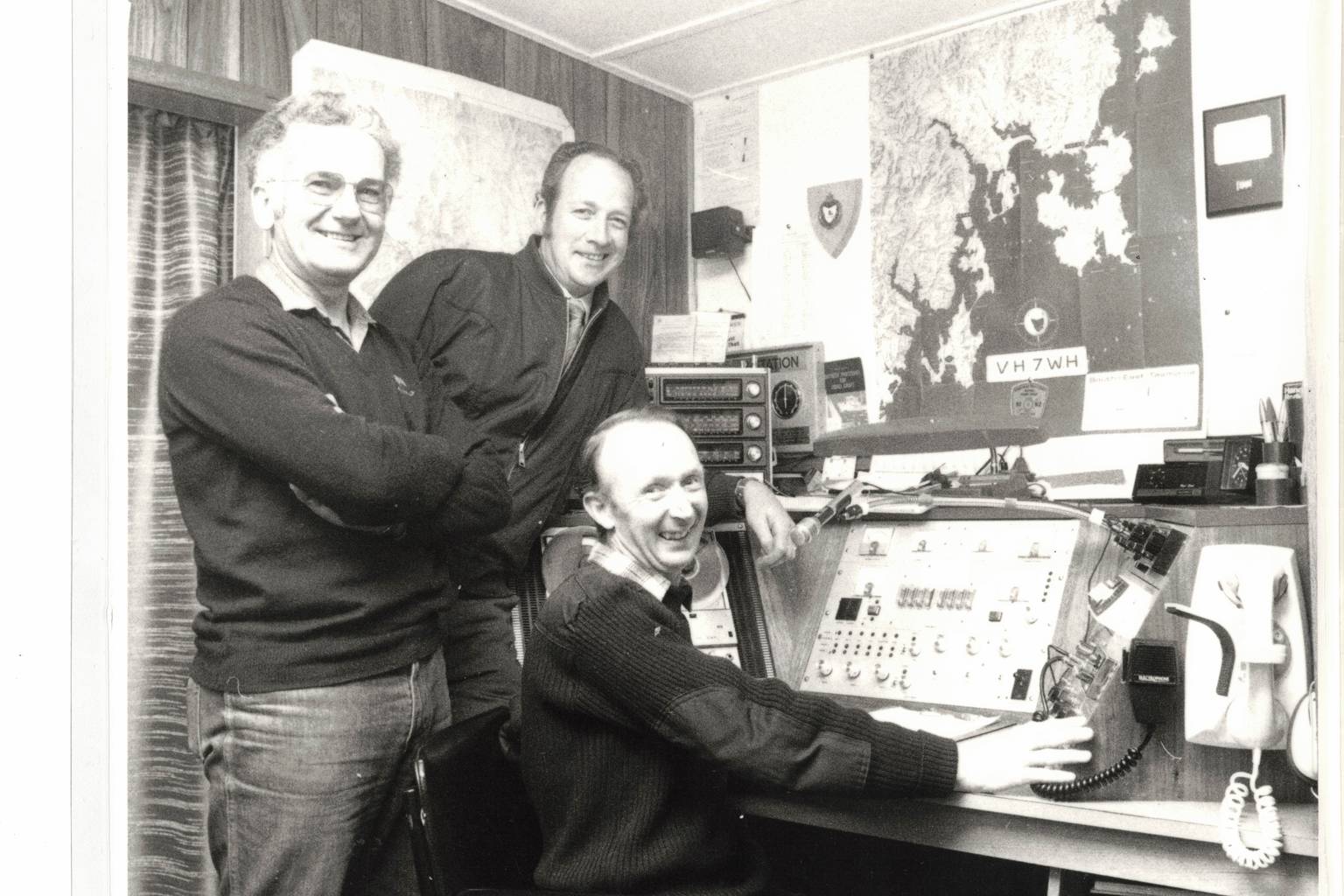
Tas Maritime Radio traces its origins to 1975, when Barry McCann and Les Collis founded the Tasmanian Smallcraft Marine Radio Group after McCann went fishing and his engine broke down with no radio on board.
The Margate base came on air for the first time on July 10 1976.
“Base operator Len Bonnitcha broadcast the weather forecast for south-eastern Tasmania,” McCann said.
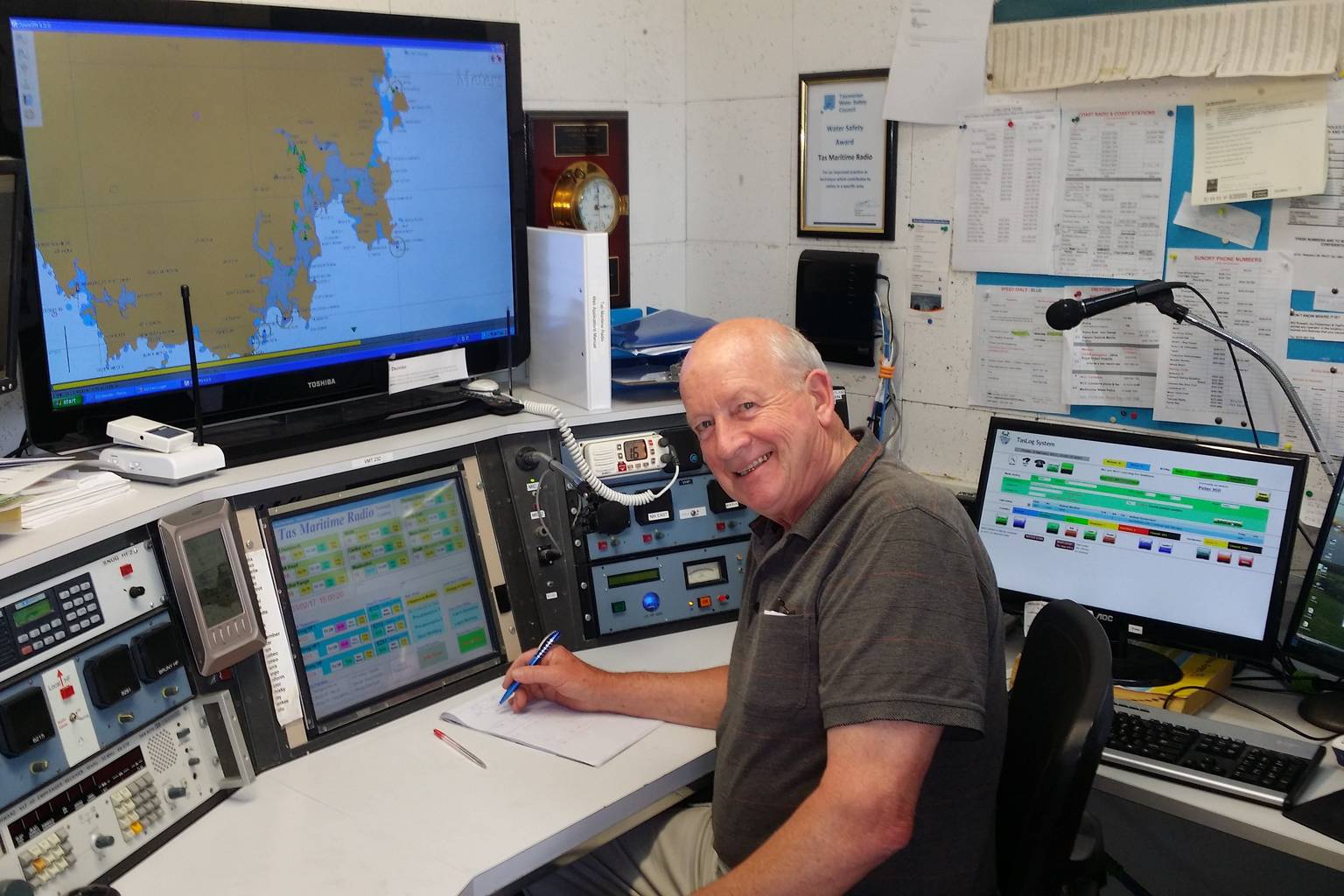
“By this time, fourteen boats had joined the network and for the next 10 years, the network grew at the average rate of one hundred per year.”
What started as a small group of radio enthusiasts has grown into one of Australia’s most extensive volunteer maritime radio networks, with around 1500 registered vessels and a team of 22 operators, volunteer technicians, computer programmers and tower climbers.
The network now operates 11 VHF base stations around Tasmania and three long-range HF stations, all controlled by a single operator at any one time doing four-hour shifts.
“I am very proud of what we have all achieved – we being our large team of volunteers,” McCann said.
Over the decades, the organisation has undergone several name changes and major upgrades.
It shifted from 27 mHz to VHF in 1998, took control of the old Hobart Radio HF station on Bruny Island in 1993 and moved to the Domain in Hobart in 2004.
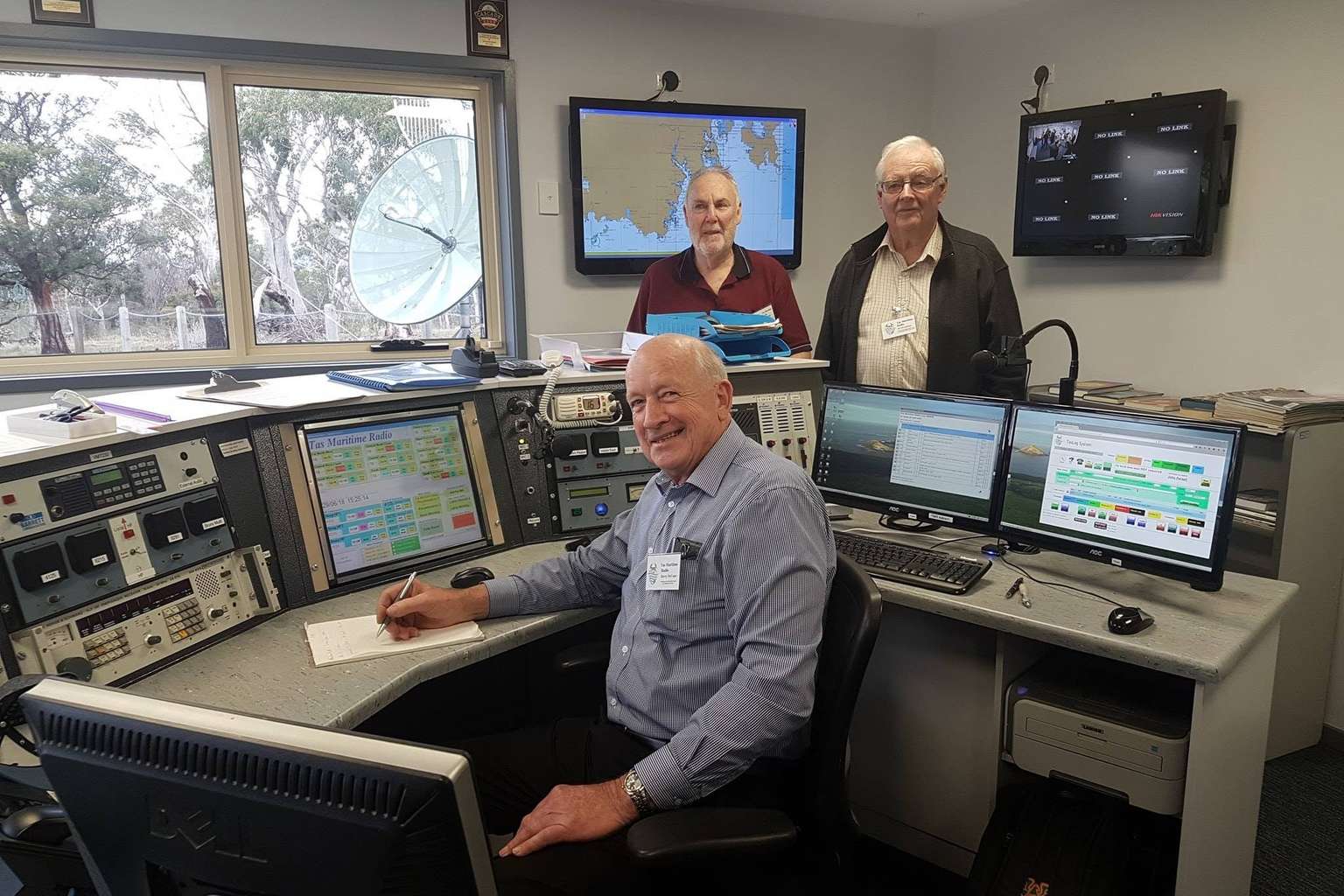
In 2002, when Telstra Maritime closed all HF stations around Australia, the network became Coast Radio Hobart, providing long-range HF coverage to New Zealand and mainland Australia.
Two new base stations on Tasmania’s West Coast were added in 2014 with help from Transend, Marine and Safety Tasmania and Icom Australia, prompting a final name change to Tas Maritime Radio.
“The name more accurately reflects the service area we cover,” McCann said.
Marine and Safety Tasmania CEO Lia Morris said the organisation had been proud to support the network for more than 25 years.
“Tas Maritime Radio has played a significant role in preventing hundreds of incidents every year from escalating into life-threatening situations,” Morris said.
This year, the organisation has begun converting its links to IP technology.