
Tasmanian potato growers are now subject to a new set of biosecurity rules aimed at curbing the spread of potato mop top virus, nine months after it was first detected in the state.
The general biosecurity direction, issued by the chief plant protection officer, came into effect late last week and will remain in force until June next year.
It requires anyone commercially growing or supplying potatoes to take active steps to limit the spread of PMTV, including cleaning soil from machinery before moving between properties and destroying any wild potato plants that could carry the virus.
Growers must also keep detailed records of planting, harvest and supply for at least three years and provide written notice to buyers if their potatoes may be carriers.
PMTV was first identified on a Tasmanian farm in July 2025 – the first time the virus had been found anywhere in Australia.
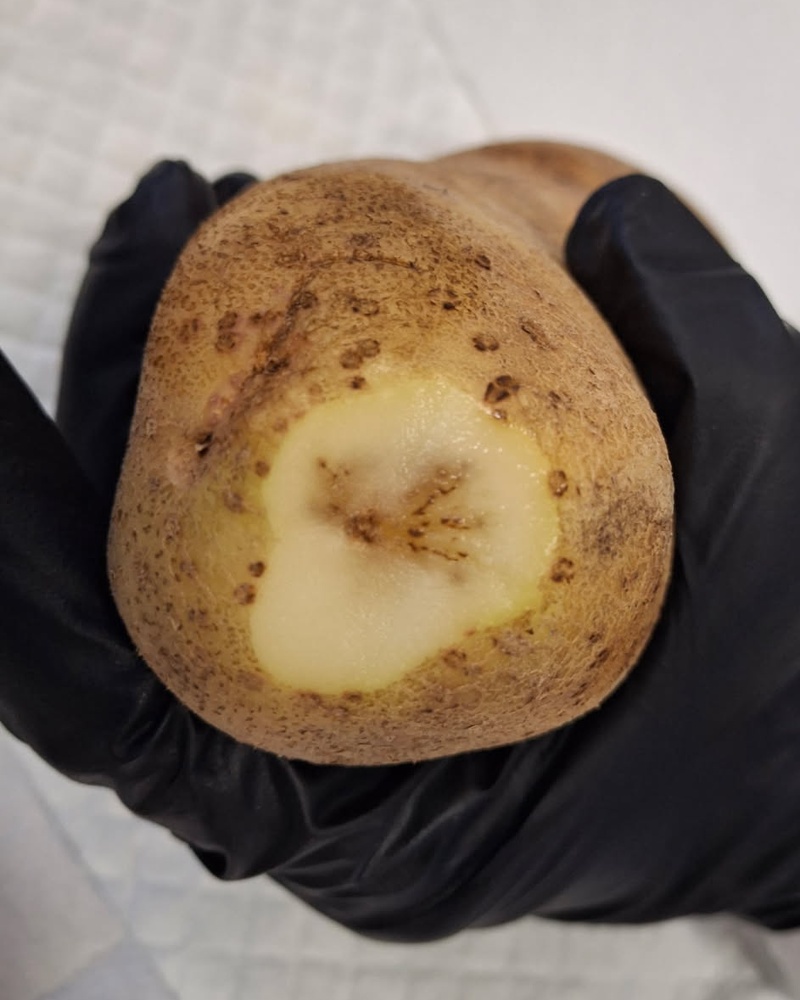
Traceback work later indicated it may have been present in the state for at least two years before that detection.
By September 2025, authorities determined eradication was not feasible and wound down emergency response efforts, shifting focus to long-term management.
The virus is carried by the soil-borne pathogen that causes powdery scab and can survive in its spores for more than a decade.
It poses no risk to human health, but can cause skin distortions, cracking and discolouration in potato flesh, reducing quality and yields.
Biosecurity Tasmania said the direction provided guidance to growers, contractors and processors on slowing the virus’s spread, particularly through reducing soil movement.
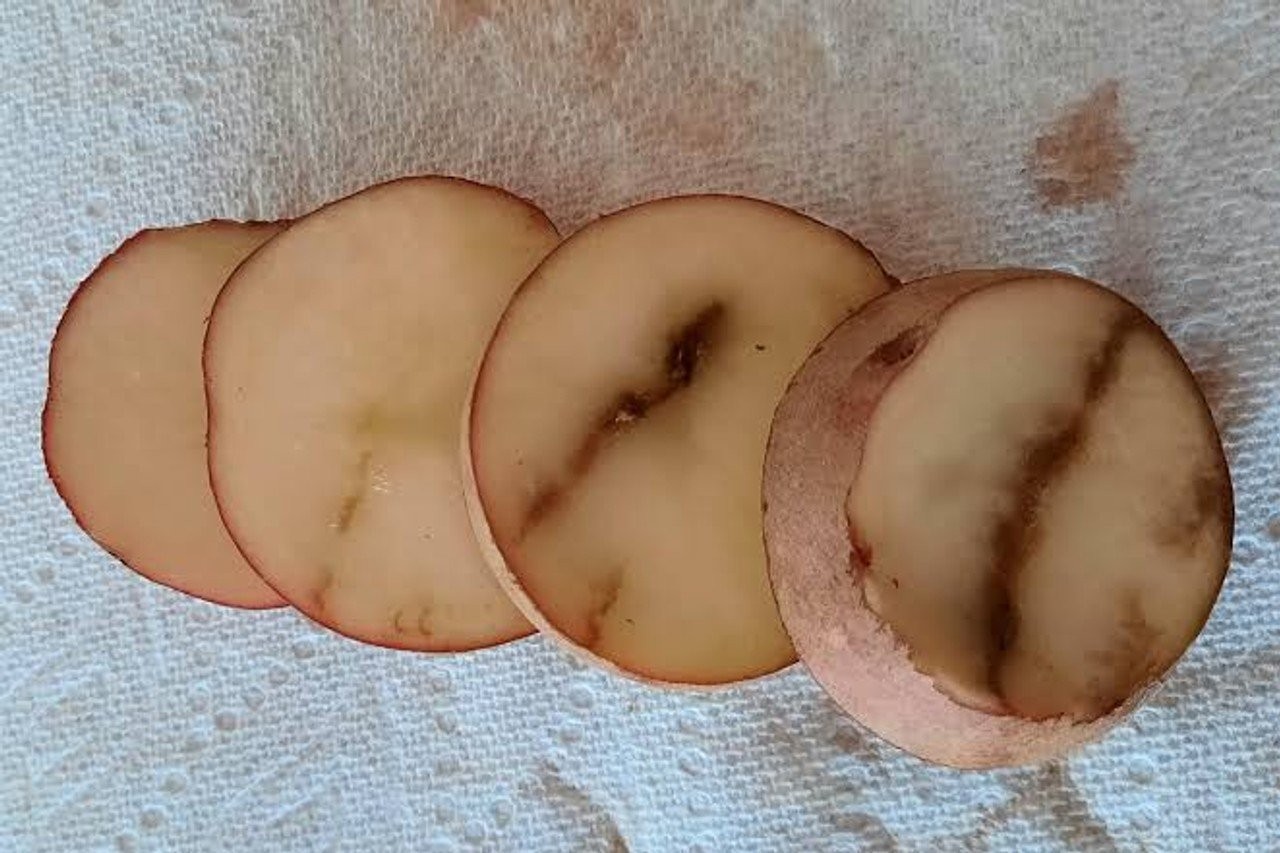
The state government has put $200,000 towards a research program being delivered across 2025-26, led by the Tasmanian Institute of Agriculture and the potato industry.