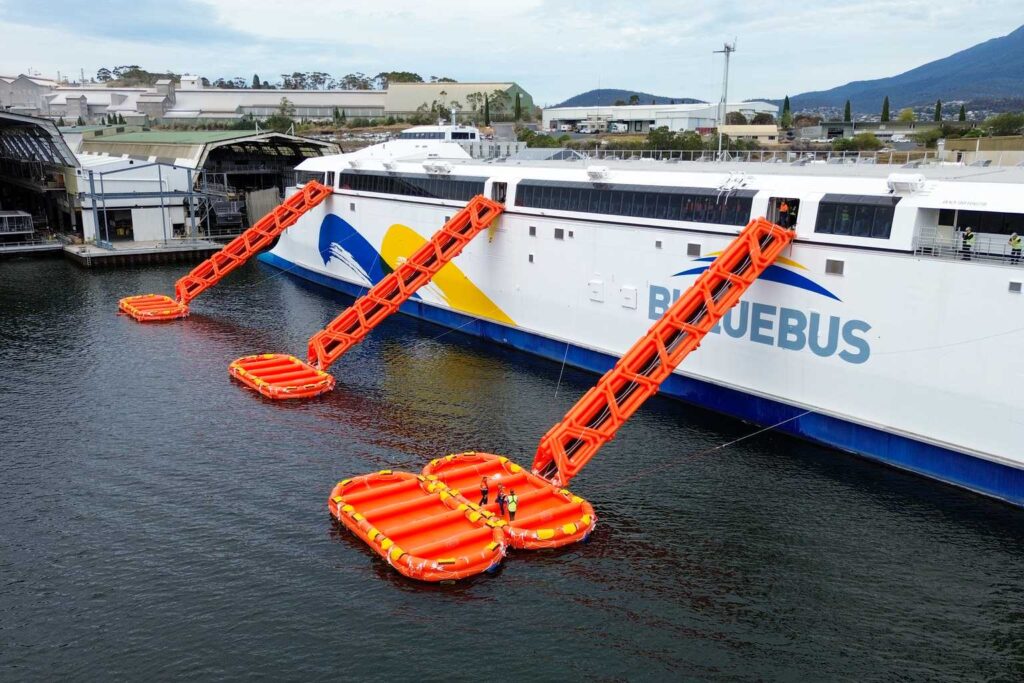
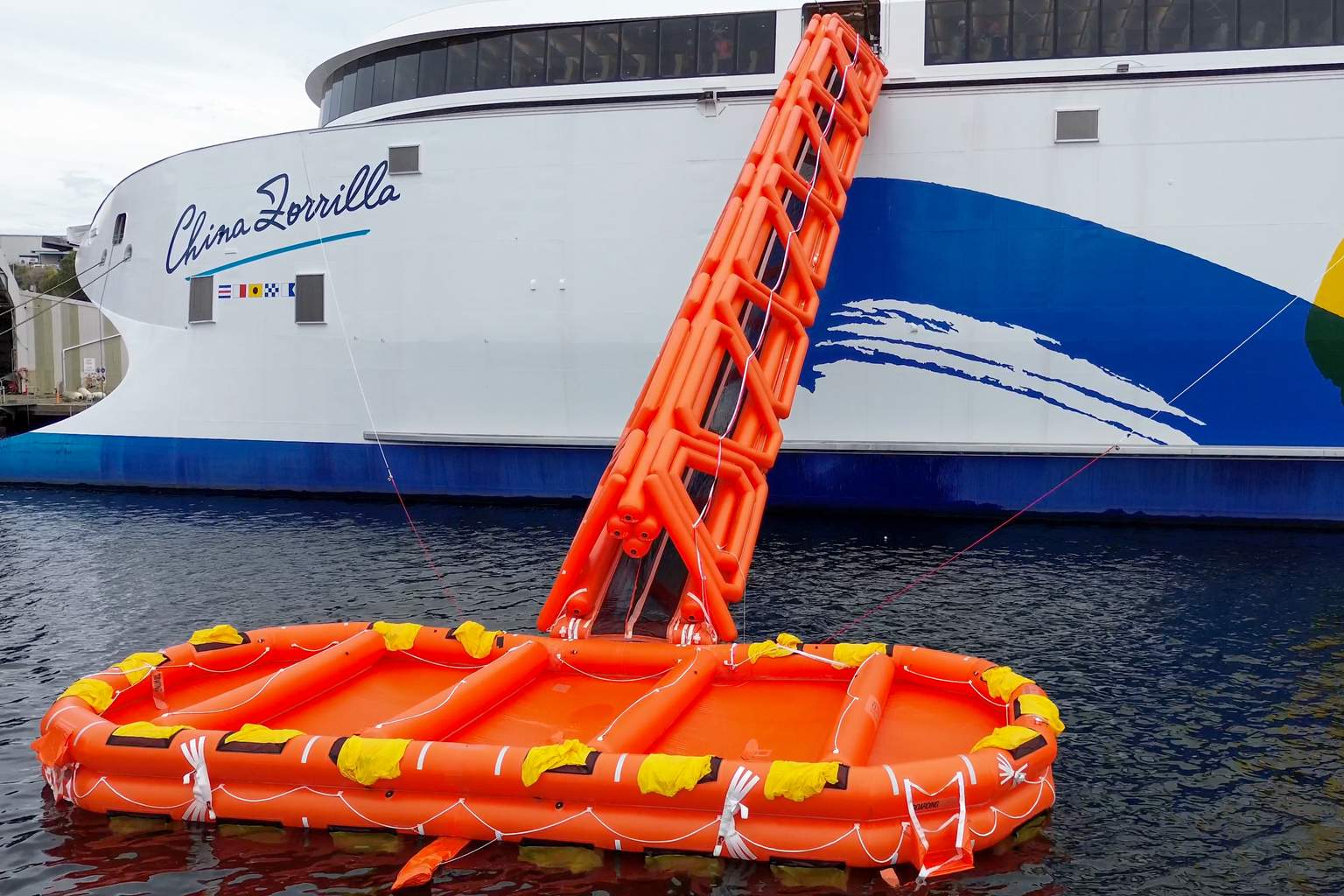
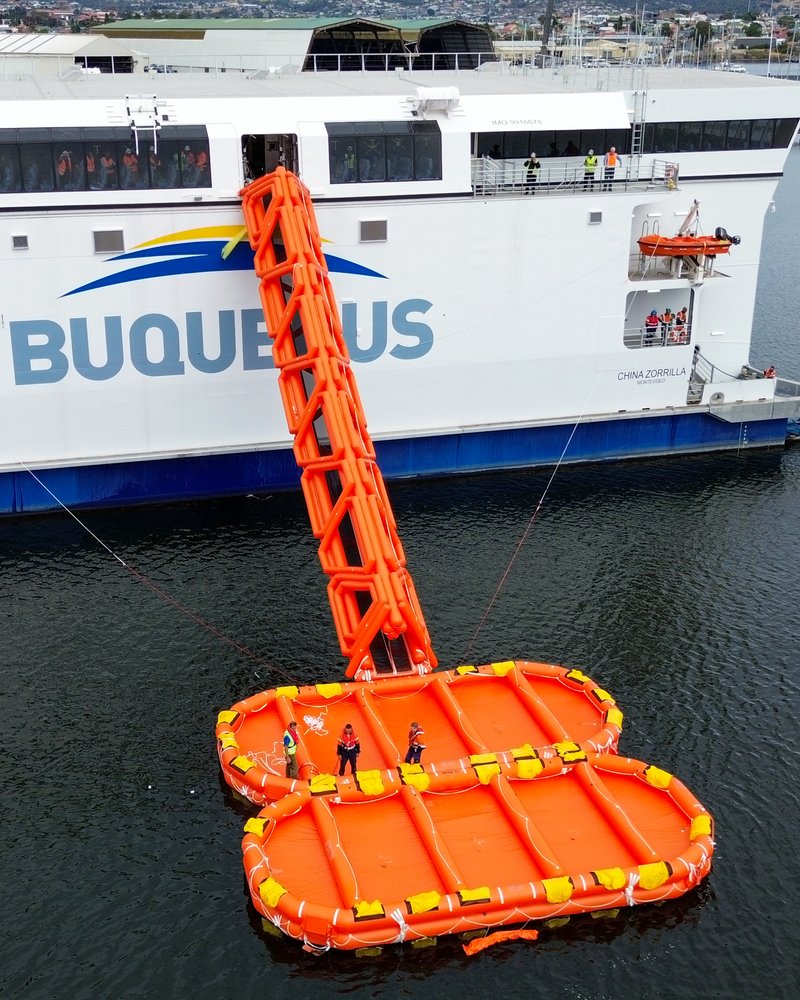
A 22-metre inflatable slide dropped from the deck of the world’s largest battery-electric ferry in Hobart on Wednesday as shipbuilder Incat completed a critical safety milestone.
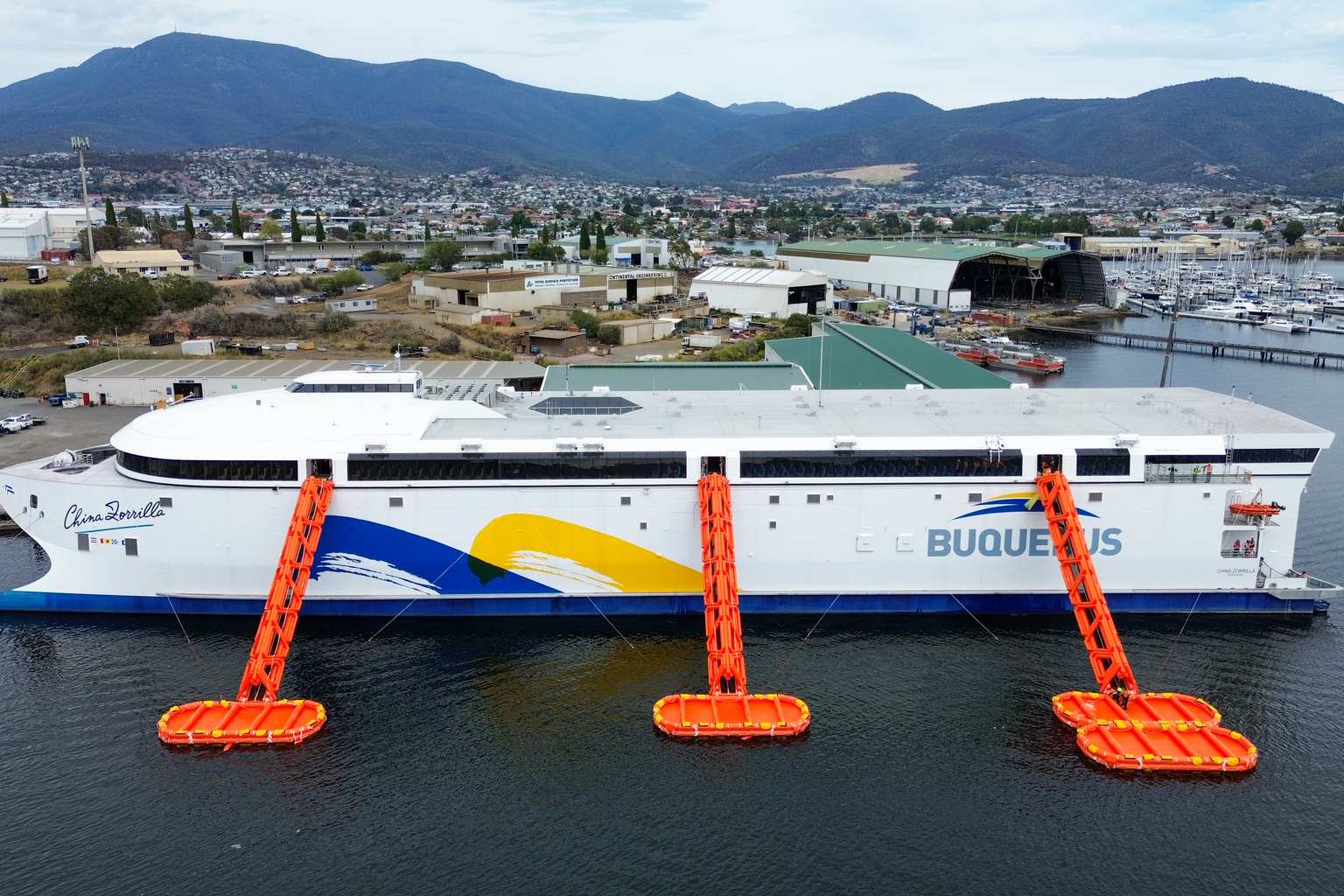
The marine evacuation system test saw three giant slides deployed from Hull 096 at Incat’s shipyard, each connected to liferafts capable of holding 128 people.
Once fully equipped, the vessel will carry six evacuation systems and 13 linked liferafts with capacity for 2,432 passengers.
Fellow Tasmanian company Liferaft Systems Australia supplied the safety equipment.
Incat chairman Robert Clifford said safety underpinned every vessel the company built.
“The successful deployment of the marine evacuation system on Hull 096 demonstrates the depth of engineering, planning and collaboration required to deliver vessels of this scale,” he said.
“We are proud to continue our partnership with another industry-leading Tasmanian company in Liferaft Systems Australia to deliver world-class safety capability.”
The test forms part of an extensive commissioning program ahead of the ferry’s delivery to South America.
Liferaft Systems Australia managing director Mike Grainger said the milestone reflected a strong partnership between the two companies.
“Our long-standing relationship with Incat is built on a shared commitment to quality, reliability and passenger safety,” he said.
“Seeing these systems successfully deployed on a vessel of this size is a proud moment for our team and a testament to what Tasmanian industry can achieve together on the global stage.”
Hull 096 is the largest battery-electric ship ever built, cementing Incat’s position at the forefront of zero-emission maritime technology.
The Hobart shipbuilder has delivered high-speed catamarans to operators worldwide for more than four decades.
Testing and commissioning will continue in the coming months before the ferry begins its journey to South America.