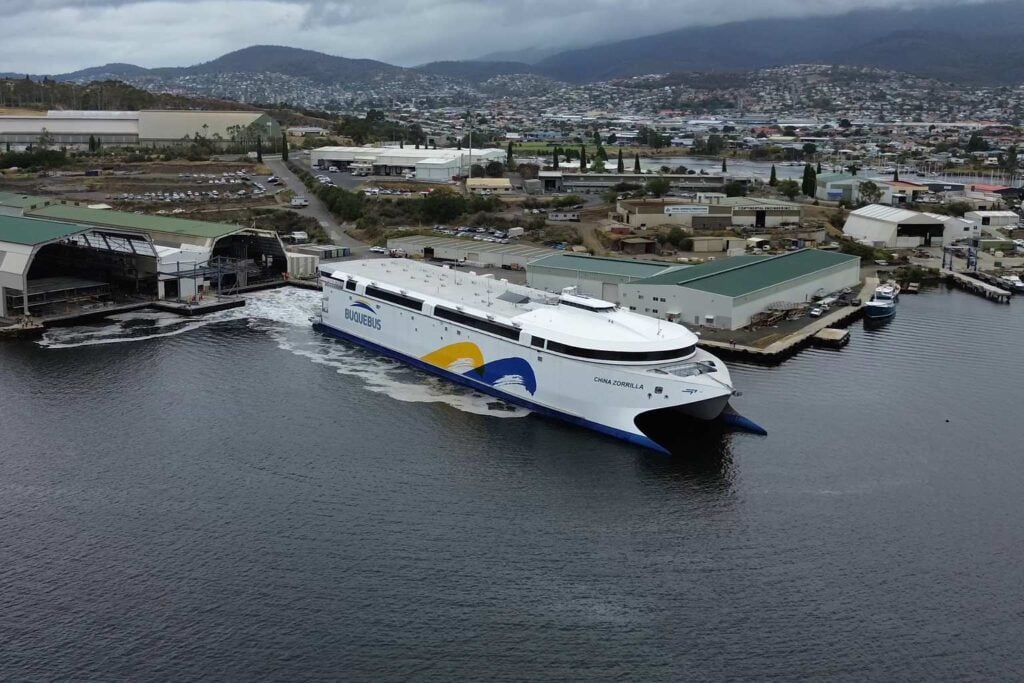
The world’s largest battery-electric vessel has conducted its first self-powered journey on Hobart’s River Derwent today.
The 130-metre vessel, known as Hull 096, has begun harbour trials, marking a pivotal moment in global shipping as the largest passenger-vehicle carrier ever to operate solely on battery power.
Built by Incat Tasmania, the ship has now transitioned from construction to operational testing phase, with crews evaluating its propulsion, manoeuvrability and onboard systems in real-world conditions.
Incat Chairman Robert Clifford described the trials as a defining moment not just for the company, but for the entire maritime sector.
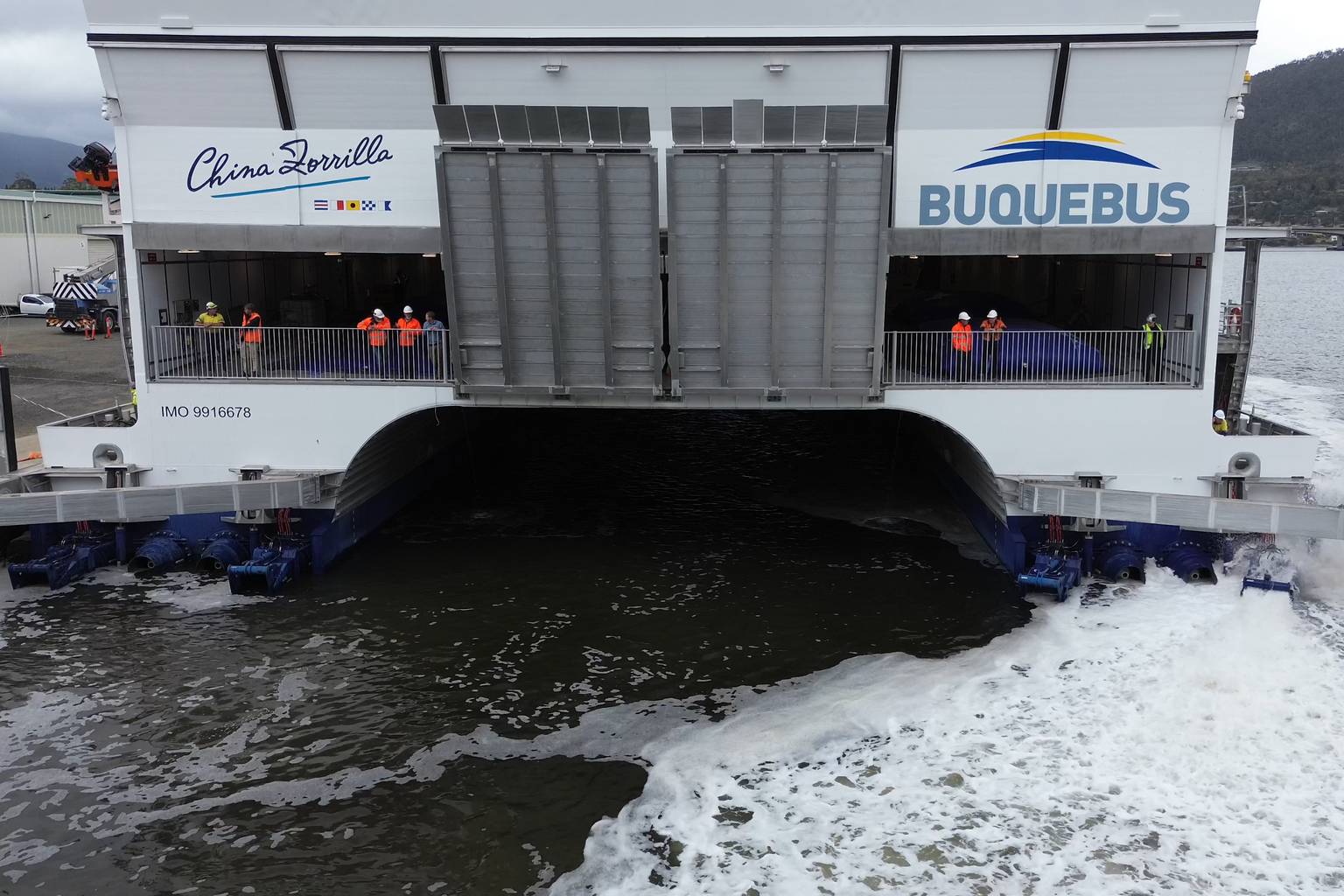
“This is the moment where the ship truly comes alive,” Clifford said.
“Moving Hull 096 under its own battery-electric power is a world first at this scale and confirms that electric propulsion is viable for large commercial vessels.”
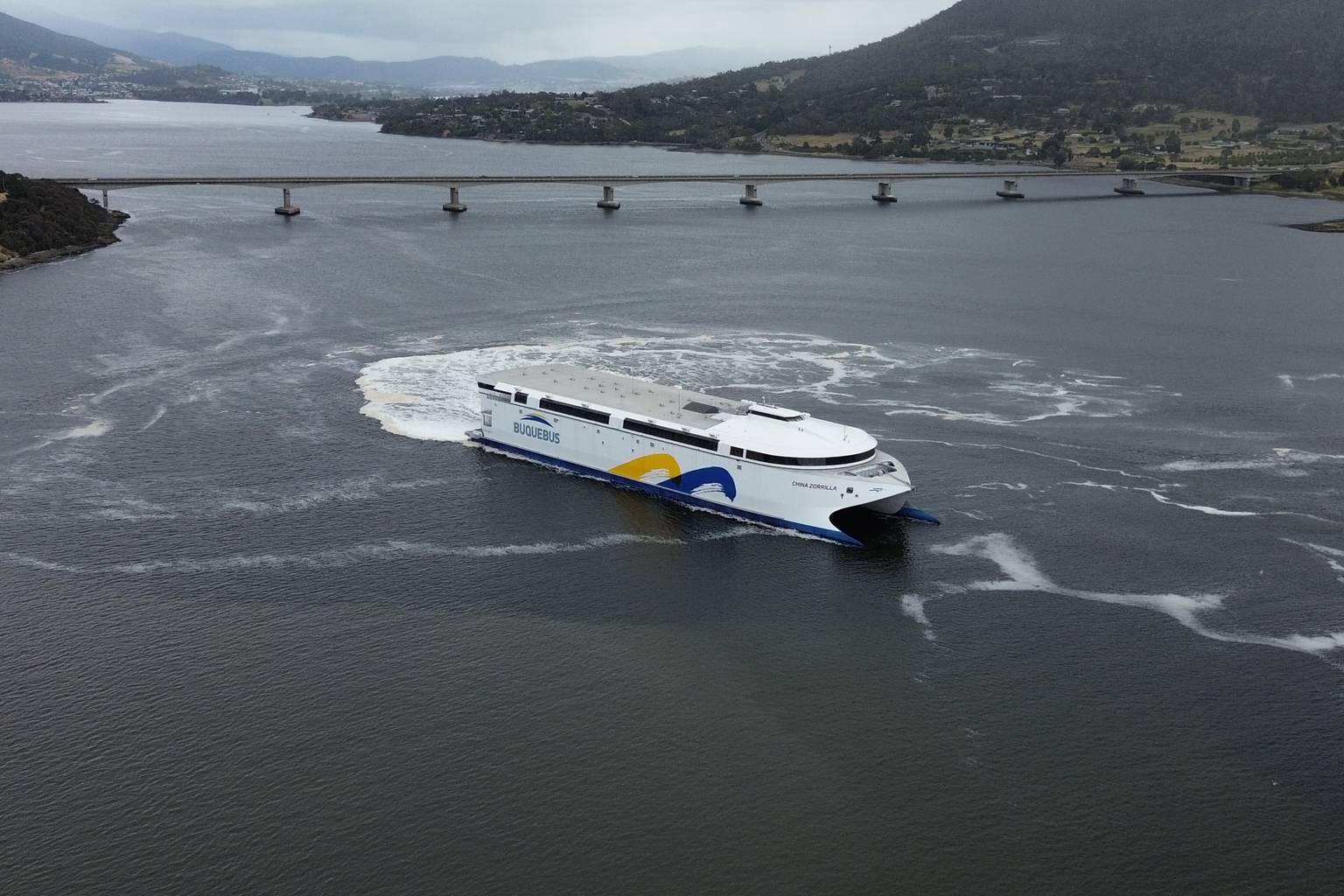
The harbour trials involve a carefully managed series of movements on the Derwent River, allowing engineers to assess how all systems perform together in water for the first time.
“Harbour trials allow us to test how all systems perform together in the water. It’s a significant step towards delivery and another major milestone in the evolution of sustainable shipbuilding,” Clifford said.
The trials form part of an extensive testing program that will continue in the coming months as the ship prepares for delivery to South America, where it will enter commercial service.