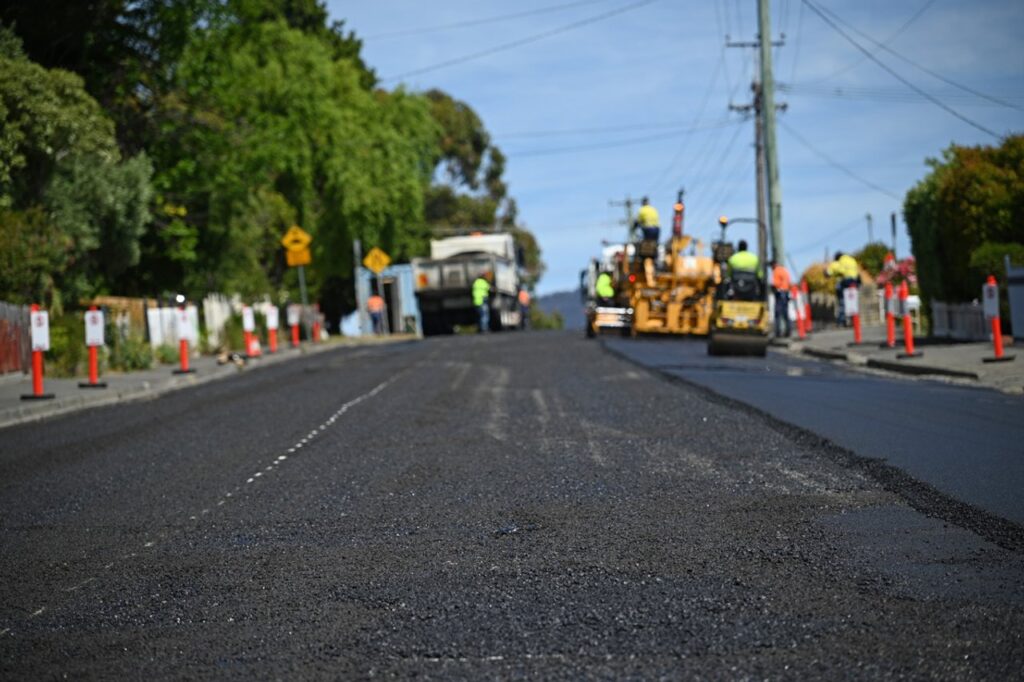
Road resurfacing has begun on Doyle Avenue in Lenah Valley, marking the first project in Hobart’s summer roadworks program.
The work, which started this week, is expected to be completed by the end of next week, before crews move on to Elizabeth Street in North Hobart.
The Doyle Avenue upgrade, between McCann Crescent and Giblin Street, will cost $650,000 and is fully funded by the federal government.
A second project on Elizabeth Street, covering the stretch between Elphinstone and Augusta roads, is also budgeted at $650,000, with the council contributing $203,787 and the federal government funding the remainder.
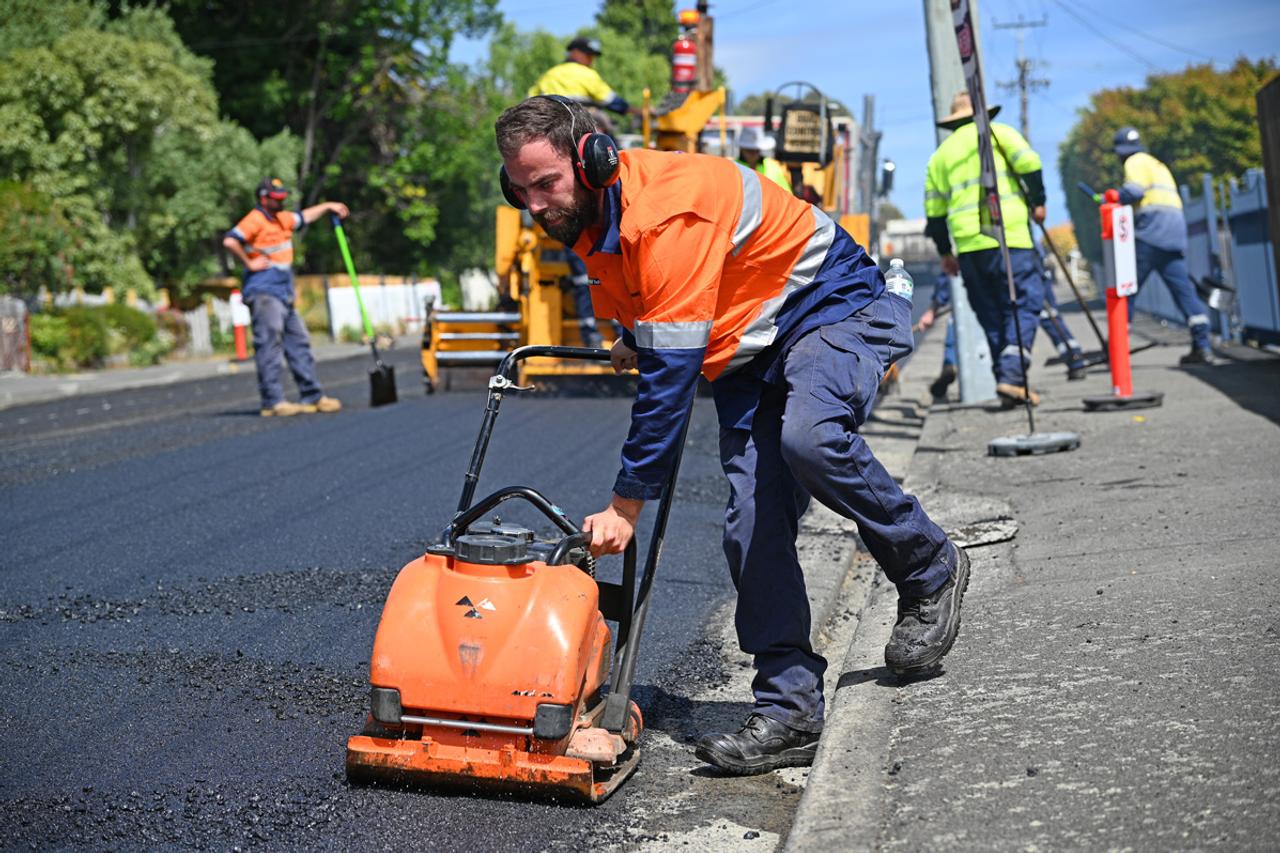
Both projects form part of a broader $1.93 million summer roadworks program across the city.
Lord Mayor Anna Reynolds said the council was stepping up resurfacing works over the warmer months.
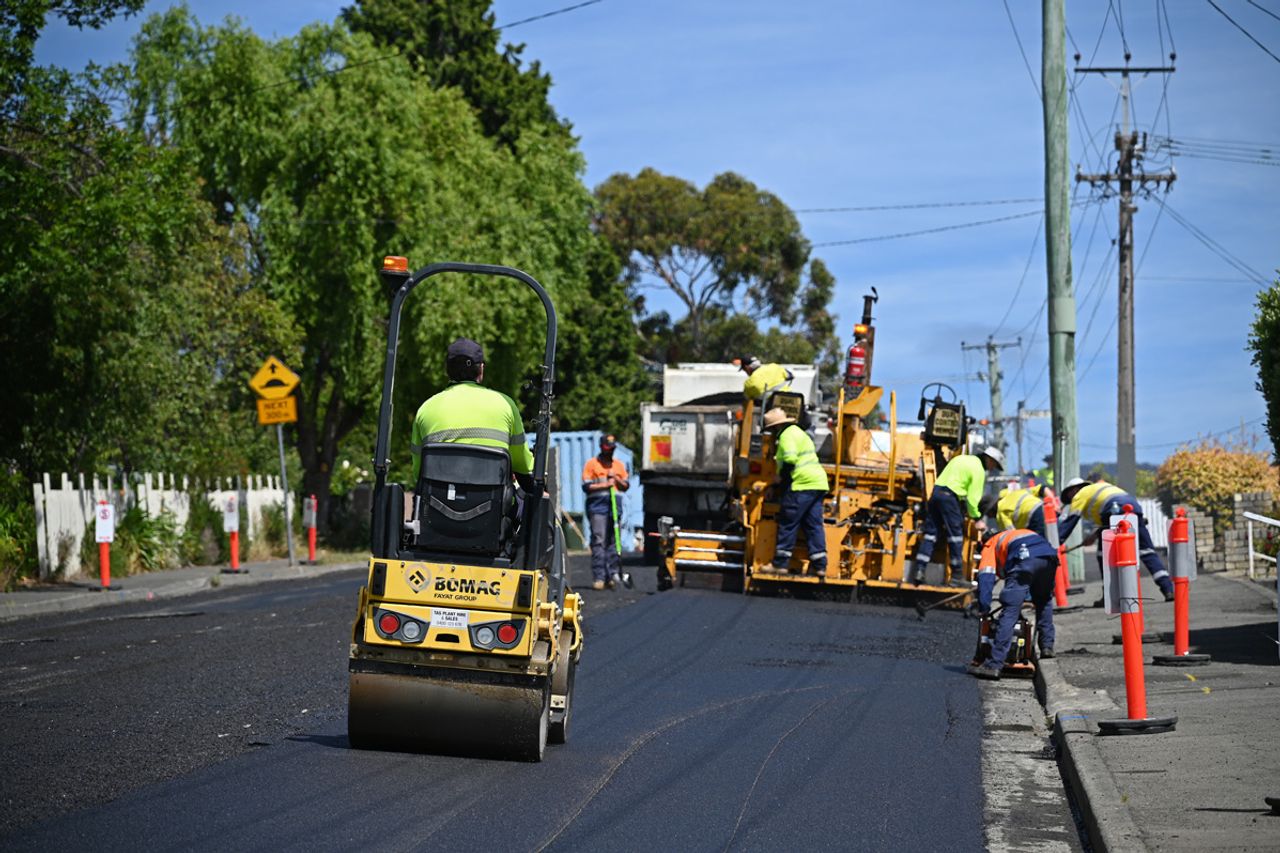
“Resurfacing roads stops potholes, cracks and hazards from forming and creates a safer road network in our city,” she said.
“The money we spend now on resurfacing important routes will result in major cost savings down the line.”
The council manages 248 kilometres of sealed roads and spends nearly a quarter of its infrastructure budget on road maintenance.
Reynolds said federal funding played a key role in supporting the program.
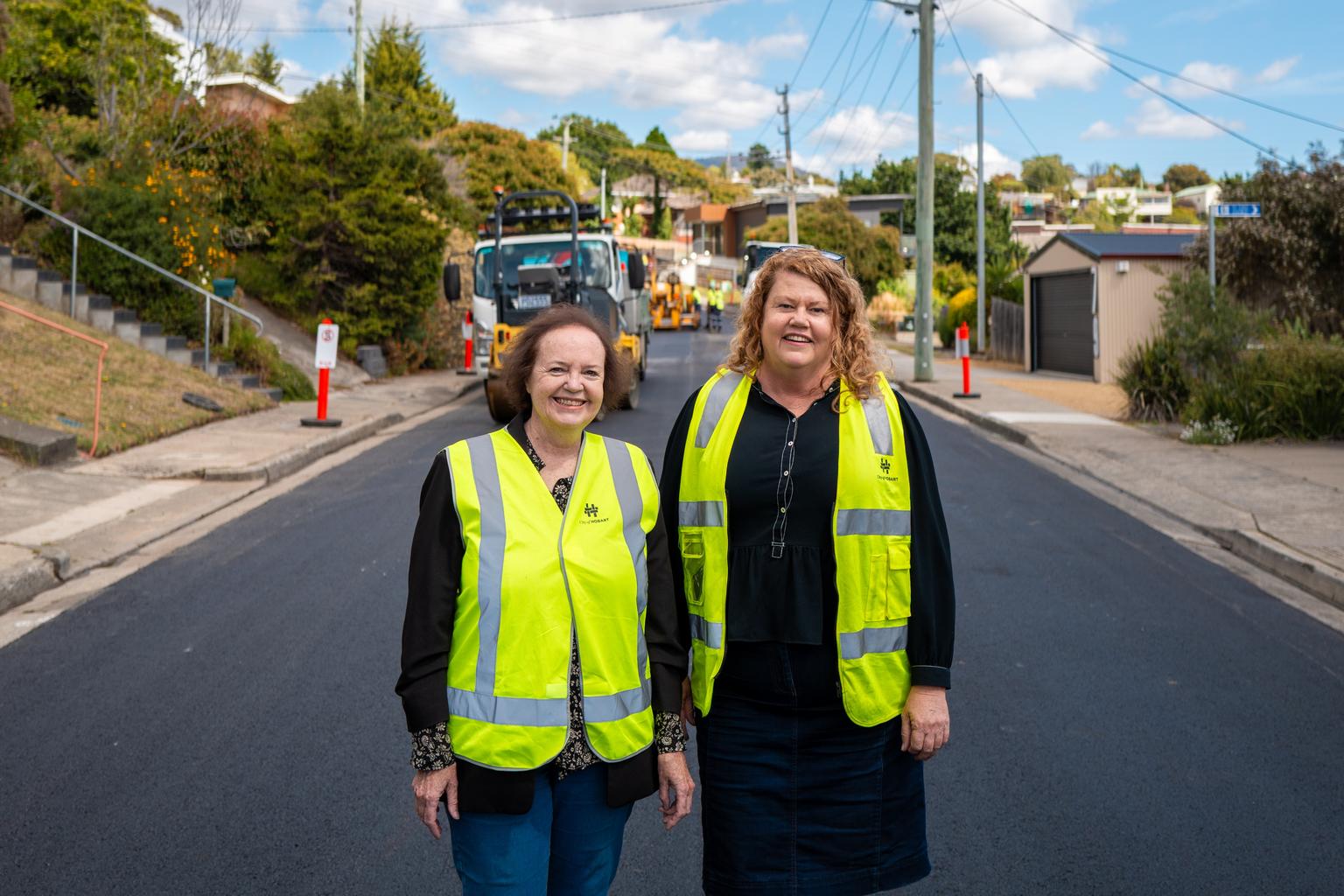
“While we’re already spending nearly a quarter of our infrastructure budget on roads, there’s always more we could spend, so this federal government contribution is welcome,” she said.
Senator Carol Brown said the investment was focused on practical, long-term outcomes.
“This work is about the basics – fixing worn road surfaces, repairing damage before it gets worse and making sure local roads last longer,” she said.
The federal government is progressively doubling ‘Roads to Recovery’ funding from $500 million to $1 billion a year.