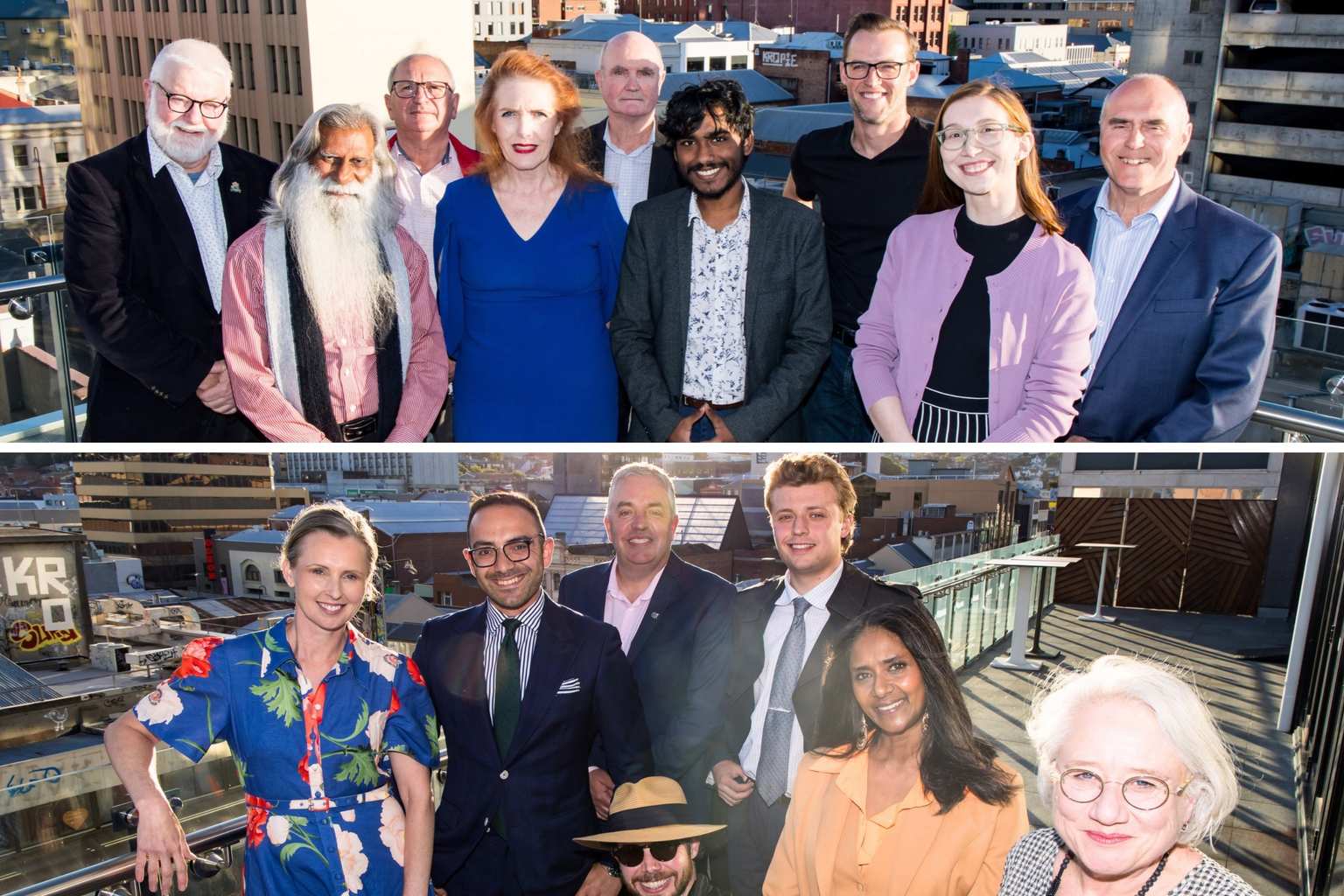
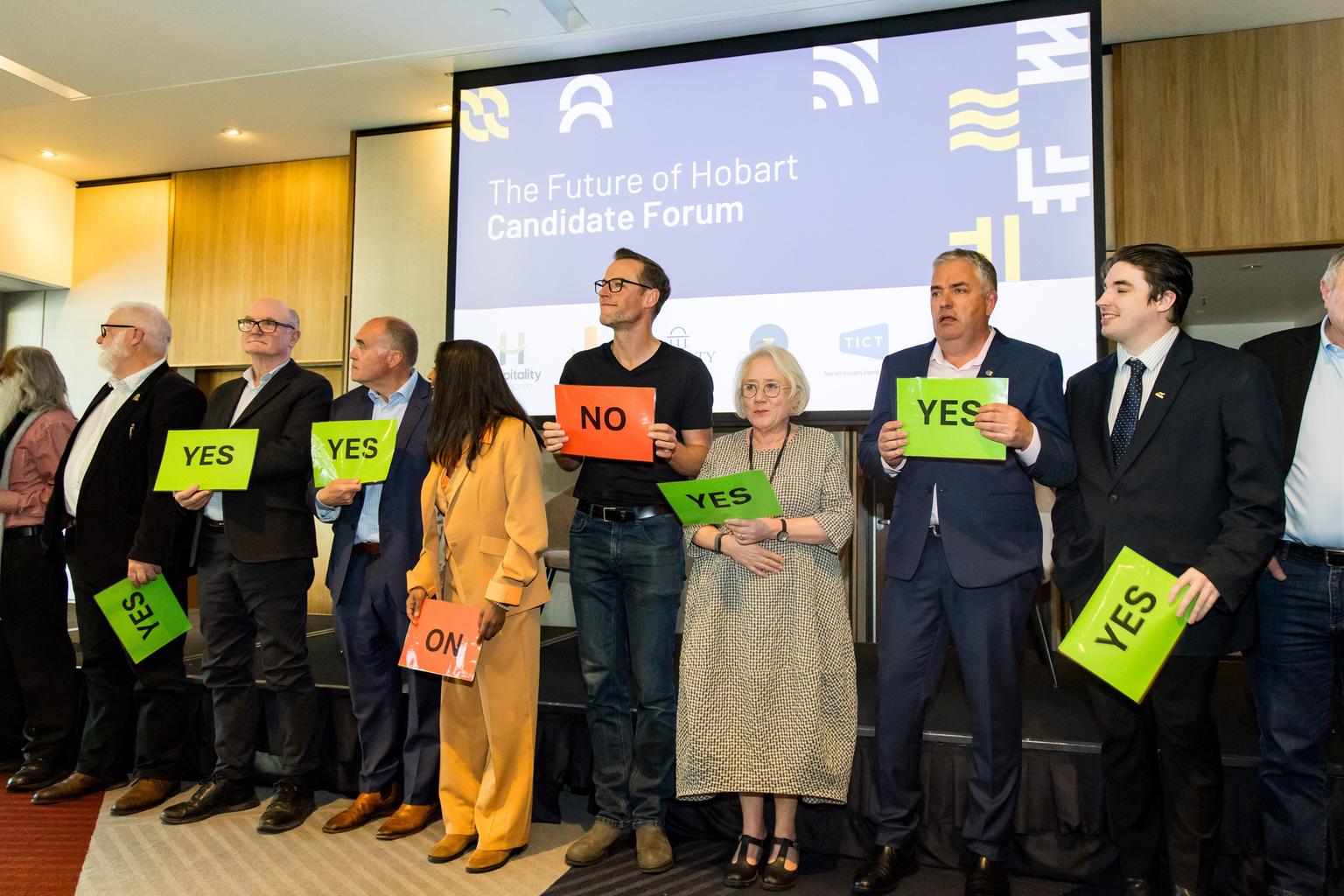
Candidates for Hobart lord mayor and deputy lord mayor have faced the city’s business and property community at a forum ahead of the Hobart City Council election.
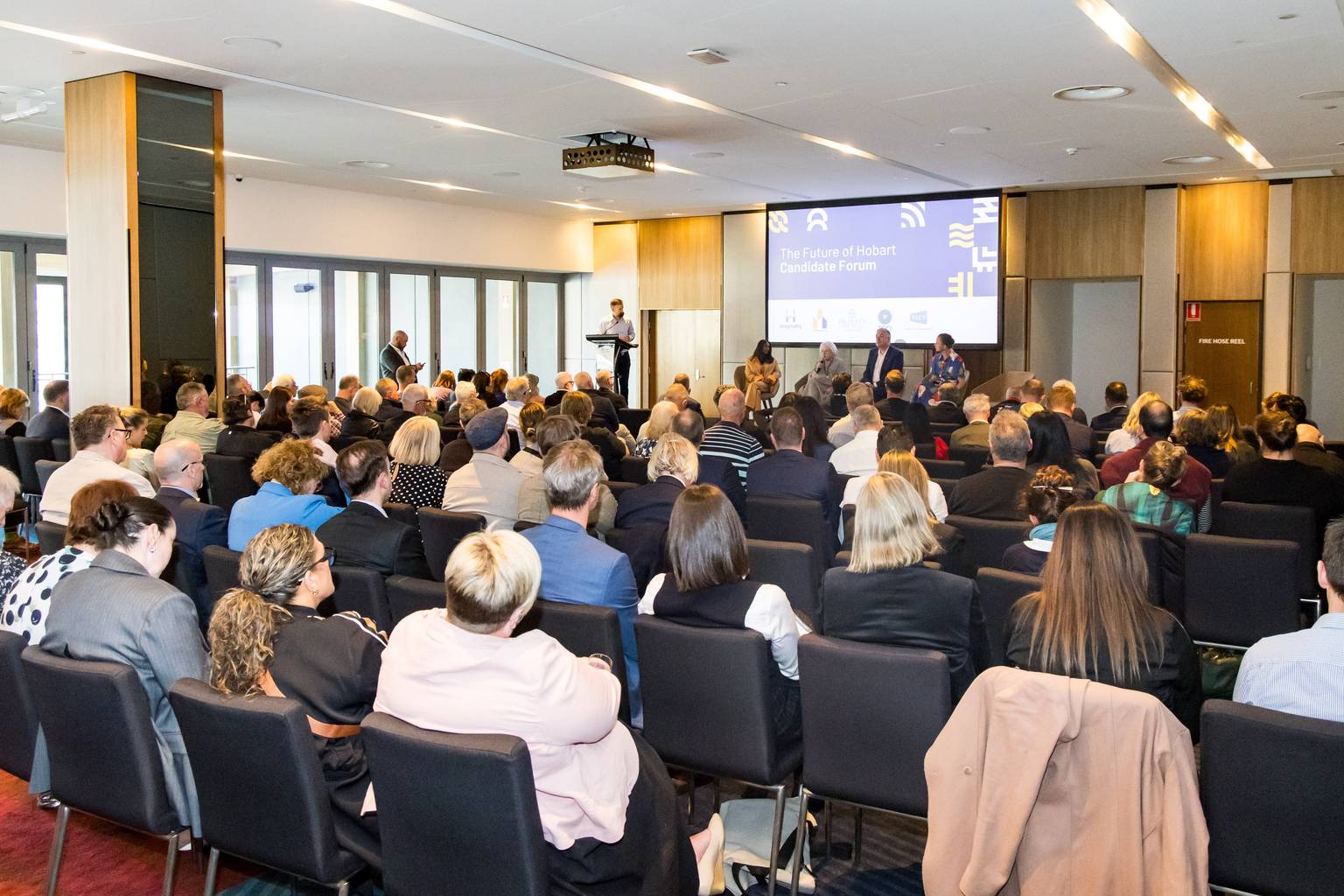
The Future of Hobart forum, held at the Crowne Plaza on Monday afternoon, was hosted by the Property Council of Australia and four other industry groups.
They were the Tasmanian Chamber of Commerce and Industry, Master Builders Tasmania, the Tourism Industry Council Tasmania and Hospitality Tasmania.
Property Council of Australia chief executive Mike Zorbas moderated, putting questions written by local business leaders on council spending, the city’s future and congestion.
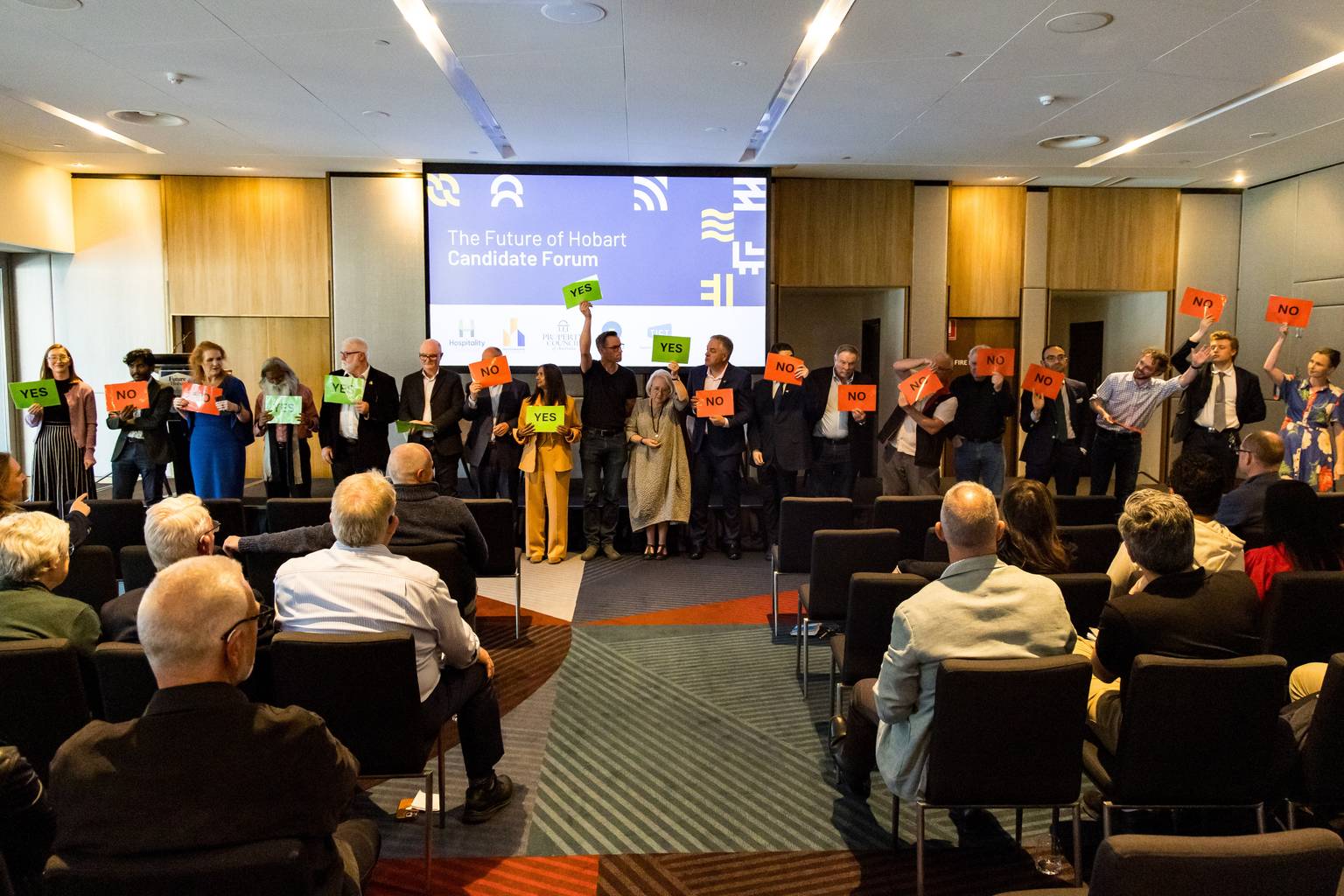
Each candidate gave a 60-second pitch, before audience members, including Master Builders Tasmania chief executive Jenna Cairney, asked how they would attract investment and revive the CBD.
The Collins Street bike lanes were a recurring point of debate, with the forum’s MC describing them as the “one issue really dominating this election”.

Marti Zucco promised to rip out the bike lanes on his first day as lord mayor, saying he would be “on the excavator driving down Collins Street”.
Zucco said rates had “killed” businesses and that council should not be running a surplus during a cost of living crisis.
John Kelly pitched his business experience, including his investment in the State Cinema, saying the CBD had “lost its momentum”.
He said transport was “the root cause of Hobart’s failures” and backed light rail as the solution.
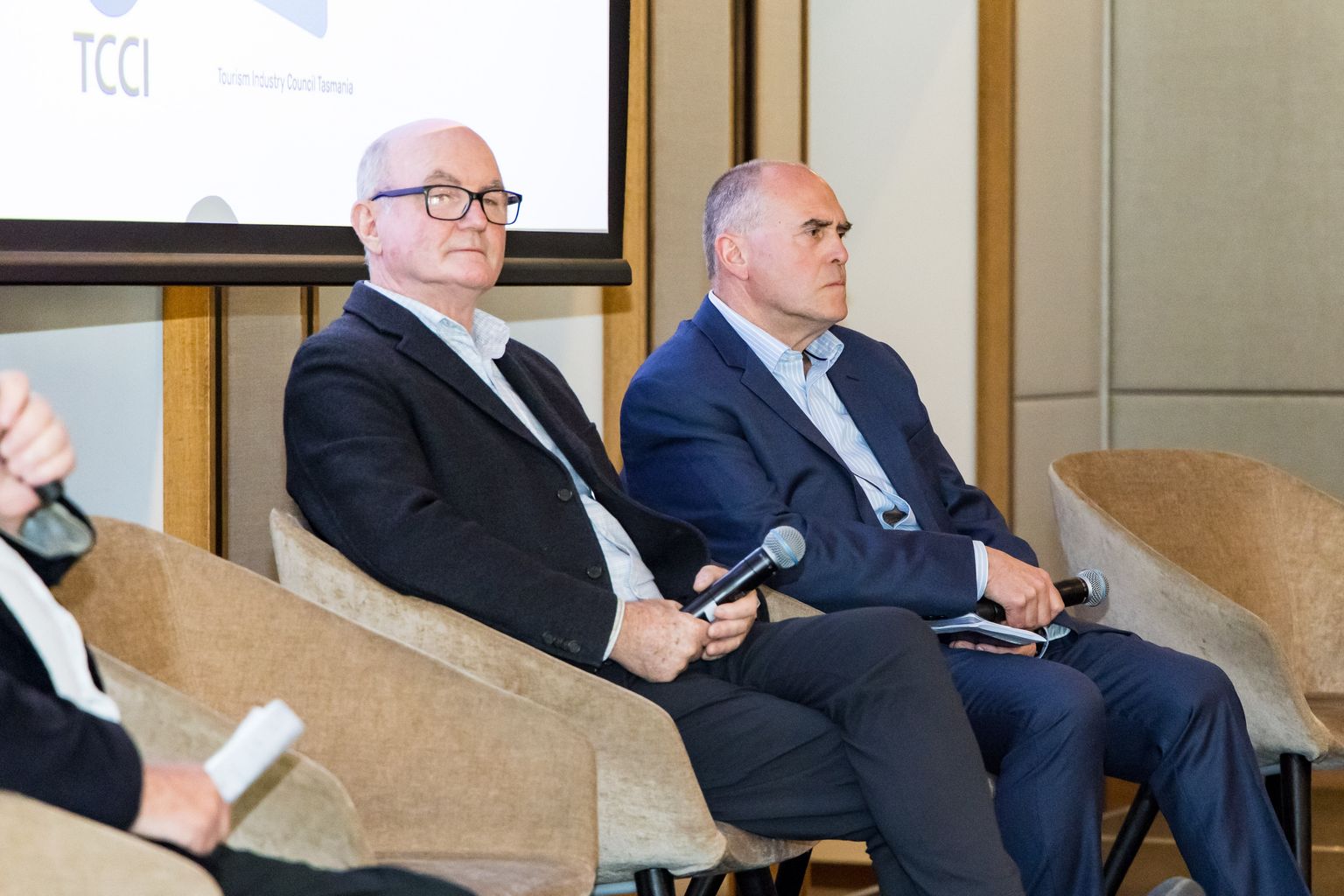
Ryan Posselt pitched a vibrant city with regular events and markets and more people living within walking distance of the CBD.
He said the state government provided 1.7% of Hobart’s budget, compared with 3% of Launceston’s. “Hobart is not getting a fair go,” he said.
Posselt defended the Collins Street trial, saying council data showed a 15% increase in cyclists and a 4% increase in pedestrians.
Greens councillor Bill Harvey, first elected in 2007, made lifting the tone of council his priority, saying he had never seen so much poor behaviour.
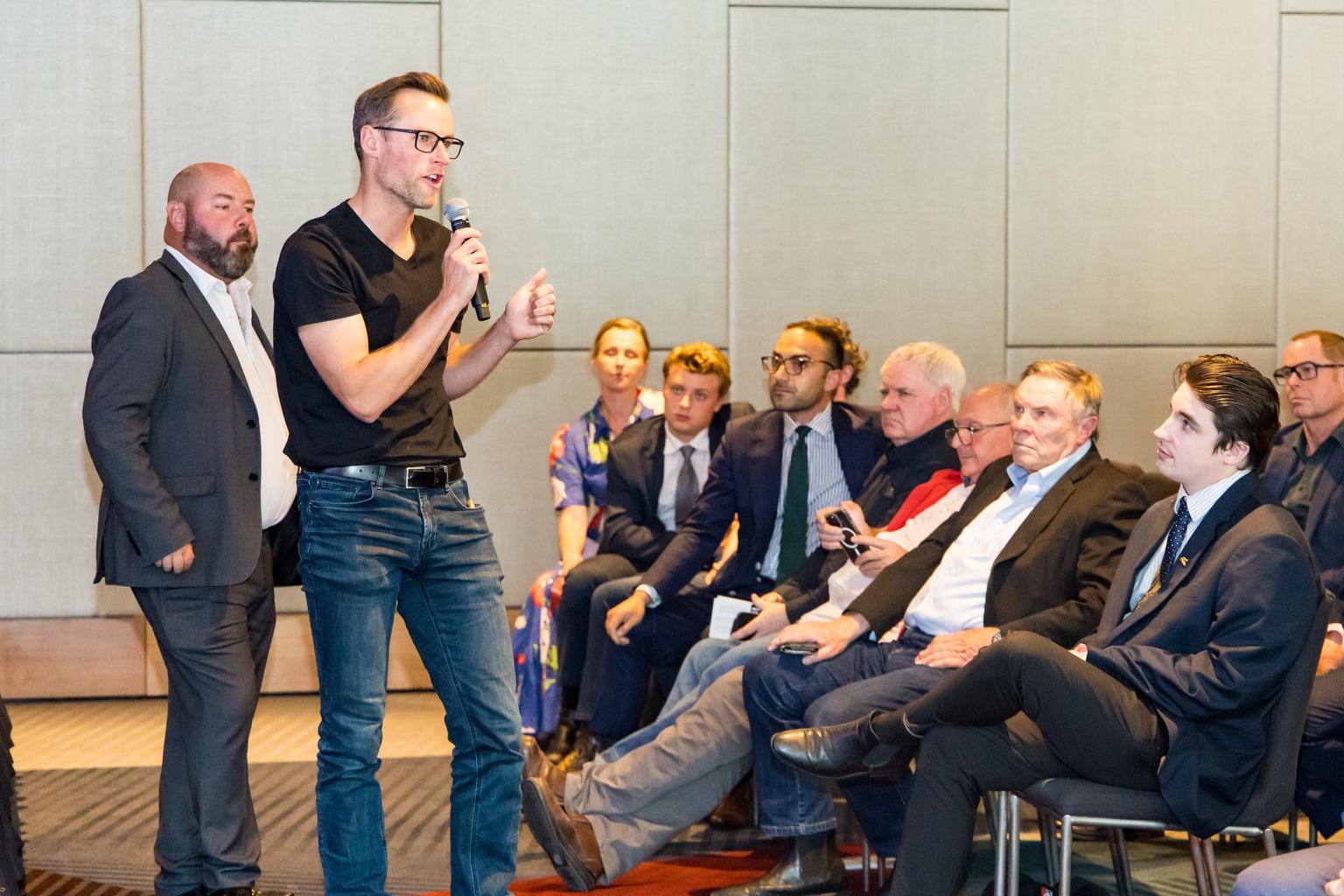
“If we don’t lift the tone, we’re going to run out of candidates,” he said.
Former RACT chief executive Harvey Lennon, standing as an independent, said council needed “a culture of respect” and closer ties with the state government.
Councillor Louise Bloomfield, an accountant and small business owner, said she wanted a Hobart where young people did not have to leave to succeed.
She called for a stronger economy, a thriving CBD and support for small business.
“I want our children to be able to build their futures here. I want them to grow up, to find good jobs here, to build careers here, to start businesses here and raise families here,” she said
Charles Wooley said a shop where he had bought shoes before the election was now closing down and called for council to “put the B back in the CBD”.
Rifatul Bari, who said he was running to be Hobart’s youngest lord mayor, said he would never say no to new housing developments.
He also campaigned on a safer and livelier nightlife, more night buses and cheaper parking.
Jack McShane said he would cut any council program or service that did not deliver a clear economic or social benefit.
Mike Dutta said migration supported small businesses and that he wanted to change the internal culture of council.
Tiffany Ashdown said her focus was the representation of women and people with a disability and protecting the environment as the city grows and innovates.
Among the deputy lord mayor candidates, Councillor Louise Elliot said ratepayers were “definitely not getting value for money” and that she would review all of council’s 330-odd services.
She criticised spending on the Collins Street bike lanes and scramble crossings, which she said “belong in Tokyo, not Hobart”.
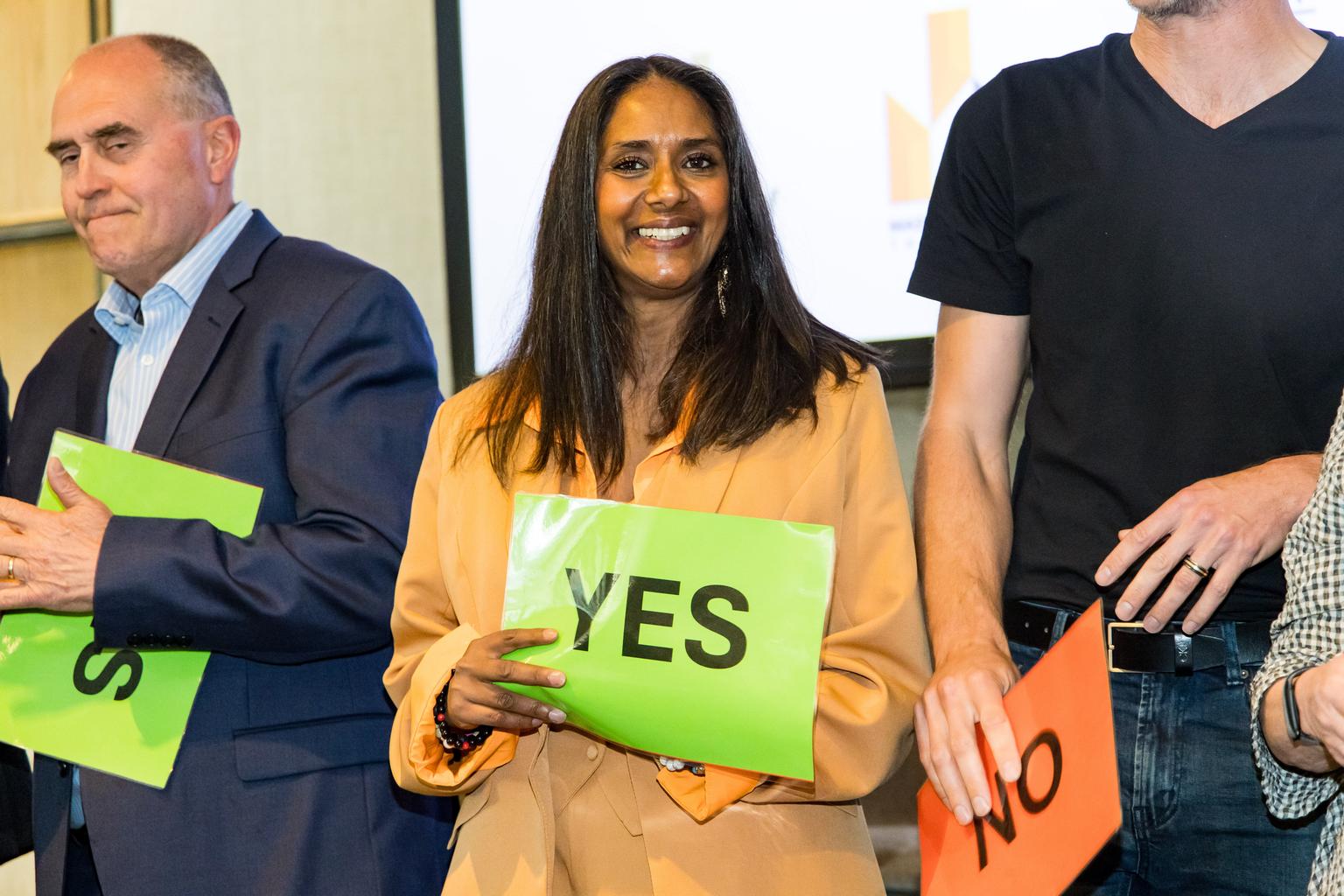
Deputy Lord Mayor Zelinda Sherlock said activating the city’s night-time economy would be a focus for her next term.
Former Liberal MP Simon Behrakis said Hobart had been named the hardest city in Australia to build a new home and called for a council that was going to “help get more housing approved, not stand in the way of it.”
Susan Wallace, a spokesperson for the Yes in My Backyard group, called for denser housing and a taskforce to build exemplar medium-density projects.
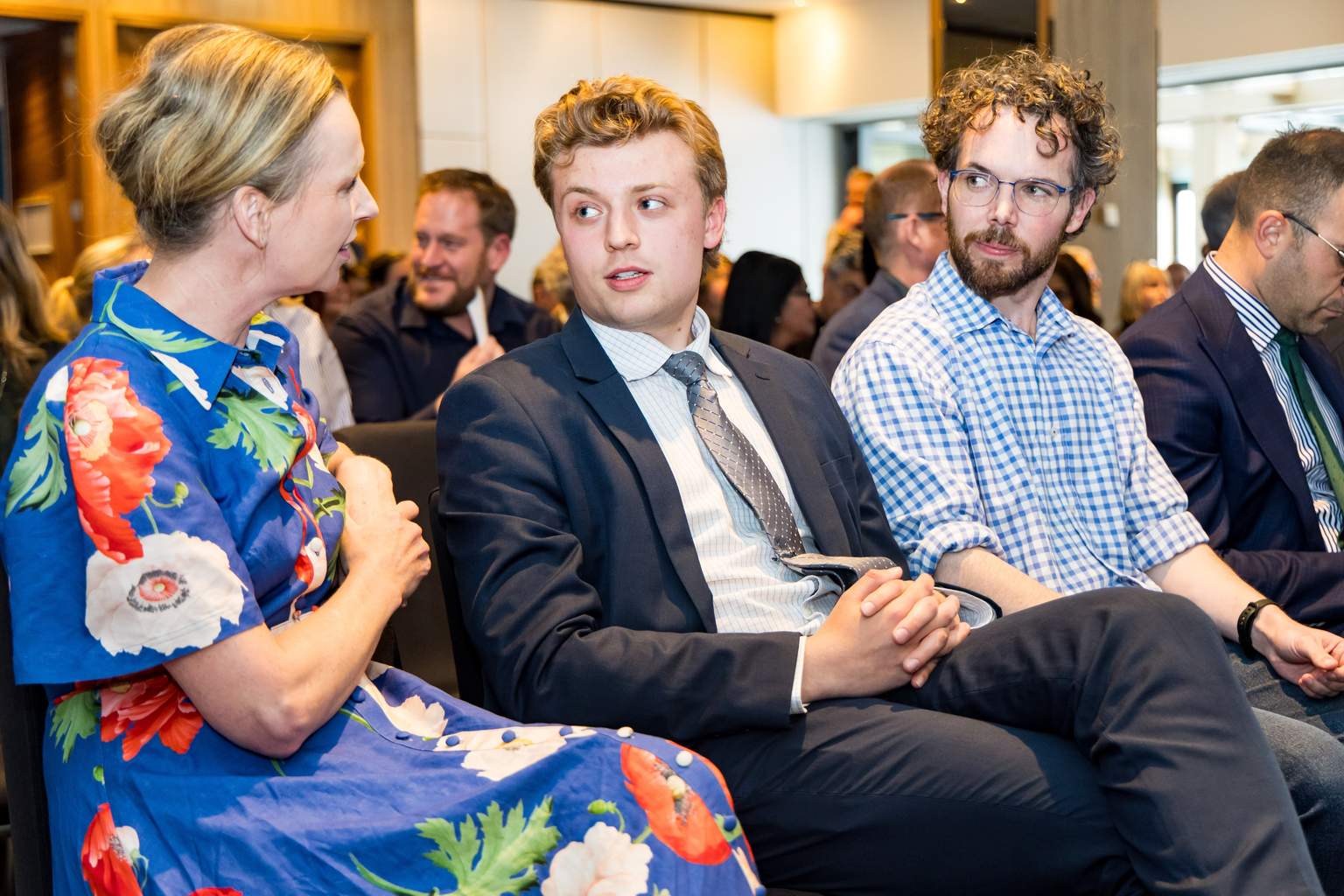
Lee Alderton, who worked at the City of Hobart for 34 years, said he would bring “honesty, common sense and respect” back to council.
Self-described socialist Sam Campbell said he may have “walked into the lion’s den”, campaigning on fair rates, homes for Hobart and better buses.
Jason Dale, the youngest candidate in the room, said the CBD had a commercial vacancy rate of more than 12% and called for better public transport.