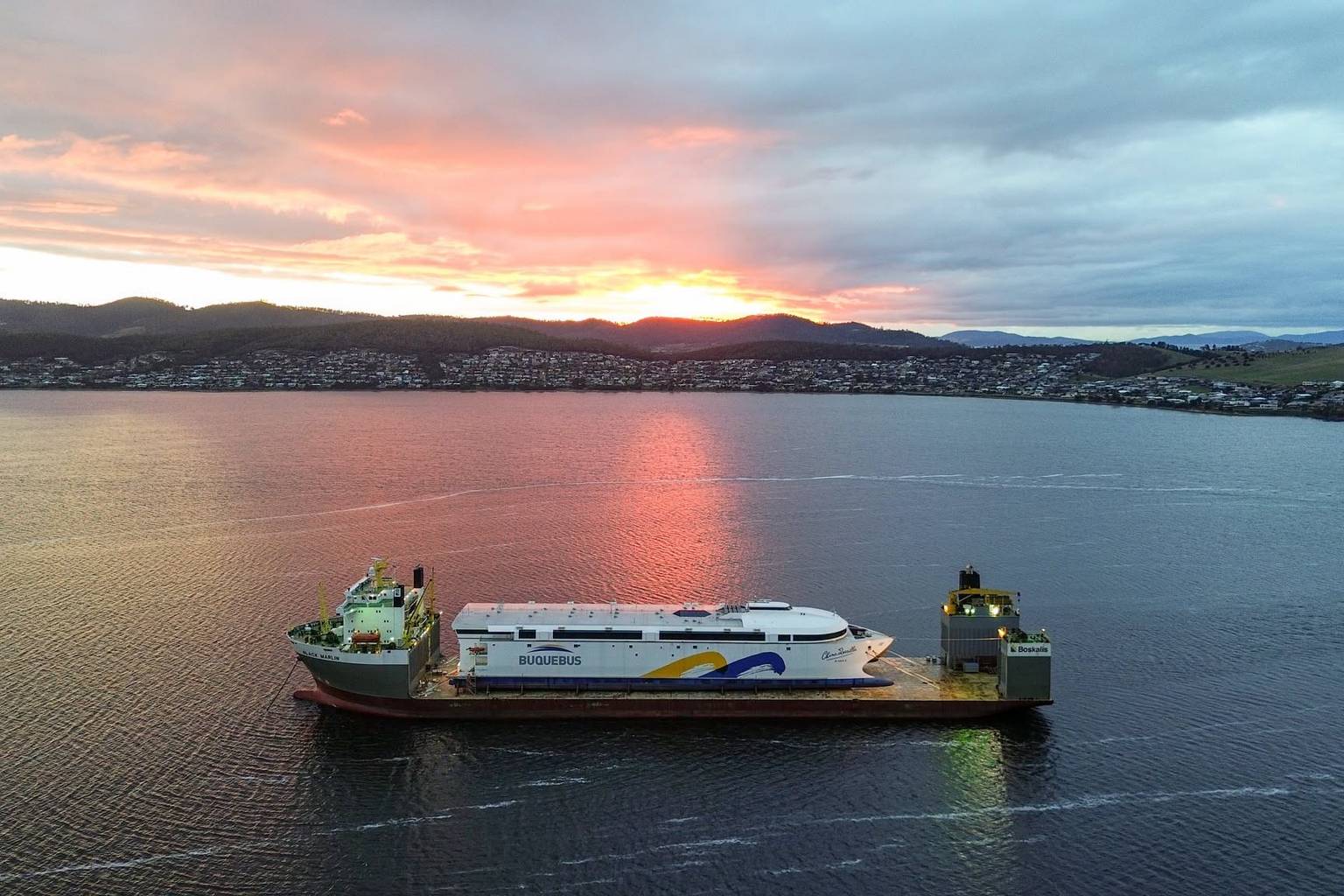
Incat’s record-breaking battery-electric ferry will not leave Hobart today as planned, with the departure pushed back until tomorrow as final works to secure the vessel to heavy-lift ship Black Marlin continue.
Hull 096 was expected to depart the River Derwent at 4pm today for its 40-day journey to South America, but crews are still completing preparations for the long ocean crossing.
The delay is not weather-related.
Tom Cooper, Incat’s head of public relations and corporate affairs, said the operator of Black Marlin was taking extra time to ensure everything was ready.
“Our understanding is that final works to secure Hull 096 to Black Marlin’s cargo deck are continuing, with the operator taking the time to ensure all preparations for the voyage are completed thoroughly before departure,” he told Pulse.
Cooper said the timing was not up to Incat.
“The decision on the departure is done by the Black Marlin operator so we don’t have any say on it, we just get told what the latest scheduled departure times are,” he said.
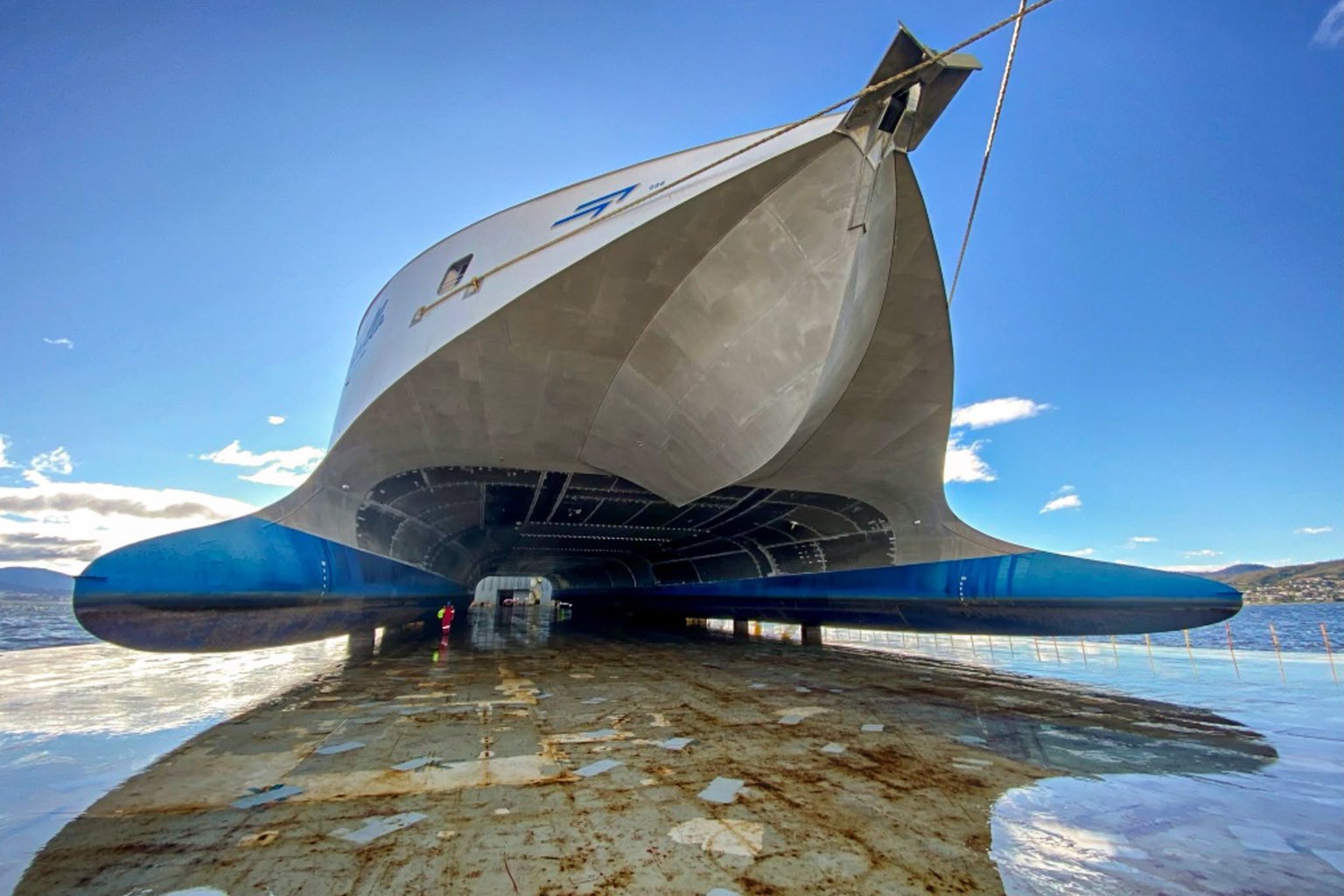
Crews have spent several days welding braces to lock the ferry to Black Marlin’s cargo deck ahead of the crossing.
The 130-metre catamaran cannot make the journey under its own power because its battery system provides only about 90 minutes of operating time.
Cooper said the ship would travel north of New Zealand before crossing the Pacific to Buenos Aires, with the voyage expected to take about 40 days depending on conditions.
“If it’s smooth sailing the whole way, they’ll get there a bit quicker,” he said.
“If it’s a bit rougher, they’ll slow down, just to be cautious.”
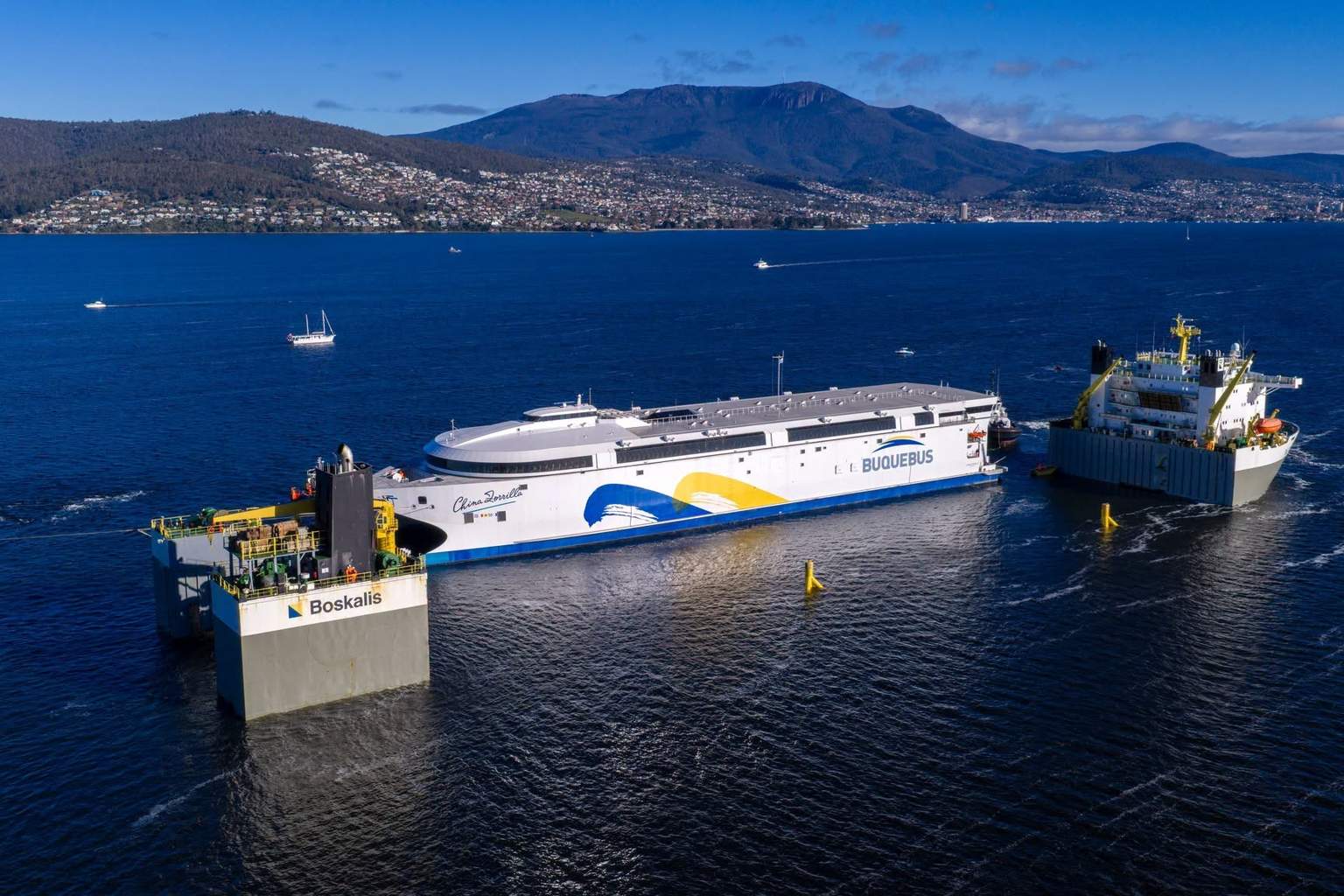
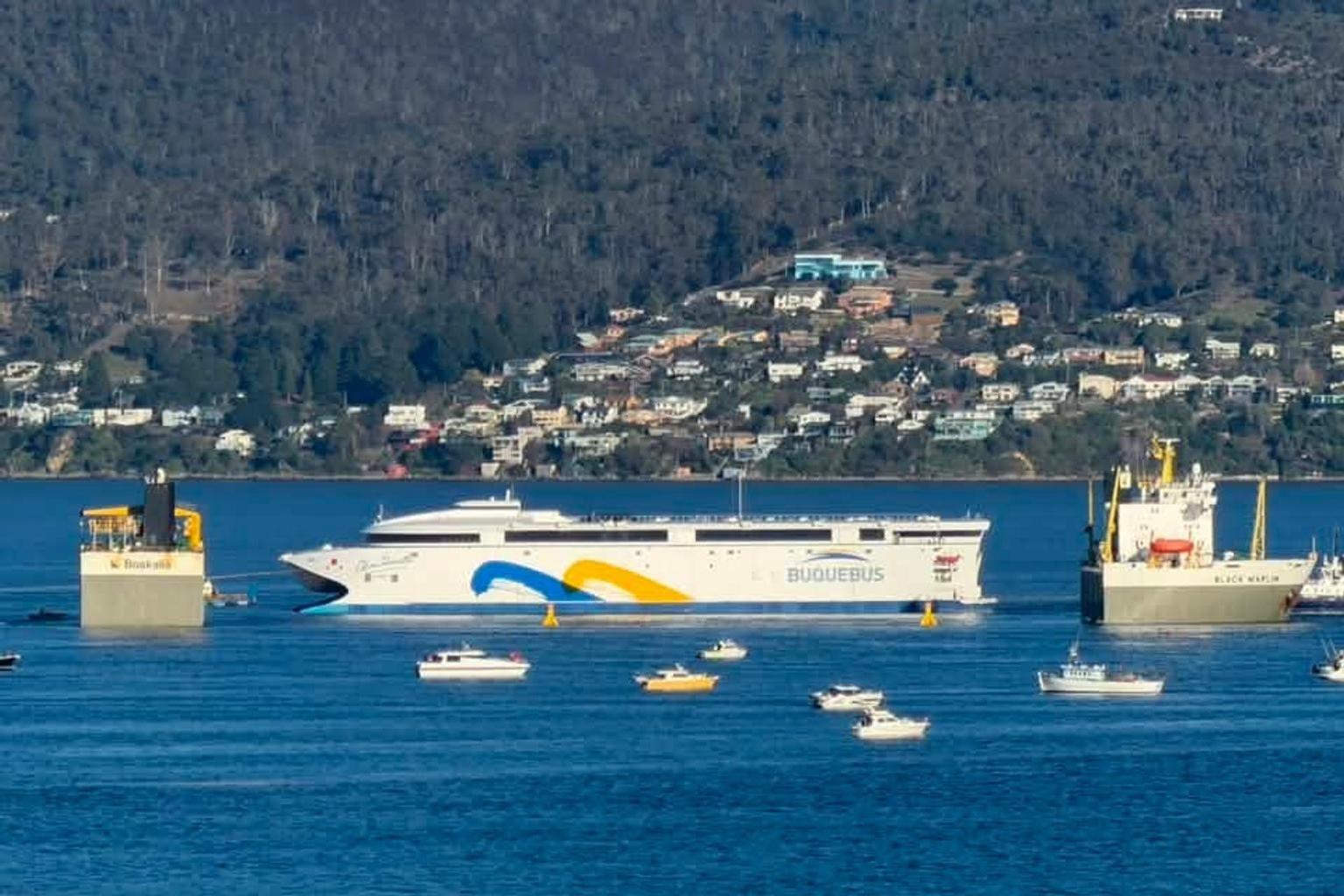
The loading of Hull 096 onto the semi-submersible Black Marlin last week drew large crowds to the River Derwent foreshores during one of Tasmania’s most complex maritime operations.
Cooper said global interest in the project had exceeded the company’s expectations.
“We knew it was going to be a point of interest given this has never been done in the River Derwent before and given it’s the world’s largest electric ship,” he said.
Infrastructure Minister Kerry Vincent said the project showcased Tasmania’s innovation to the world.
“It must be incredible for the Clifford family and what they’ve achieved and the potential of what they can do in keeping manufacturing in Tasmania and Australia is huge,” he said.
Once delivered, the vessel will operate as China Zorrilla for Buquebus, carrying up to 2,100 passengers and 225 vehicles between Argentina and Uruguay.