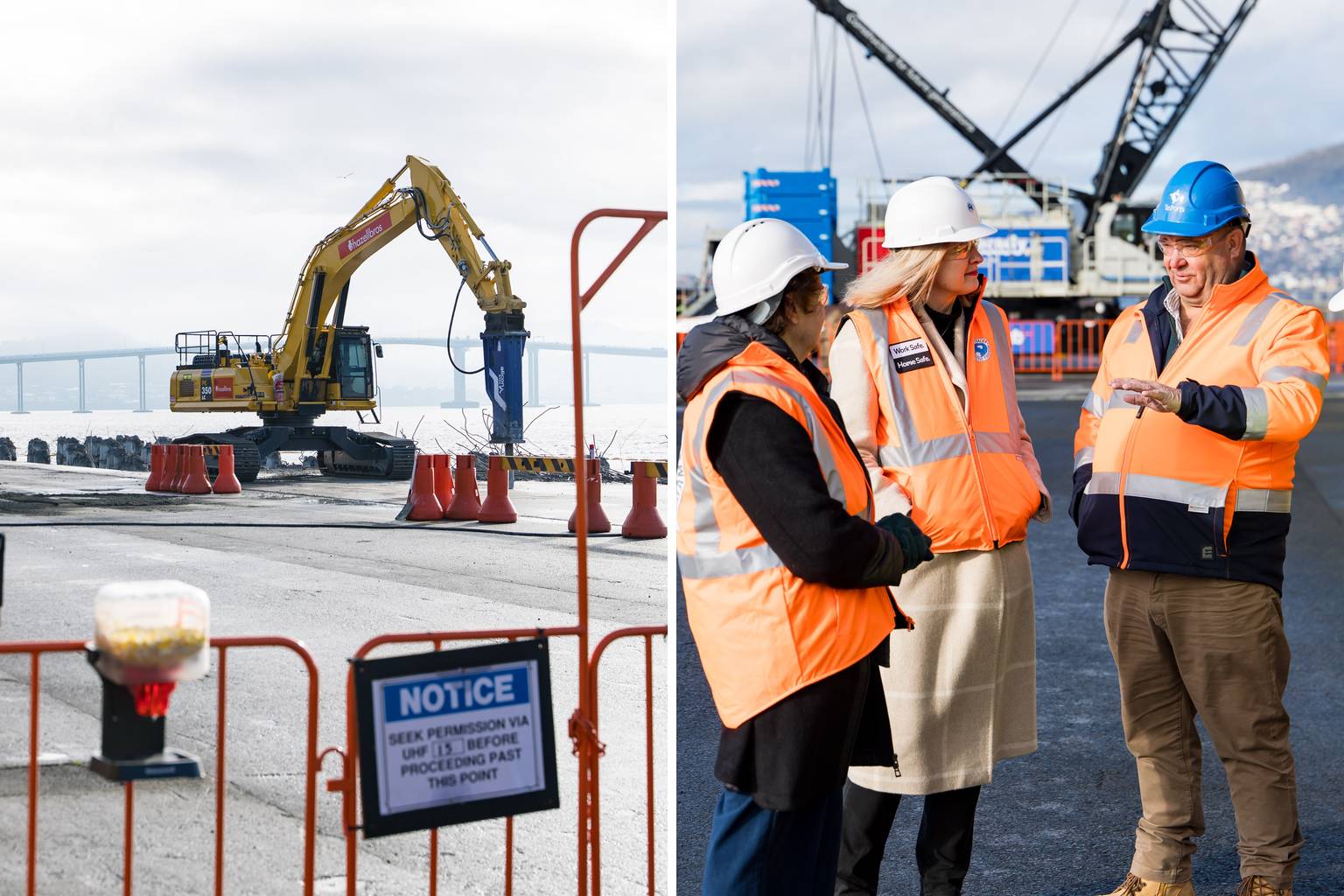
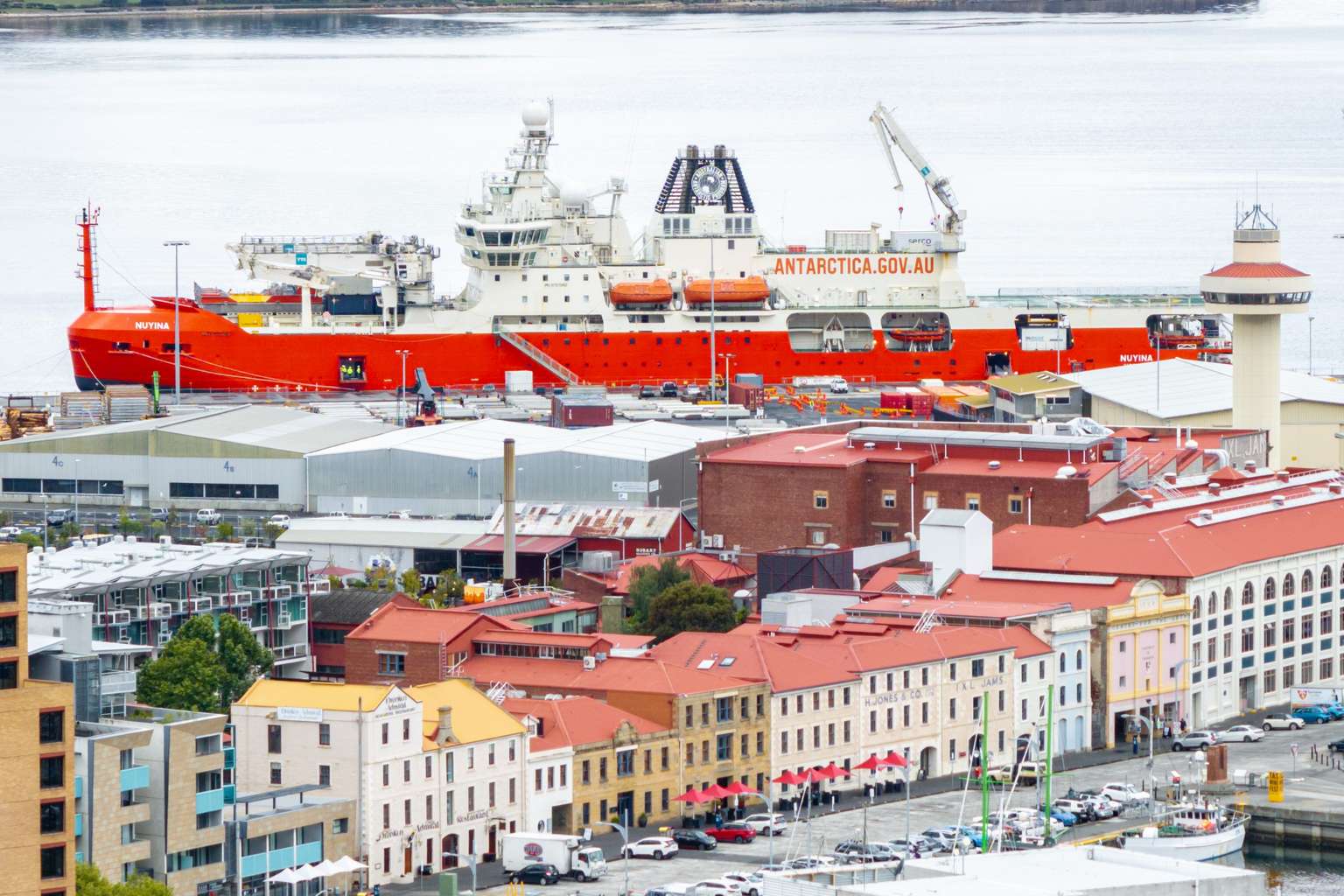
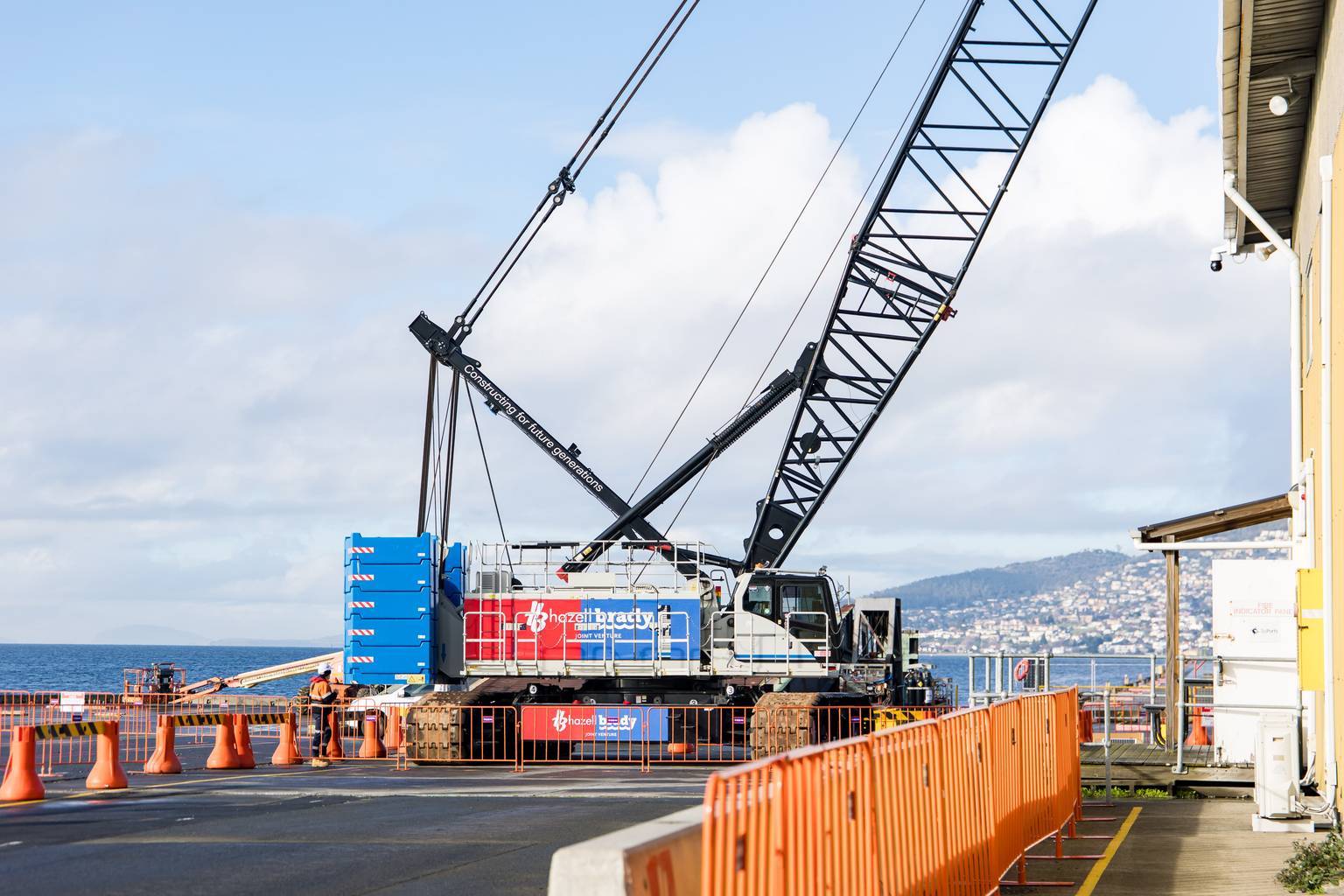
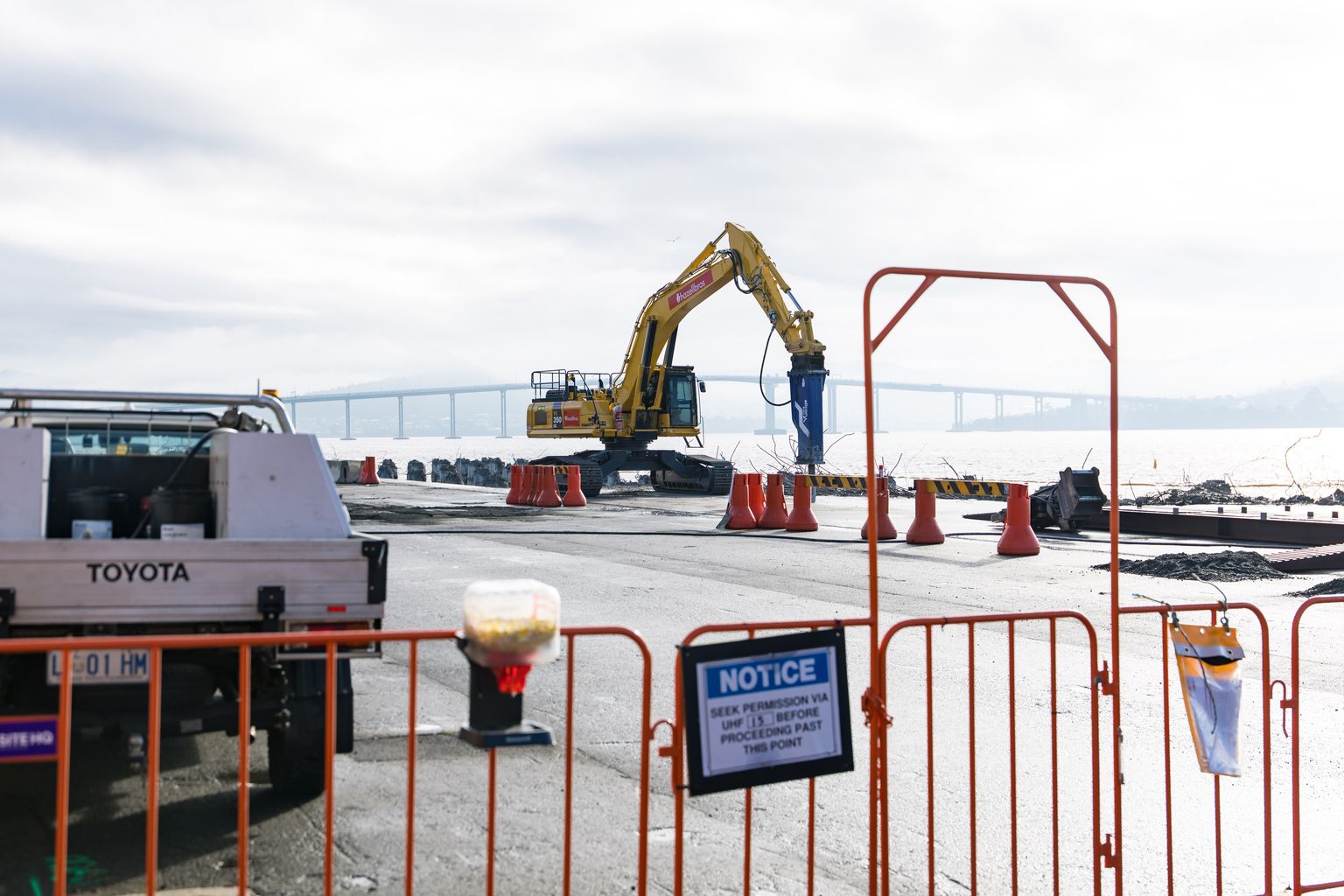
Demolition of Macquarie Wharf 6 is underway at the Port of Hobart, with more than 12,900 tonnes of concrete, steel and timber to be dismantled over the next five months to make way for a new home berth for Australia’s icebreaker RSV Nuyina.
The work marks the first stage of the broader Macquarie Wharf Redevelopment Project, one of TasPorts’ largest infrastructure investments, backed by $188 million in funding from the federal government.
Hazell Brady Joint Venture, a partnership between Hazell Bros and Brady Marine, was awarded the redevelopment contract in December 2025 and is carrying out the demolition in sections to prioritise safety and minimise environmental impact.
Federal Franklin MP Julie Collins said the investment secures Hobart as the country’s Antarctic gateway.
“The fact that the Antarctic Program will be here for years to come because of this investment is really significant indeed,” Collins said.
“Hobart is a crucial hub for Antarctic and Southern Ocean science in Australia.”

State Infrastructure Minister Kerry Vincent said the project would deliver long-term benefits well beyond the icebreaker’s berth, with upgrades to wharves 4 and 5 to follow for larger cruise ships and cargo vessels.
“You have to remember 40, 50, even 100-plus years ago when some of these walls were built, technology and pylons weren’t as strong as what it is now,” Vincent said.
He said heavier containers, bigger forklifts and larger ships meant the upgraded working deck needed to handle far more weight than the 1970s structure was built for.
TasPorts CEO Allan Gray said the demolition was around 35% complete and on track for practical completion by August 2028.
Wharves 4 and 5 are expected to take another 12 to 18 months beyond that.
Specialised equipment including a 280-tonne crawler crane has been deployed, along with excavators fitted with rock breakers, shears and pulveriser attachments.
Custom-built barges sit beneath the wharf deck to capture falling material, which is then removed and recycled on land.
Environmental controls including silt curtains and marine-life monitoring are in place to protect the River Derwent.
Under the funding agreement, the federal government is providing the capital while Tasmania takes responsibility for operating and maintaining the wharf for 30 years.
Gray said TasPorts is also exploring shore power systems for the upgraded wharves, which would make it the first common-user, multi-user berth with that capability.
He said Hobart faces competition from other Australian and overseas ports to remain the Antarctic gateway, but said Tasmania offers more than just infrastructure through partnerships with the University of Tasmania and the Australian Antarctic Division.
Vincent said a decision on the Nuyina’s refuelling solution, an outstanding issue given the vessel cannot pass under the Tasman Bridge, was close – with both barge-based and shore-based options under final assessment.