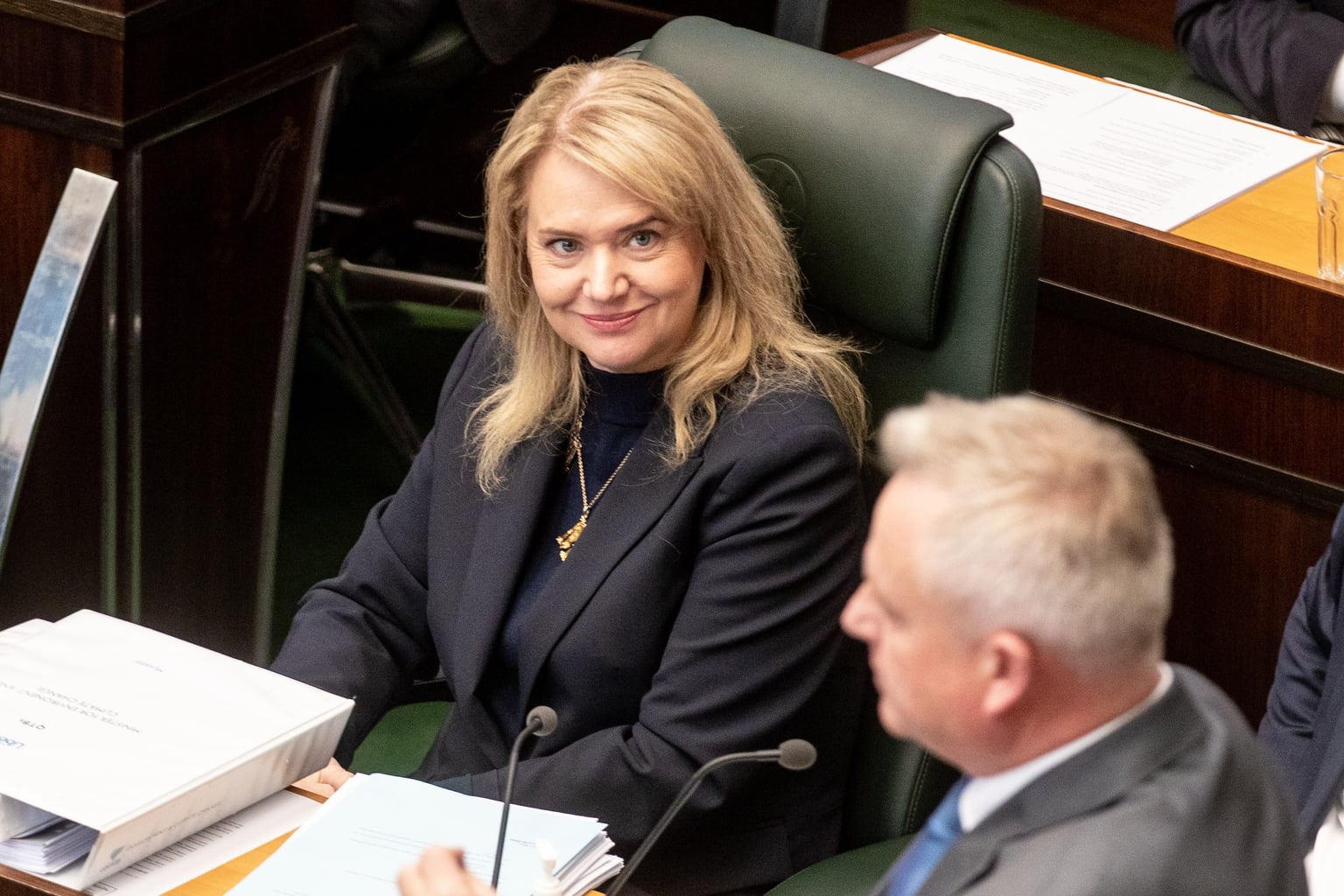
The public may never find out how the Integrity Commission’s investigation into former Tasmanian government minister Madeleine Ogilvie ends, her lawyer has told a parliamentary committee.
Senior counsel Chris Gunson told the Joint Standing Committee on Integrity on Monday that the Supreme Court ruled last week that the commission cannot table investigation reports in parliament.
Tabling is how the commission makes its reports public.
Gunson said the court found the commission’s board is limited to its decision-making powers under section 58 of the Integrity Commission Act.
“It’s not really open justice at that point,” he said.
He suggested the commission could instead send reports to the committee, which could then decide whether to publish them.
The investigation, known as Olegas, is now waiting on a decision by the commission’s board.
Gunson said the main allegation was a conflict of interest over Ogilvie’s 2021 election promise to fund a pontoon at a rowing club her daughter belonged to.
He said a commission investigator also believed she should have declared a conflict when the budget bill, which included about $12 million in election commitments, was debated.
Gunson said no conflict existed and compared it to a minister approving a new overtaking lane on the Midland Highway.

“They’ve got a conflict of interest because it means they’ll get from Hobart to Launceston a bit quicker,” he said.
“That’s the type of level which is not, as a matter of law, a conflict of interest.”
He told the committee Ogilvie’s side asked for the suppression orders that kept her court case secret, but only because of the commission’s confidentiality rules.
“Not because the applicants involved wanted to hide what was going on, but rather because the Integrity Commission had imposed strict confidentiality requirements,” he said.
He said the commission chooses to make everything confidential and is not required to.
“I don’t think it is necessary to be imposed in every matter,” he said.
Gunson said a minister under investigation cannot respond while opposition and crossbench MPs can say what they like.
“It leaves a minister potentially hamstrung,” he said.
“It can have extreme results … Ms Ogilvie was obviously compelled to resign as minister for what, when we see as the ultimate investigation, is fairly minor, if any, conduct that could constitute wrongdoing.”
Ogilvie quit cabinet on May 30 after admitting she had wrongly told parliament she was not a party to any Supreme Court case.
Parliament later censured Premier Jeremy Rockliff for failing to make her correct the record. Taxpayers have paid $120,000 of her legal fees.
The committee’s inquiry into the commission’s confidentiality rules is continuing.