
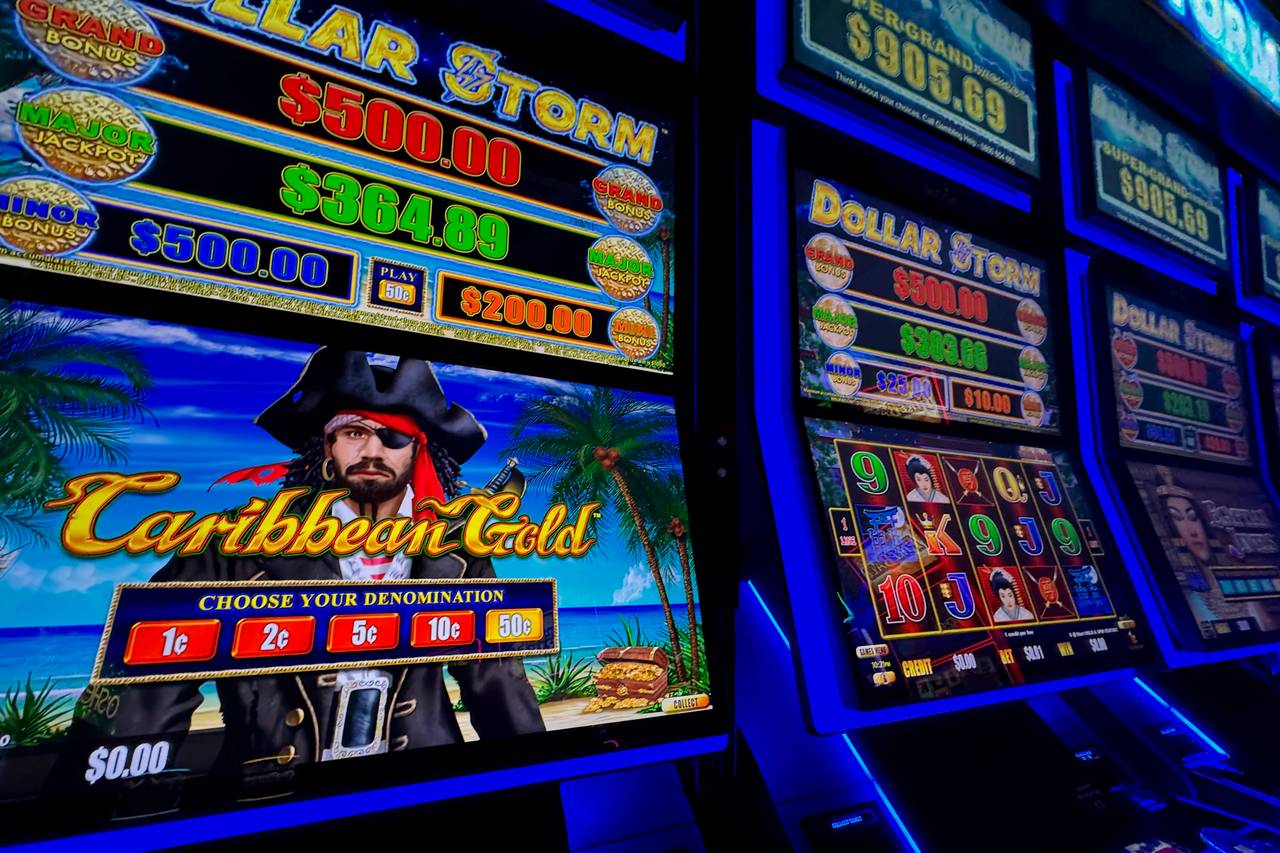
Research commissioned by the Tasmanian government has found its now-shelved gaming machine reforms could have boosted the state’s economy by $230 million and created more than 200 jobs.
The Deloitte Access Economics report, completed in December 2025, modelled the impact of mandatory player cards with loss limits of $100 per day and $5,000 per year.
The government has halted the reforms indefinitely in favour of new measures that do not include binding spending caps.
The report found net economic benefits under all three scenarios, based on different assumptions about player behaviour, with projected gains ranging from $153 million to $240 million.
The best-case scenario assumed many gamblers would not register for cards and would shift to less harmful gambling, delivering $240 million and 238 jobs.
The central scenario assumed most players would register, with some reducing spending due to limits while others spent more due to the convenience of cashless gaming, delivering $230 million and 209 jobs.
Even the most conservative scenario – which assumed cashless gaming would encourage more spending – still delivered a $153 million benefit and 126 additional jobs.
“Across all scenarios, reforms are expected to lift Tasmania’s GSP and net employment, relative to the state’s economic baseline,” the report stated. “This finding holds across each of the three scenarios.”
The research found Tasmania has approximately 1,785 problem gamblers and 7,586 moderate-risk gamblers using poker machines.
Each problem gambler costs the state roughly $20,000 a year through health services, justice costs and lost productivity.

The total cost to government from gambling-related harm is estimated at $88 million annually.
Mandatory loss limits would reduce the number of problem gamblers by up to 560 people, according to the modelling.
The median problem gambler currently loses $200 per session, meaning a $100 daily cap would halve their losses.
The report found money not spent on poker machines would instead flow to other industries that employ more workers.
Food and beverage businesses create 8.3 jobs per $1 million in sales, compared with just 2.3 jobs from gambling revenue.
All 29 local government areas would experience neutral or positive economic impacts, with Launceston, Hobart and Glenorchy expected to see the largest gains.
The report examined evidence from Norway, where similar reforms saw poker machine participation fall sharply from 19% to 2%.

The research noted that voluntary pre-commitment systems consistently failed because not enough people used them.
“The evidence for mandatory pre-commitment is stronger,” the report stated.
The analysis also found poker machines are disproportionately concentrated in disadvantaged communities across Tasmania.
The government deferred the player card system in November 2024, more than a year before the Deloitte report was finalised.
At the time, it cited a separate MaxGaming report warning of implementation delays and cost blowouts.
Treasurer Eric Abetz today said the government would “continue to monitor progress interstate of the pre-commitment gaming card”.