Tasmania has ranked last of all states and territories in the latest CommBank State of the States report.
The bank pointed to the labour market as its key concern for the state.
The quarterly index scores each state on household consumption, business investment, dwelling investment, public demand, unemployment and wage growth.
Tasmania placed eighth in the June quarter, unchanged on the quarter but down three places over the year.
That is the largest annual decline of any state or territory. Queensland took top spot from Western Australia, with South Australia second.
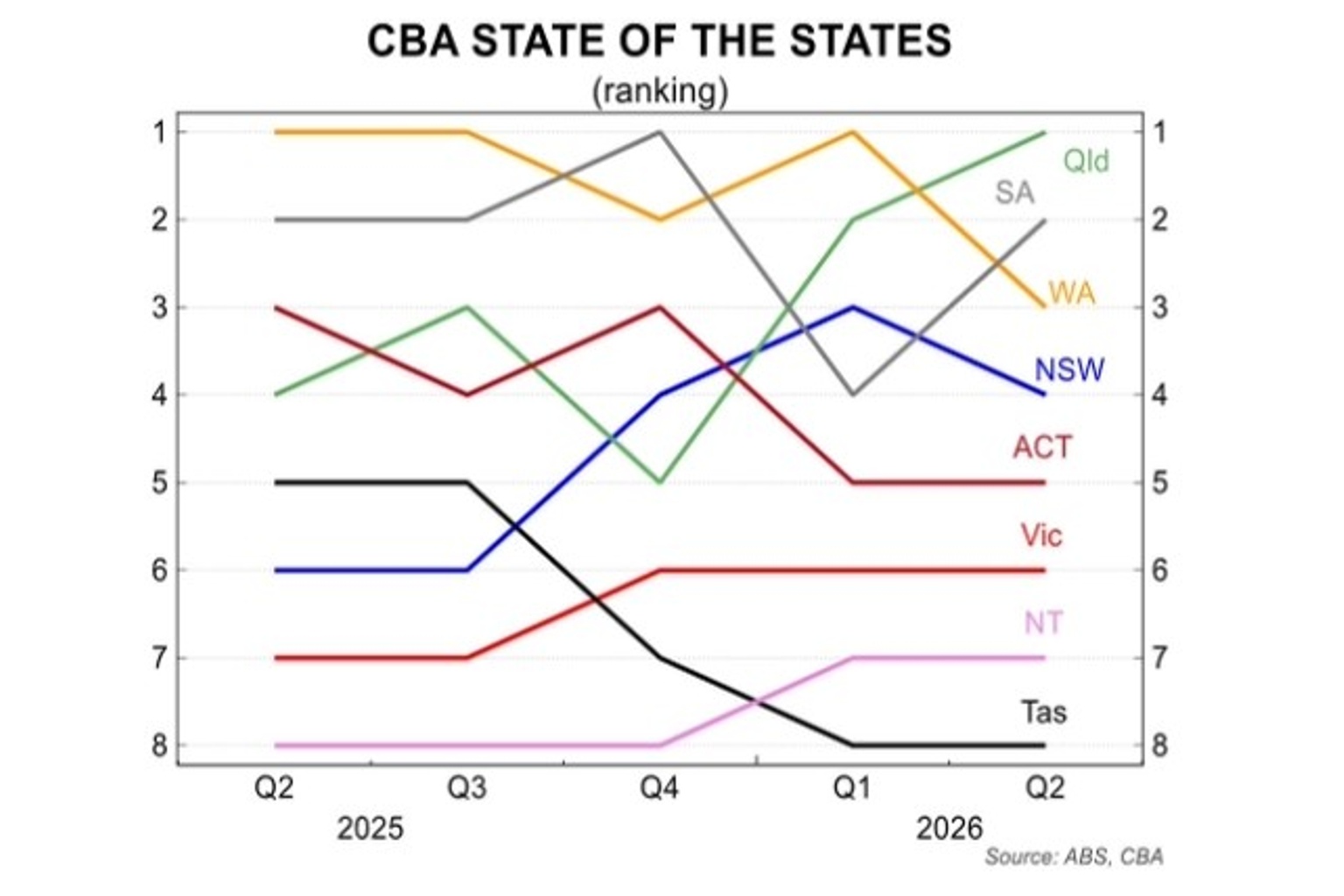
Tasmania sits in the bottom two on four of the six indicators.
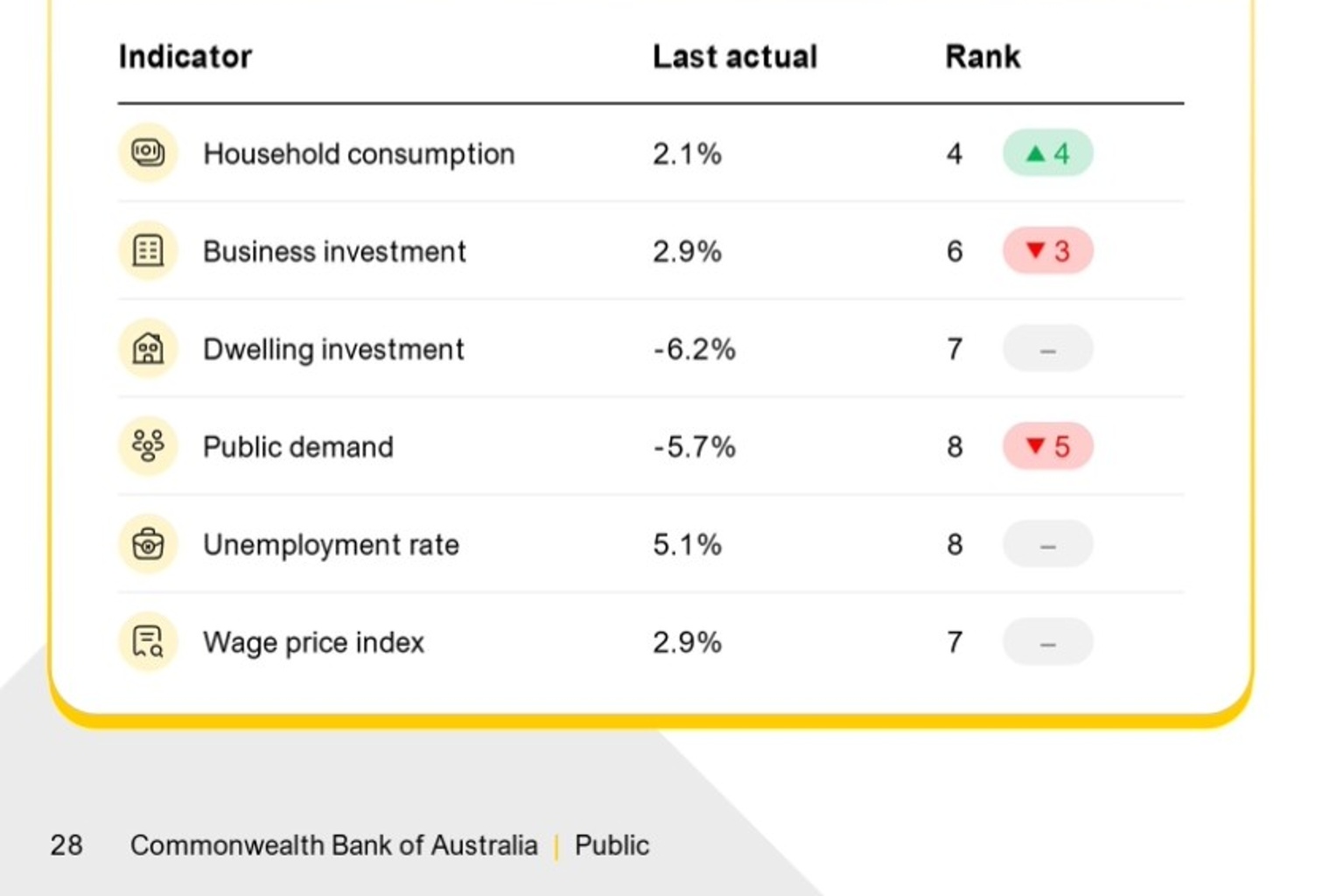
The report said Tasmania’s unemployment rate rose from 3.8% to 5.1% over the year, the highest in the country.
It said Tasmanian employment has been falling in annual terms since March and is now 1.3% lower than a year ago.
That is the only decline nationally.
Public demand fell 5.7%, the weakest in the country, though the report described that result as arithmetic.
It said the figure largely reflects the government’s purchase of the Spirit of Tasmania ferries dropping out of the base.
Dwelling investment fell 6.2% to rank seventh, while wage growth of 2.9% also ranked seventh.
Business investment rose 2.9% for sixth place, slowing from 9.0% in the March quarter.
Household consumption was the one bright spot, rising 2.1% to rank fourth, up four places on the quarter.
Adjusting for population, the report said Tasmania recorded the strongest per capita result in the country.
The report was previously published by CommSec and has returned with a new methodology.
The bank said findings from this edition are not comparable to the past series.
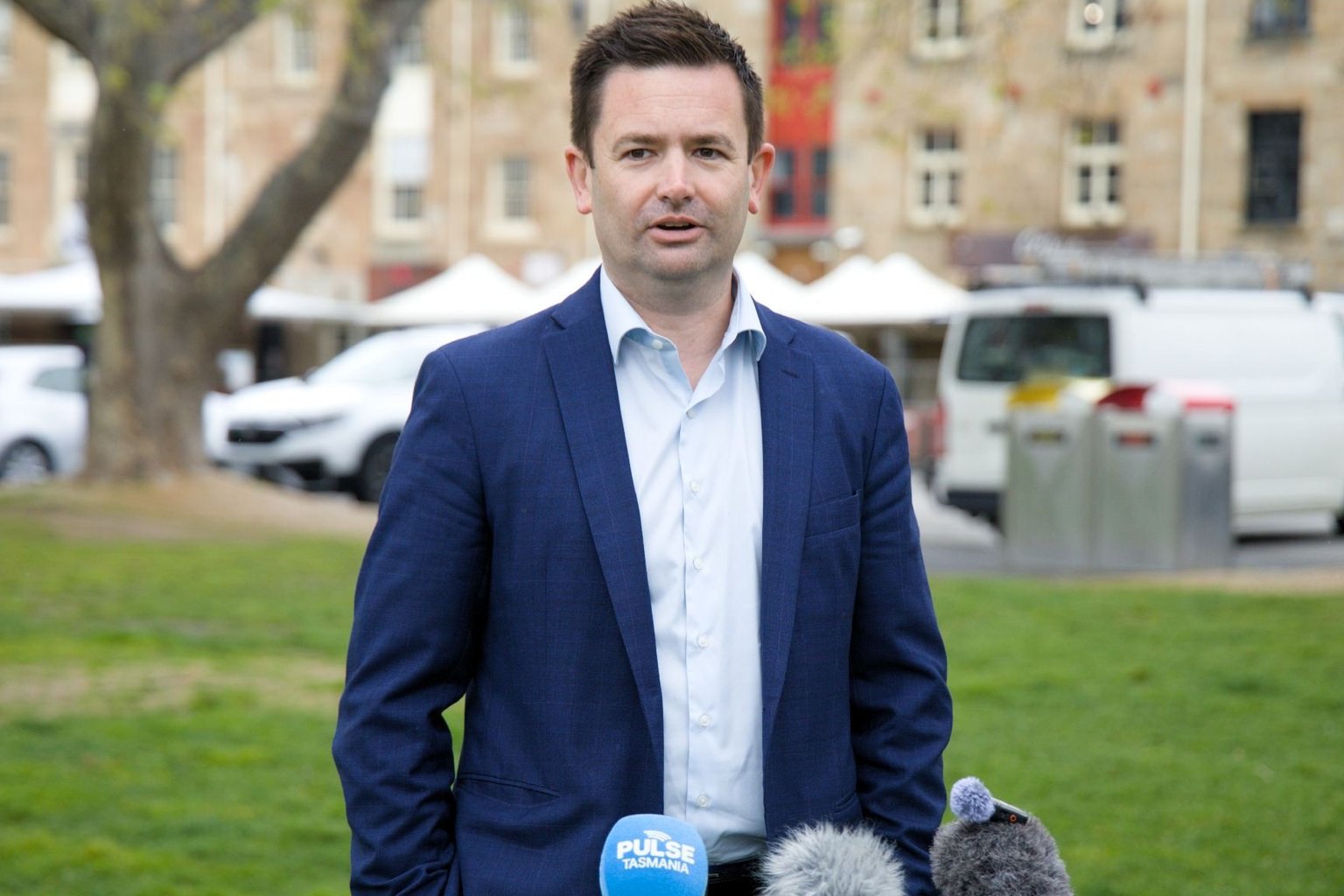
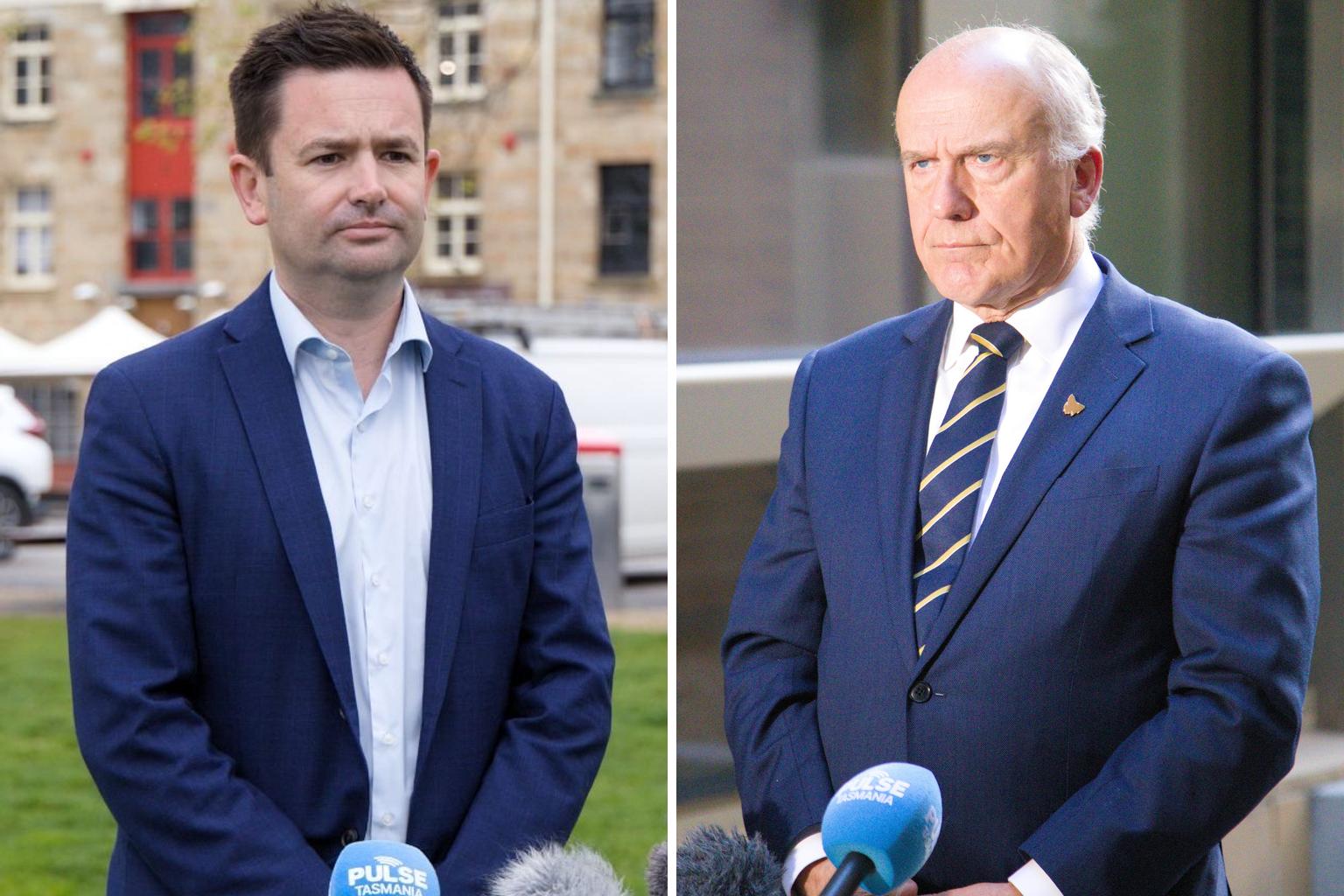
Shadow Treasurer Dean Winter said the ranking showed the state’s Liberal government had left the economy shrinking.
“Tasmania’s now slipped to last, dead last out of all states and territories,” Winter said.
Winter said more than 4,000 jobs had been lost since August last year.
He described it as the worst employment situation since the global financial crisis.
Winter said the government had previously pointed to the same report as evidence its plan was working.
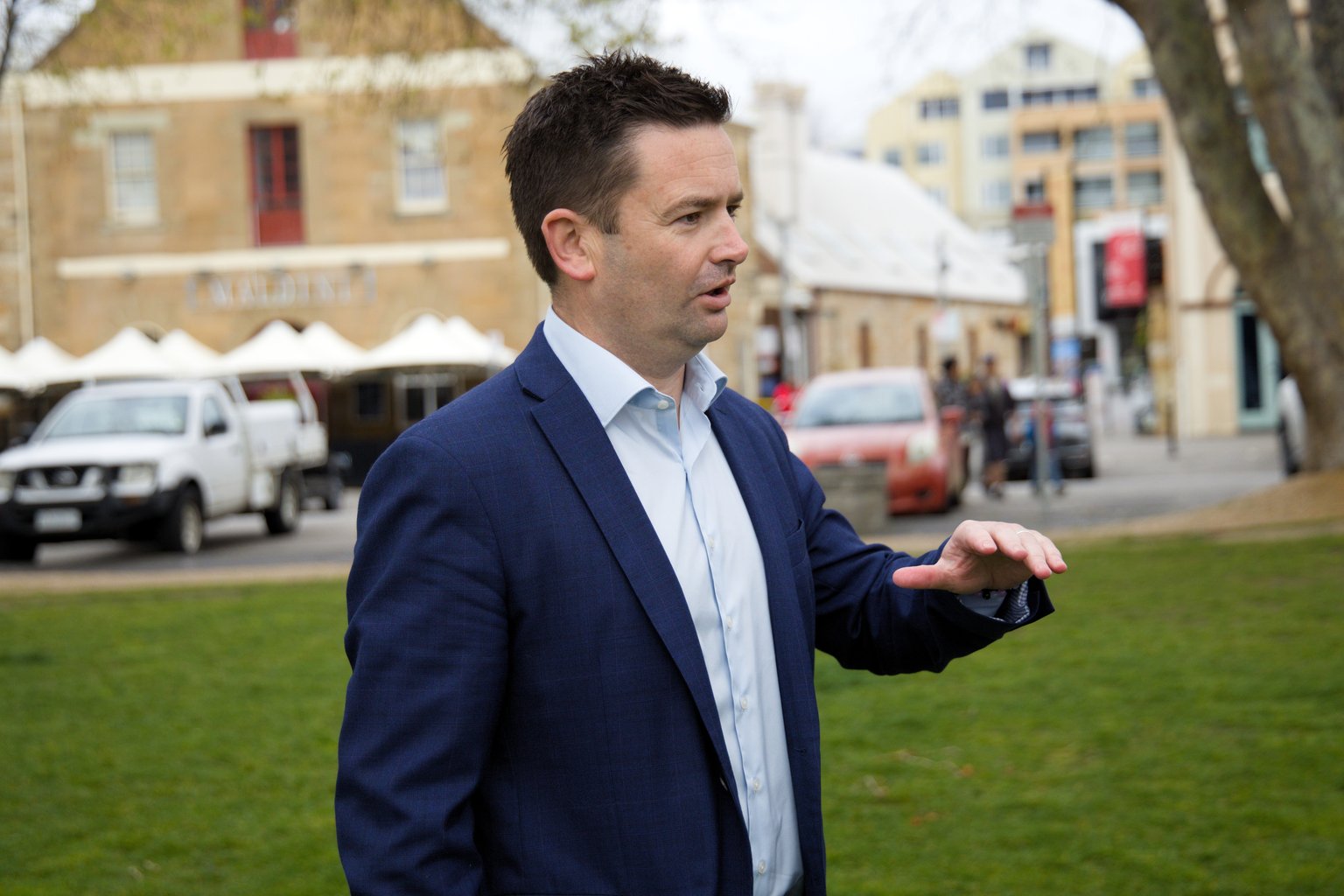
“Well, now Tasmania on those same readings is coming dead last, 8th,” he said.
“And if you follow their logic, that means their plan is not working.”
Winter said government policy was driving investment away, pointing to the salmon review and the closure of greyhound racing.
He also raised the inquiry into the sale of Rushy Lagoon.
“People have got to know that when they come to Tasmania to invest, they’re going to be welcomed,” Winter said.
He also raised energy supply, saying no new wind farms have been built in the state for more than five years.
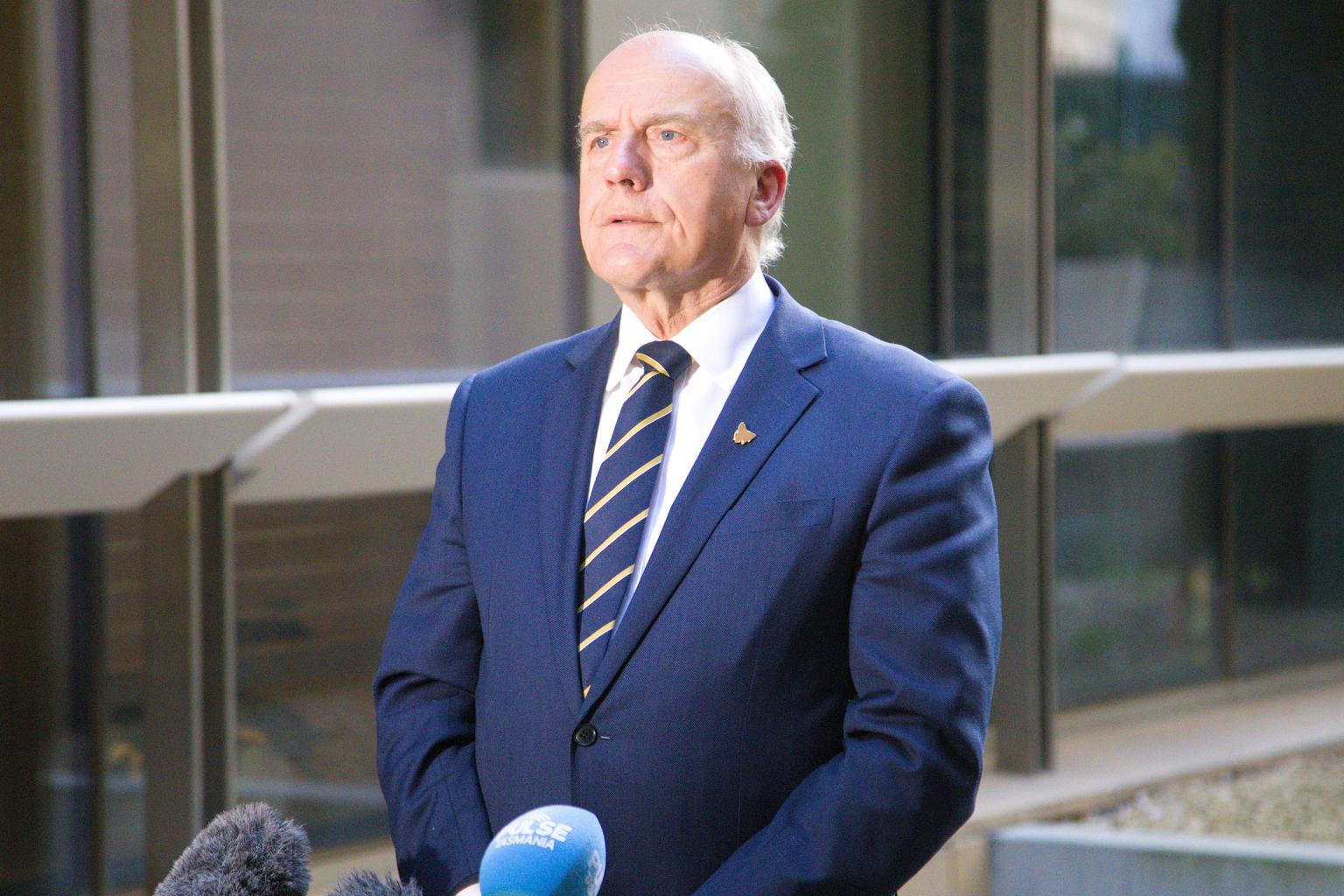
Treasurer Eric Abetz said Tasmania’s economy continued to be resilient despite persistent economic challenges nationally.
Abetz pointed to household consumption rising 2.1% and the strongest per capita growth in the country.
“When Labor was last in government the unemployment rate had a 7 in front of it,” Abetz said.
“Since then, we have created more than 40,000 jobs and continue to invest in job-creating projects.”
Abetz said the fall in public demand reflected a timing effect associated with investment in the new Spirit of Tasmania vessels.
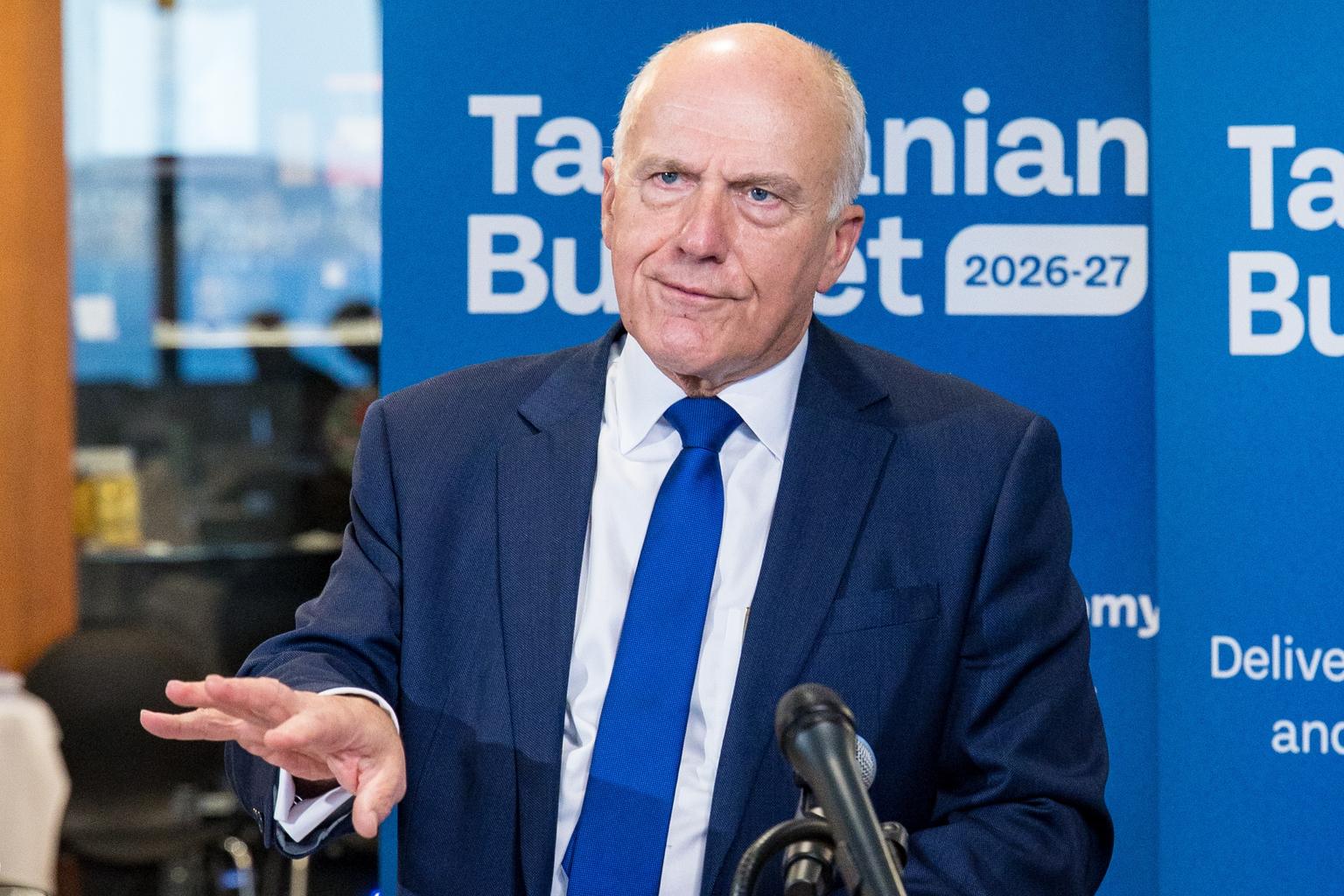
He said it was not evidence of an equivalent withdrawal of activity from the economy.
Abetz said Tasmania ranked first among the states for business conditions and confidence in the latest NAB business survey.
He pointed to the expanded Royal Hobart Hospital emergency department and the North West Regional Hospital upgrade.
Abetz also named the Launceston Convention Centre and the Macquarie Point Urban Renewal project.
“[These projects] will ensure our economy continues to be resilient in the face of economic headwinds,” Abetz said.