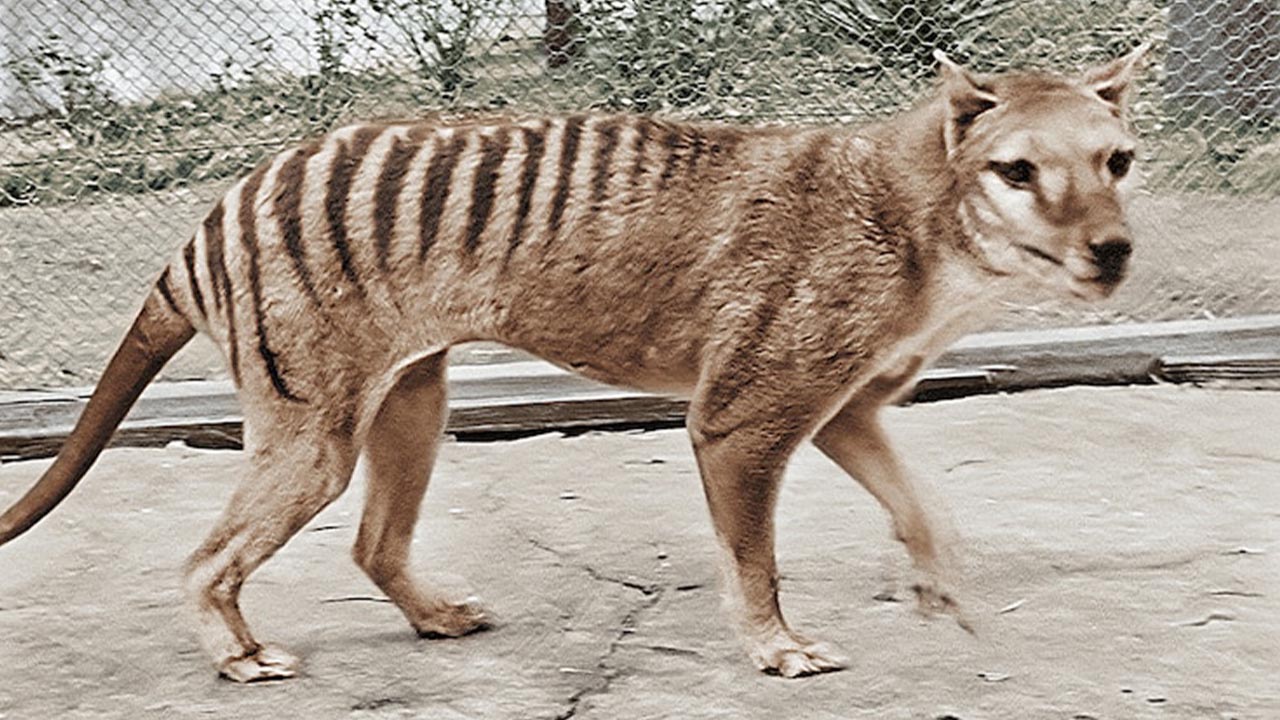
A new study conducted by an international team of researchers has discovered that the extinction of the Tasmanian tiger, also known as Thylacine, may have occurred as recently as the late 1980s or early 2000s.
The research, which was led by Professor Barry Brook from the University of Tasmania, analyzed a comprehensive database of 1,237 observational records dating back to 1910 to map the species’ decline and eventual extinction.
The study revealed that the Tasmanian tiger’s distribution shrank rapidly after a period of bounties for animal skins were provided across Tasmania from 1888 to 1909.
The team found that the most likely location of the last surviving subpopulation was in the southwestern region of Tasmania.

The researchers used a novel approach to estimate the most likely extinction date for the species, incorporating uncertainty modeling and sensitivity analysis.
The results showed that extinction likely occurred within four decades after the last capture, between the 1940s and 1970s.

However, further analysis found that extinction might have been as recent as the late 1980s to early 2000s, with a very small chance that it still persists in the remote southwestern wilderness areas.
Professor Brook said that this study is the ‘most comprehensive and rigorous’ analysis of the Tasmanian tiger’s extinction to date.
Dr. Stephen Sleightholme, a co-author from the International Thylacine Specimen Database, said that the Tasmanian tiger is one of the most fascinating and enigmatic animals of modern times.