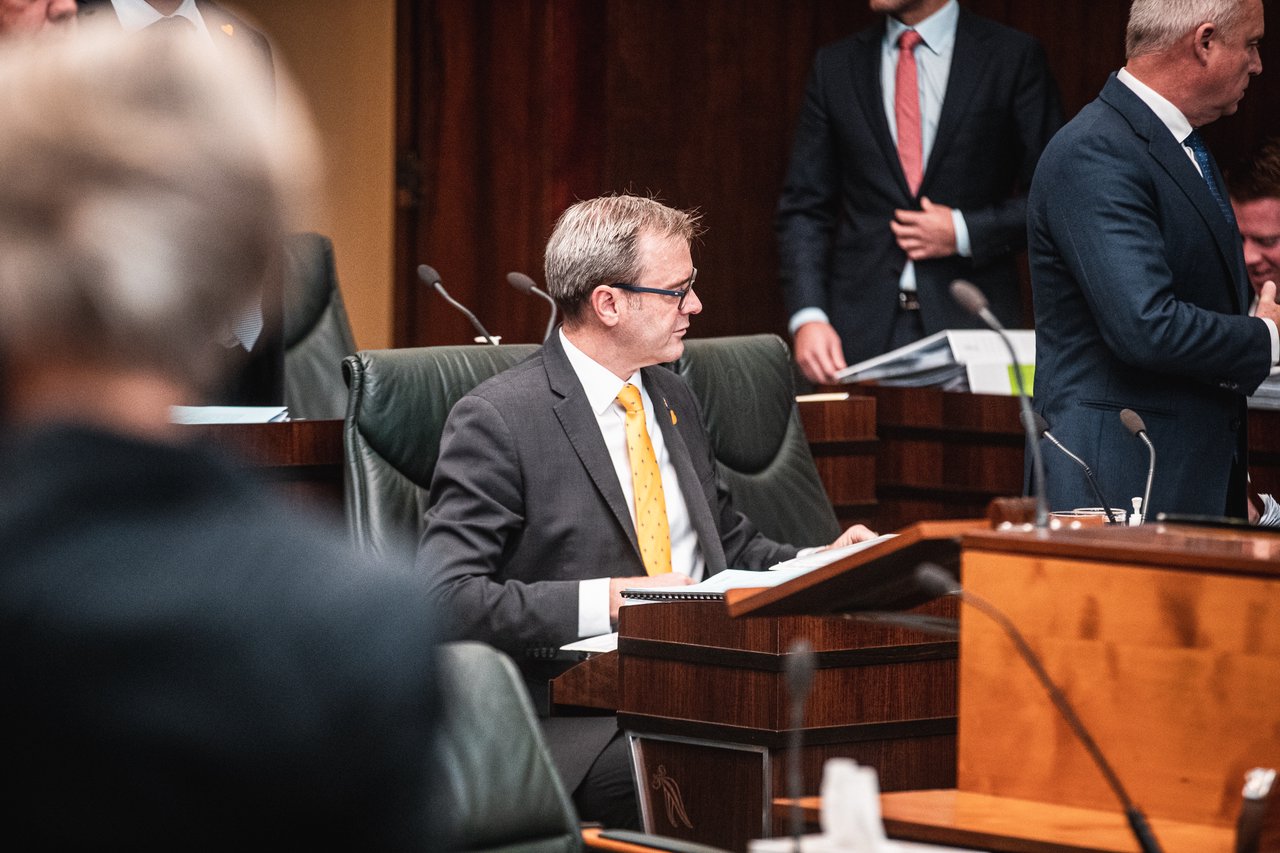
Tasmania’s Treasurer, Michael Ferguson, has presented the state’s budget for 2023/24, which reveals a postponed surplus, rising debt and potential cost increases for the Macquarie Point stadium project.
The projected surplus of $19 million has been replaced by a deficit of $298 million and it is expected to reach $148 million in 2024/25 before a modest surplus of $13 million the following year.
The budget allocates $375 million for a roofed stadium at Macquarie Point in Hobart, which has drawn opposition from state Labor, the Greens and parts of the community.
Concerns about transparency surrounding the stadium plan led two Liberal MPs to leave the party and become independents, leaving the government in a minority.

The Macquarie Point stadium project is necessary for the AFL team license Tasmania received, with the team scheduled to start playing in 2028. The state has agreed to cover any cost overruns.
The budget also includes $100 million to relocate the wastewater plant at Macquarie Point, but the final costs are expected to exceed initial estimates.

$60 million is also designated for an AFL team high-performance centre, $35 million for start-up costs and $65 million for upgrades to the UTAS Stadium.
Net debt is projected to rise from $3.5 billion in 2023/24 to nearly $5.6 billion in 2026/27.
To save $300 million over four years, the government plans to implement a modest efficiency dividend in 2024/25, aiming to minimize the impact on frontline services.
Opposition leader Cassy O’Connor of the Greens criticized the government for prioritising the AFL over pressing societal issues.
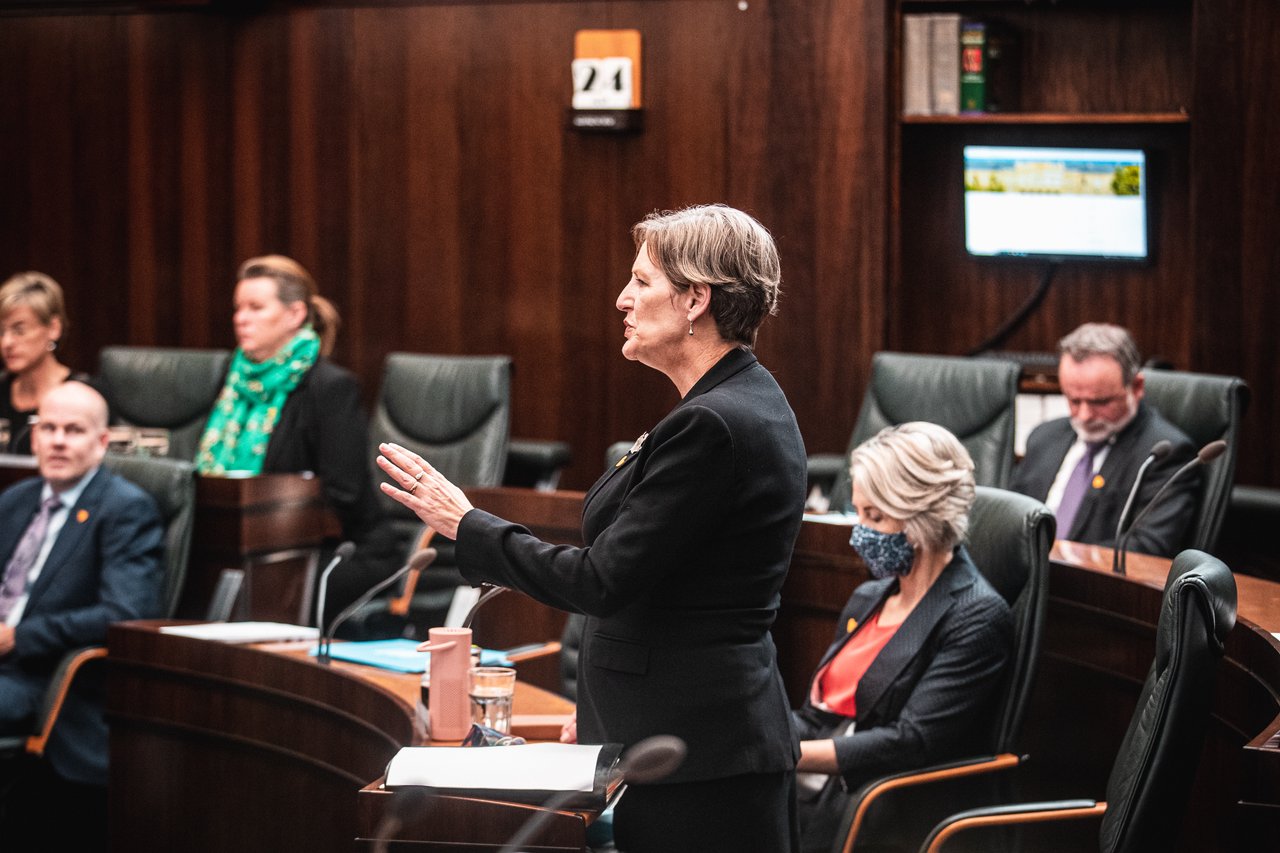
Labor’s shadow treasurer, Shane Broad, also criticized the government for increasing net debt.
Tasmania’s GST revenue, which makes up 42% of government revenue, is expected to decrease by $900 million between 2022/23 and 2025/26 compared to previous estimates.
The budget sets aside $30 million to address recommendations from an ongoing inquiry into child sexual abuse in state government institutions, potentially leading to significant costs in the future.
Health and education account for 58% of the $8.7 billion expenditure in the 2023/24 budget, with total health spending exceeding $12 billion over the next four years.

Additionally, $347 million has been allocated over four years to help low-income individuals pay water, sewerage, power and local government bills.
A trial program will provide reduced-rate rental properties for eligible low-income Tasmanians, with a budget of $1.5 million.