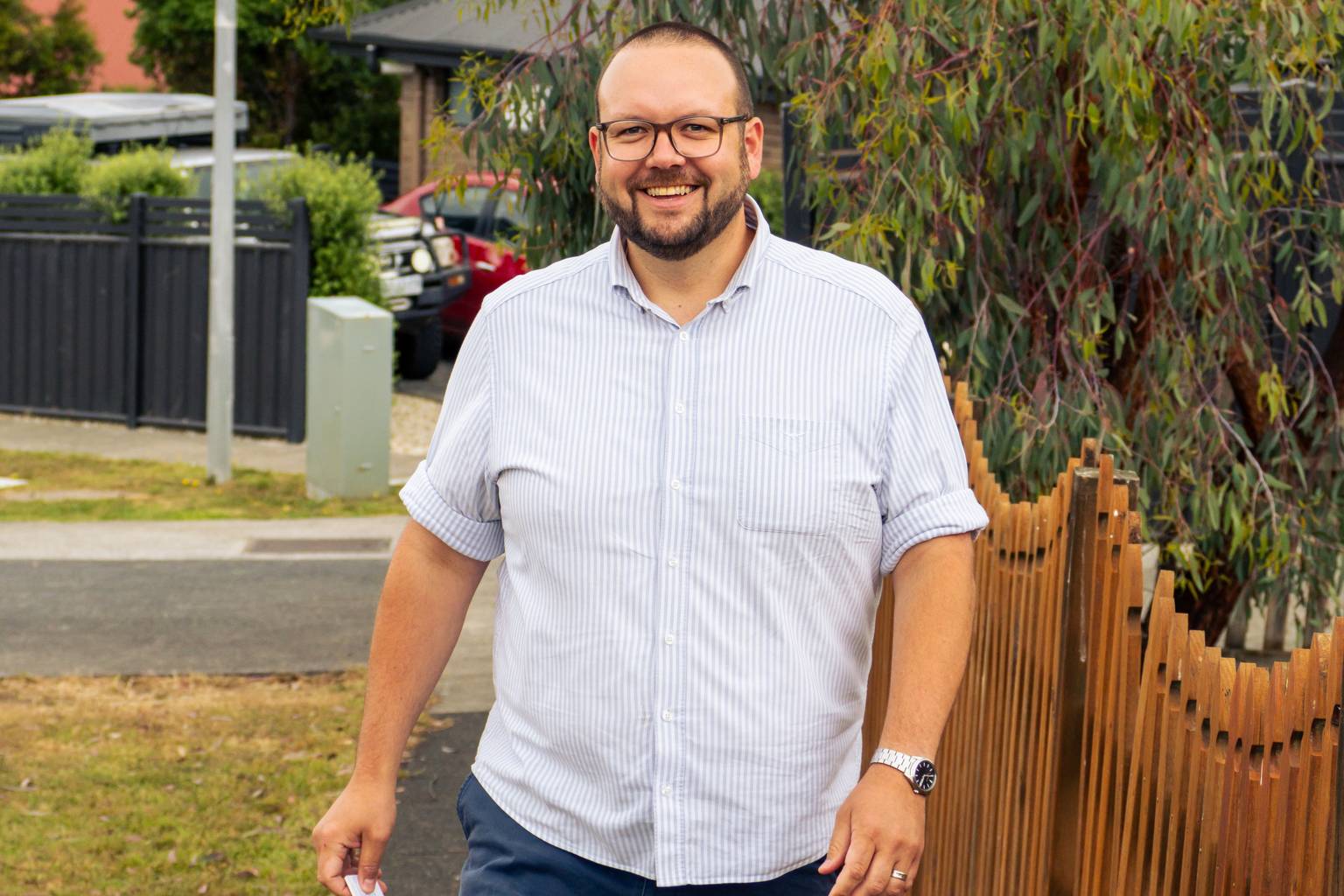
The first thing people tend to notice when Tyler Petersen knocks on their door is his accent.
It’s a question the Huon upper house candidate said he tries to address early when he’s out campaigning.
“I tell people that I’ve been living here pretty much my whole adult life and working in small business,” he said.
This story is part of a Pulse deep-dive series on the May 2 Legislative Council elections. To read more about candidates standing in Huon, click here.
Petersen, who grew up in the United States, is running as an independent for the Legislative Council seat of Huon.

His most recent role was at aviation rescue service Rotor-Lift, which lost its major contract last year.
Petersen said the experience left him uneasy about how the state government treats local businesses.
“I didn’t feel like things were very transparent and I felt like there were a couple of places where Rotor-Lift may have been stitched up,” he said.
He pointed to the Bruny Island ferry contract as another example, where a joint tender from Bob Clifford and Rob Pennicott was passed over in favour of mainland company SeaLink.
“I just feel like Tassie businesses aren’t getting the go that they should be getting,” he said.
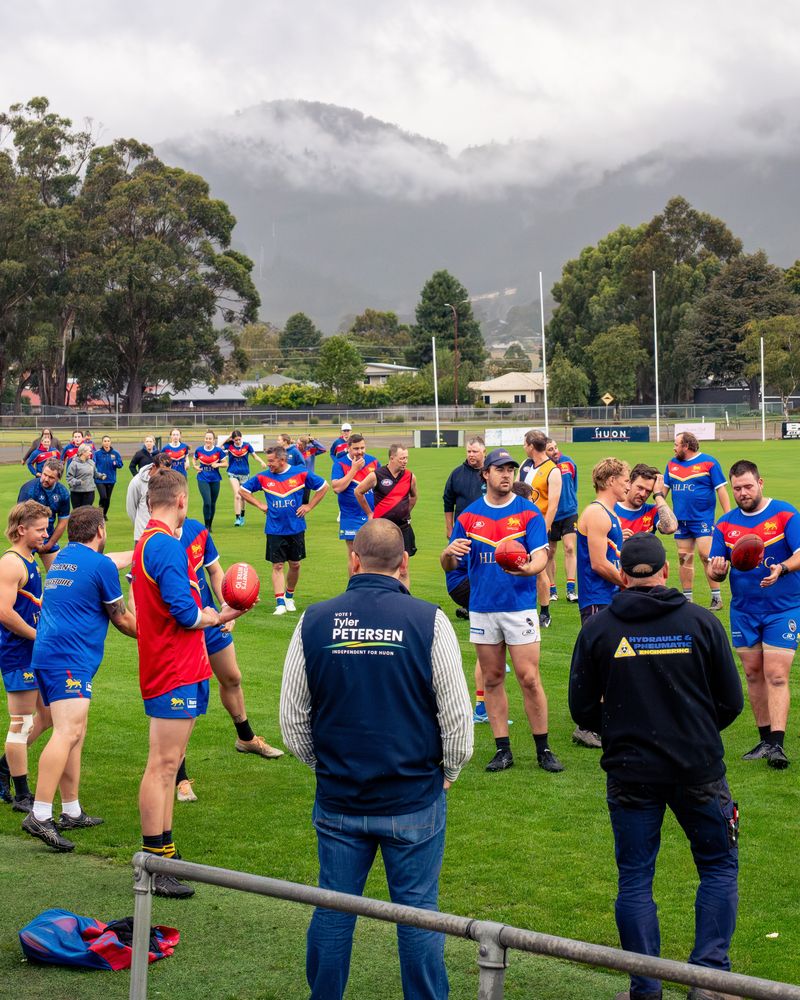
Before Rotor-Lift, Petersen spent years running pubs and hotels, including work for the Jubb family.
He said he loved the hospitality industry but stepped away when his children came along because the hours weren’t suited to family life.
Petersen describes himself as sitting in the middle of the political spectrum.
He said he leans slightly left on social issues and slightly right when it comes to money.

“I think it all works out in the wash somewhere and I sit solidly in the middle,” he said.
On the doorstep, he said the same topics come up over and over.
“Cost of living, stadium and salmon seem to be the main things,” he said.
He said those conversations almost always circle back to cost of living pressures, whether people start by talking about health, education or childcare.
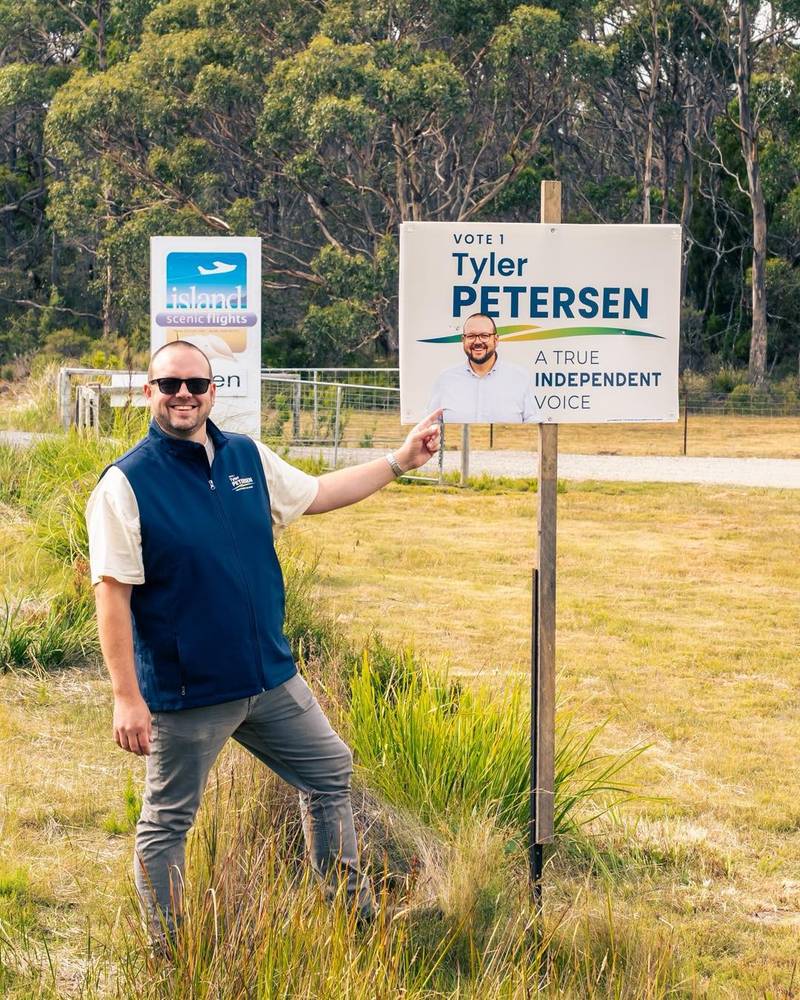
Housing is the issue Petersen speaks about with the most urgency.
He said he believes planning decisions should be taken away from local councils and handed to a single state board made up of practical housing experts rather than academics or policy specialists.
He wants to make it easier to convert unused commercial space into housing and is pushing for more aggressive stamp duty concessions for first home buyers and retirees looking to downsize.
“At the moment if an old couple wanna move out of their four-bedroom house into a unit or something, they need to be incentivised to do that rather than facing punitive taxes in the form of stamp duty,” he said.
Petersen said around 30 to 40 per cent of the cost of a new build goes to taxes in one form or another, between stamp duty, GST and infrastructure levies.
“I think housing being a human right, we just need to find a way to work around it,” he said.

On the Hobart stadium, Petersen said he doesn’t think it should be a campaign issue now that it has passed both houses of parliament with bipartisan support.
But he said voters deserve transparency when it comes to the project’s price tag.
“We’ve got a bad habit in this state of costs just blowing out on nearly everything we do and it’s just kind of accepted,” he said.
“Coming out of small business, I’d get the sack if I consistently ran over budget like that.”

On salmon farming, Petersen said his position doesn’t win him much favour on either side.
He said the industry supports thousands of families in areas with limited employment and he would not pull the rug out from underneath them.
But he said existing regulation doesn’t seem to pass the pub test and called for transparent auditing and real-time monitoring.
“I think they’ve gotta worry about regaining public trust and confidence and ultimately that can only be done through their own actions,” he said.
Petersen said he wants to model himself on the kind of independent upper house member who looks at each piece of legislation on its merits.
He named MLC Ruth Forrest as someone he respects for her objective and impartial approach, even when he disagrees with where she lands.
“I don’t want to be an activist or a party-aligned candidate,” he said.
“If the upper house becomes more party aligned, get rid of it.”
On greyhound racing, Petersen said he hasn’t been part of the debate but is inclined to support the ban.
“I’ll concede that my view is more emotional rather than rooted in debate,” he said.
Petersen conceded he is running with the smallest public profile among the candidates and has relied heavily on social media to get his message out.
“I just hope that I got my message across and that it resonates with people,” he said.