People convicted of sexual offences, family violence and serious violent crimes would be blocked from using good character references to reduce their sentences under legislation being debated in Tasmania’s parliament today.
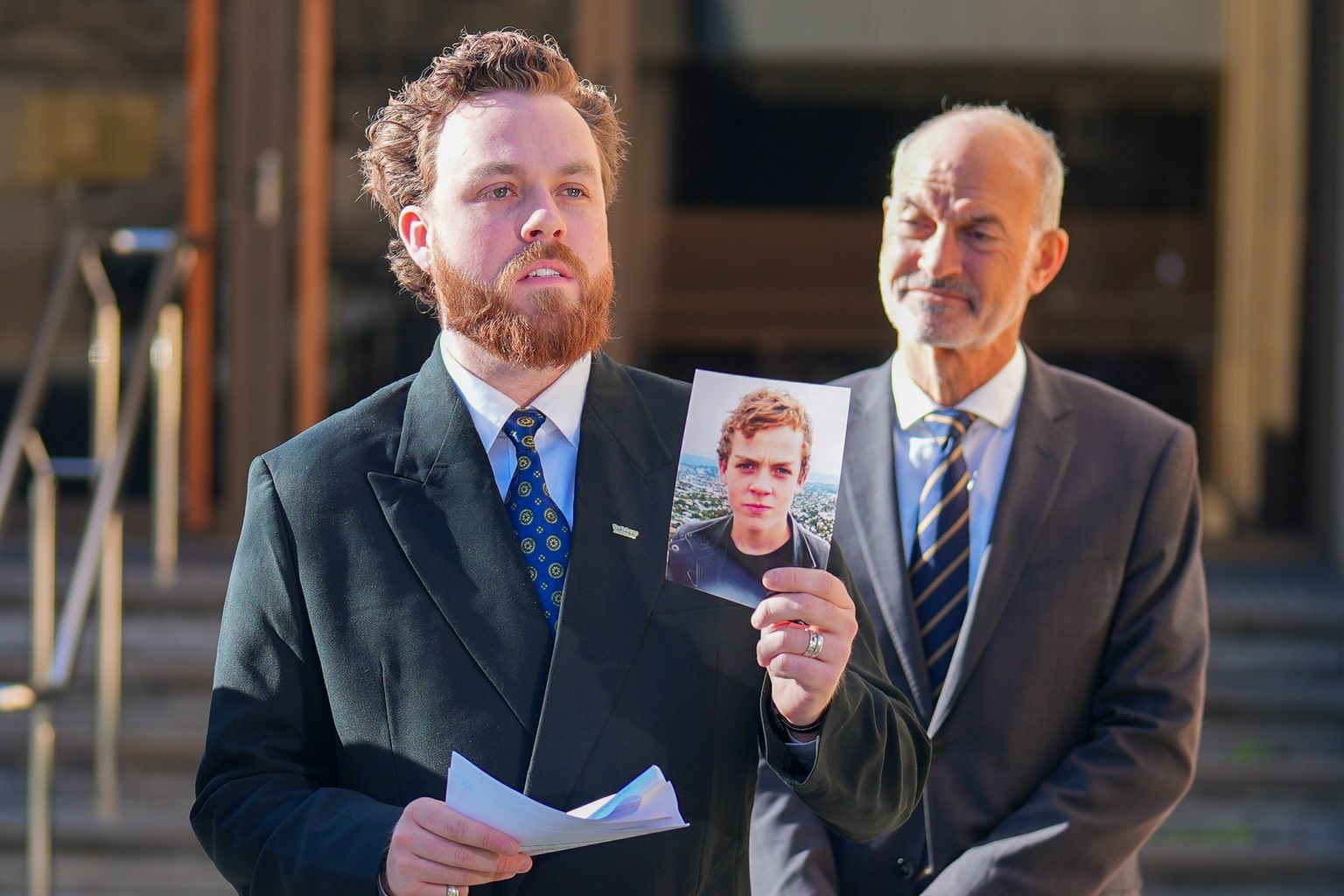
Attorney-General Guy Barnett spoke in support of the Sentencing Amendment (Good Character) Bill outside the Supreme Court in Hobart this morning, ahead of debate in parliament.
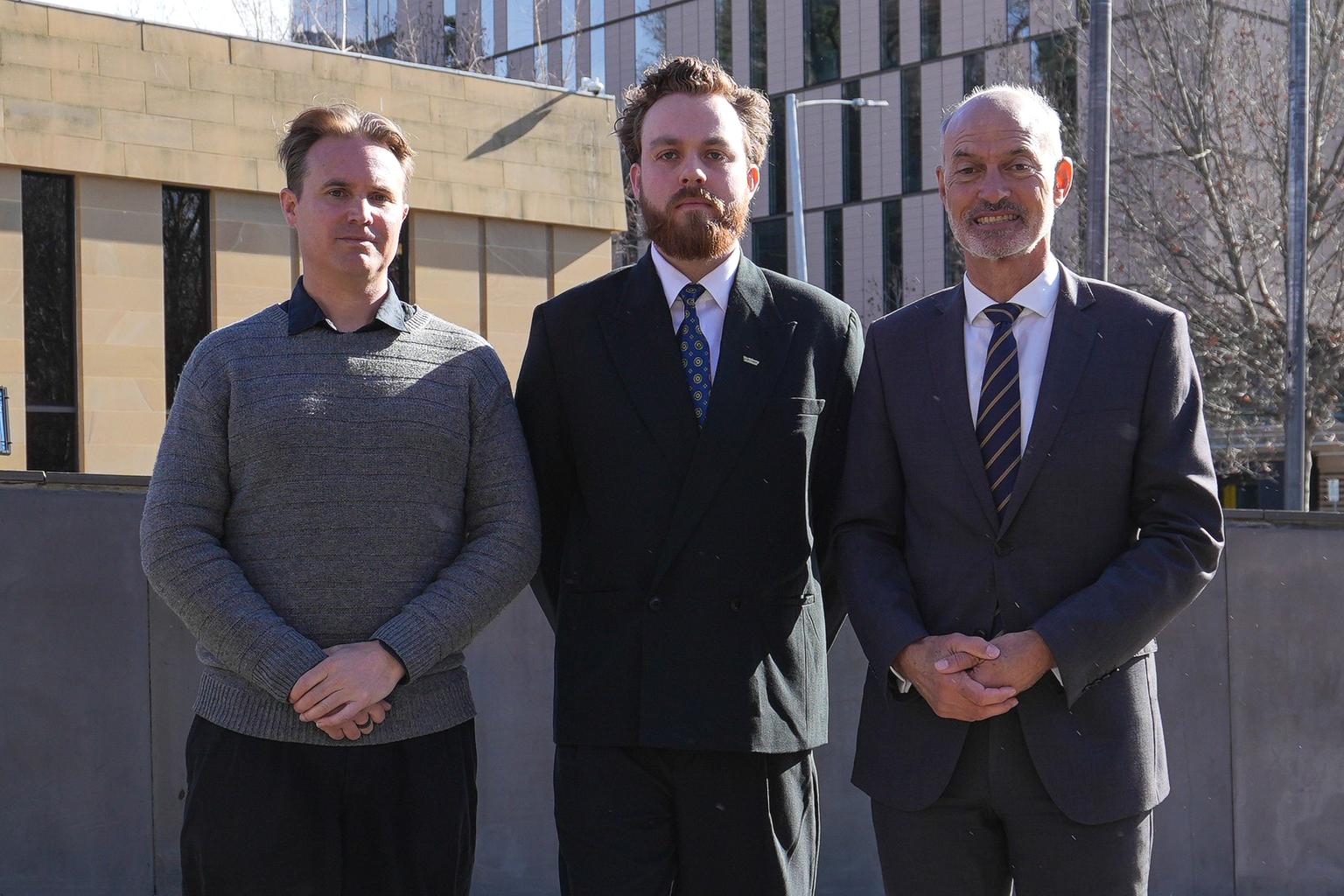
He appeared alongside Harrison James and Jarad Grice, co-founders of the advocacy group ‘Your Reference Ain’t Relevant’.
“We do not want victims of crime sitting, listening to what might be purportedly a good character reference when they’ve committed such serious offences,” Barnett said.
The changes would apply only to adults and would also affect decisions about whether a conviction is recorded.
For violent crimes, the restrictions would apply to the most serious offences dealt with on indictment.
Family violence offences would also be covered, although breaches of family violence orders are excluded.
Courts could still consider good character material where it was relevant to an offender’s prospects of rehabilitation or risk of reoffending.
Even then, a judge would have to weigh factors including the nature of the offence, the harm caused and the victim’s vulnerability before allowing it.
James, who was sexually abused by his stepmother for three years as a child, held up a photograph of himself at 13 as he urged MPs to pass the bill.
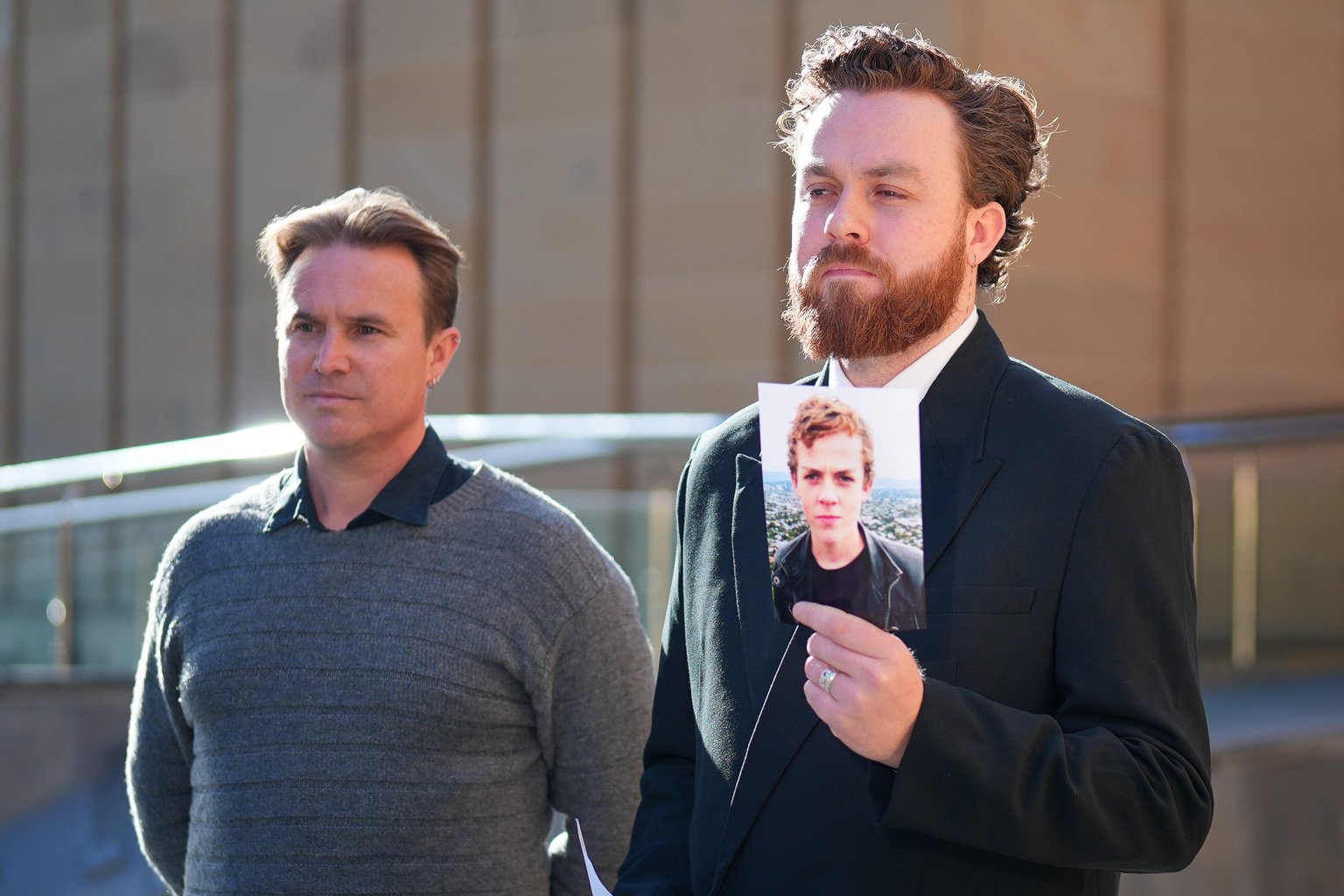
“There is nothing abstract about sitting in a courtroom and hearing friends and family describe the person who harmed you as kind, generous, respected, successful, a good person, as though the version of them experienced by somebody else should somehow diminish the version that you experienced,” he said.
James said he and Grice had campaigned for four years across Australia and faced repeated knockbacks, while other states had already made similar changes.
“We’ve been told no,” he said. “We’ve been told it’s too difficult. We’ve been told to wait and we kept going because survivors have already waited long enough.”
In its submission, the campaign backed the bill but urged the government to go further and abolish good character as a mitigating factor for all offences, not just serious ones.

Grice, who was sexually abused by a neighbour before he was 10, said the reform was long overdue.
He said survivors lived with “a life sentence” and the burden of pushing for change should not fall on victims.
James said judges would still have access to objective factors such as an offender’s prospects of rehabilitation, mental health records and lack of previous convictions.
“Good character references are subjective,” he said.
The Law Society of Tasmania argued during consultation that judges already had discretion to exclude good character evidence and were best placed to decide how much weight it should carry.
Independent MP Kristie Johnston made a similar argument in parliament, calling much of the bill “symbolic”.
She said character references tended to favour people who were well connected.
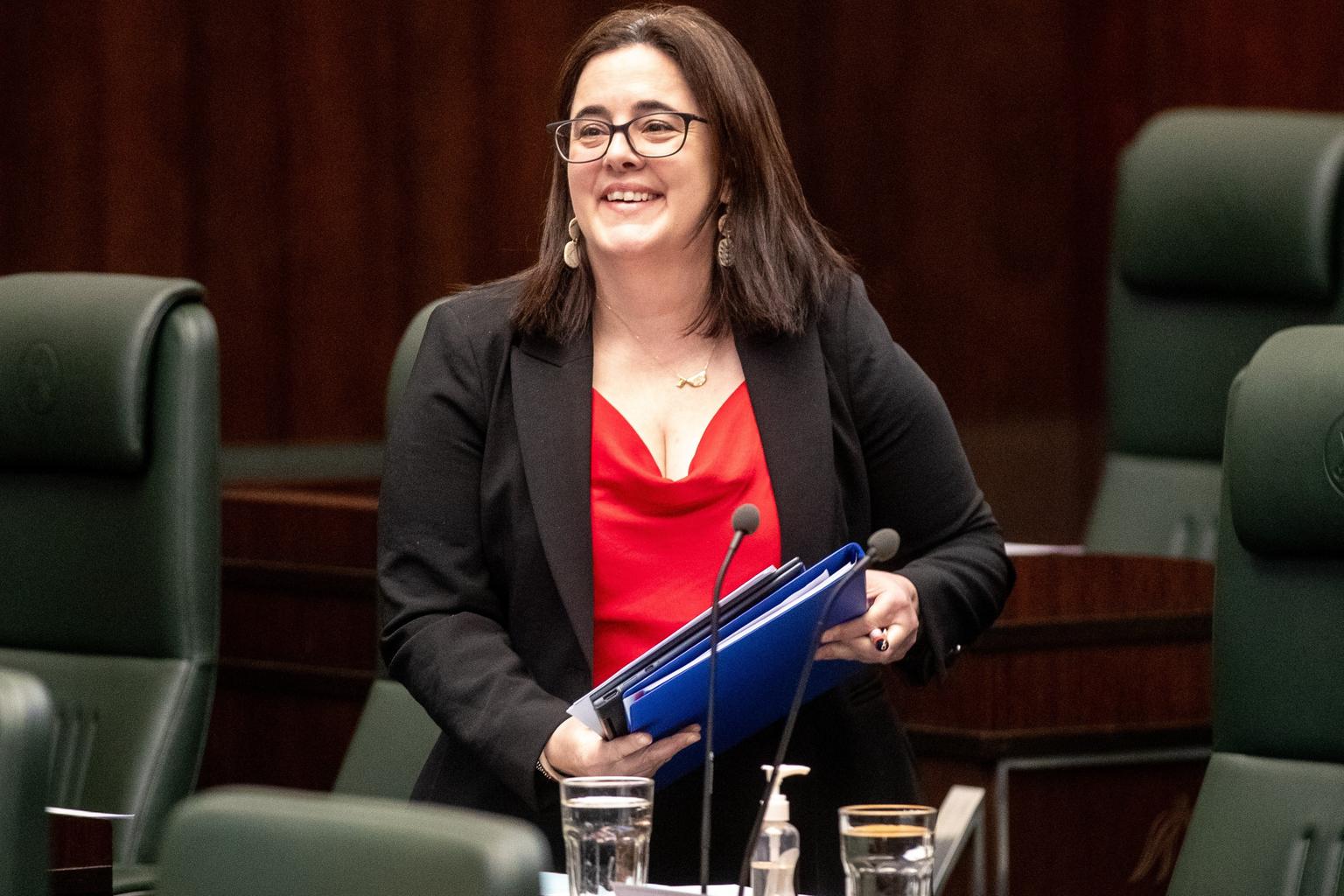
Labor MP Ella Haddad commended the bill but said the attorney-general should monitor how often the exception was used.
“If the test is being misused or abused or used unfairly, the parliament should come back and revisit this law,” Haddad said.
Greens leader Rosalie Woodruff confirmed her party would support the bill and thanked James and Grice for their courage.
She pointed to the Commission of Inquiry into child sexual abuse in Tasmanian government institutions and evidence from survivors about being retraumatised by hearing offenders praised in court.
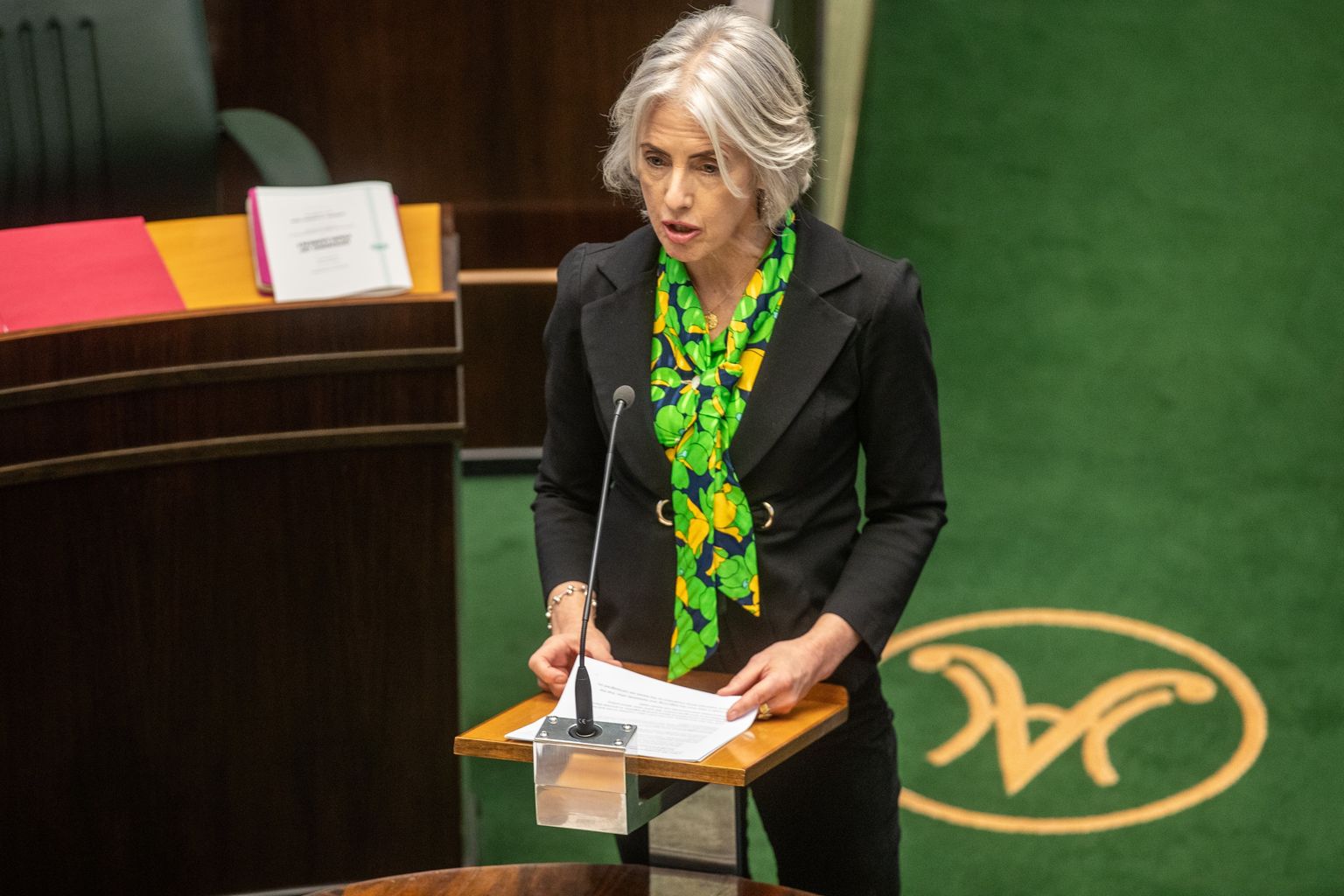
“This is the nature of perpetrators of sexual abuse, especially child sexual abuse, is that they make it their life’s work to be a central trusted part of the community,” she said.
Barnett said he was confident the bill would pass.
“This is a very pivotal moment for us in Tasmania and you have helped us to get to this point in time,” he told James and Grice in parliament.
“I’d say it’s a milestone event. It’s not a destination, it’s an ongoing effort and journey that we’re all on.”