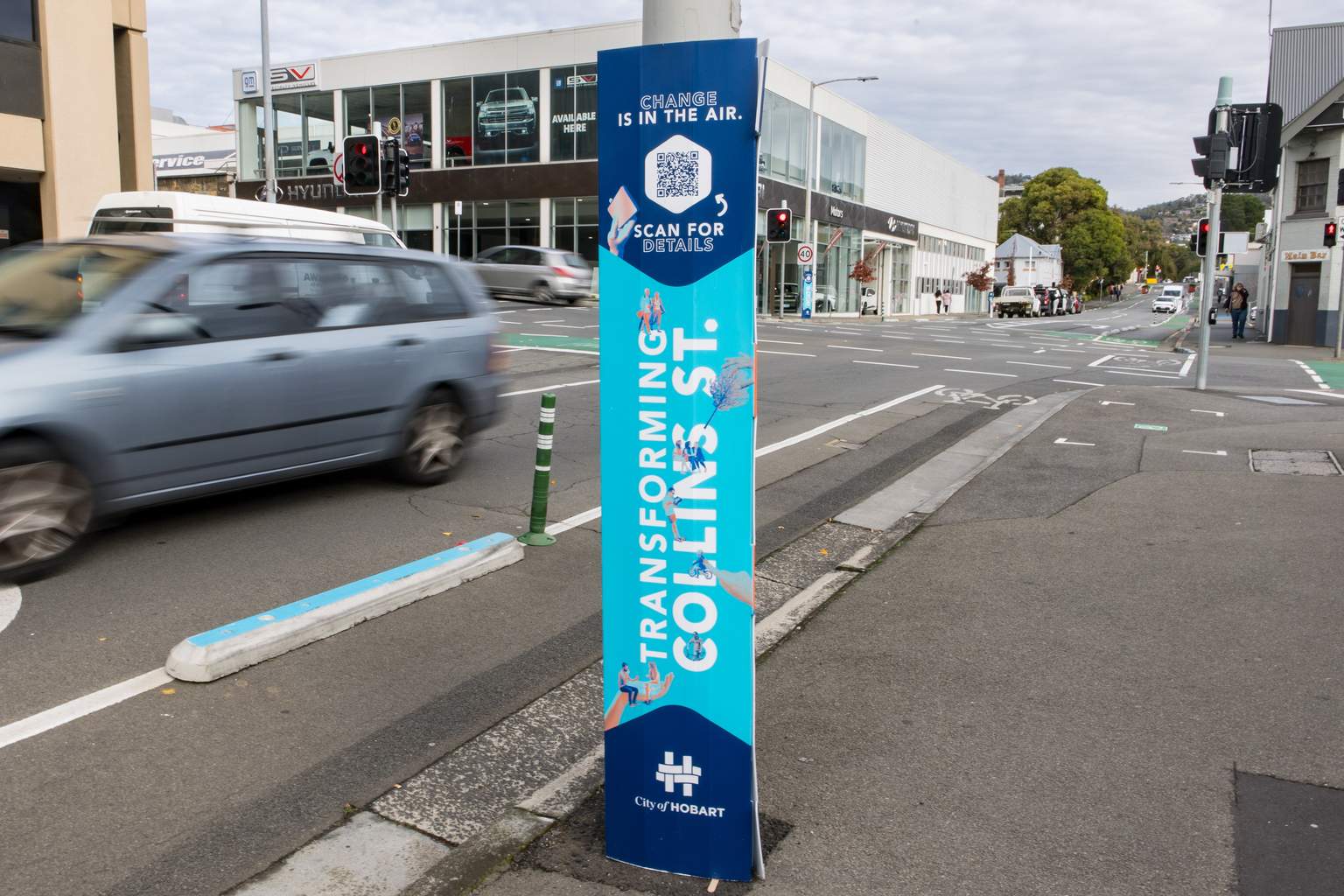
Hobart’s most contested street project has reached its halfway mark, with locals given two weeks to weigh in on whether the Collins Street bike lanes should stay or go.
The City of Hobart opened the public feedback period on Monday, one year into the two-year Transforming Collins Street trial.
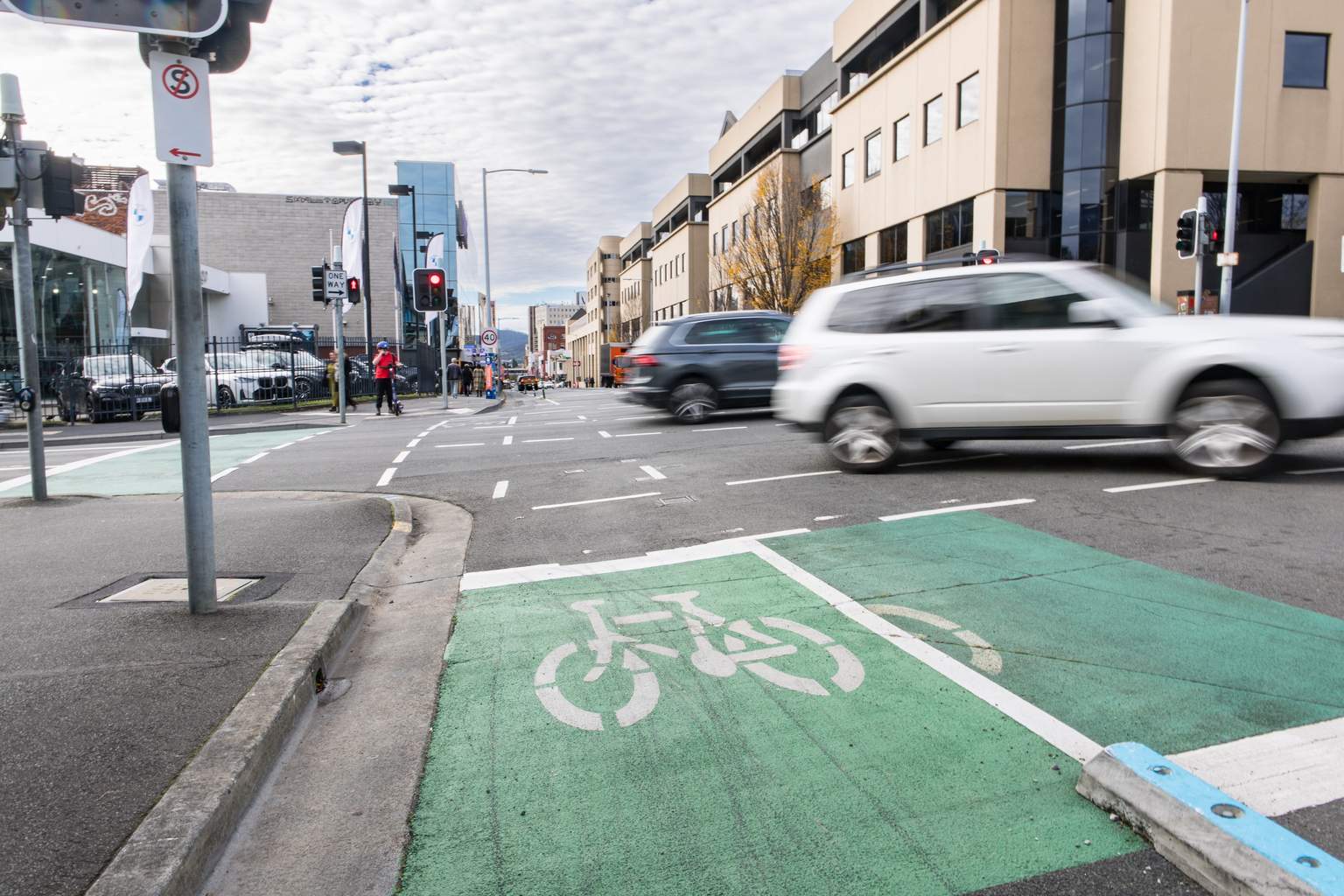
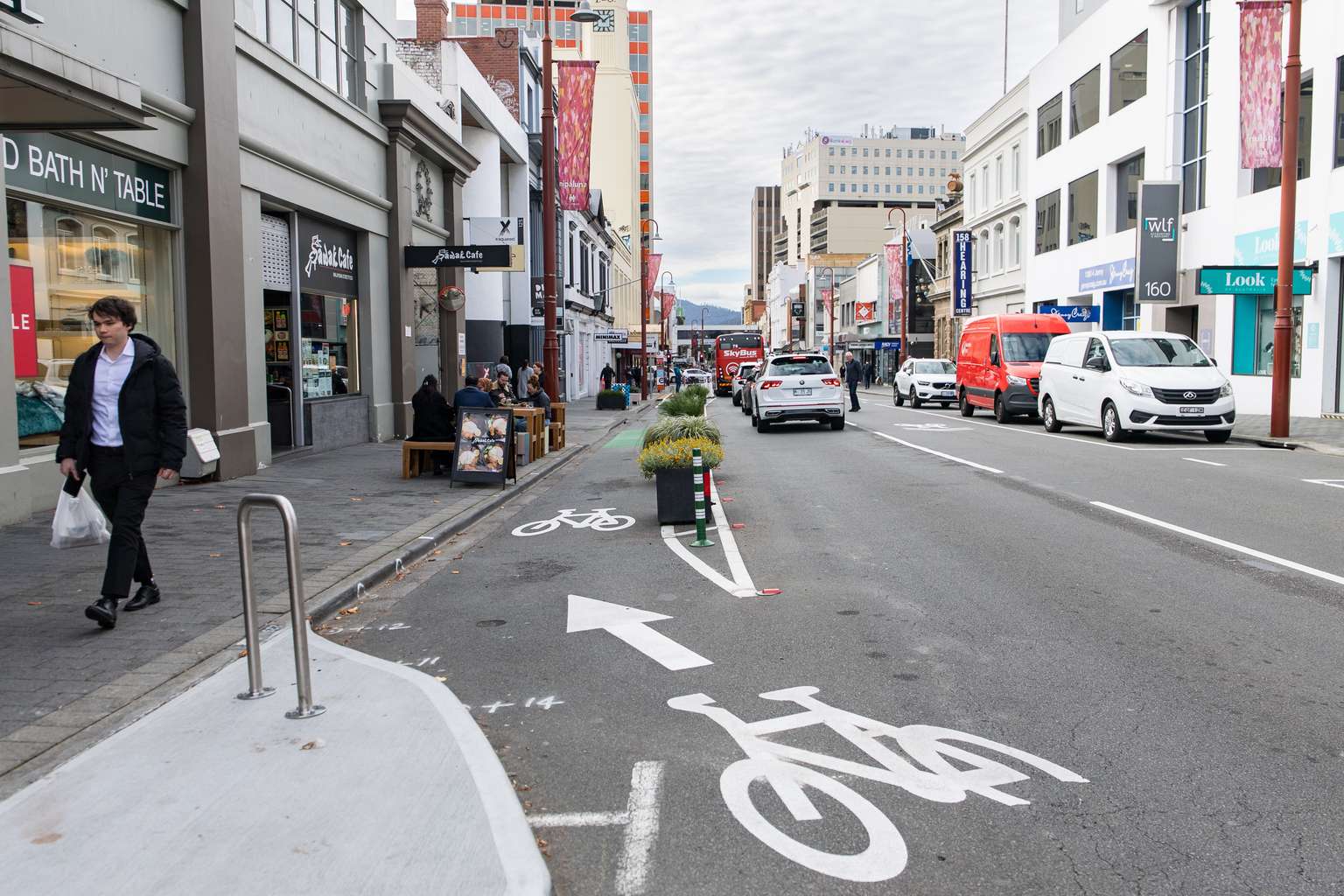
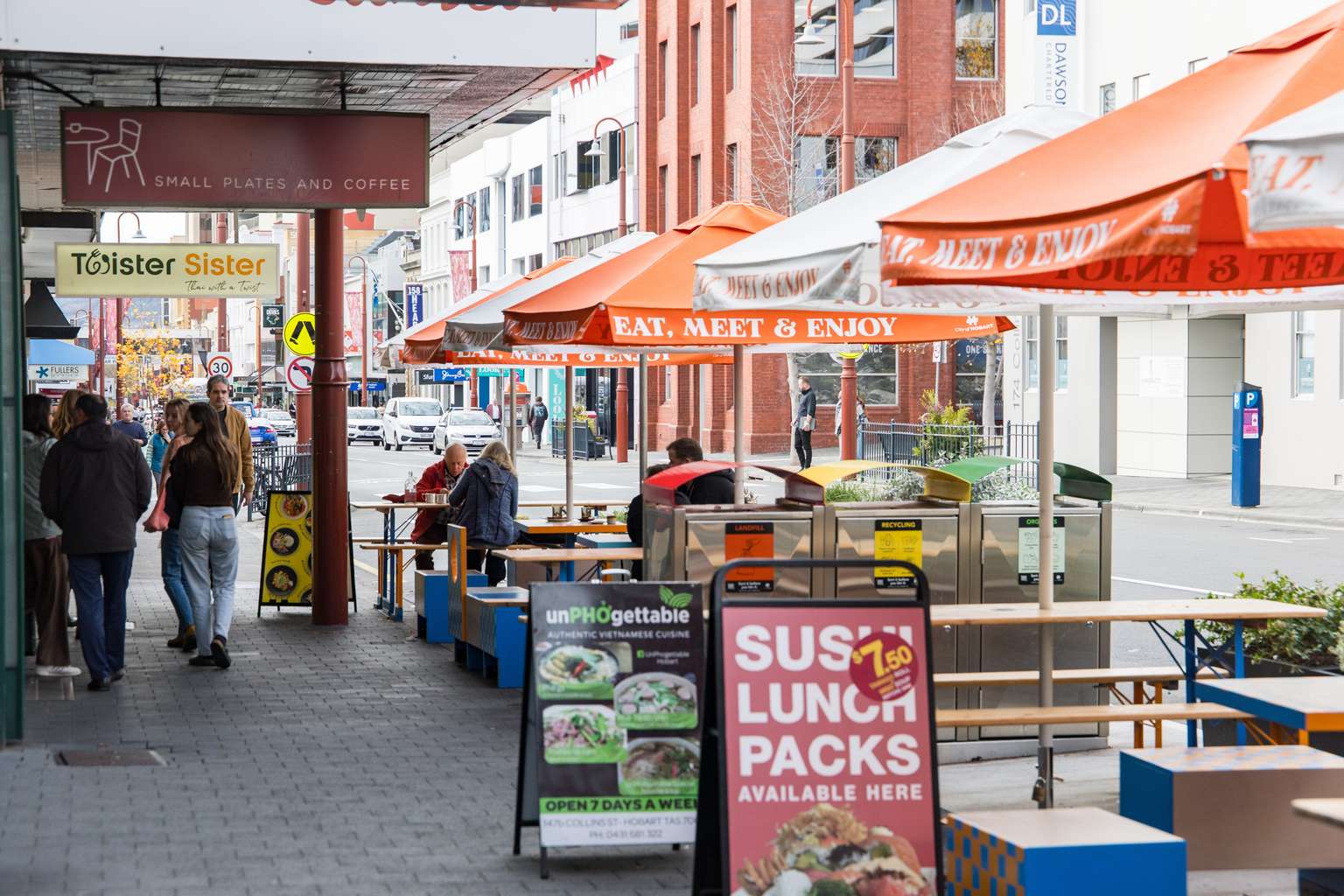
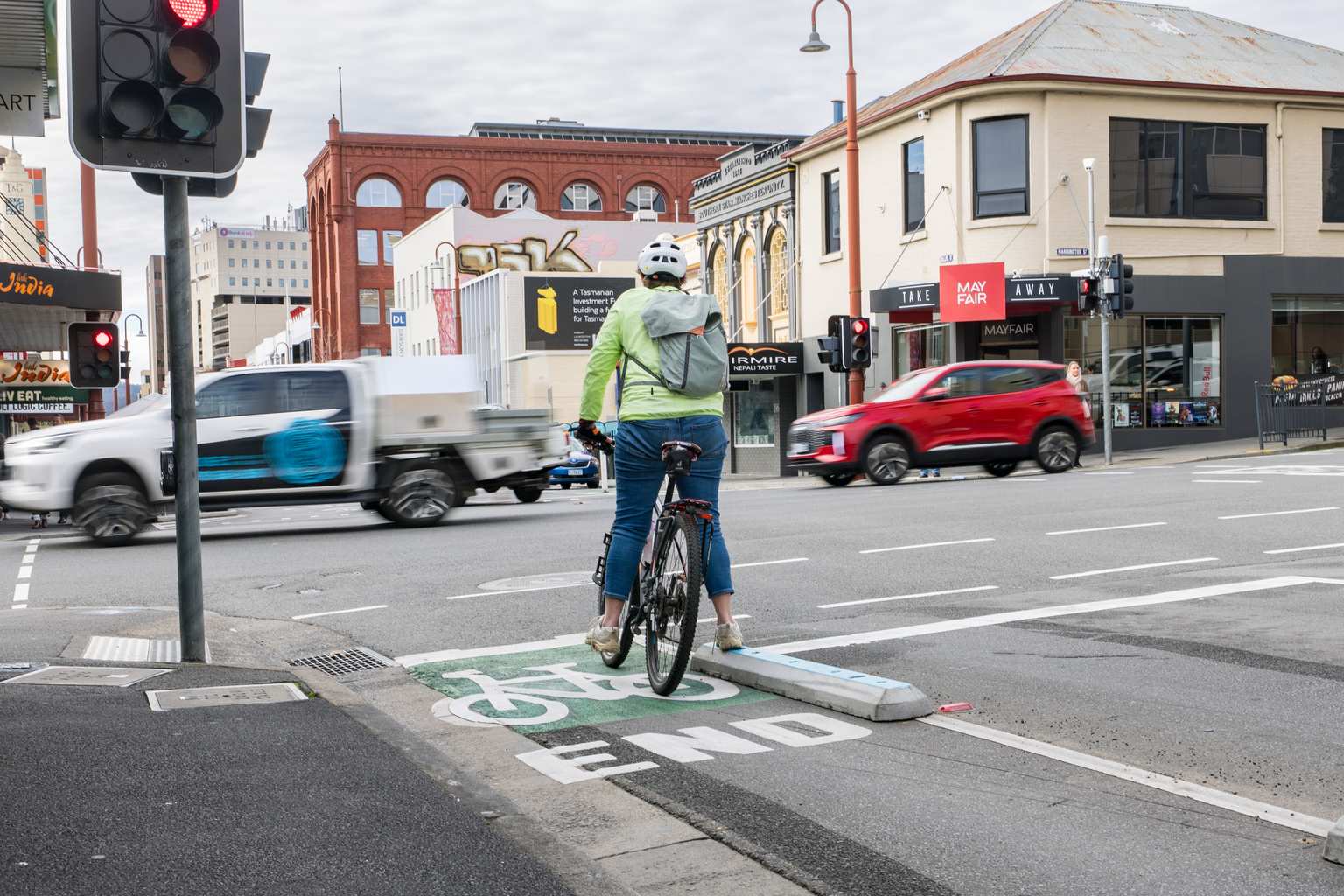
The 700-metre stretch between Molle Street and Murray Street has featured separated bike lanes, outdoor dining, additional greenery, lower speed limits and pedestrian crossings since April 2025.
The final stage of works completed in recent weeks introduced some of the trial’s most debated changes.
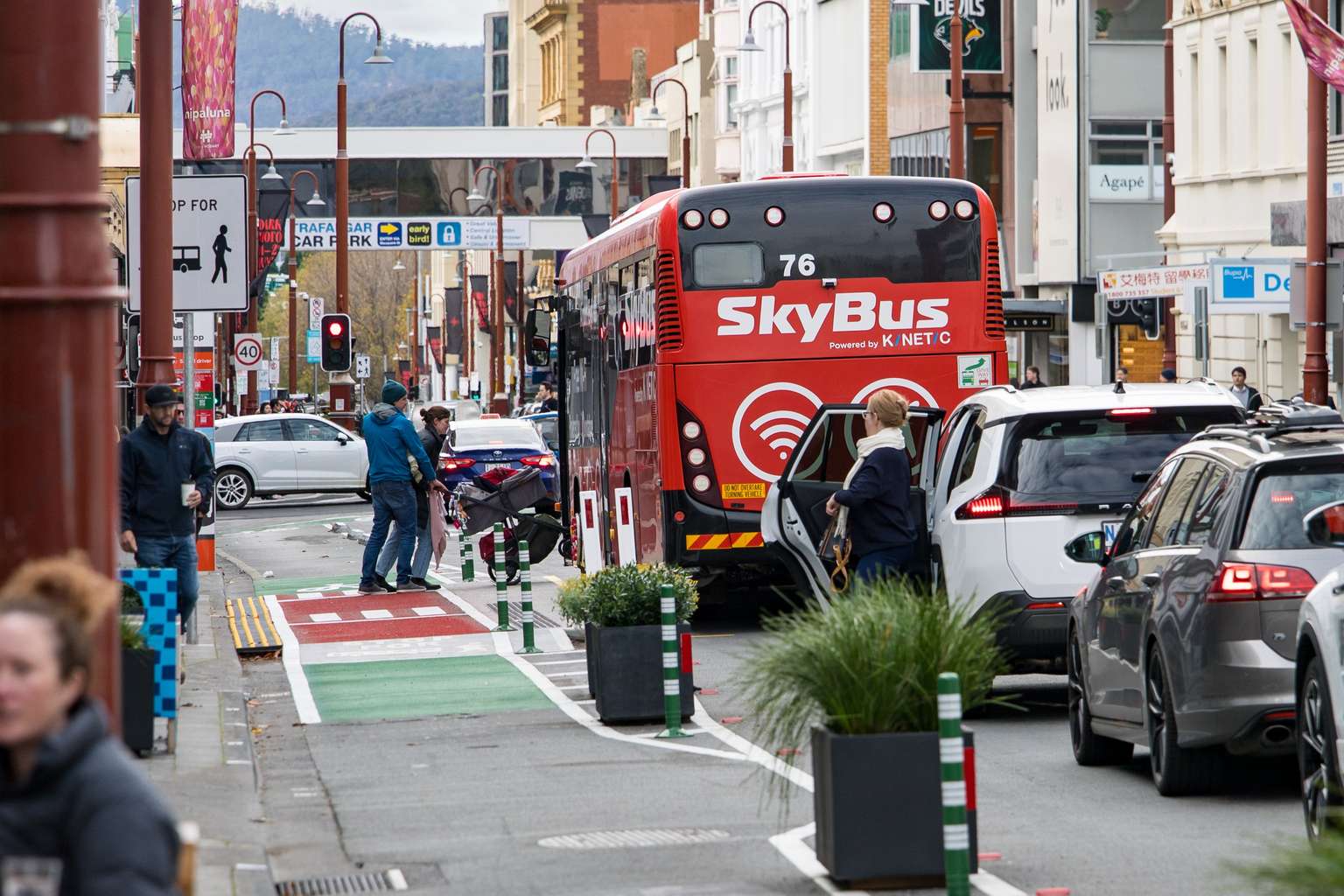
A new tram-style bus stop near Murray Street now sits within an active traffic lane, where buses pull up beside a raised boarding platform.
Cyclists ride up and over the platform, giving way to passengers getting on and off.
Outgoing Hobart Lord Mayor Anna Reynolds said early data pointed to more cycling and foot traffic since the changes began.
The council’s November 2025 monitoring report counted a weekday average of 330 cyclists a day at the Hobart Rivulet entrance, down from 347 in winter.
It logged no daily car count for comparison, tracking only vehicle speeds, which sat at 34-35km/h.
“Transforming Collins Street is about making one of Hobart’s great streets more inviting, more connected and more enjoyable for everyone,” Reynolds said.
“This is not a set-and-forget project. We’ve already made changes in response to feedback and we want to keep improving it.”
The council previously returned Victoria Street to two exit lanes onto Collins Street, reversing a single-lane setup that caused gridlock around the Centrepoint car park before Christmas.
“Community feedback is essential in helping us understand what’s working, what’s not and how we can shape the future of Collins Street,” Reynolds said.
But the project has drawn criticism from business groups, which say the trial has made it harder for people to get into the CBD.
Business Greater Hobart chair Edwin Johnstone said the trial should end.
“The council’s monitoring reports have not yet demonstrated the increase in cycling numbers that many supporters of the project anticipated,” he said.
“Major transport projects should be judged on outcomes, not ideology. The current evidence does not justify making the bike lanes permanent.”
Johnstone said Collins Street was a critical access route for customers, tradespeople, delivery drivers and buses.
“CBD businesses need more customers, not more barriers to access,” he said.
The cost of the trial has also caused concern among councillors.
Councillor Louise Elliot shared online in April that the project had cost $762,468 by then, with $200,000 set aside for the final stage of work.
The council says it will consider all data and community feedback before making a decision when the trial ends in 2027.