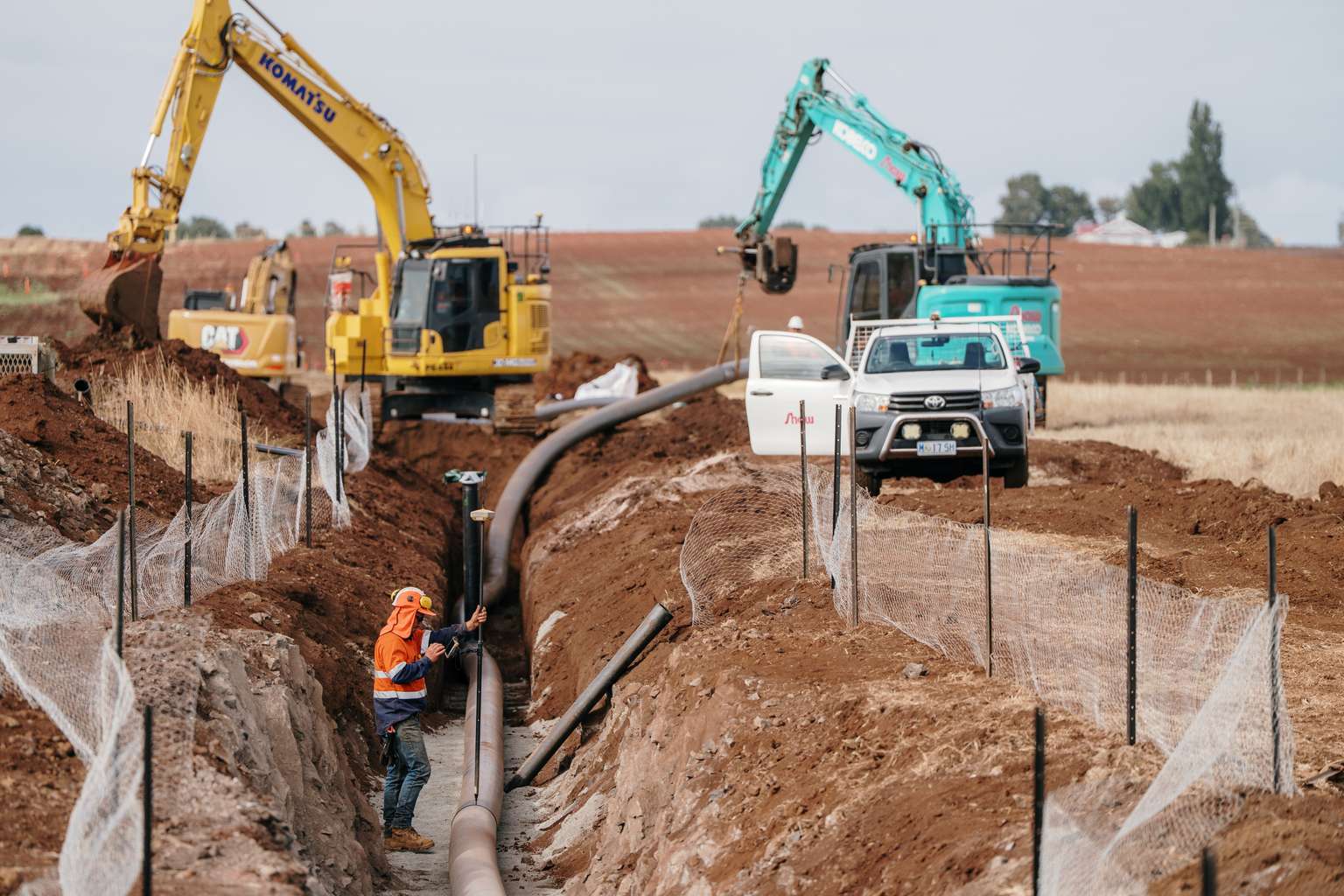
Construction has begun on a major irrigation expansion that will almost triple water supply to farmers across north-west Tasmania.
The Sassafras Wesley Vale Irrigation Scheme Augmentation will deliver an additional 9.2 gigalitres of water annually to farming communities from Sassafras to East Devonport.
The $124 million project is jointly funded by the federal government ($62.1 million), Tasmanian government ($31.05 million) and local landowners ($31.05 million).
Federal Environment and Water Minister Murray Watt said water security was critical for farming success.
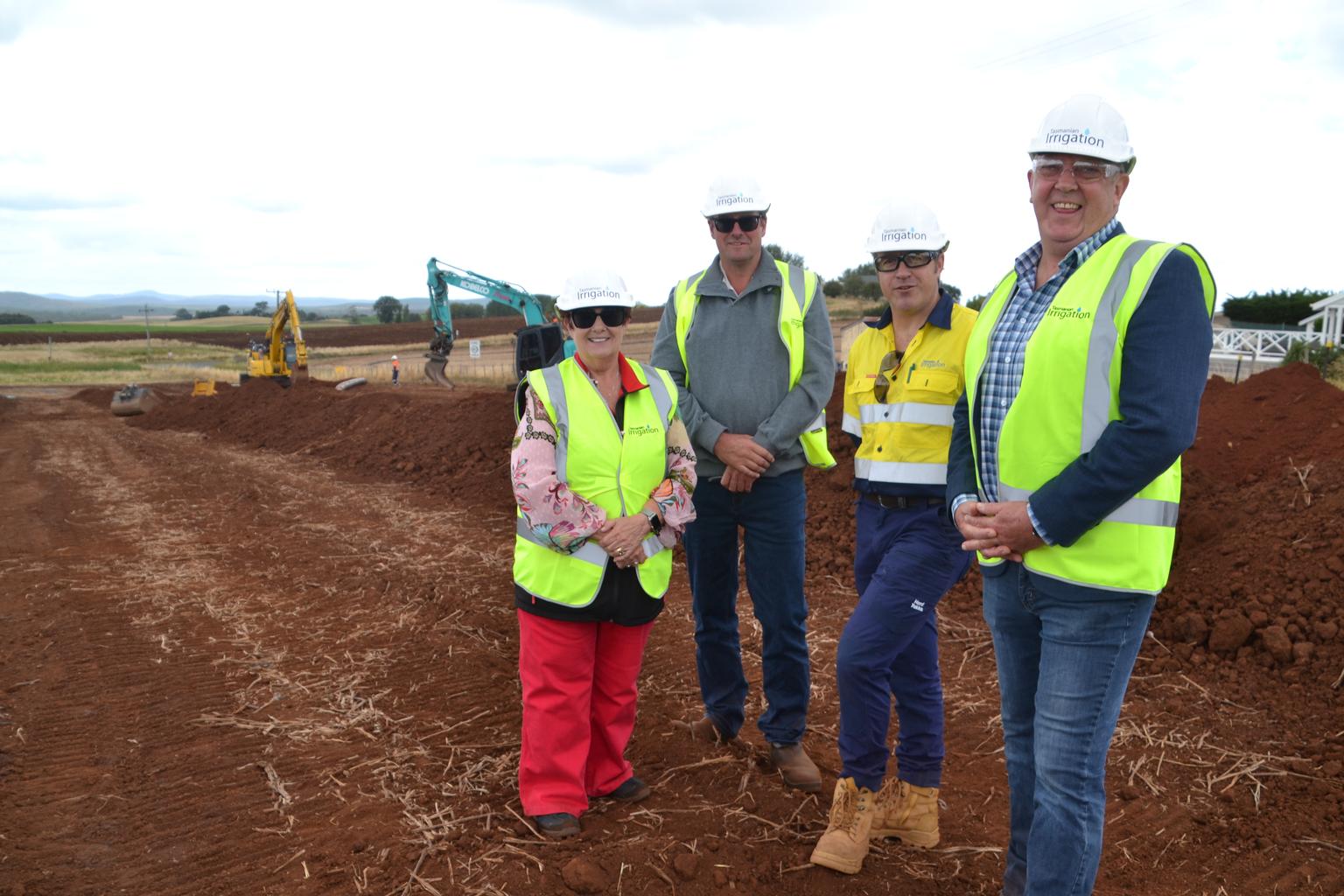
“We’re pleased to see this project surge ahead, with construction now underway that will deliver almost triple the amount of water available to farmers in Tasmania’s northwest once it’s completed,” he said.
The scheme will boost total annual water delivery to 14.9 gigalitres for the Sassafras Wesley Vale Irrigation District.
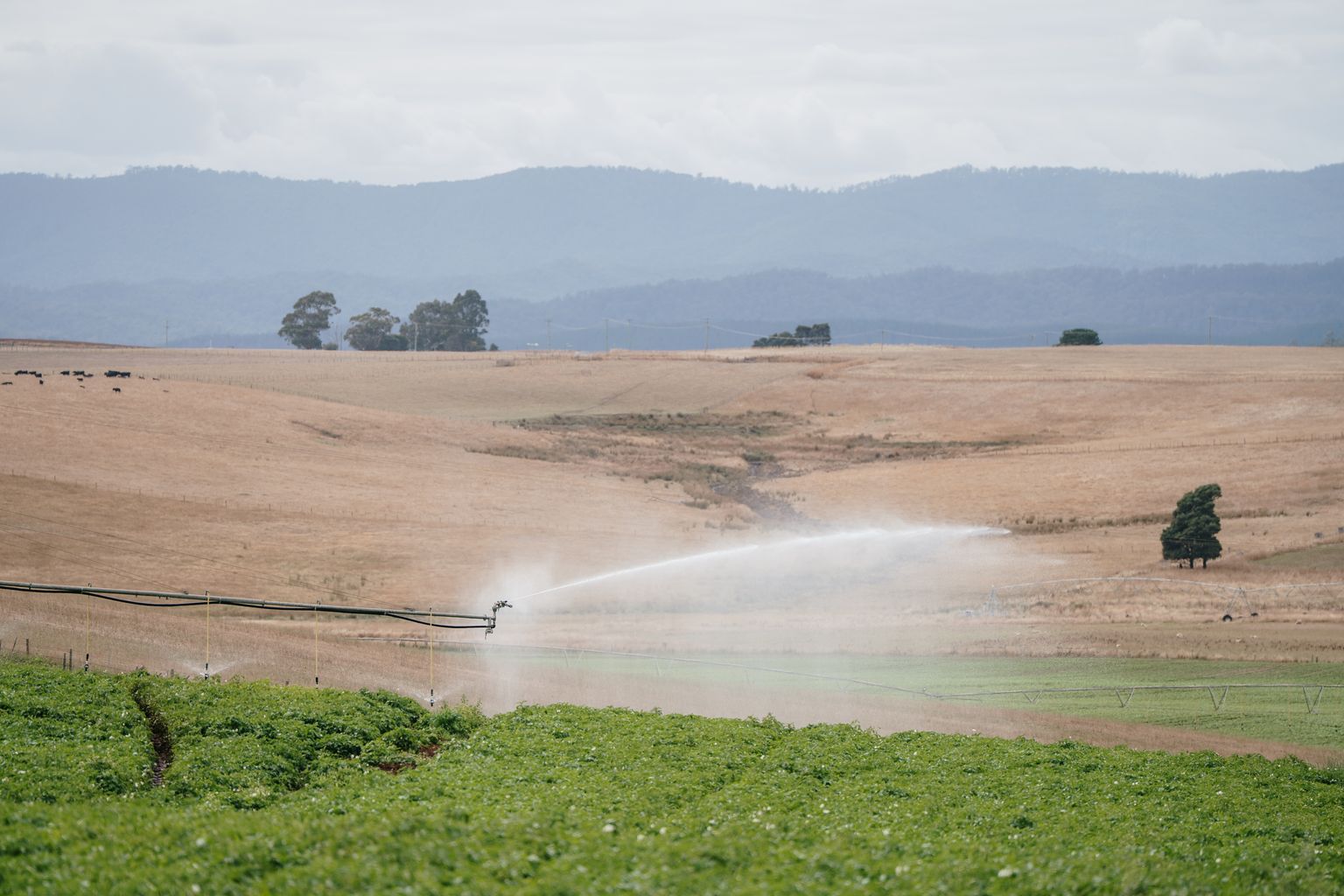
Water will be sourced from the Great Bend pump station on the Mersey River, backed up by releases from Hydro Tasmania’s Parangana Dam.
Tasmanian Primary Industries Minister Gavin Pearce said the project would transform regional farming.
“The Sassafras Wesley Vale Irrigation Scheme will be transformative, serving as a key enabler for farmers across the region,” he said.
“We know just how vital water security is for our farmers, which is why our Government invested $31.05 million in this Scheme.”
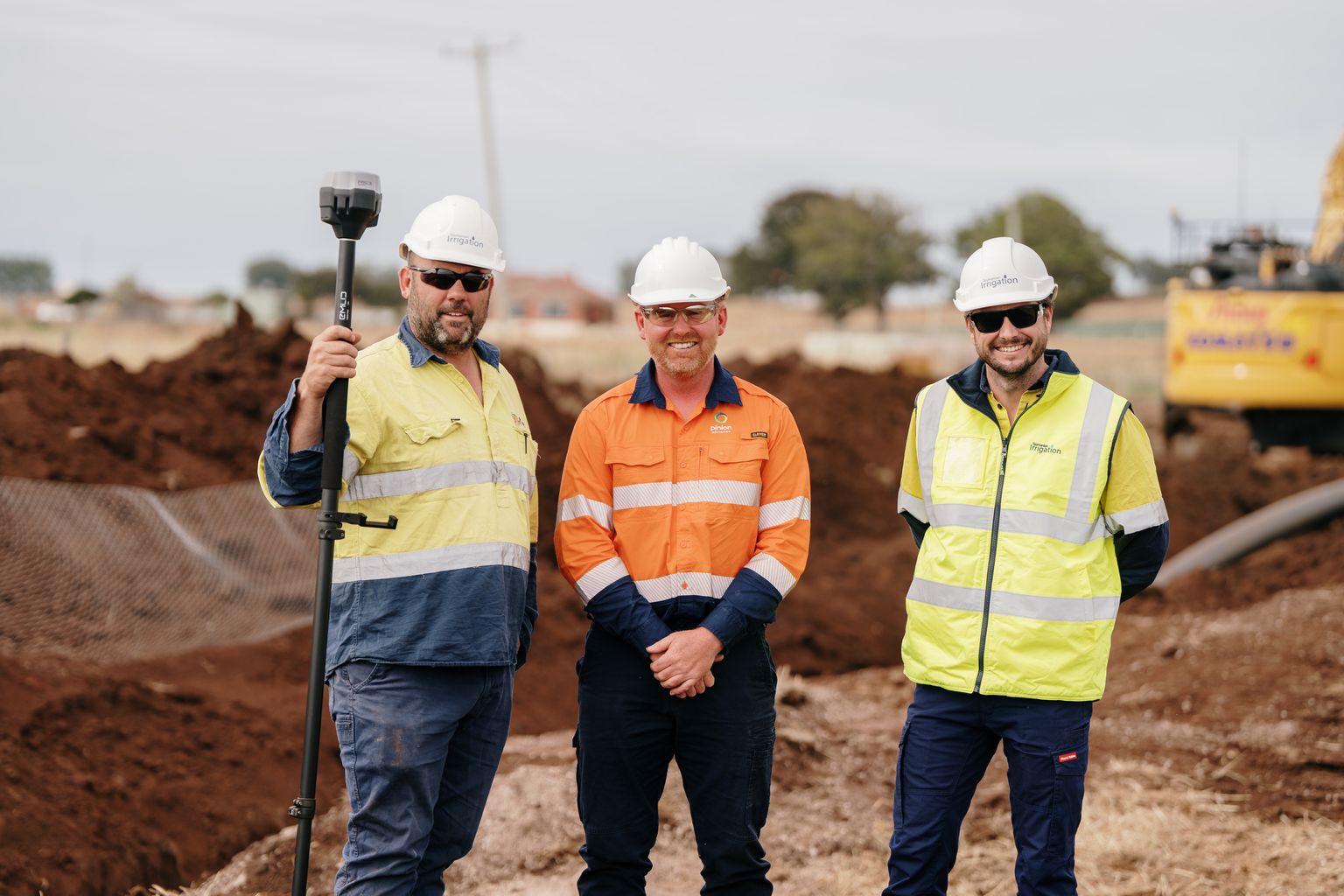
Federal Braddon MP Anne Urquhart said the infrastructure would benefit farming communities for generations.
“From Sassafras to East Devonport, this investment will support farmers through the critical summer irrigation season and ensure water reliability for decades to come,” she said.
Tasmanian Irrigation chief executive Michael Sylvester said the project would create 60 construction jobs and 210 ongoing positions once operational.
The scheme includes more than 100 kilometres of new and refurbished pipeline plus two pump stations.
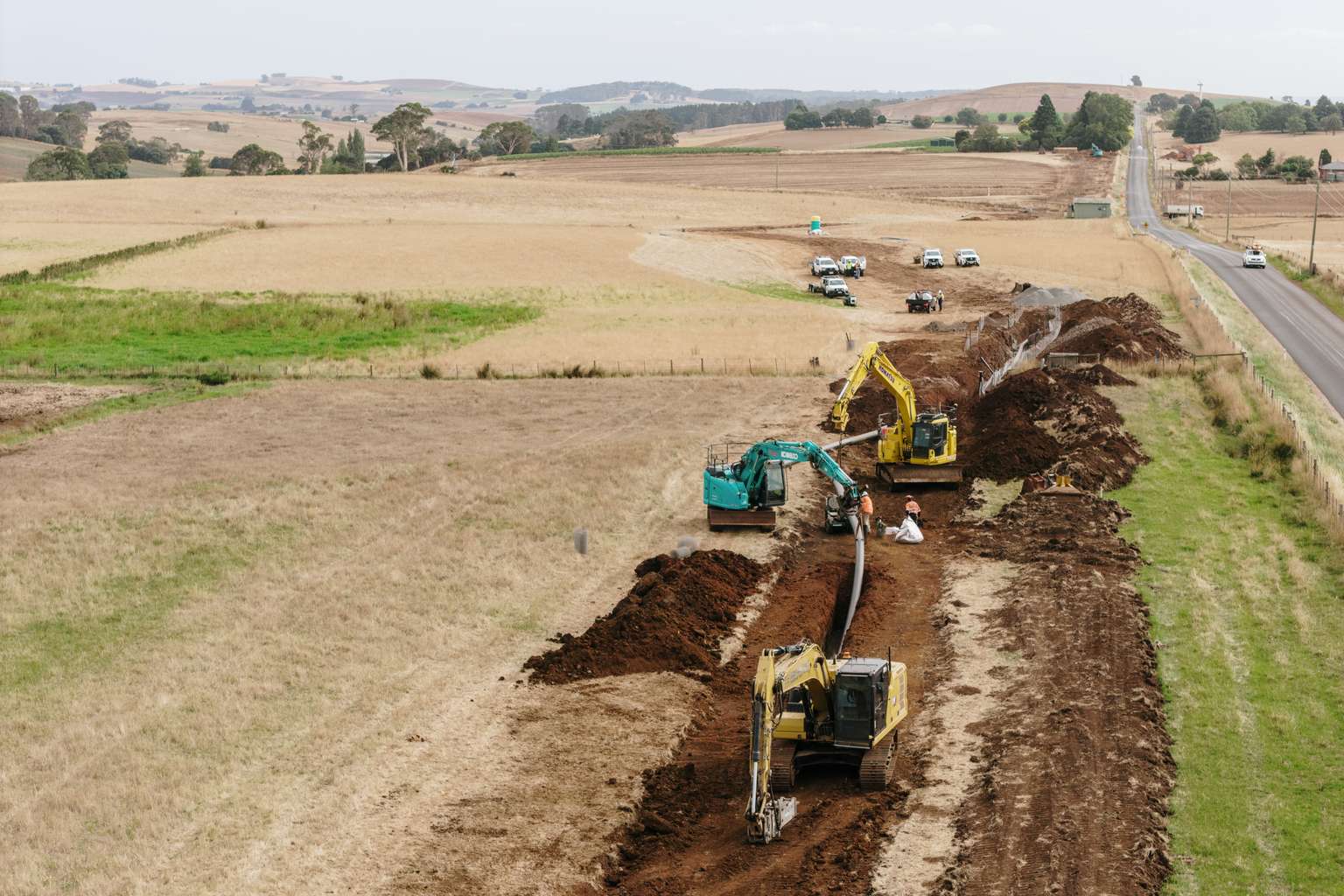
Pipeline supplies are being sourced from the Vindex plant at Wynyard.
Construction is expected to finish in October 2027, providing crucial water security particularly during the summer irrigation season from November to March.