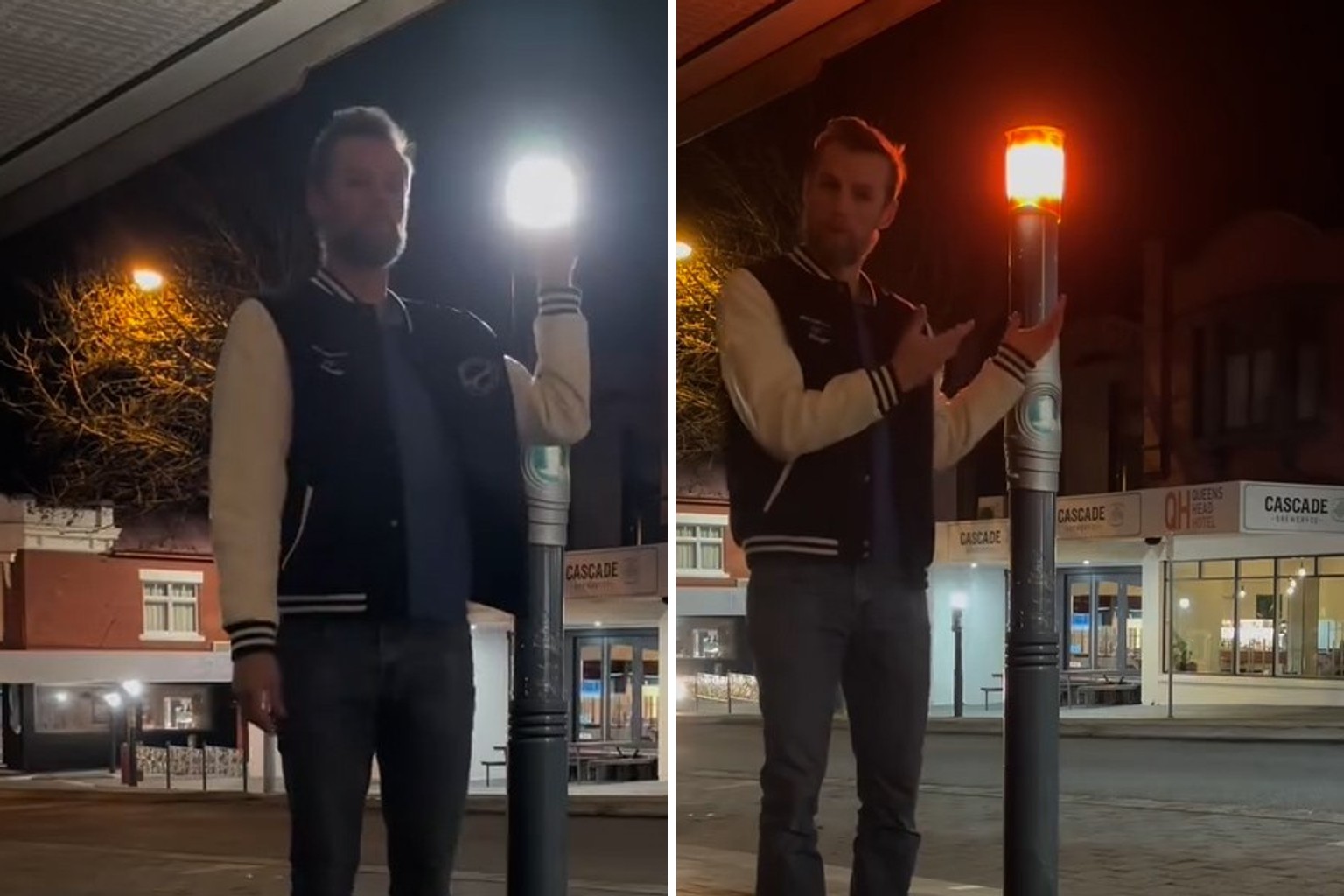
A bright idea to combat strong white lights in Hobart by councillor Ryan Posselt has been rubbished by the Hobart City Council.
Posselt took a hands-on approach to what he sees as an eyesore in North Hobart, crafting DIY filters to soften new LED bollard lights he says are too harsh.
The council recently replaced the bollard lights in the area with energy-efficient globes.
Posselt said the new lights were a problem.
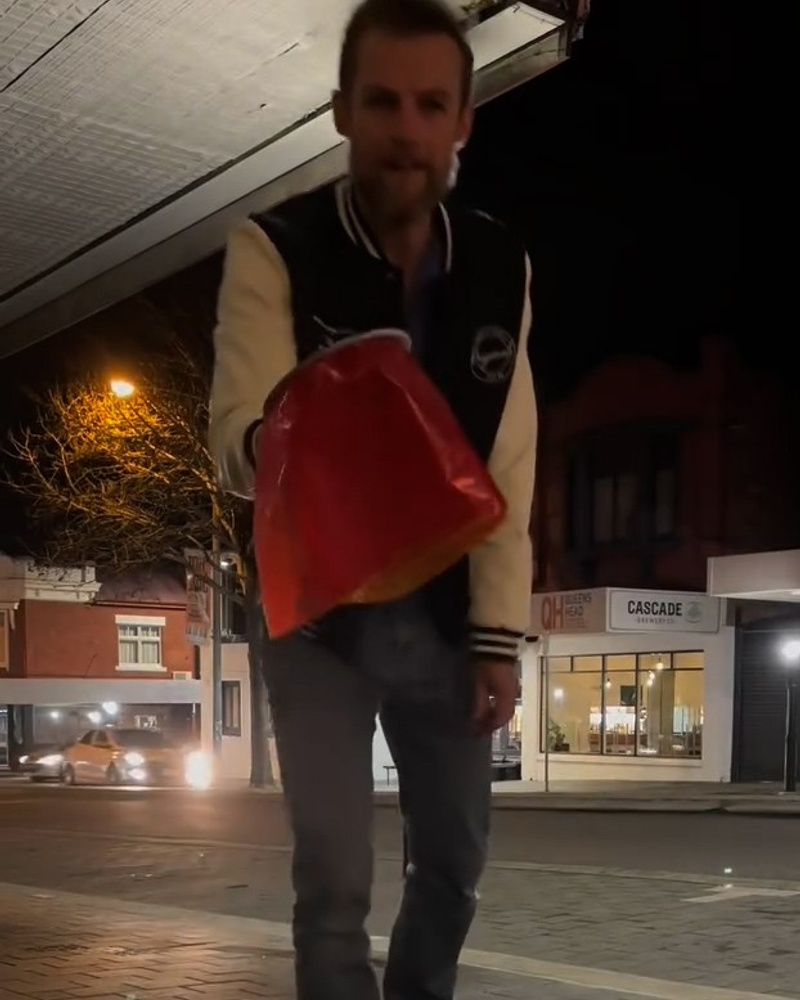
“They’re super bright and they’re super white,” he said in a social media video over the weekend.
Rather than wait for an official fix, Posselt and his children crafted DIY light colour filters from cellophane and paper plates before installing them himself over the lights.
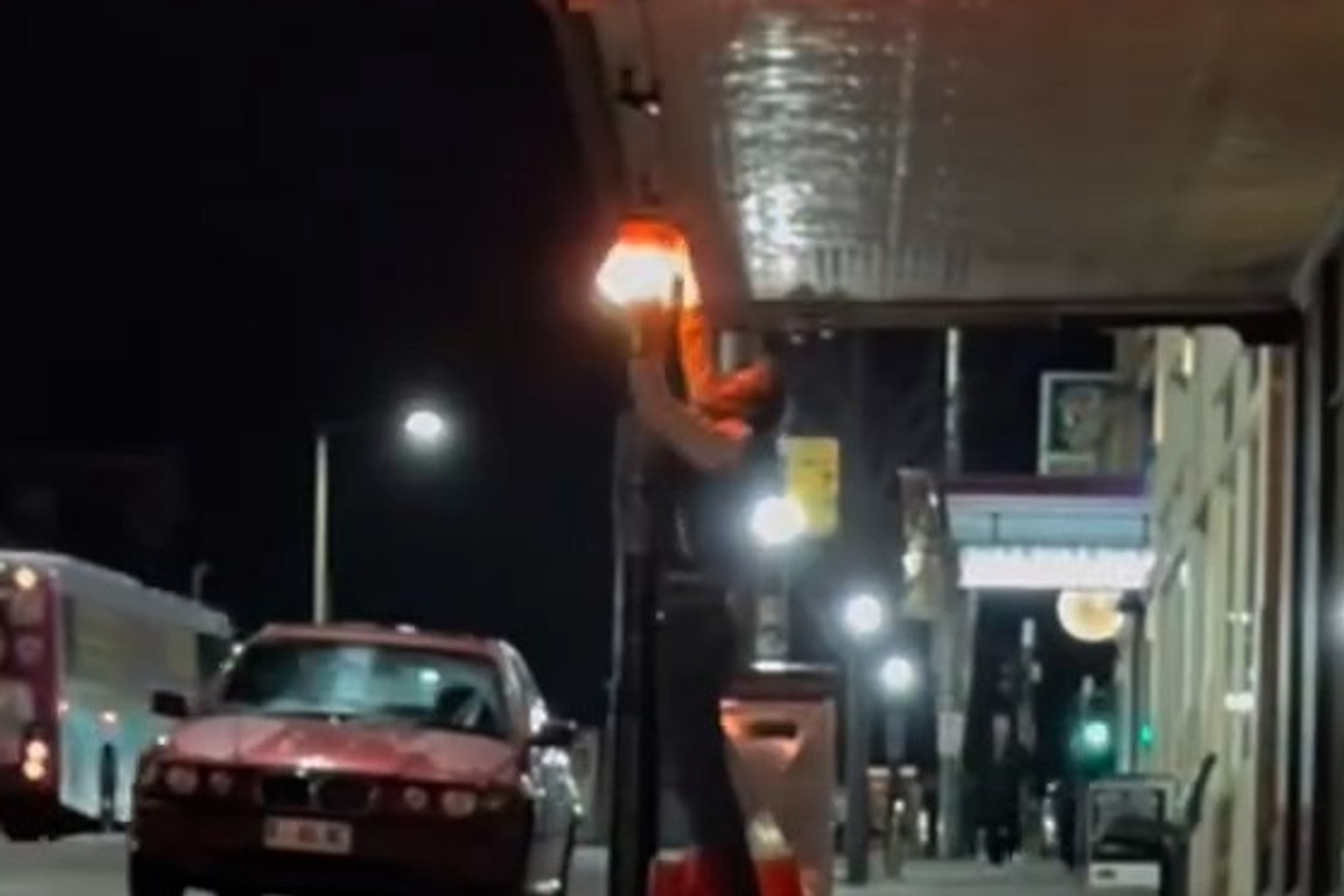
“I decided to come down to North Hobart and fix it,” he said.
“Me and the kids made these little filters out of cellophane and paper plates.”
In a statement, the council pushed back on the stunt.
A Hobart City Council spokesperson said the lighting was designed to “provide a safe, welcoming and accessible environment for pedestrians while incorporating modern, energy-efficient LED technology”.
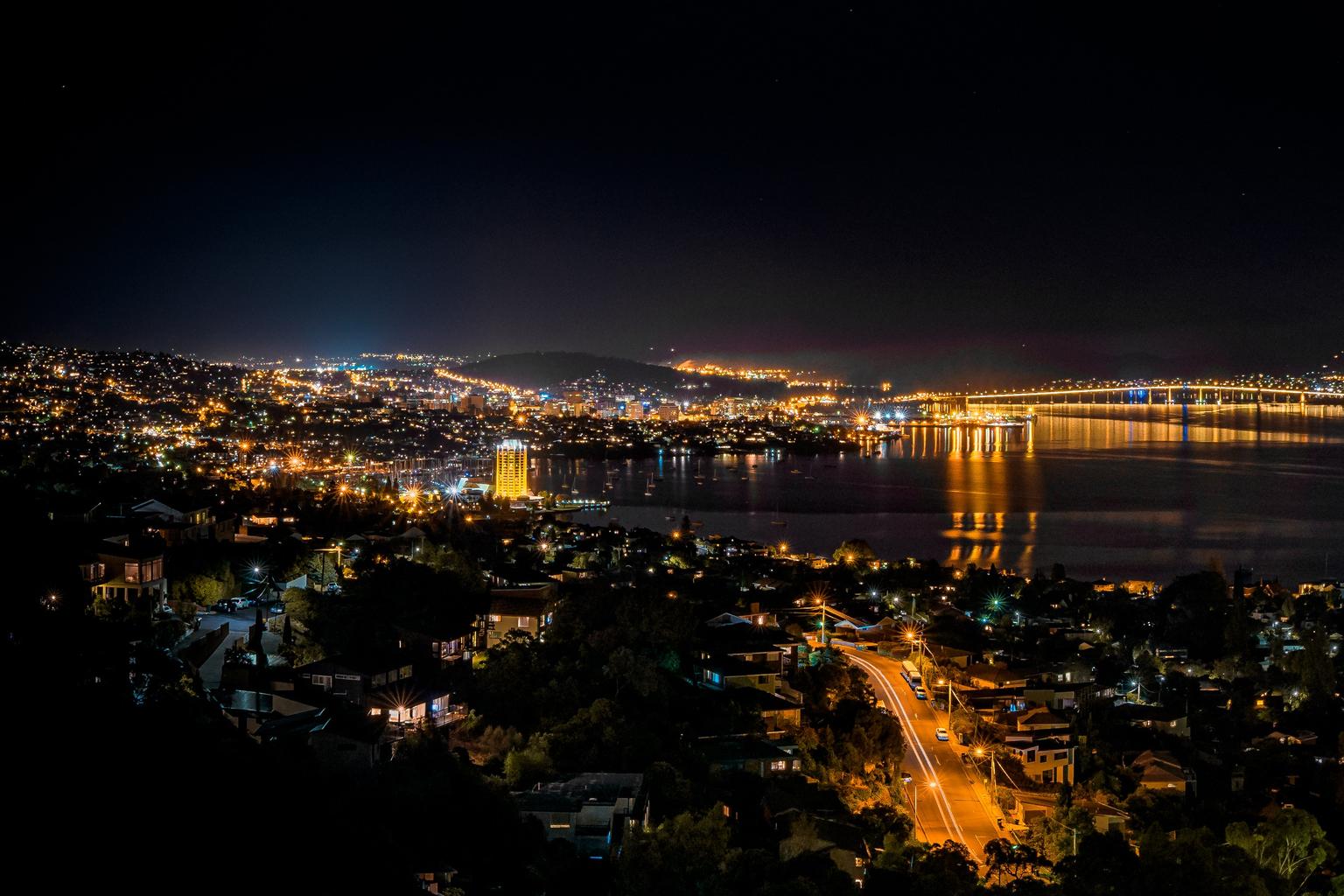
“Council continually reviews its public infrastructure and welcomes community feedback,” they said.
“However the current lighting is considered fit for purpose and meets the requirements of a contemporary public space.”
The spokesperson said Posselt’s DIY fixes were installed “temporarily for the purpose of recording the video and were removed immediately afterwards”.
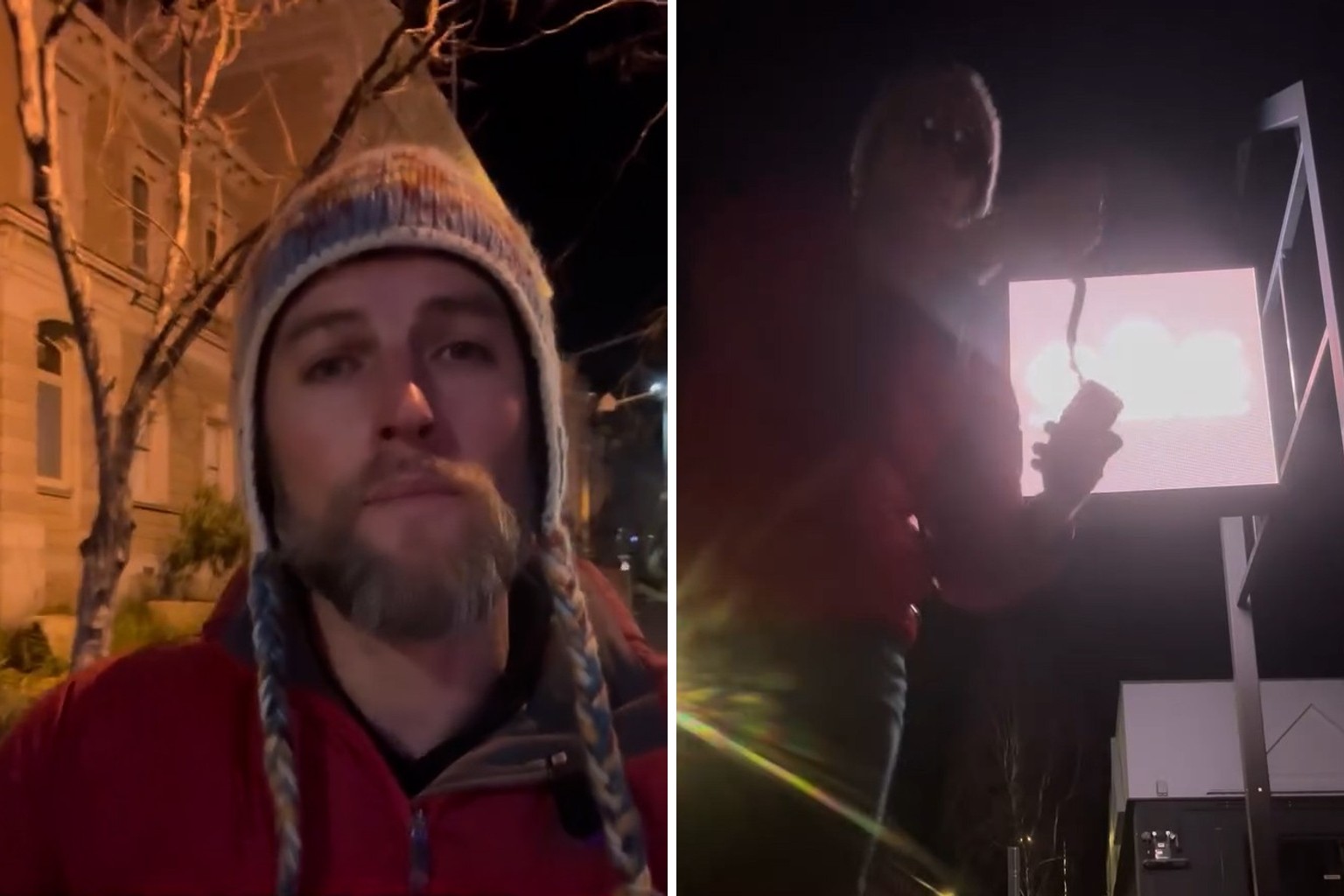
The stunt is part of a broader push by Posselt to make Hobart a dark sky community, with the councillor recently posting videos of himself wandering the city with a light meter to compare lighting levels in different areas.
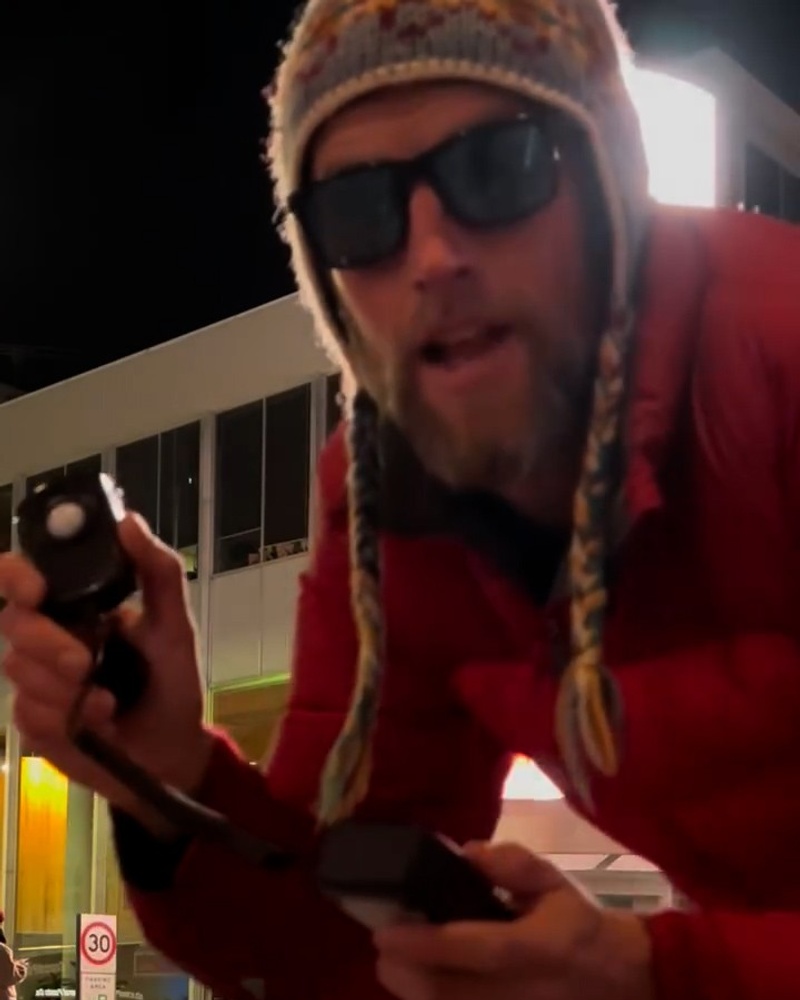
He said a stretch of Liverpool Street near Myer was consistently reading between 20 and 25 lux – seven times the light exposure measured just one block away and four times the reading outside Town Hall.
“Outside Myer, it really feels like daylight,” he said in a recent social media video.
“It’s not a very pleasant space to be, I don’t want to stay here and my body is having a visceral reaction to the light.”
In contrast, he said Town Hall measured just five lux yet “feels so pleasant and safe”.
Posselt argued the spread of white and blue spectrum LED lighting was affecting not just people but wildlife as well.
“Streets don’t need to have bright white blue spectrum lighting at night to make people feel safe,” he said.
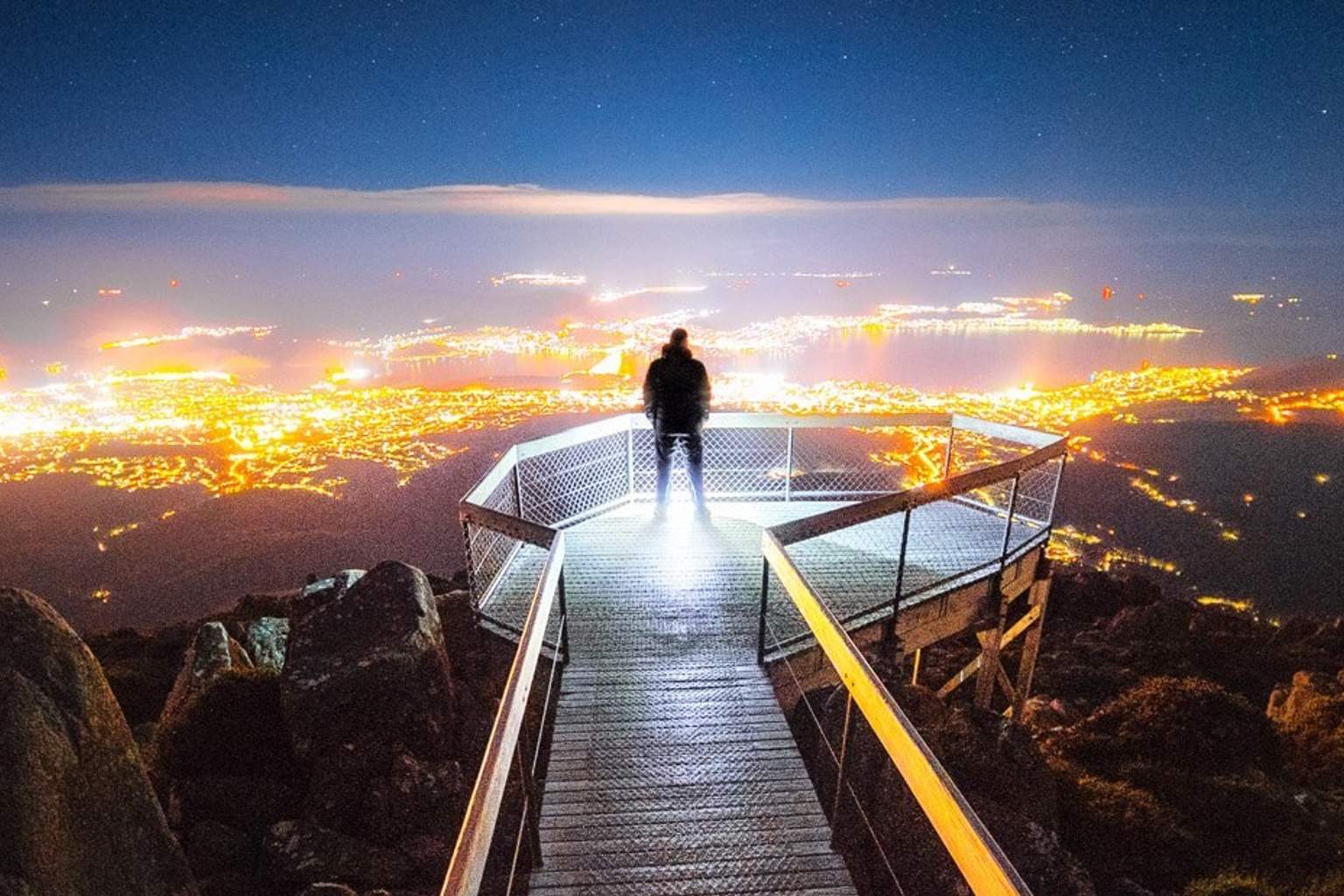
Dark Sky Tasmania has been advocating for local councils to enforce the Australian standard AS/NZS 4282:2019, which places limits on glare and light spill to neighbouring properties.
The group says the standard is not always mandatory but can be applied to street lighting and new developments and is urging councils to insist on it for all new or upgraded lighting projects.