
An Australian aviation crew has carried out a rare midwinter medical evacuation from Antarctica, departing from Hobart and flying into complete darkness and temperatures as low as minus 43 degrees celsius.
Australian aviation company Skytraders said it mobilised its Airbus A319 after receiving an urgent request for help late last month.
The plane, known as Snowbird 1, departed Hobart on July 31 at 2:44am and landed at US-operated McMurdo Station on Ross Island five and a half hours later.
The aircraft had been reconfigured into a specialised medical evacuation setup within 24 hours of the call, then waited 12 hours for a suitable weather window.
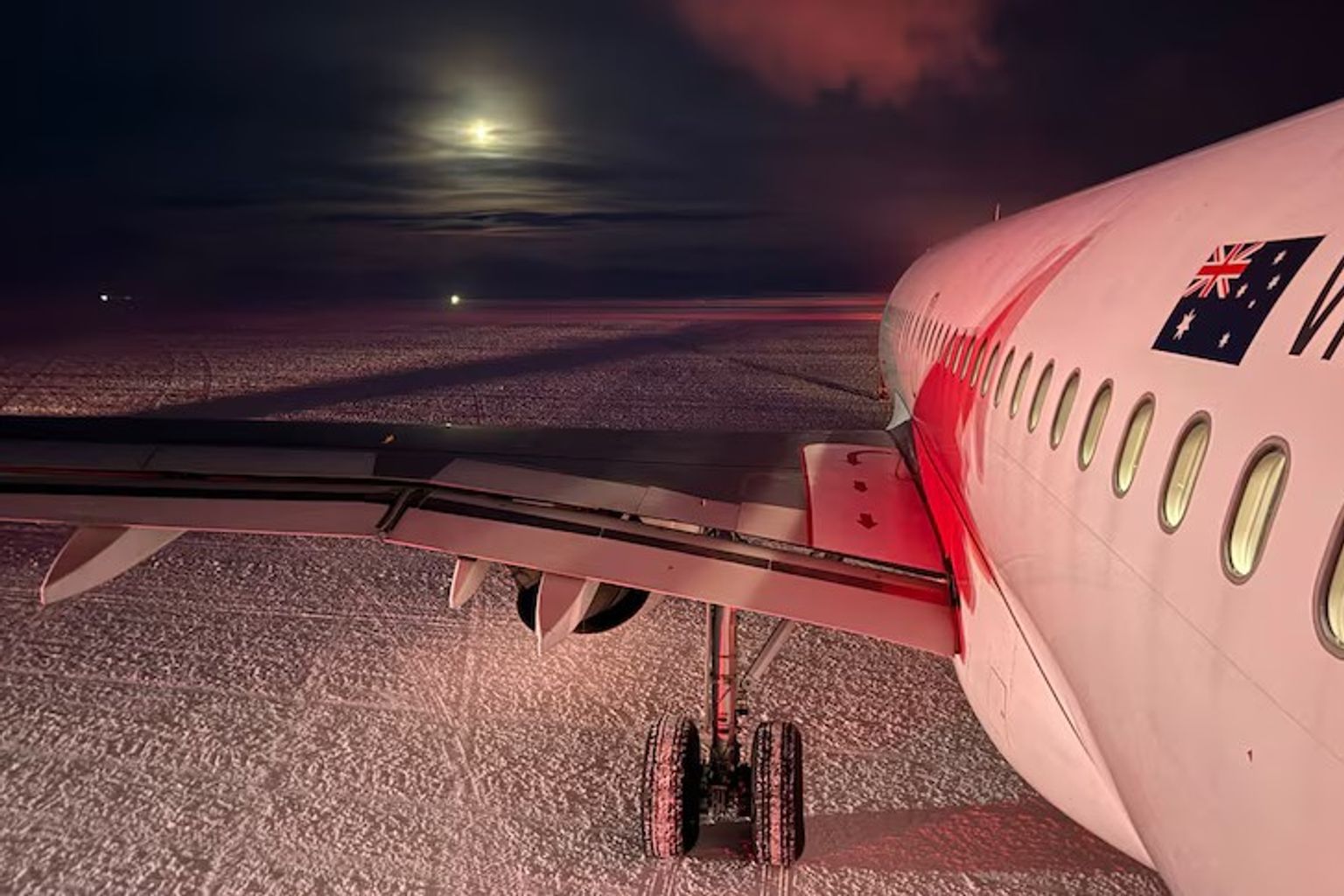
The crew safely transferred the patient before departing ahead of worsening conditions, then flew on to Christchurch in New Zealand for medical treatment.
The US National Science Foundation told the ABC the patient “arrived at Christchurch on July 31 and was admitted to Christchurch Hospital in serious condition”.

Skytraders deputy chief executive Duncan Mackay said his company believed the flight was the closest a civilian airliner had operated to the Antarctic winter solstice.
He said an enormous amount of experience and familiarity with the conditions was needed to safely land an airliner on an ice runway in total darkness at minus 43 degrees.
Pilot Al Wallach said the successful mission reflected the specialist expertise of the team, including flight crews, meteorologists, operational planners, runway teams and medical personnel.
“Every Antarctic mission demands absolute precision, but winter operations raise the complexity significantly,” he said.

“The conditions we encountered were right on the edge of even the most specialised aircraft capability.”
The US National Science Foundation said winter medical evacuations “occur infrequently and can be extremely dangerous, requiring significant skill and experience to execute successfully”.
Skytraders has been a provider of air services to the Australian Antarctic Division for almost 25 years.
The company operates the intercontinental air link between Hobart and Antarctica and provides specialist polar aviation services for scientific programs operating in Eastern Antarctica.