Tasmania Police officers are being pulled away from core police work to cover for other agencies, an independent review has found.
The ‘Role of Police’ review, released today, warns the organisation will struggle to do its job properly in the long run unless that changes.
It found police are absorbing mental health callouts, ambulance jobs, child safety matters and youth offending that other parts of the system cannot handle.
“Many of these matters sit more appropriately with other agencies and failure to address this will affect the ability of Tasmania Police to fulfil their core role in the long term,” the report says.
The Australian New Zealand Policing Advisory Agency ran the review between June 2024 and October 2025 at the request of Police Commissioner Donna Adams.
Around 200 officers and policing partners contributed through surveys and interviews.
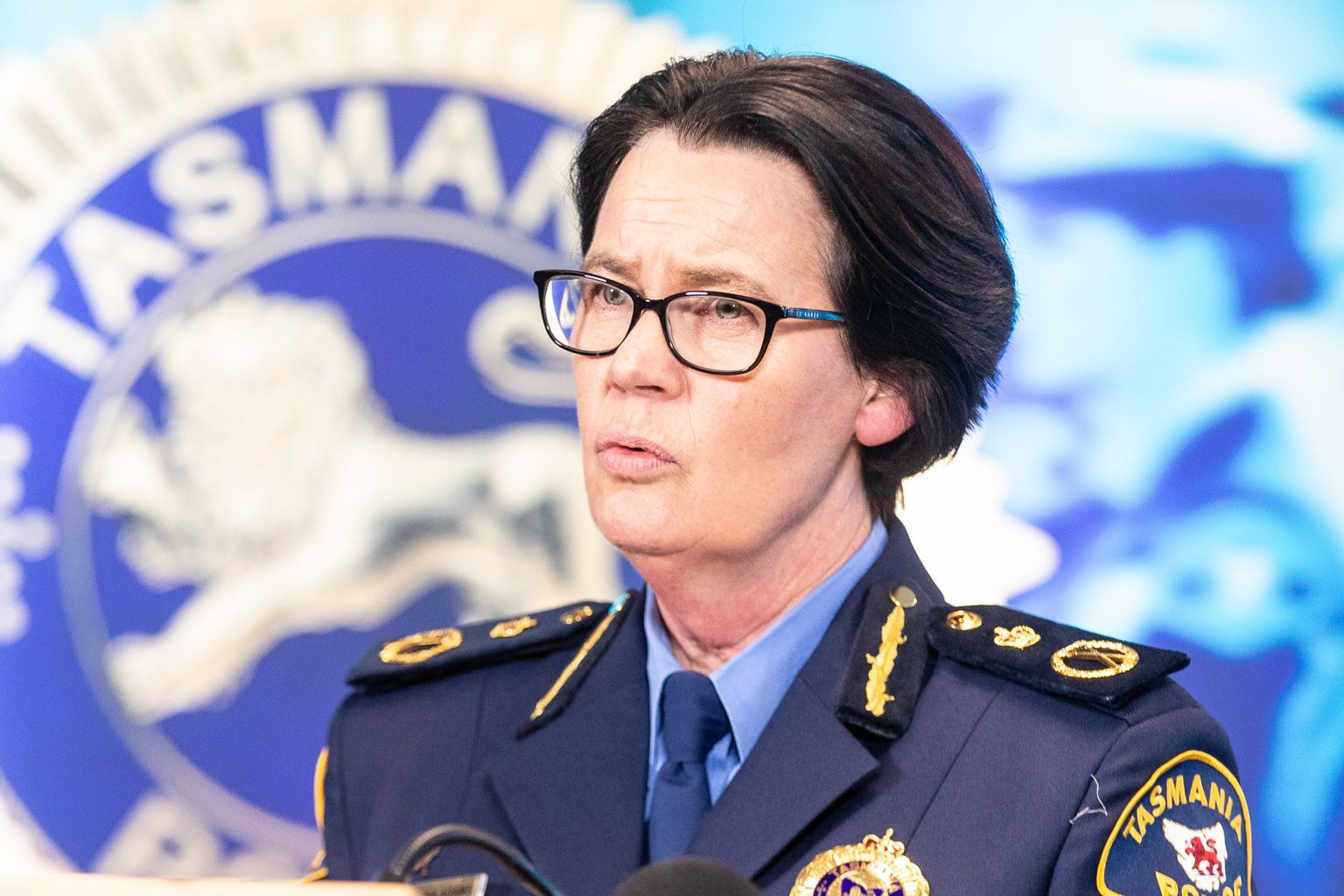
Adams acknowledged the pressure was coming from work that is not strictly policing.
“Much of this work, while important to community safety, does not always sit neatly within traditional measures of police performance or within the core responsibilities of policing,” she said.
Police attended 10,650 mental health and welfare jobs in the year to January 2025, along with 2,443 ambulance jobs.
In one case, two officers waited an hour and 37 minutes at the Royal Hobart Hospital with a man in protective custody who the report said posed no obvious risk.
The job took three hours and 38 minutes. The review said that was not unusual.
Police were called to the Ashley Youth Detention Centre 40 times last year, involving 159 members and 73 hours of work.
Officers told the review they were overworked and understaffed.
But the review found the data did not back that up, saying officers were instead being “overwhelmed” by complex systems, slow processes and the emotional toll of repeated high-impact incidents.
“Meeting policing demand requires smarter solutions than simply extra police numbers,” the report says.
Tasmania Police runs 28 separate reporting and intelligence systems.
Its main system, Atlas, was described as “onerous and not user-friendly”. Some officers bypass it entirely.
Many share intelligence, images and suspect details over WhatsApp on their own unencrypted phones, which the report said may put data security at risk.
Youth offending was another source of frustration. In both 2023 and 2024, a young person was bailed in 80% of crime custody incidents.
“[Young people] know their rights. They know what we can do. They can be given bail on bail on bail. Youth crime is taking up a lot of our time,” one constable told the review.
The review also recommends frontline officers carry tasers. Currently, only qualified Special Operations Group members always carry them.
Reported armed person incidents are up 276% since 2020-21, while dangerous article charges rose an estimated 127% between 2021-22 and 2024-25.
“These are significant increases,” the report says.
Dispatch incidents are up by more than 40,000 in a decade, reaching 138,756. Mental health and family violence dispatches have more than doubled over that period.
Family violence incidents rose from 1,582 to 5,856, a 270% increase. Those jobs typically need a response of between two and eight hours.
The review makes 39 recommendations, five of them marked as priority actions. Three are roster reform, online reporting and a trial of secure mobile devices.
The other two cannot be delivered by police alone – setting criteria for when officers attend mental health incidents and hospital handover protocols with Ambulance Tasmania.
The Police Association of Tasmania, which had pushed for the review, said it confirmed what officers had been living with every day.
“Police are increasingly being used as the safety net when other agencies are not resourced, available or willing to respond to matters that sit within their own portfolios,” the association said.
“Police officers are not trained to provide that support, but they do their best in challenging circumstances.”
It said roster reform was the most urgent issue.
Many officers work a five-week cycle ending with seven consecutive night shifts, which the association said was “placing unacceptable pressure on police officers and their families”.
Commissioner Adams said Tasmania Police would now examine the report’s findings and recommendations to help prioritise “realistic, achievable actions” for frontline policing.
“Taking budget considerations into account, we will be working with staff to focus on identifying what can be done now, what can be undertaken over time and what will deliver the greatest impact for our people, the organisation and the community,” Adams said.
The police association said the recommendations were broader than Tasmania Police could implement alone, because many of the pressures came from gaps elsewhere in government.
“The association supports a whole-of-government commitment to close the circle on the disconnect between multiple agencies and the police service,” it said.