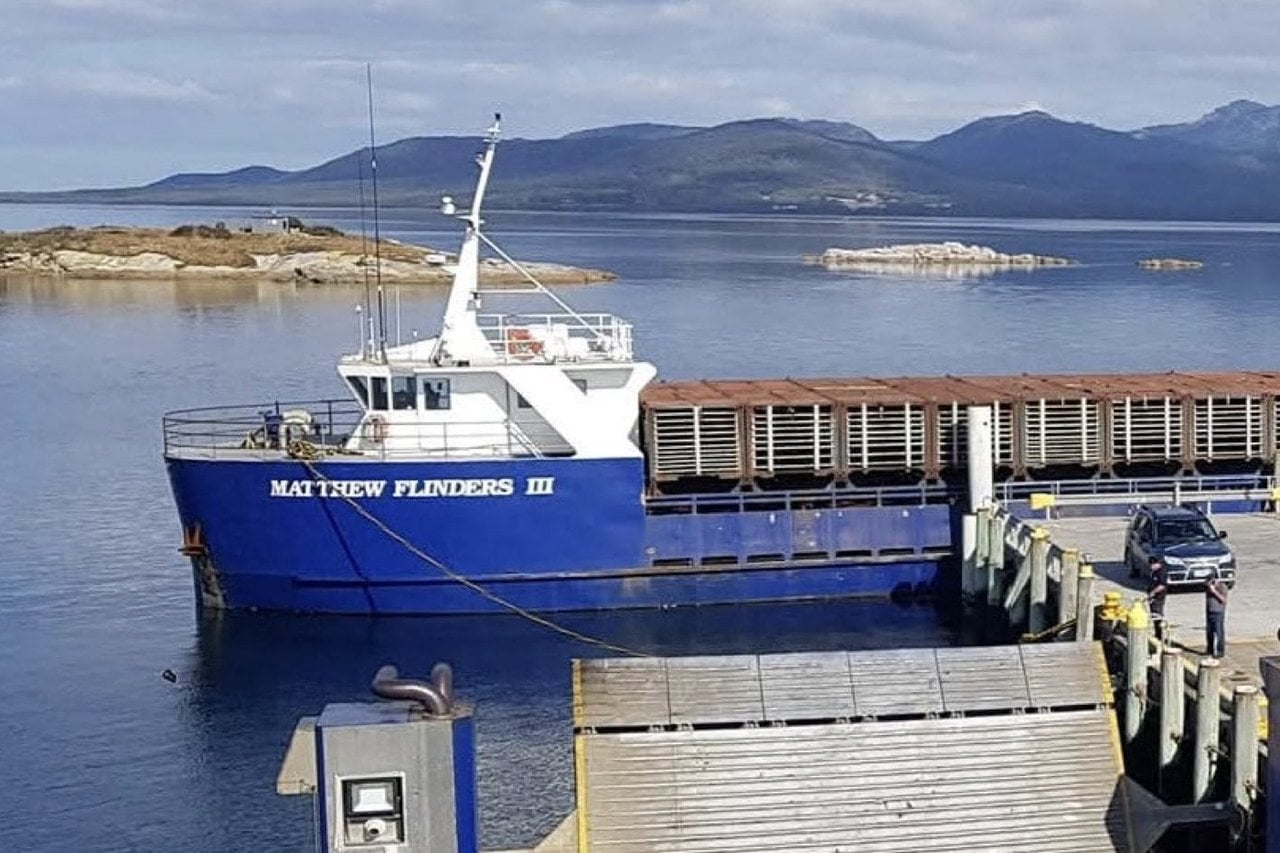
A cargo ship lost steering in Bass Strait last year, leaving its crew struggling to keep it clear of the coast for about eight hours, a safety investigation has found.
The Matthew Flinders III was travelling from Bridport, in Tasmania’s north-east, to Lady Barron on Flinders Island on the night of July 23, 2025, when the failure happened.
The ship was about eight kilometres north of Waterhouse Island when both rudders locked hard to port, sending it into an uncontrolled turn.
The crew could not immediately work out what had gone wrong.
As the ship rolled heavily in the swell, they disconnected the steering gear, centred the rudder by hand and used the main engines to regain some limited control.
They then began making their way back to Bridport.
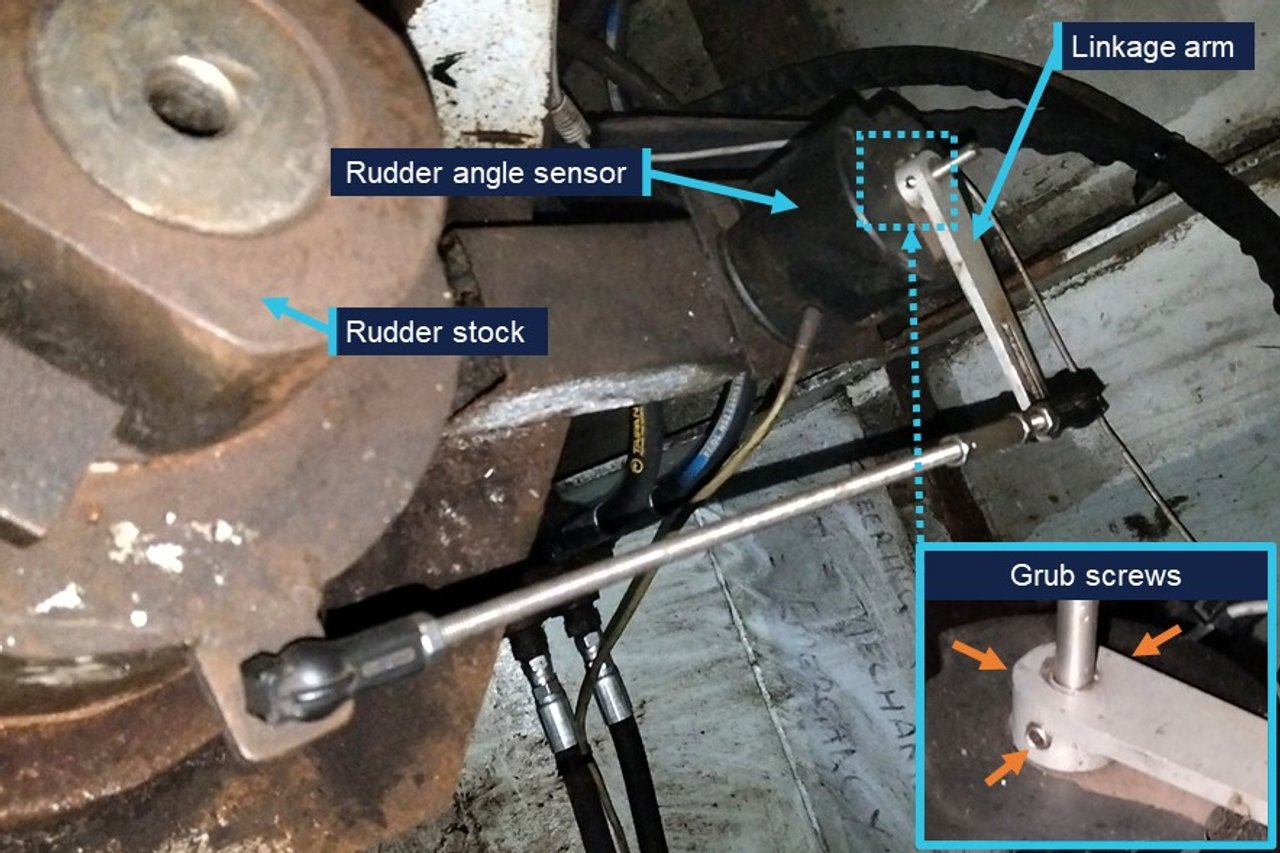
About eight hours later the ship’s engineer found a loose linkage arm in the steering control system and re-tightened it.
Steering was restored and the ship continued to Lady Barron without further trouble.
The Australian Transport Safety Bureau (ATSB) found the loose arm had cut rudder feedback to the autopilot, disabling both the autopilot and the follow-up manual steering.
But the ship also had a separate backup system that did not rely on the failed sensor.
“The toggle steering system was available throughout the occurrence and was engaged by the engineer, but the master was unfamiliar with the toggle steering controls on the bridge and was unable to regain steering,” ATSB chief commissioner Angus Mitchell said.
The investigation found the operator, Bass Strait Freight, had not properly trained new crew on the backup system and its safety documents lacked clear instructions.
“Shipping companies are reminded of the importance of the availability of clear and simple instructions and procedures as part of their safety management systems,” Mitchell said.
He said this mattered most on ships with unusual features or a high turnover of casual crew.
Bass Strait Freight has since improved its training and posted a simple guide for switching between steering modes.
The ATSB has recommended the company go further and set out a clear timeframe for improving its emergency steering procedures.