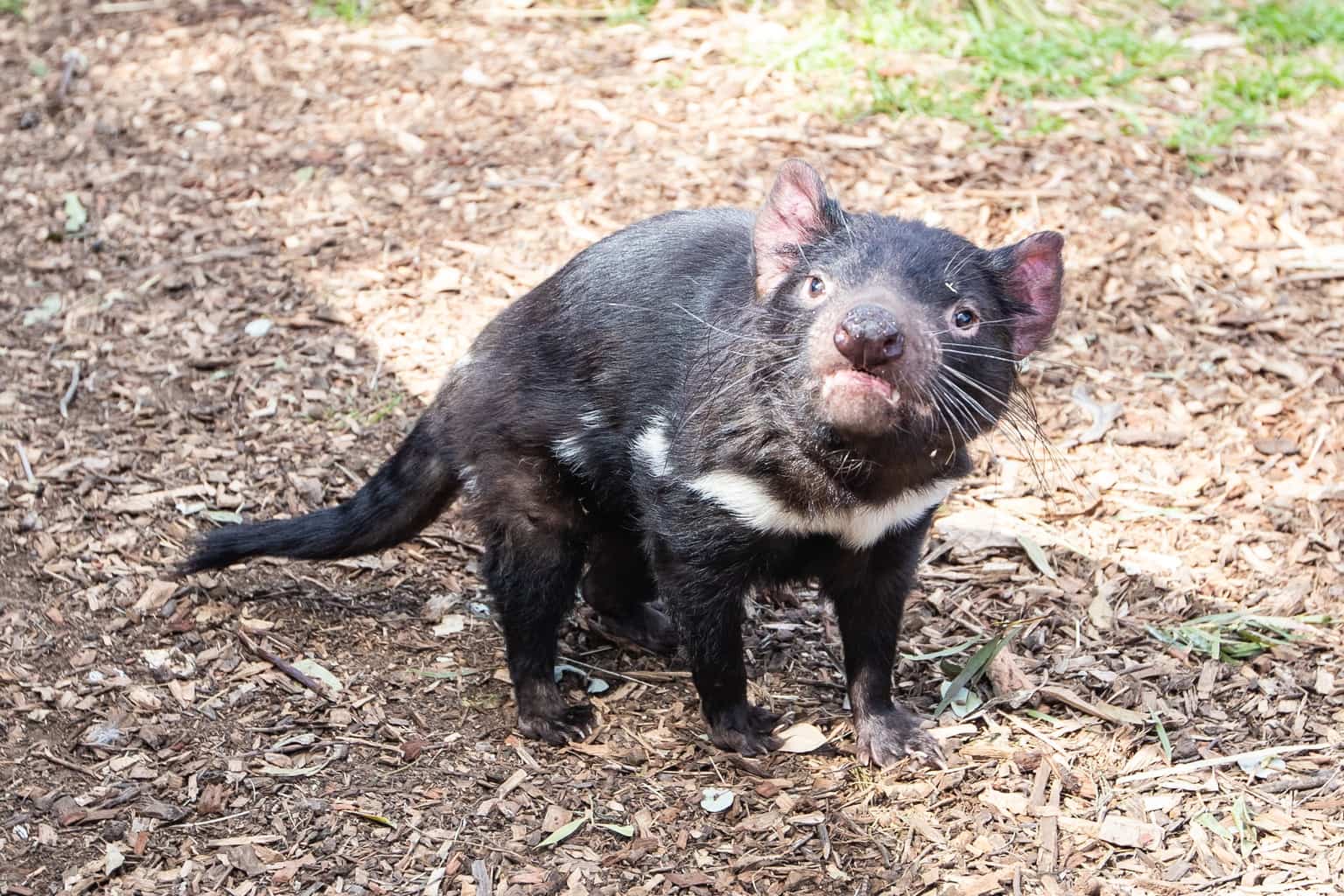
A new field test could help scientists detect devil facial tumour disease in wild Tasmanian devils in hours instead of days or weeks.
University of Tasmania researchers published their findings in the journal Royal Society Open Science this week.
The test detects tiny amounts of tumour DNA from swabs, fine-needle samples or small biopsies. It can identify both forms of the disease, known as DFT1 and DFT2.
A positive sample glows under a handheld light, with results available in under an hour once the sample is processed.
The current standard test must be done in a laboratory and can take days or weeks.
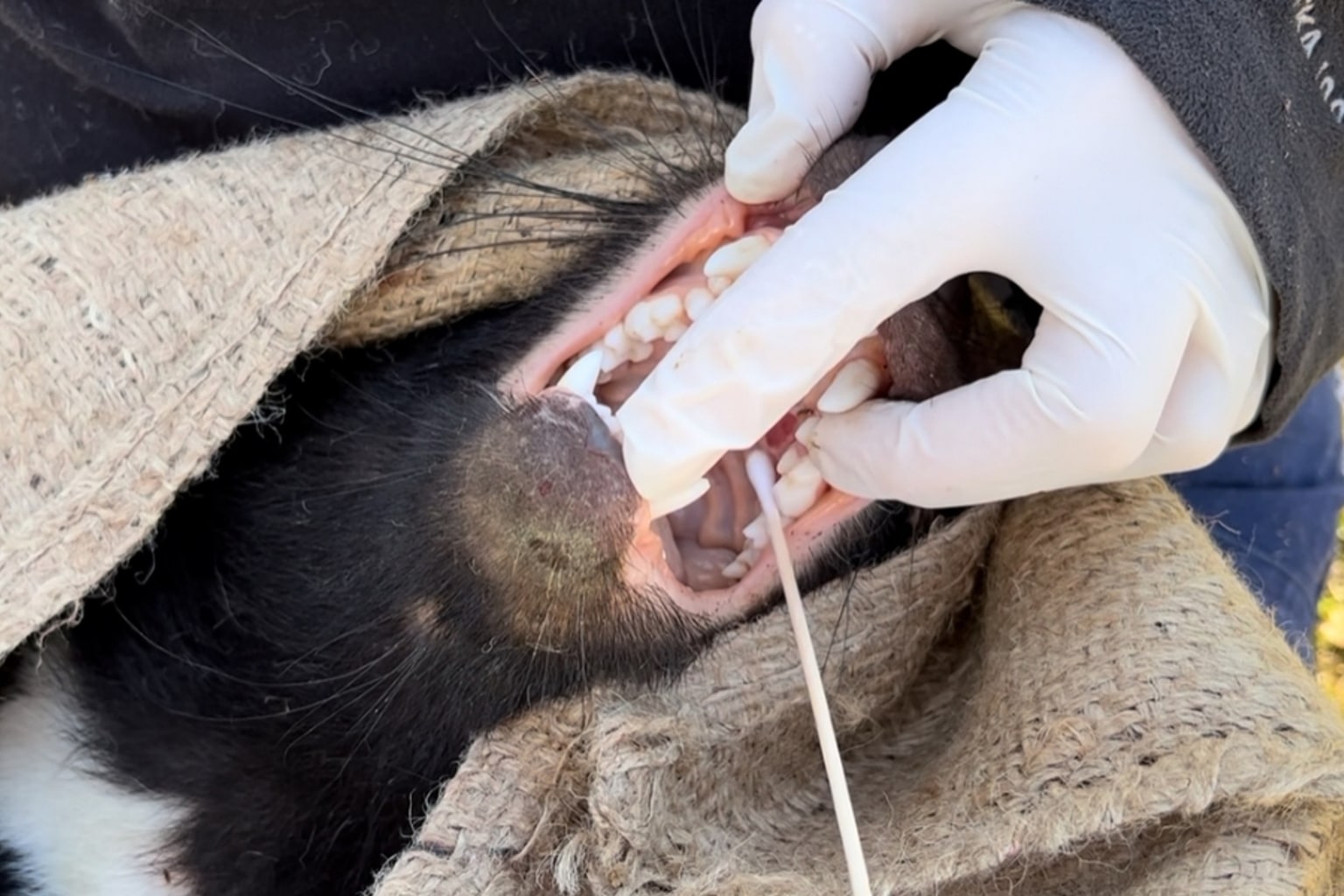
Lead researcher Anuk Kruawan said the new test removes the need to send samples to a lab, avoiding delays that have been a major problem.
The researchers said the test offered “a practical tool for earlier disease detection, improved surveillance and more informed conservation management”.
The team, from the Menzies Institute for Medical Research, ran 33 tests on 10 wild devils and three spotted-tailed quolls in northern Tasmania.
All five devils with DFT1 tumours tested positive, while all samples tested negative for DFT2, which has not been found at the site.
Tests on samples from dead devils in areas where DFT2 is present suggest the test can also detect that form of the disease.
Kruawan said detecting tumours before symptoms appear could help scientists understand how the devil’s immune system responds in the early stages, potentially leading to better treatments.
The disease spreads through biting, with tumours growing on the face until affected devils can no longer eat and eventually starve.
It has reduced devil numbers by up to 80% in some areas since it was first detected in 1996.
The researchers now plan to repeatedly test devils without symptoms and use the test in trials of an oral bait vaccine being developed at Menzies.