Treasurer Eric Abetz says the government remains open to reviving a short-stay levy after the upper house voted down the proposed 5% charge on Wednesday.
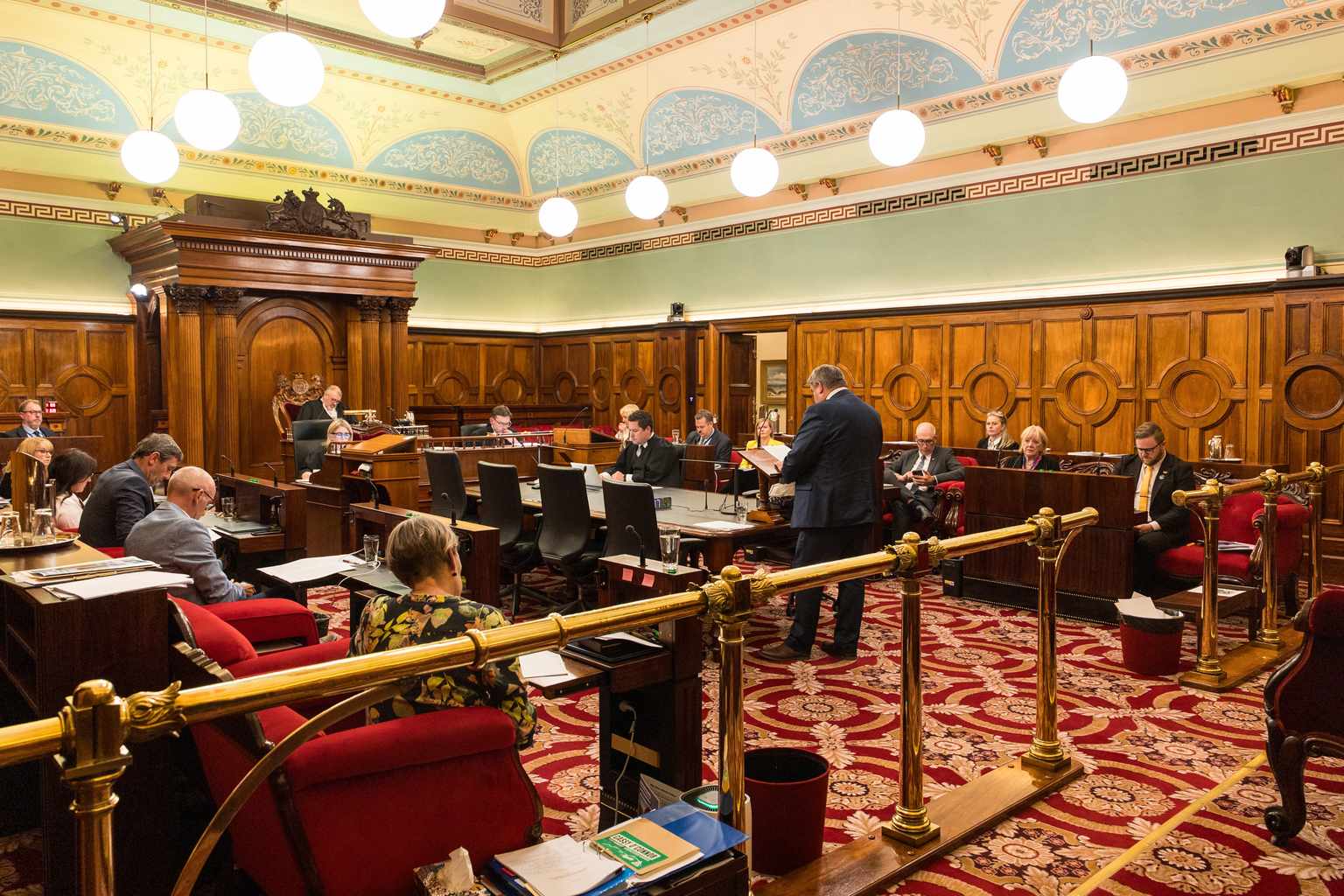
The Legislative Council split six-all, with president Craig Farrell voting against the bill as is convention.
The levy would have added 5% to the total booking fee for short-stay accommodation booked through platforms for stays of less than 28 days.
Treasury expected it to raise around $7.3 million a year, down from an initial estimate of $11 million.
The government had planned to introduce the levy from July 1, 2027, with the government promising the money would go towards first home buyer support.
Independent MLC Casey Hiscutt said the promise to direct the money to first home buyers did not appear in the legislation.

“That’s not in the bill at all. There’s no legislative requirement,” he said.
Independent MLC Tania Rattray, who leads government business in the council, said the “cost and uncertainty of bespoke modelling would outweigh its likely value”.
She also told the chamber the government’s claim that 83% of short stays are used by non-locals was not a publicly available statistic and had been supplied by an industry stakeholder.
Independent MLC Rosemary Armitage said the government’s own second-reading speech had claimed only that the levy “may” make more housing available for long-term rental.
“‘May’ is not a housing strategy, is not evidence and is not enough when parliament is being asked to create a new tax,” she said.
Independent MP David O’Byrne urged the government to consider redirecting any future levy towards homelessness services and crisis accommodation instead.
He told parliament a short-stay levy remained valid “especially if it raises funds for services which support people bearing the brunt of the housing crisis.”
O’Byrne noted a motion he moved in May calling for levy funds to be directed to homelessness services had already been passed by the lower house.
Abetz said he genuinely regretted the upper house decision and suggested politics had influenced the vote.
“When I find myself voting on the same side as the [Greens] Member for Hobart, Cassy O’Connor, something must be either badly, badly wrong or absolutely no-brainer,” he said.
“And I think it was an absolute no-brainer and I am thankful that the … Greens in the upper house saw the sense of voting for that measure.”
Abetz credited the Greens for supporting the need for budget repair, while taking aim at Labor for opposing the bill.
On the question of homelessness funding, Abetz deferred to Housing Minister Kerry Vincent for specifics but noted his own personal connection to the issue.
“The issue of homelessness, which is growing, especially for women now, that is a matter of genuine concern to the government,” he said.
Abetz indicated the government would be willing to bring the levy back if upper house members signalled they might change their vote.
Labor shadow treasurer Dean Winter said the bill had fallen apart under its own contradictions.
“Instead of delivering a clear and coherent strategy to fix Tasmania’s housing crisis, the Liberals cooked up legislation so riddled with contradictions that even the upper house couldn’t save it,” he said.