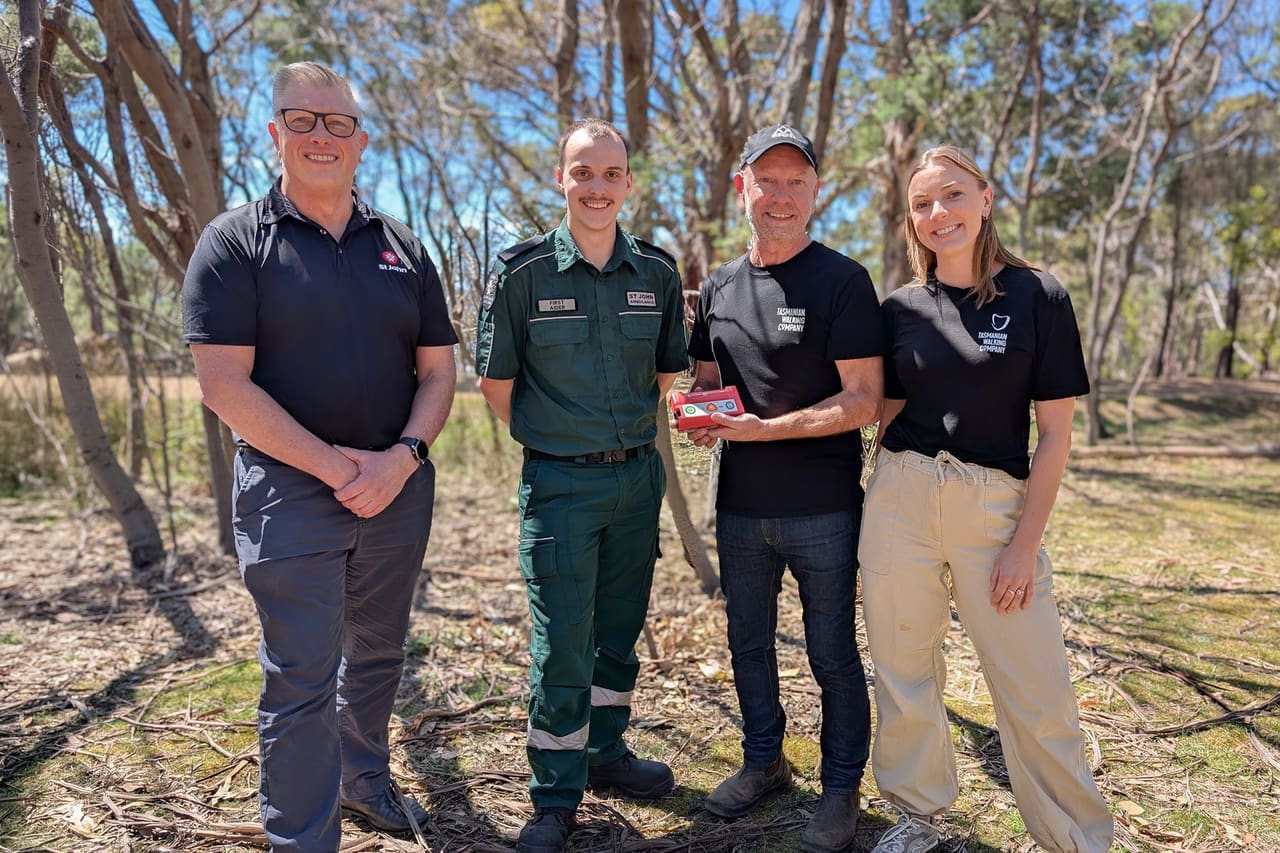
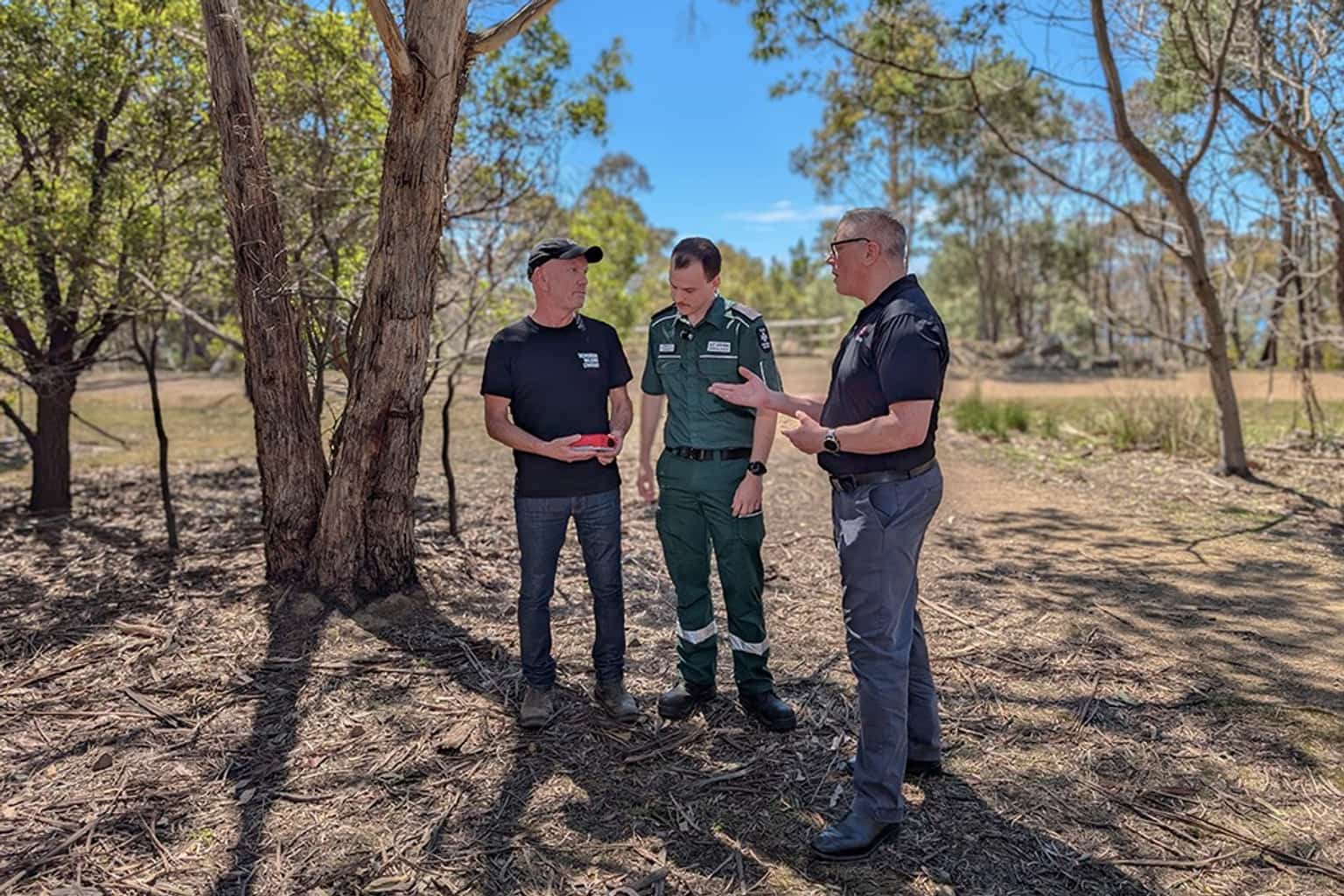
Guides leading walks through some of Tasmania’s most remote wilderness will now carry portable defibrillators, under a partnership between Tasmanian Walking Company and St John Tasmania.
The company is introducing St John Pocket AEDs, which are lightweight defibrillators designed for places where a conventional fixed device may be hard to reach.
St John Tasmania chief executive Matt Brocklehurst said a defibrillator could only save a life if it could get to the person who needed it.
“What makes the Pocket AED concept so useful in environments like these is that instead of asking people to find the defibrillator, the defibrillator travels with them,” he said.
“When you’re many kilometres from roads, towns or traditional emergency infrastructure, that creates another layer of preparedness.”

The partnership follows research commissioned by St John Tasmania, which found 82% of Tasmanians could not say with certainty where their nearest AED was located.
The research also found 48% of Tasmanians would feel confident using an AED during a cardiac arrest.
Bastion Insights surveyed 616 Tasmanian adults for the study earlier this year.
Tasmanian Walking Company has run guided walks for visitors from around the world since 1987, including in areas where emergency services can be some distance away.
Heath Garratt, the company’s head of delivery, said help could be hours away in the wilderness.
“The magic of Tasmania’s wilderness is its remoteness,” he said.
“By partnering with St John Tasmania, we’re giving our guides the tools to respond when every second matters.”
“Ultimately, it’s about looking after the guests and the guides who put their trust in us.”
Brocklehurst said people often pictured AEDs mounted on the walls of airports or shopping centres.

“But cardiac arrest doesn’t only happen in convenient places,” he said.
He said businesses and community organisations had a role to play in improving emergency readiness.
“This isn’t about ticking a compliance box,” he said.
“If somebody experiences a cardiac arrest here, what equipment would we want available in those first critical minutes?”