Weather has forced a delay to one of the most complex maritime operations ever attempted in Tasmania, with the loading of Incat’s record-breaking battery-electric ferry onto a heavy-lift ship pushed back to Friday morning.
The operation to float Hull 096 aboard the semi-submersible Black Marlin on the River Derwent was originally set for Thursday morning.
On Wednesday evening, an Incat spokesperson said there had been “a late decision to postpone the loading of Hull 096 onto the Black Marlin till Friday morning due to more favourable weather conditions.”
The 217-metre Black Marlin arrived on the Derwent from South Africa on Tuesday to collect the 130-metre Hobart-built catamaran and carry it across the Pacific to South America.
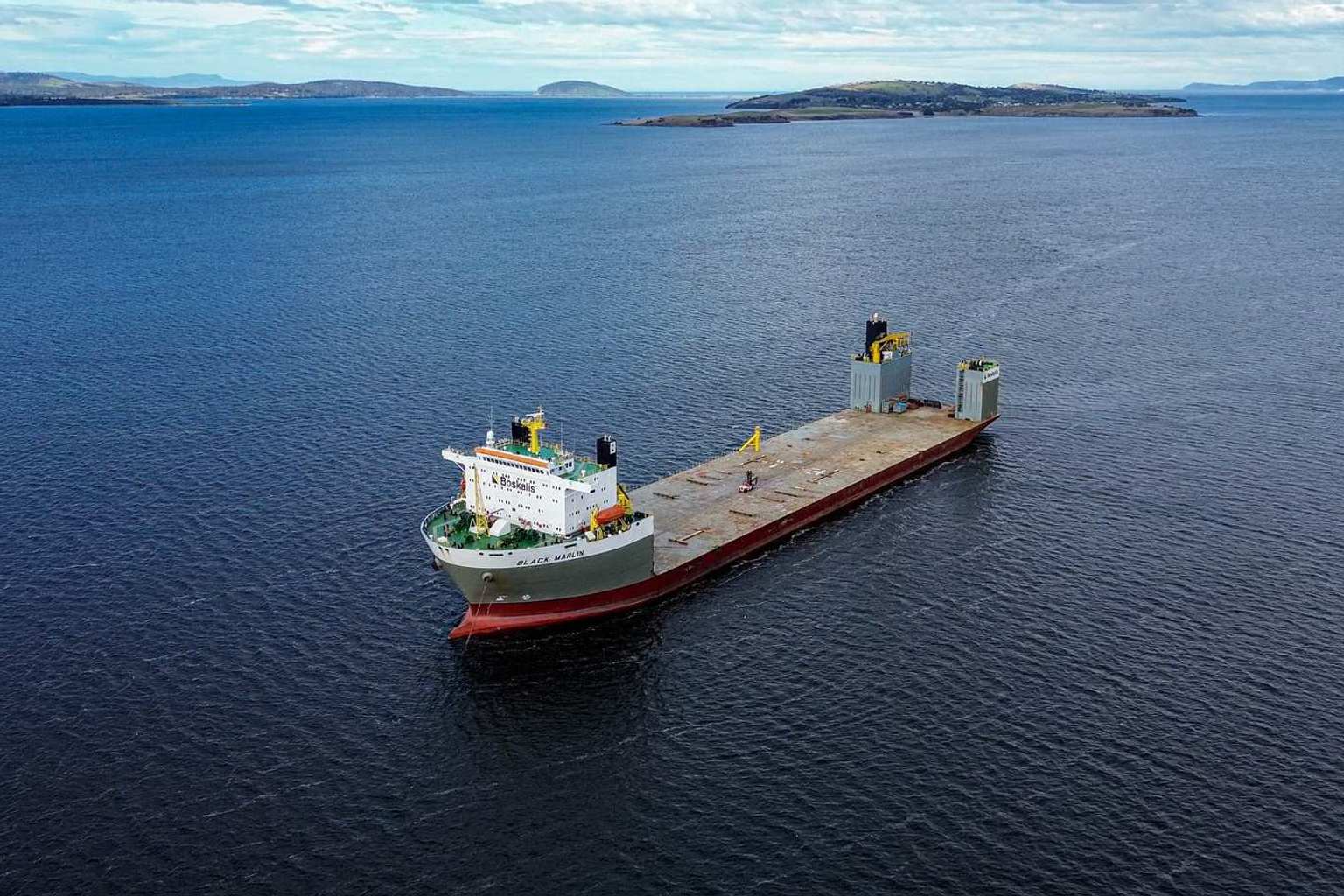
As a semi-submersible vessel, the Black Marlin can lower its cargo deck beneath the waterline by taking on ballast water.
Hull 096 will then be positioned above the submerged deck before the water is pumped out, lifting the ferry clear of the surface.
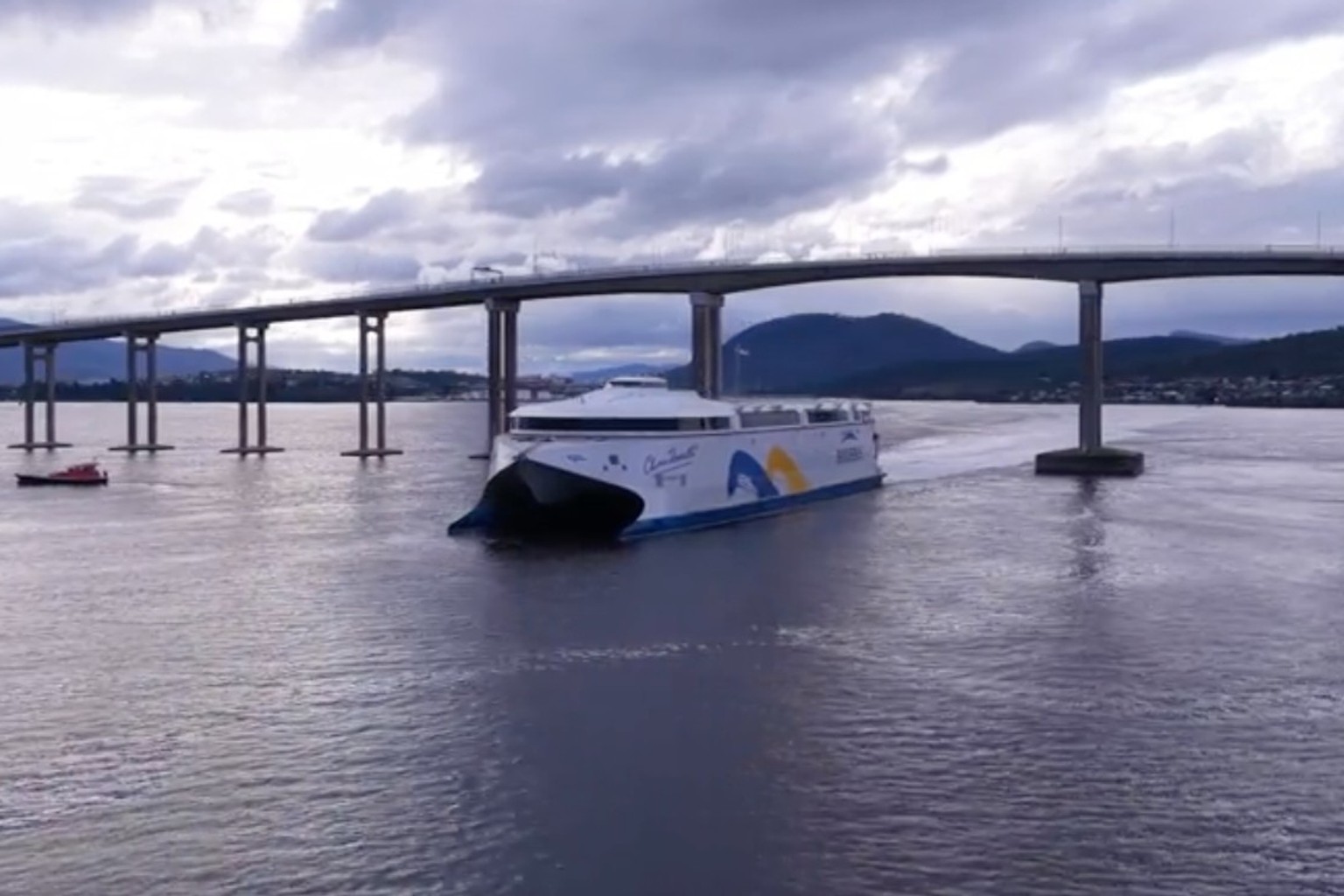
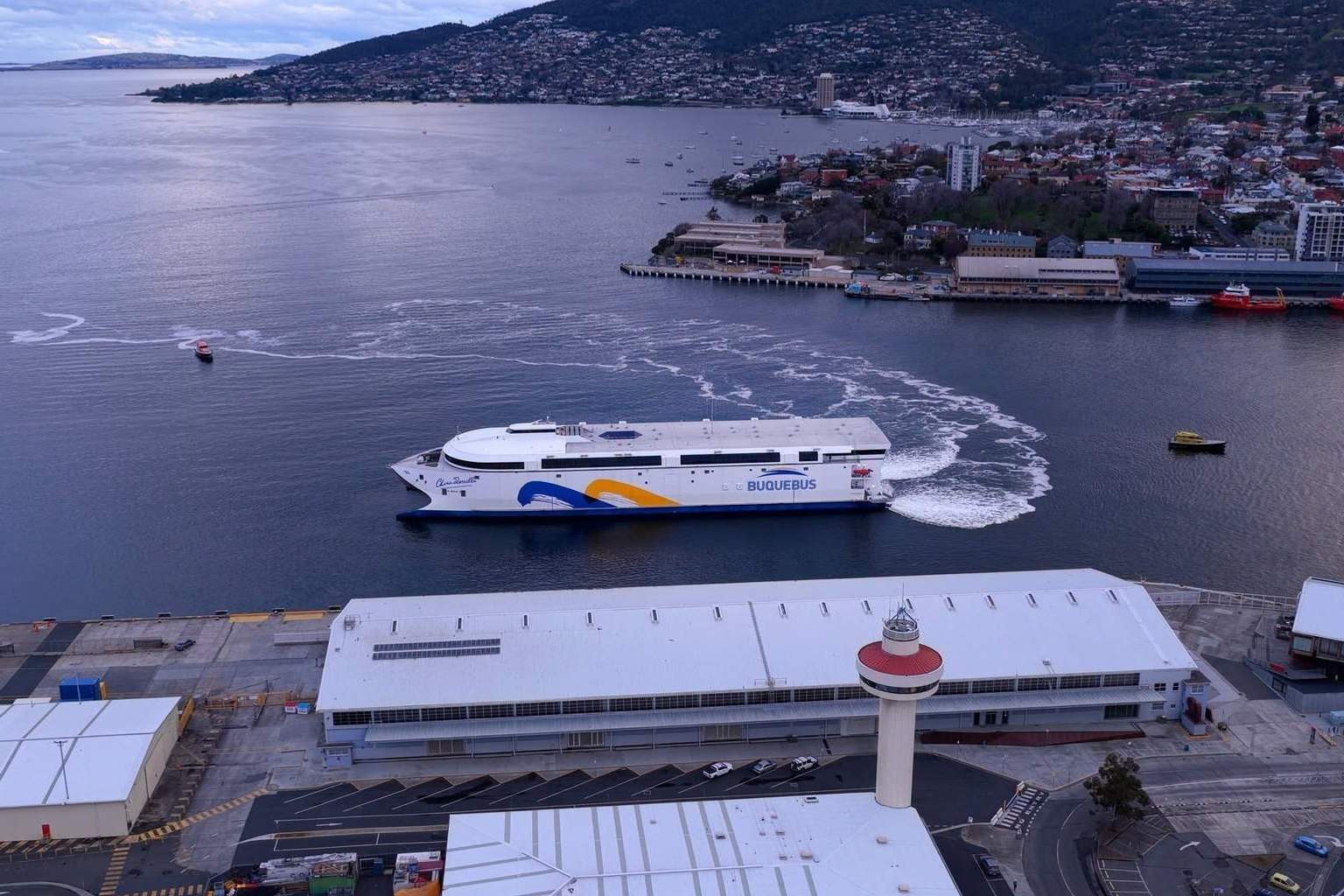
The ferry was moved from Incat’s shipyard at Prince of Wales Bay to Macquarie Wharf on Saturday in what was its final voyage under its own power in Tasmanian waters.
Incat chairman Robert Clifford said the arrival of the Black Marlin signalled the final stage of Hull 096’s time in Tasmania.
“After years of design, engineering and construction, we’re now preparing for one of the most significant maritime operations ever undertaken in Tasmania,” he said.
“Watching it load Hull 096 will be a spectacular sight and a proud moment for Tasmania.”
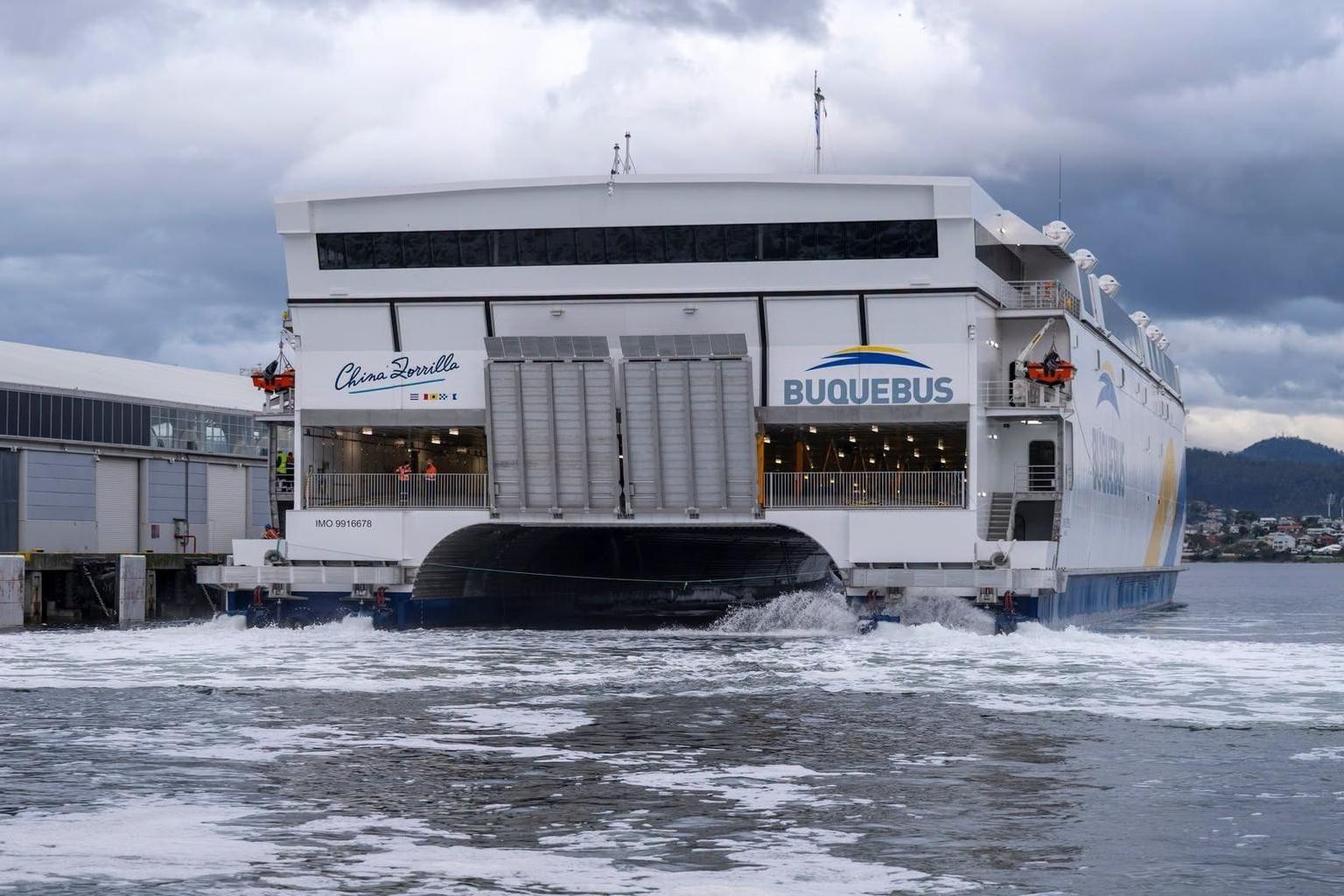
Once delivered, the vessel will be known as the China Zorrilla and operate for Buquebus between Buenos Aires and Colonia in Uruguay.
It will carry up to 2,100 passengers and 225 vehicles, powered by more than 250 tonnes of batteries and eight electric waterjets.
Exclusion zones will be in place on the water during the loading operation, with restrictions also applying to drone use.