Hobart’s new council is moving to tear out the Collins Street bike lanes, six months before the two-year trial was due to finish.
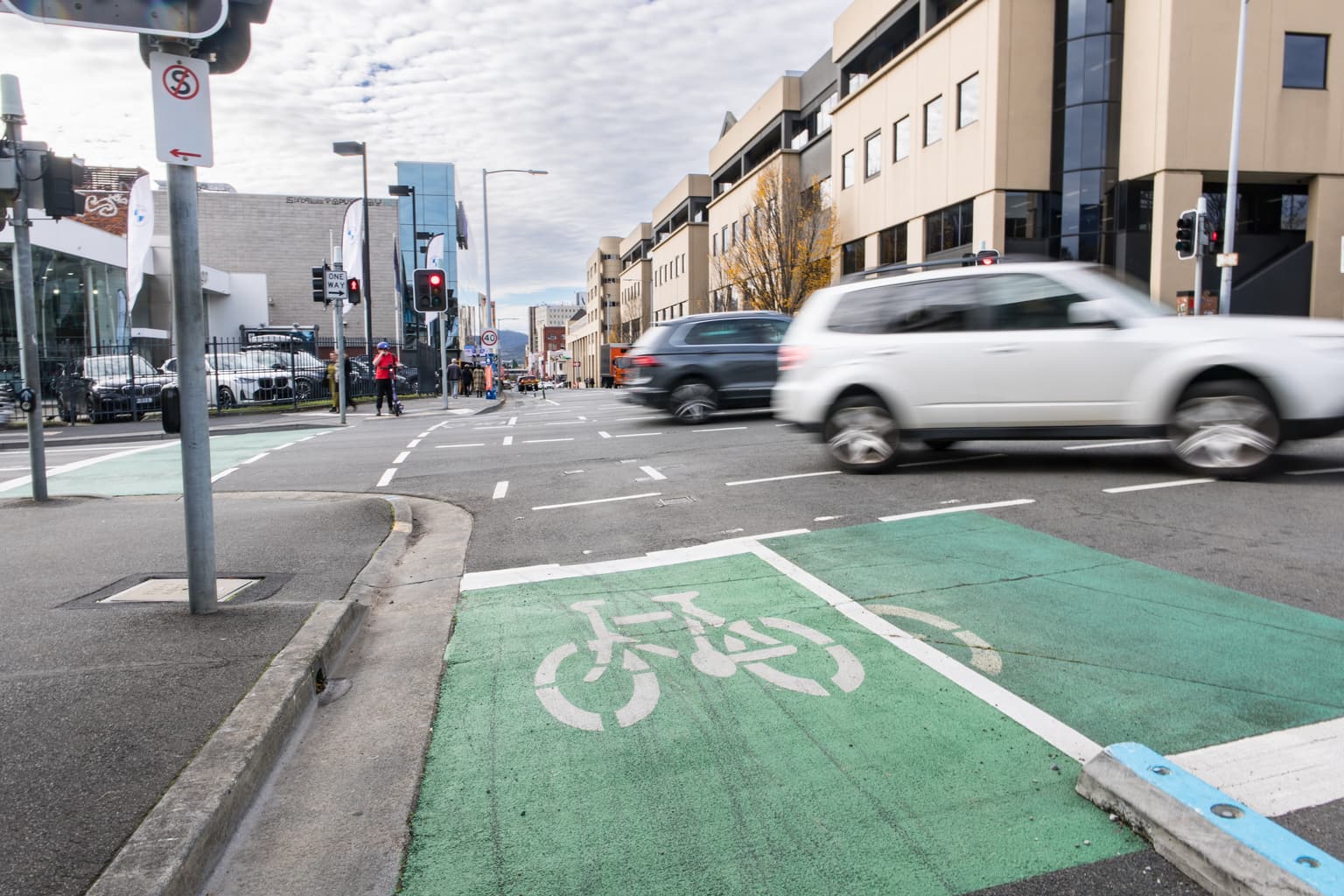
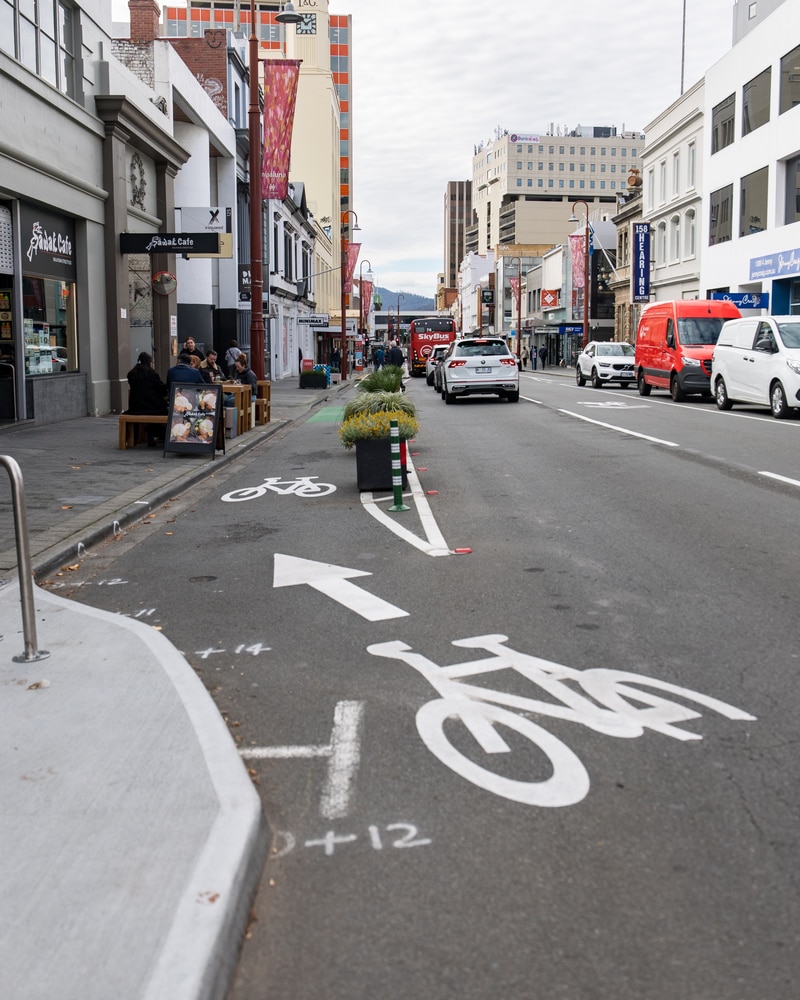
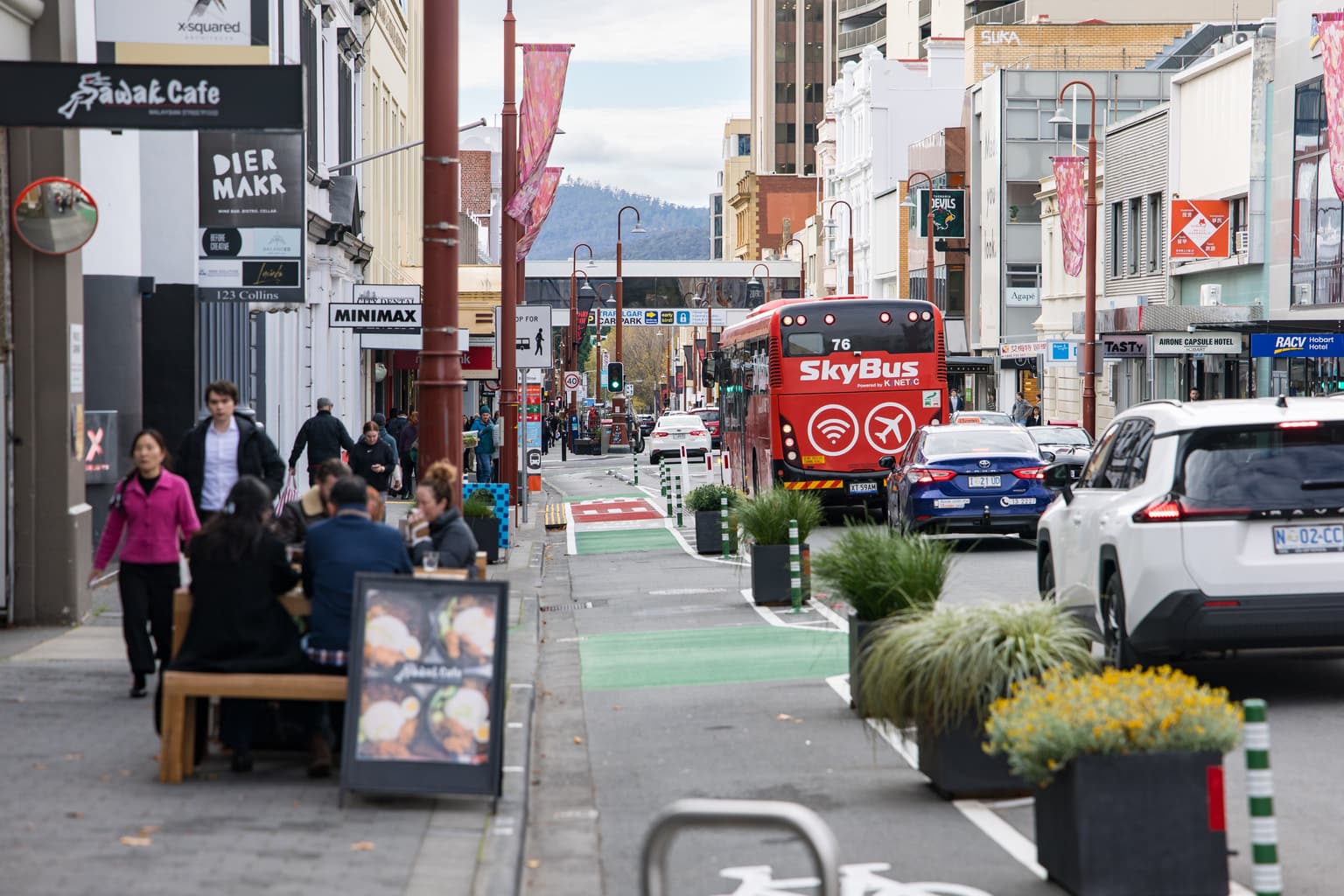
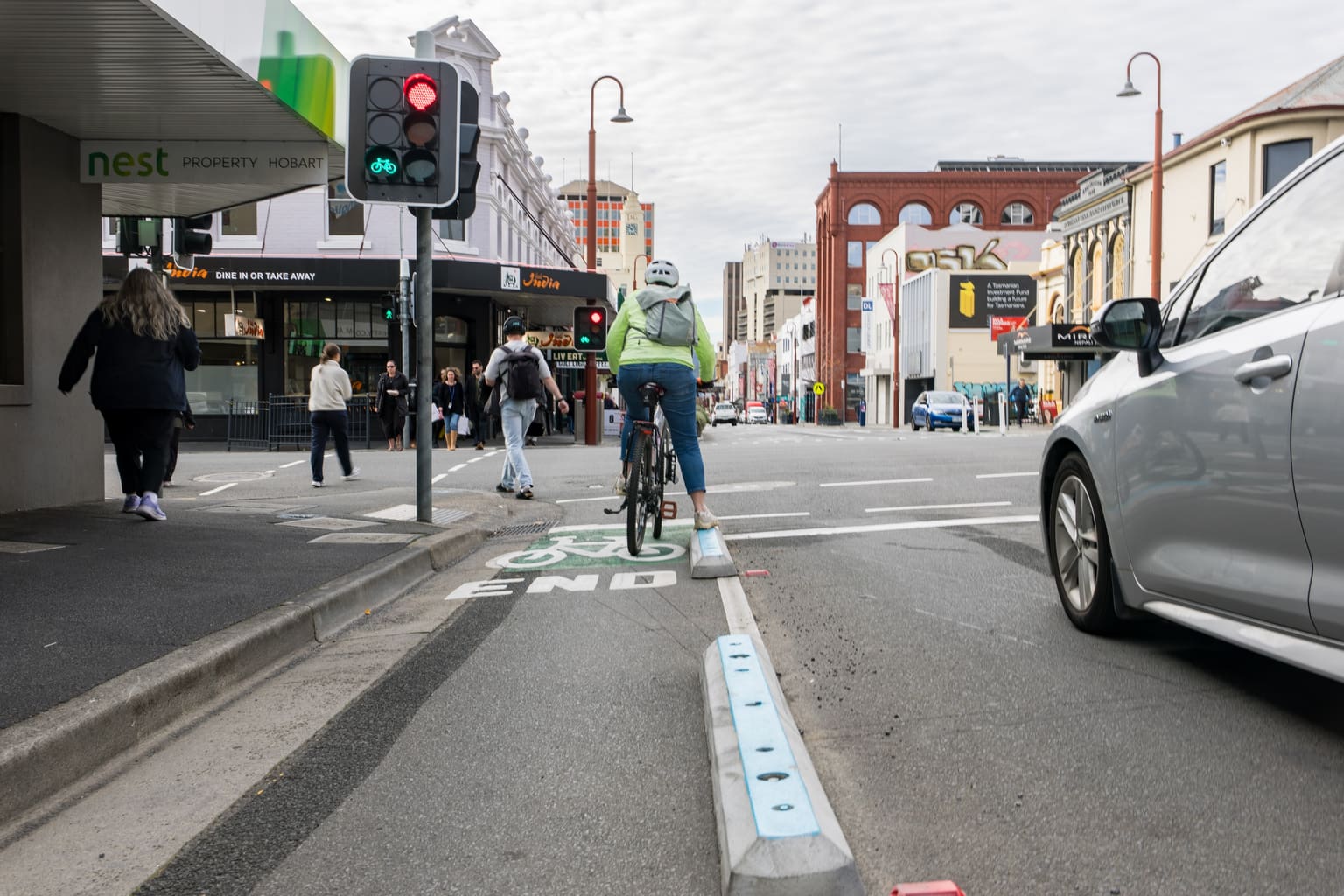
The motion, backed by a majority of the nine-member council, would label the ‘Transforming Collins Street’ trial a “failure” and remove the separated bike lanes between Molle and Murray streets.
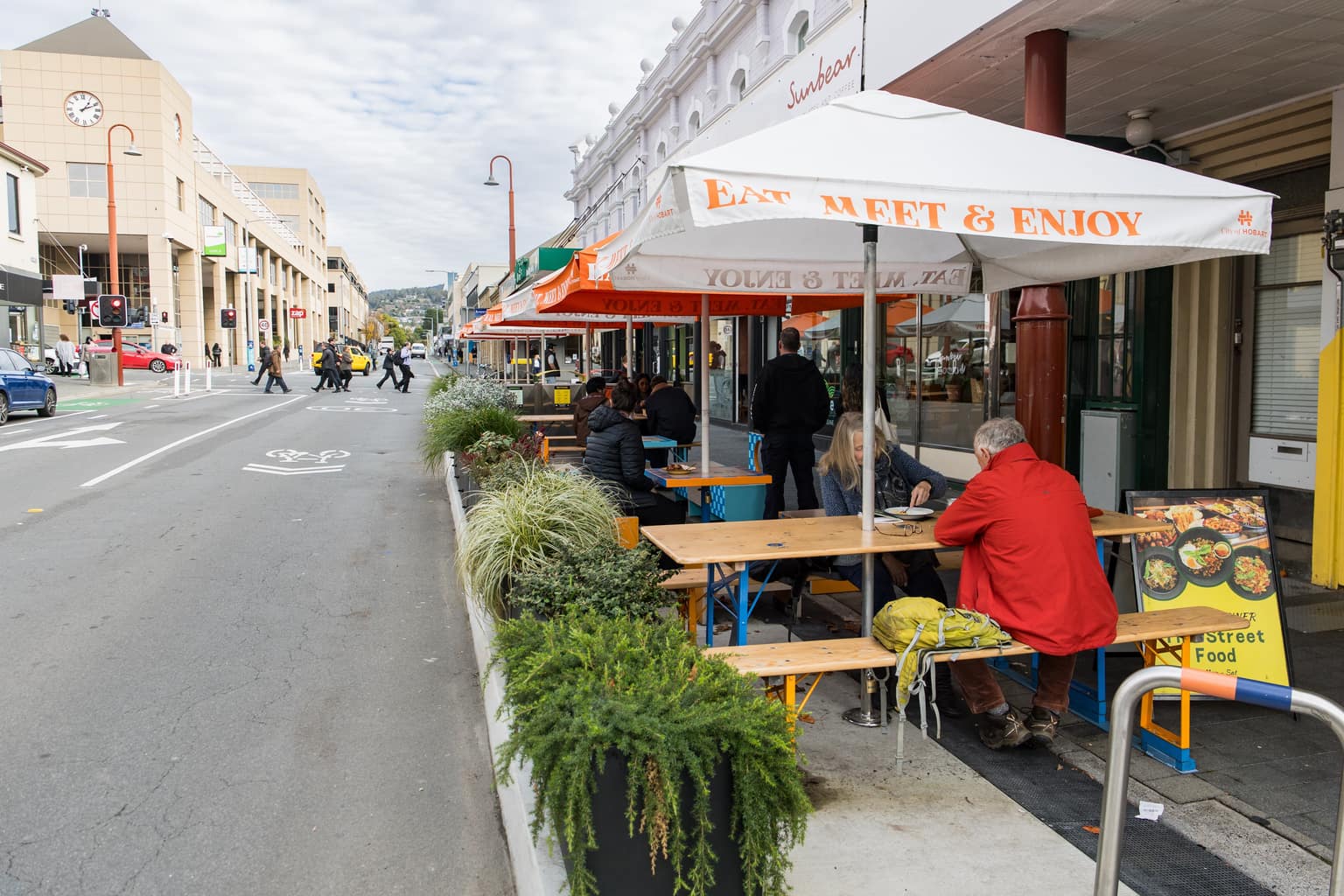
It would also see the in-road bus stop installed as part of the trial ripped up and parking, loading zones, disability parking and bus stops restored on the street.
The on-street dining parklets and 30km/h speed limit would stay.
“It’s time to admit and rewind the last council’s mistake,” councillor Louise Elliot said.
“From the start, this has been a pet project focussed on luxury treatment for a tiny niche of South Hobart cyclists to the detriment of many other user groups.”

Councillor Simon Behrakis said the contentious installation would be replaced with something “safe for all road users” and allow the CBD economy to “heal from the damage this trial has done”.
“Our first motion of council is going to be digging up this bike lane. It’s a dead duck,” he said.
The motion also has the backing of Lord Mayor Charles Wooley, deputy lord mayor John Kelly and new councillor Harvey Lennon, who said the bike lanes were “the issue most raised” with him during the campaign.
In September 2024, the previous council approved the trial seven to five. Elliot and Kelly are the only two councillors who voted against it still on the council.
Four of the seven who voted for it – Ryan Posselt, Bill Harvey, Zelinda Sherlock and Mike Dutta – were also re-elected.
In October 2024, then-transport minister Eric Abetz withdrew a $170,000 state grant, citing community and business concern.
Seven councillors then voted to cover the shortfall from the council’s capital works contingency fund, usually reserved for emergency cost overruns.
Edwin Johnstone’s Confederation of Greater Hobart Business gathered almost 1,900 signatures to force a public meeting in March 2025.
About 1,000 people attended and voted down three motions against the lanes. A follow-up push for an elector poll failed.
Council documents show the cost has grown from a forecast $370,000 to about $600,000.
Elliot said business owners’ data from a camera at Victoria and Collins streets showed about 75 cyclists entering the city on an average weekday and no more than 30 on weekends.
“Some days a measly handful of people used this million-dollar work,” she said.
The council’s November 2025 monitoring report recorded an average of 330 cyclists a weekday at the Hobart Rivulet entrance and in September it reported cycling was up 15% on pre-trial levels.
Kelly said the council “must learn from this experiment”.
“We cannot use small businesses and other office workers and the like as experiments,” he said.
“We should go away realising that in the future we need baseline data and we need community consultation.”
Johnstone called it “a great day for the businesses of Hobart”.
“It’s about time we had a council that listens to the concerns of small businesses and this failed experiment of Collins Street bike lane was impractical from the start,” he said.
Elliot said the council would need to go through “a lot of steps” before removal could begin.
“It won’t happen overnight, but it will happen,” she said.