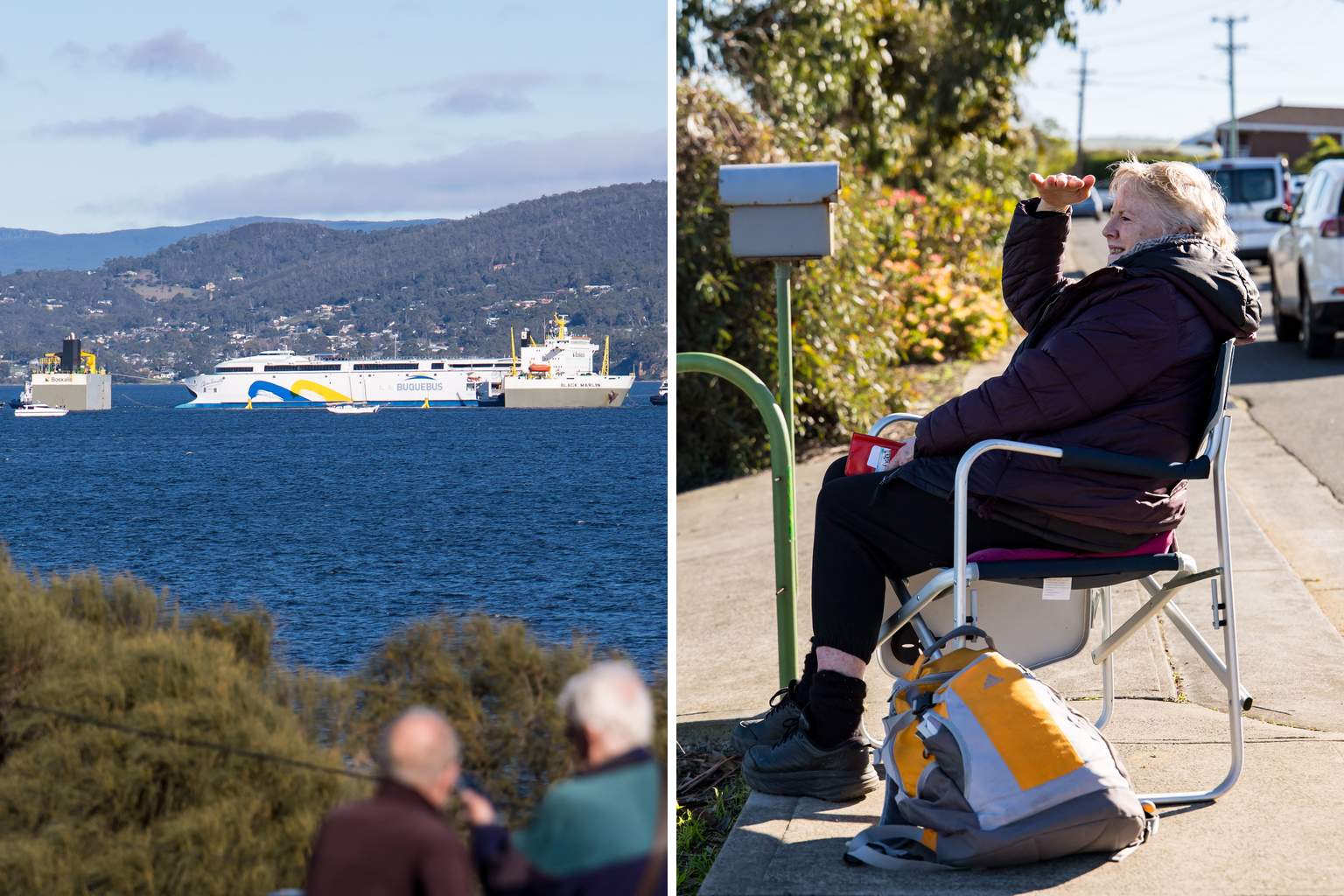
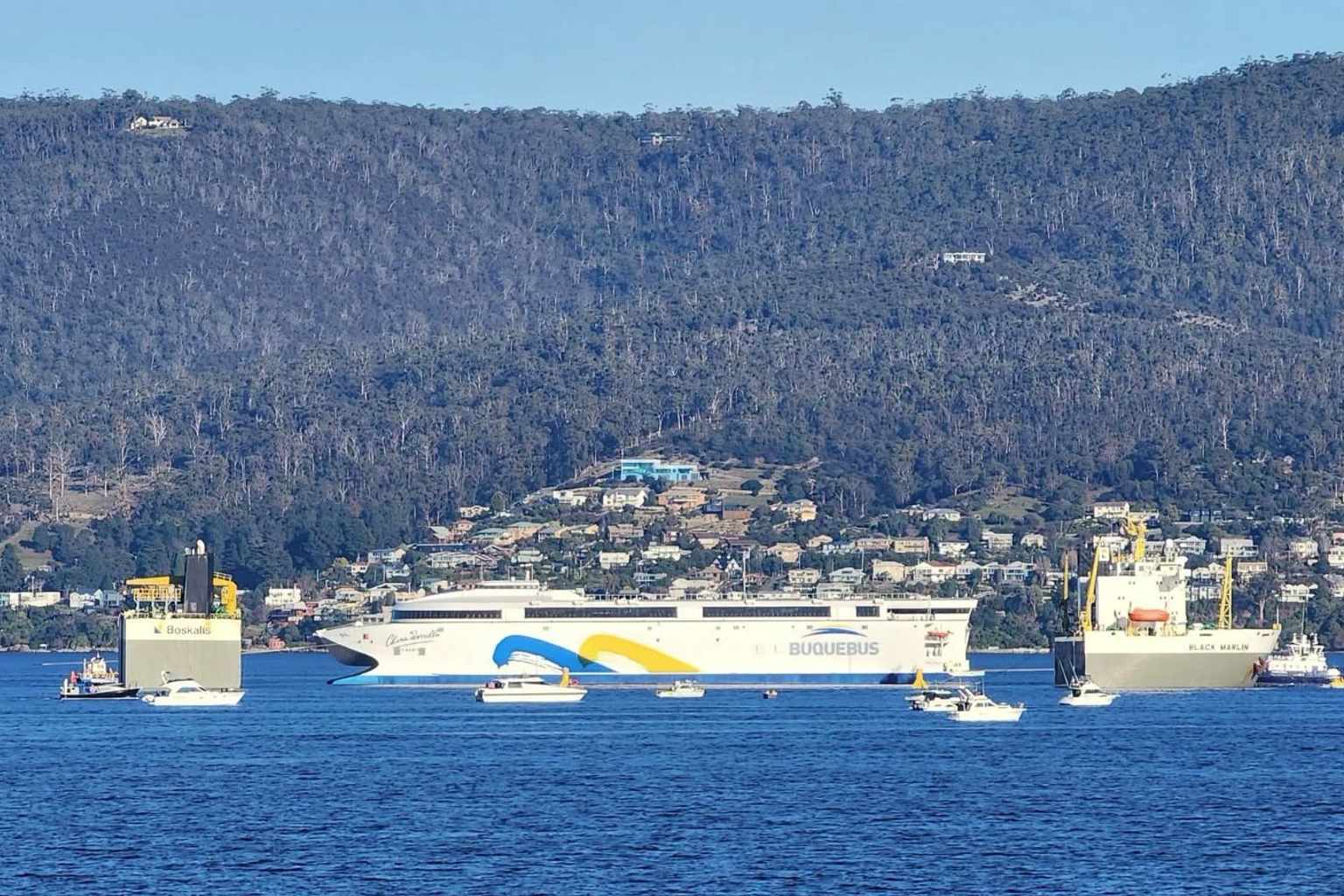
Big crowds gathered along the River Derwent this morning to watch one of the most complex maritime operations ever attempted in Tasmania as Incat’s record-breaking battery-electric ferry was successfully loaded onto a massive heavy-lift ship.
The operation to float Hull 096 aboard the semi-submersible Black Marlin had been delayed from yesterday due to weather, but conditions today were near perfect according to Incat staff.
The Tranmere and Howrah foreshores were among the most sought-after viewing spots, with crowds gathering along the eastern shore of the Derwent for a glimpse of the historic operation.
Among the spectators was Jane Chandler, who travelled from Cygnet before 8am with a chair to secure a front-row spot.
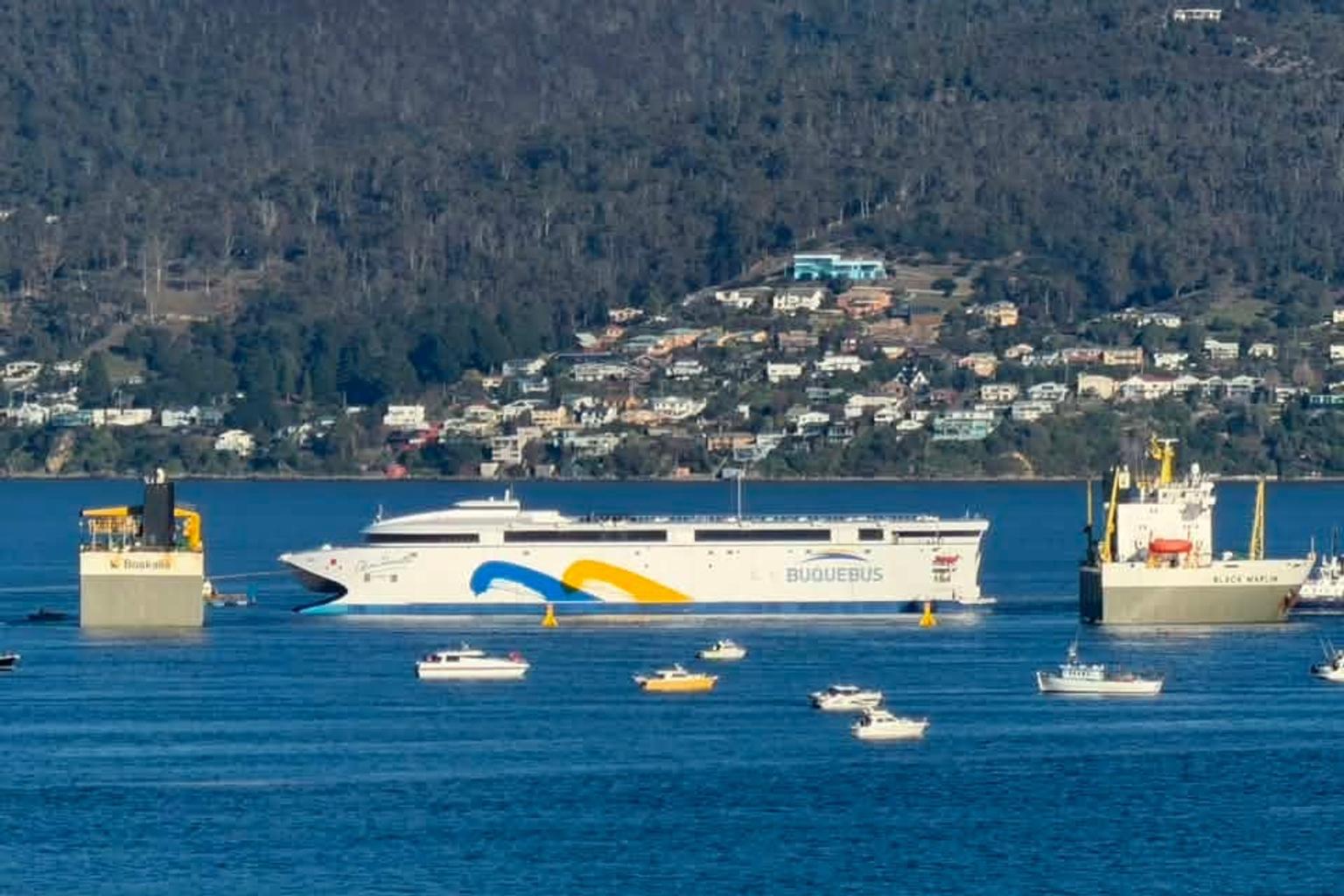
“Coming down the Southern Outlet, watching the ferry slowly making its way down here, it just looked like a bride walking up the aisle to the altar because it was white and the Black Marlin was waiting at the altar,” she told Pulse.
Chandler said she had followed the build through a friend who works at Incat and praised the company’s flow-on effects for Tasmanian businesses.
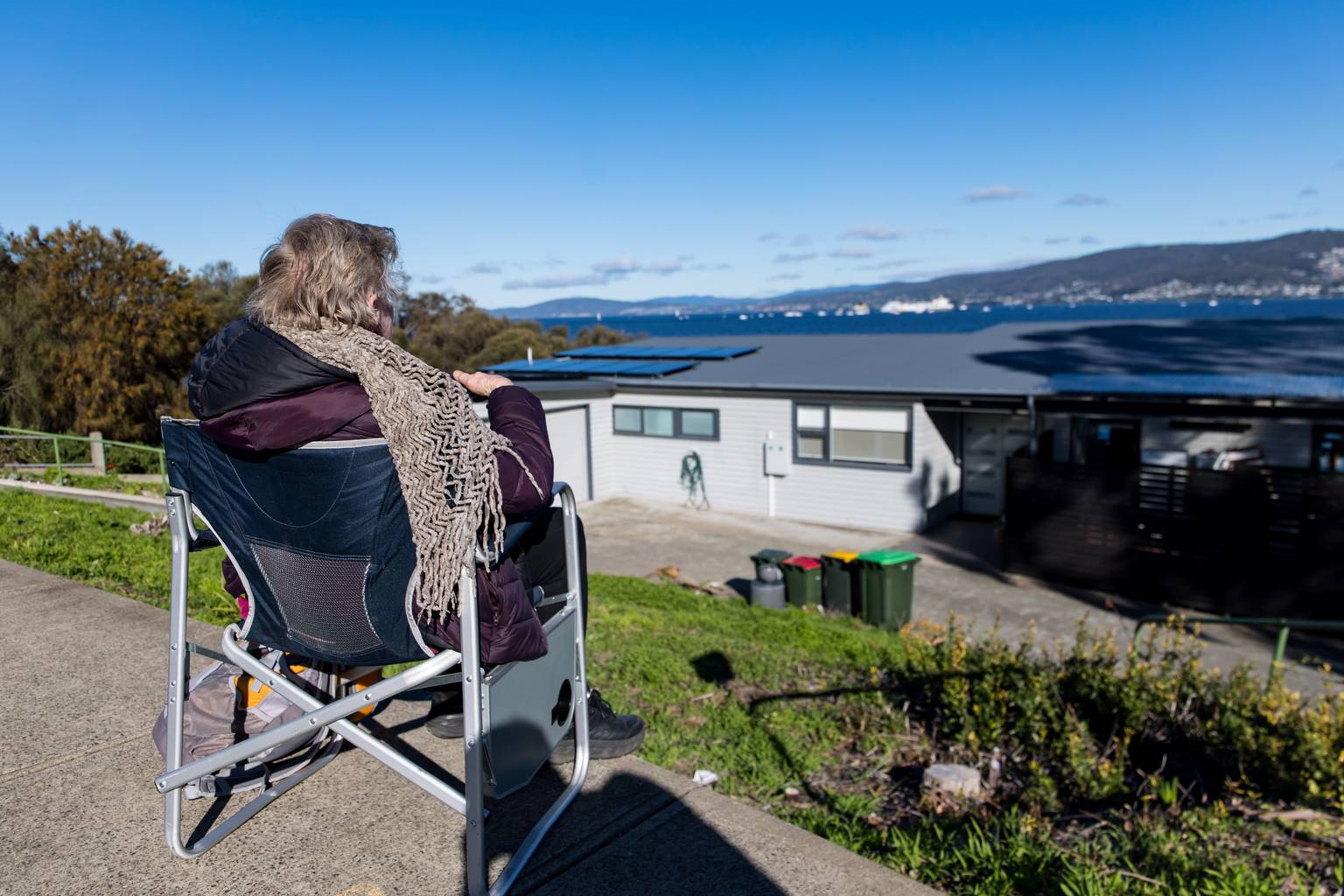
Kate Gracie from Lauderdale said told Pulse she spotted the operation while driving home and pulled over with her three-year-old son Roman to watch.
“I think we had the right idea, everyone’s down here,” she said.
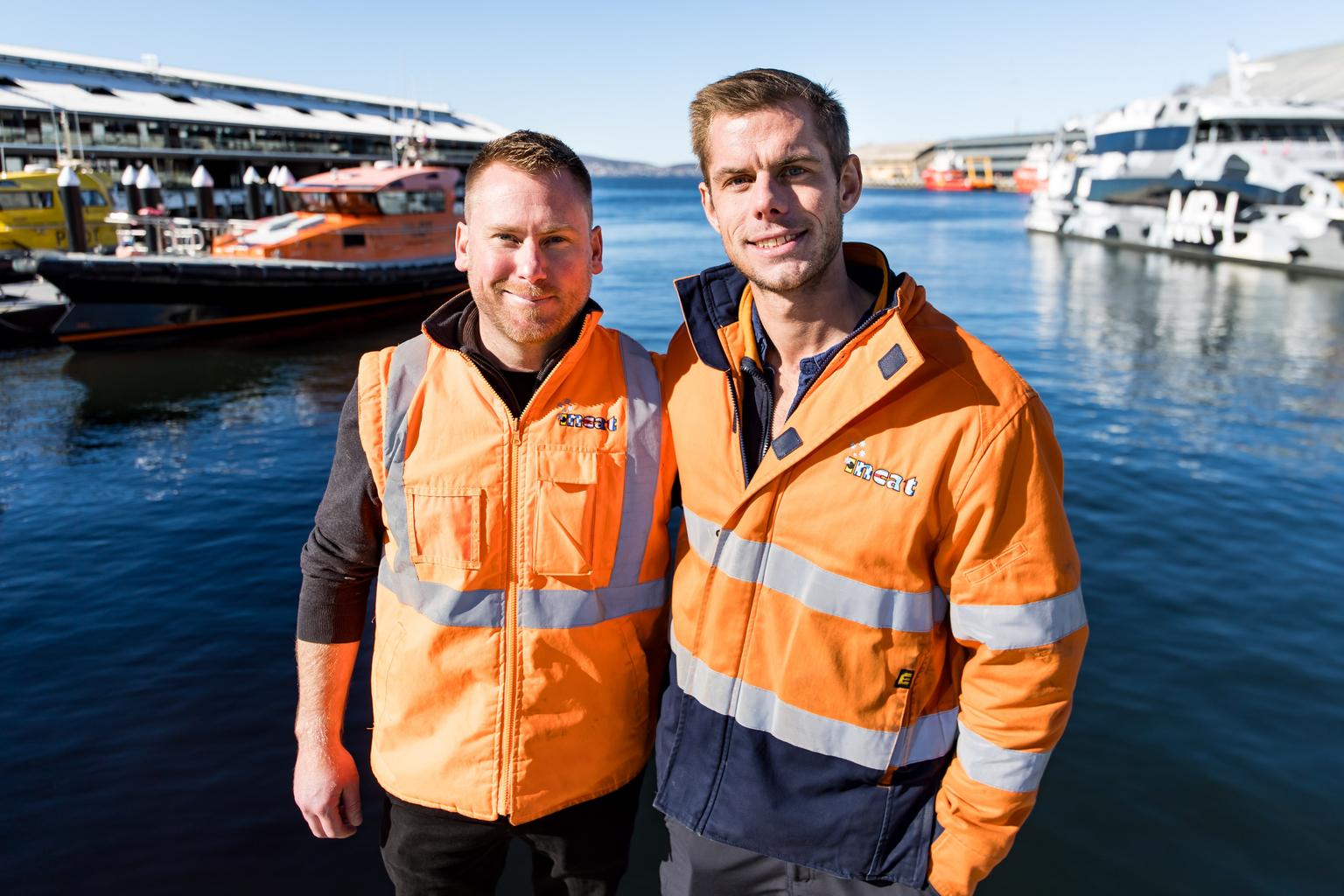
Tom Cooper, Incat’s Head of Public Relations and Corporate Affairs, said it was one of the biggest days in the company’s history.
“We saw the world’s biggest electric ship loaded onto one of the world’s largest heavy lift vessels,” he said.
“Everything went to plan, so we couldn’t be happier.”
Cooper said the ferry’s battery system gave it only around 90 minutes of runtime, meaning it could not travel to South America under its own power.
“It would run out of battery probably around Bruny Island,” he said.
The Black Marlin sank its cargo deck beneath the waterline by filling its ballast systems with water, allowing tugboats to position Hull 096 above before the water was pumped back out.
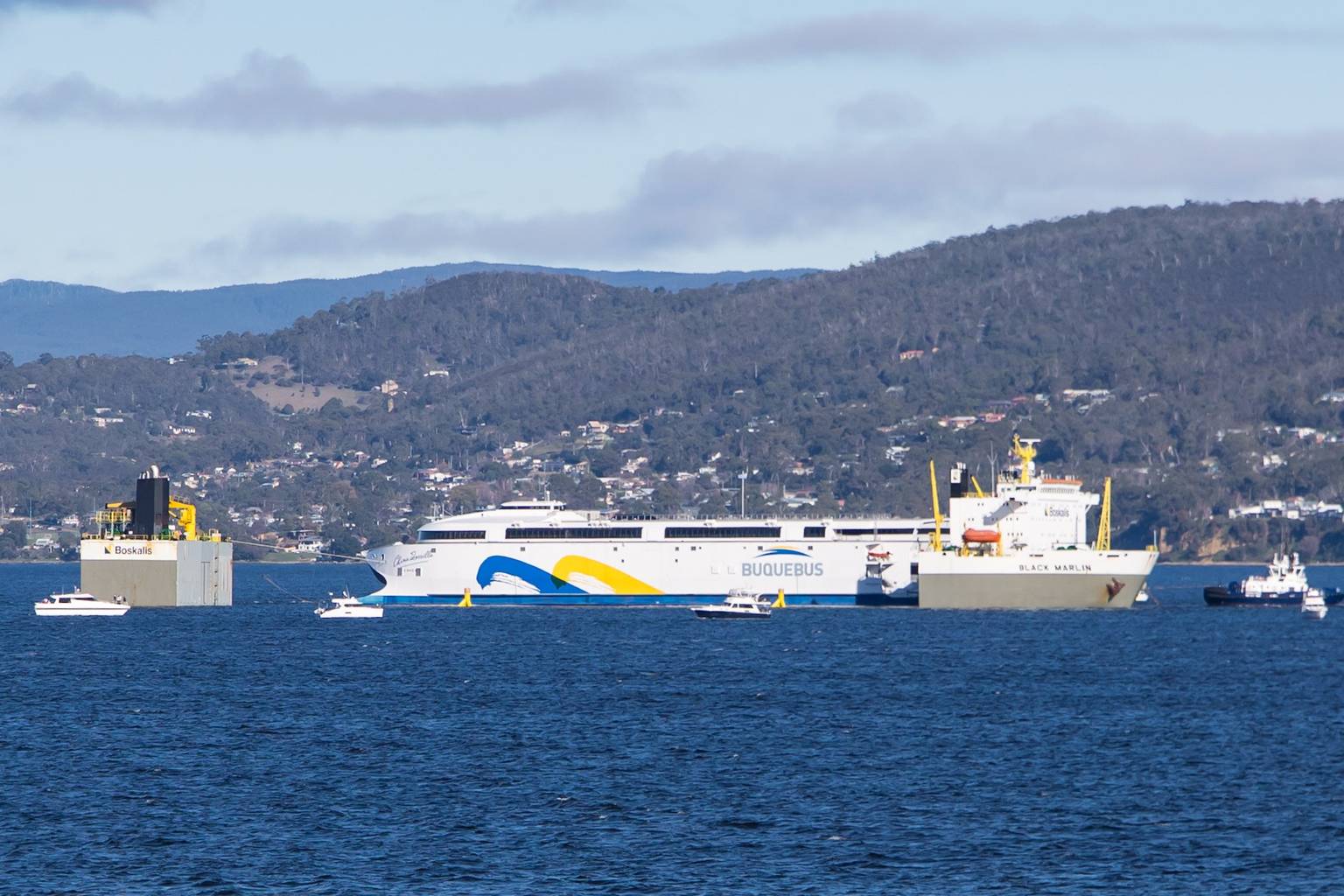
Cooper said the process of refloating the heavy-lift ship would take around 10 to 12 hours, with the journey to South America expected to begin around Monday.
“I think we saw with the amount of people that came out to watch this operation this morning, this really is Tasmania’s ship,” Cooper said.
“The fact that we are leading the world in fully electric shipbuilding is something all of Tasmania has been extremely proud of.”
Cooper said the operation was a first for the River Derwent and possibly a last, as Incat’s three upcoming electric ferries for Denmark will have diesel generators allowing them to travel under their own power.

Incat project manager Sean Lowrie, who spent two years working on the vessel, said it was a momentous day for the whole team involved.
“To see it go down the river, it’s been a long time coming,” he said.
“It’s amazing to see something of this size and this scale on a global sense finally go down the river and make its way down to South America.”
The 130-metre catamaran will be carried across the Pacific to Buenos Aires over around 40 days.
Once delivered, the vessel will operate as the China Zorrilla for Buquebus, carrying up to 2,100 passengers and 225 vehicles between Argentina and Uruguay.
Incat has three more large electric ferries and two smaller hybrid electric vessels under construction at its Prince of Wales Bay shipyard.