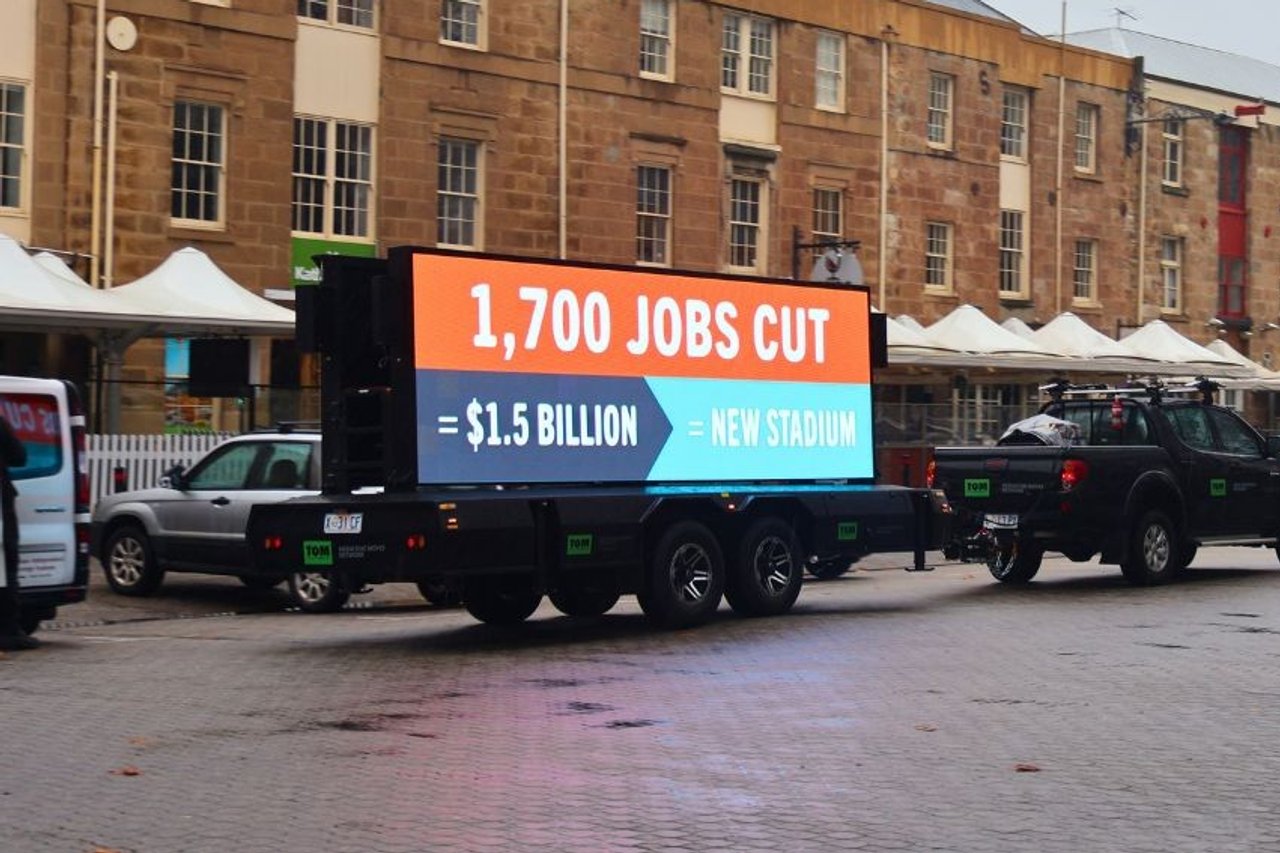
A new independent report says the Macquarie Point stadium could cost Tasmania more than $1 billion in net economic losses and push state debt $2.3 billion higher by 2040.
The report by economist Nicholas Gruen’s firm Lateral Economics was commissioned by anti-stadium group No New Stadium.
It estimates the project would return less than 40 cents for every dollar spent.
The analysis puts the net cost at $1,831 for every Tasmanian, according to the report. In a worst-case scenario, it says that could climb to about $3,200 a person.
The report updates Gruen’s 2025 review, which was originally commissioned by the state government as a condition of securing crossbench support to keep the Liberals in power.
No New Stadium paid for the new version itself after raising the money through public donations.
The report says the project’s benefit-cost ratio has fallen from 0.44 last year to 0.398 now. A ratio below 1 means a project is estimated to cost more than it returns.
It says costs in the model rose 22.5% to $1.75 billion, while benefits rose 9.8% to $696 million.
No New Stadium spokesperson Roland Browne told Pulse the group raised more than $40,000 to fund the report.
He said the state government’s official cost figure of $1.13 billion was no longer believable.
“In a world where the costs of diesel and building is going through the roof, it’s inevitable that the stadium cost has grown significantly,” Browne said.
“But the government is just not coming clean with that.”
Browne said the state government had been “stripping out every element from the stadium to try and reduce the apparent cost of the project”.
The official estimate has climbed steadily as the design has progressed.
It started at $715 million, rose to $775 million, then jumped to $945 million when the project was half designed.
At that point, minister Eric Abetz said the increase was needed to cover a wider range of planned uses, including cricket.
He said it also paid for detailed items such as audio-visual and communications systems and kitchen and food and beverage fit-outs.
The figure rose again to $1.13 billion in November 2025, once the design was 70% complete.
Browne pointed to a string of stadium cost blowouts overseas, detailed in the report’s appendix.
The appendix looked at 10 comparable roofed stadiums built since 2000. The report says none came in under its first announced budget.
It puts the median cost overrun at about 70% and says complex roof systems were the main driver of the blowouts.
It found the roof was the primary cost driver at Atlanta’s Mercedes-Benz Stadium, which it says went over budget by up to 80%.
Roof complexity also drove the overrun at London’s Tottenham Hotspur Stadium, which the report says blew out by 150% on its first estimate.
Singapore’s National Stadium, home to the world’s largest self-supporting dome, came in up to 188% over budget, according to the report.
It says the worst case was Los Angeles’ SoFi Stadium, which blew out by more than 200% as its scope expanded into a wider precinct.
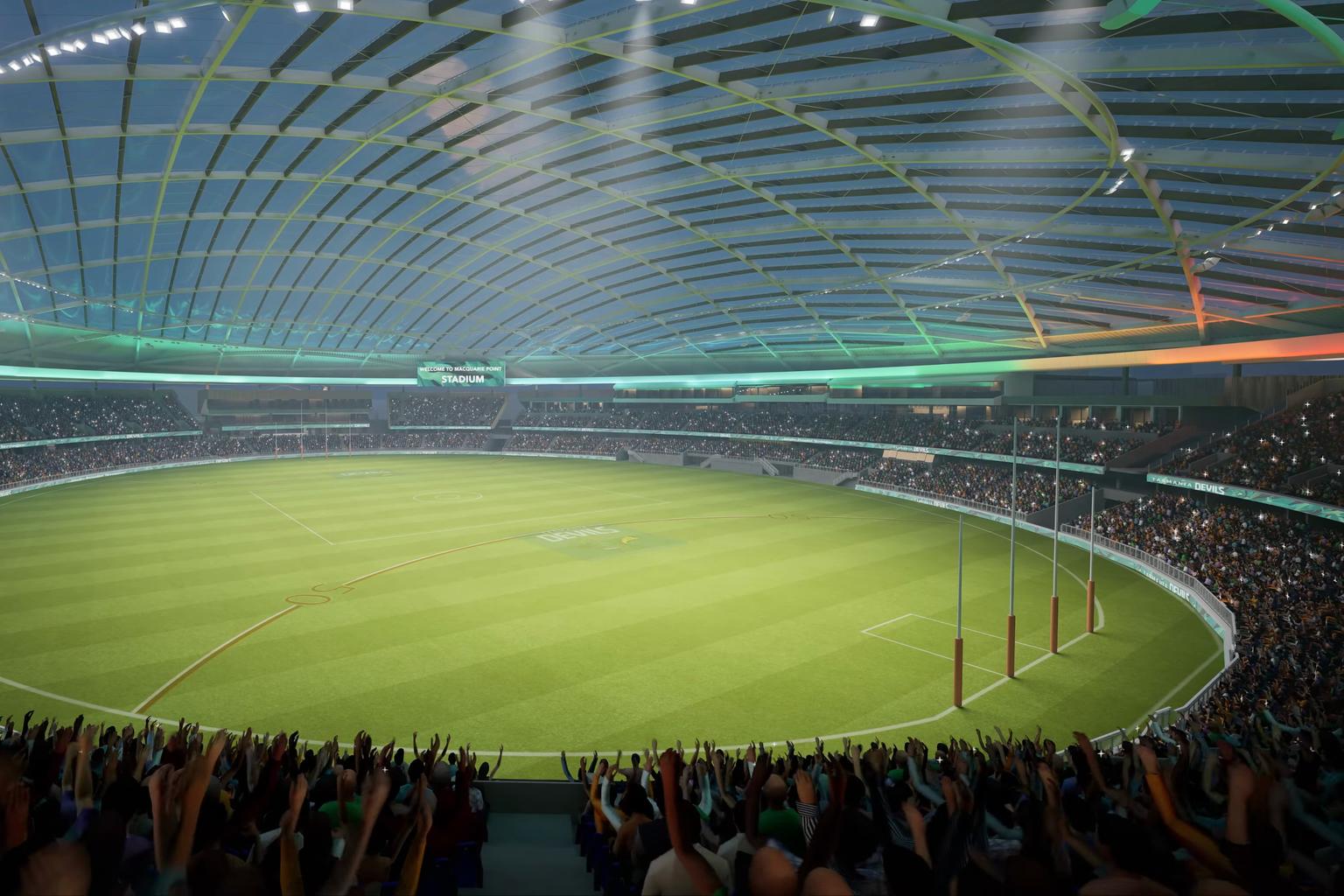
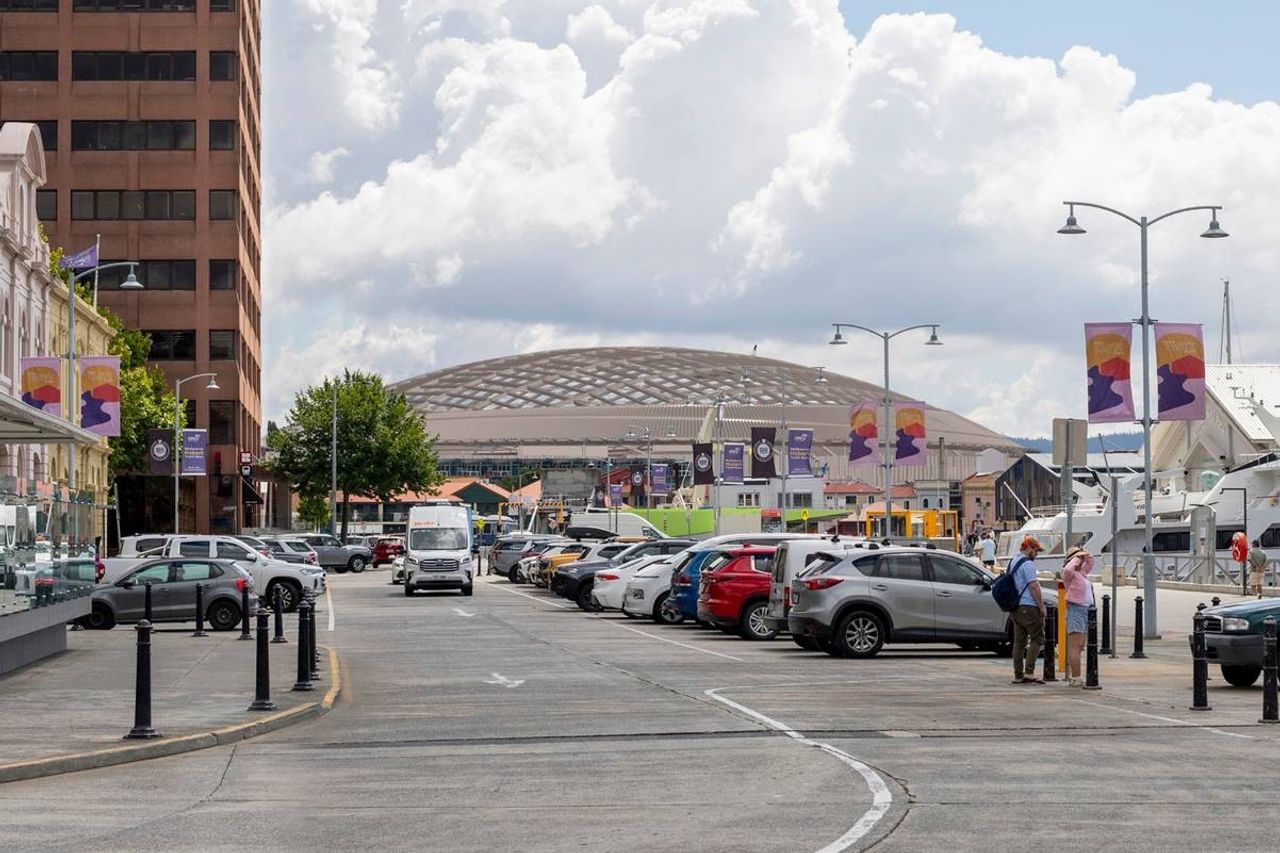
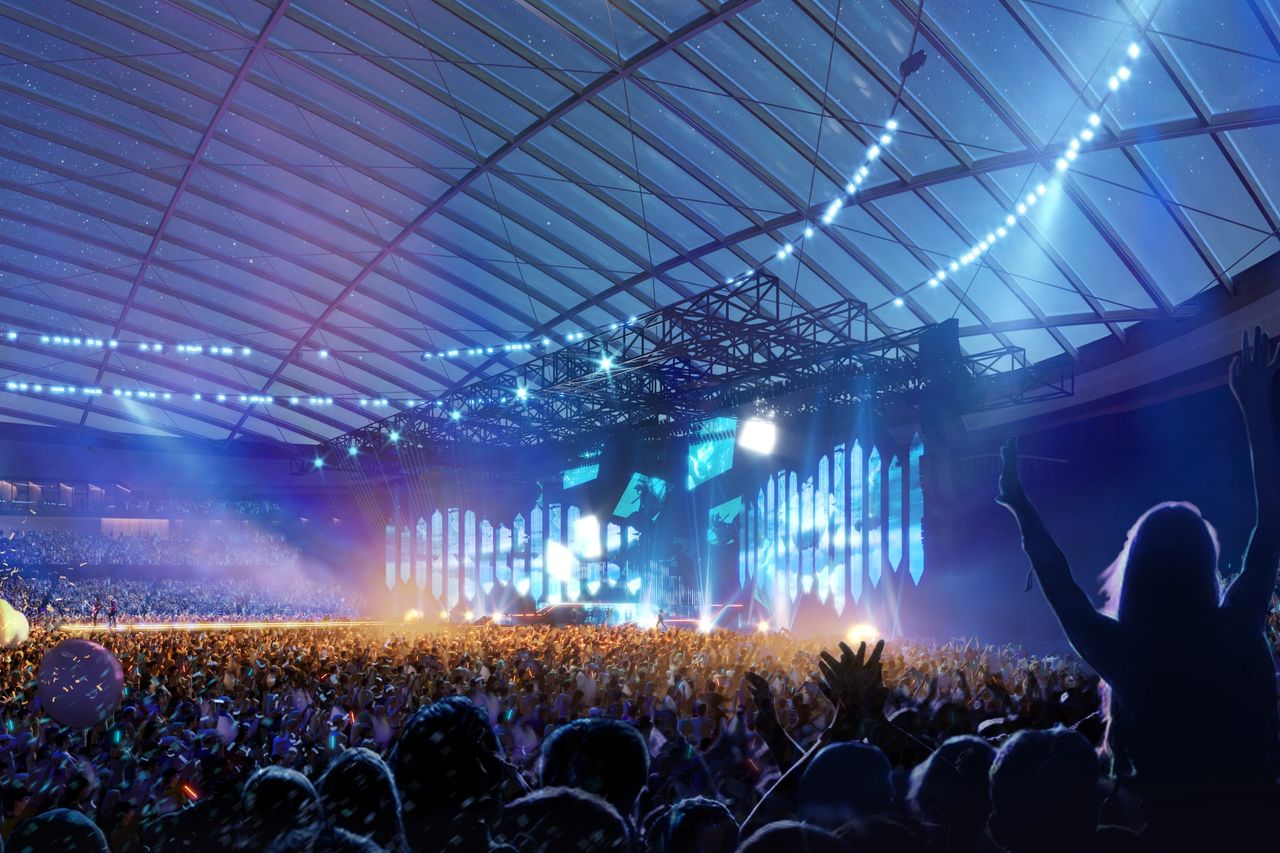
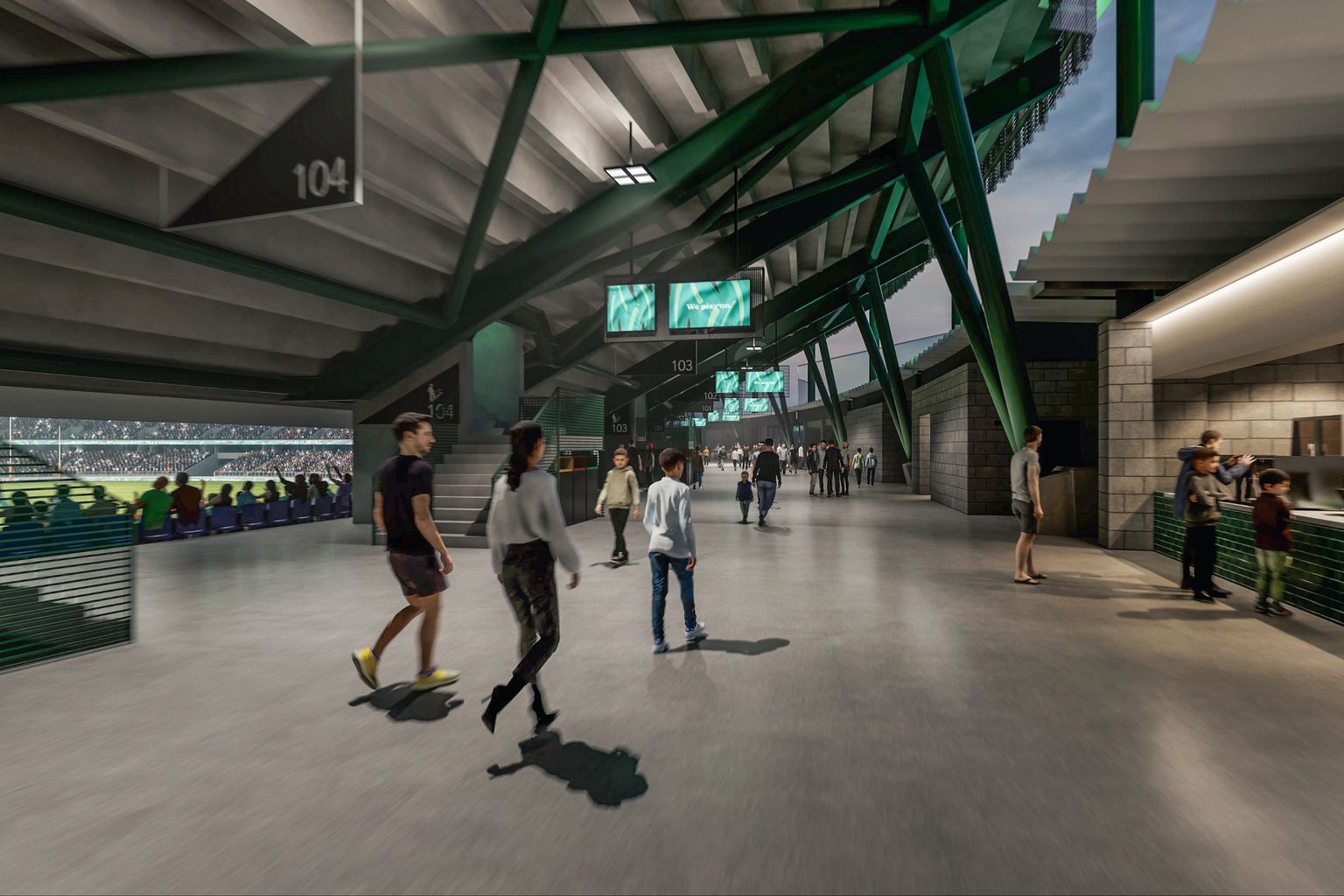
The report links those examples directly to Hobart, where the stadium is planned to have a fixed translucent roof on a constrained waterfront site.
Most of the stadium’s cost is being covered by state borrowings.
The federal government has pledged $240 million and the AFL is contributing $15 million towards construction, with the state government funding the rest.
Browne said the money would be better spent elsewhere.
“If we get rid of the stadium, Macquarie Point is ready to go for construction of quite a lot of houses,” he said.
He said up to 1,000 homes could be built on the site in a mixed-use development alongside hotels and commercial space.
The report also backs an alternative to the stadium.
It says the state government could simply subsidise the Tasmania Devils directly at about one-tenth of the cost.
The report estimates playing at the new stadium would earn the Devils $5 million to $6 million more a year than playing at existing venues.
But it says the interest bill on the stadium debt could be more than 10 times that, at roughly $62 million a year.
The findings broadly match those of the Tasmanian Planning Commission, which last year reached a benefit-cost ratio of about 0.45 and recommended the project not proceed.
The state government is pressing ahead with the project.
Macquarie Point Urban Renewal Minister Eric Abetz, in a statement on Tuesday morning, said the state government was yet to receive the report.
“We are unable to comment on a report we have not seen,” Abetz said.
“We are getting on with the job of delivering the Macquarie Point stadium, which has been costed at $1.13 billion.”
Abetz said the state government continued to “monitor global supply challenges”.
He said No New Stadium had “been fierce critics of the plan since day one” and its campaign against the project was “unsurprising”.
Browne rejected suggestions the report was biased because his group paid for it.

He said Gruen was engaged at arm’s length and the group played no role in shaping his conclusions.
“They don’t have any answers to Dr Gruen’s criticisms of their mismanagement of this project,” Browne said.
“That’s a classic case of playing the man instead of the ball.”
The stadium is a condition of Tasmania’s deal with the AFL to field its own team.
The Devils enter the AFL and AFLW in 2028. The stadium is not expected to host games until at least 2031.
The report says the official cost estimate has risen 46% since the original $775 million figure and warns further increases are “overwhelmingly likely”.