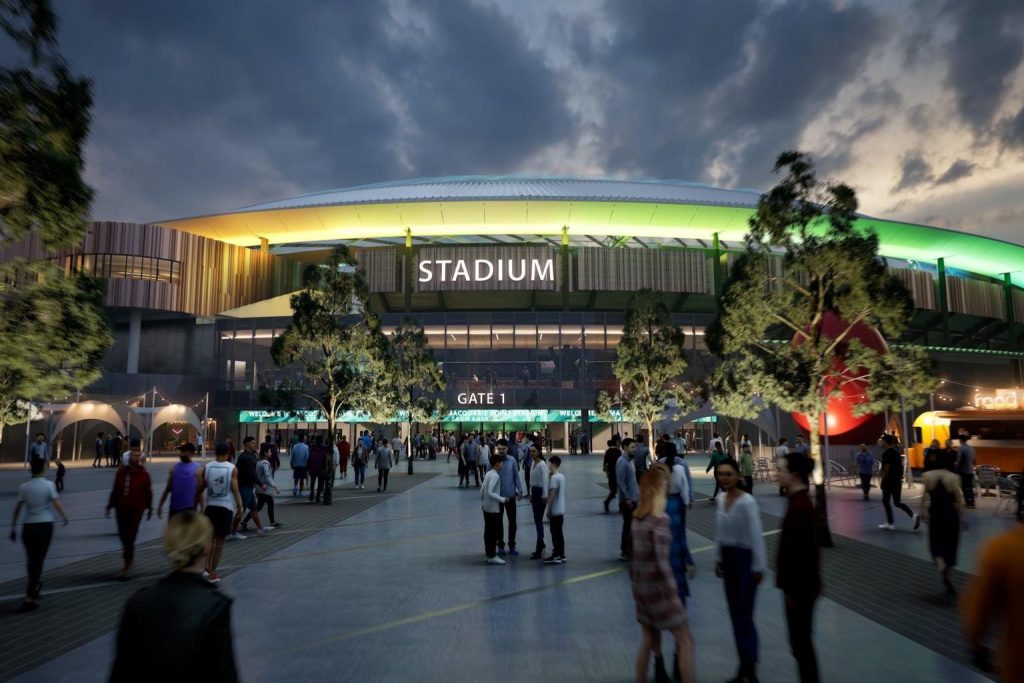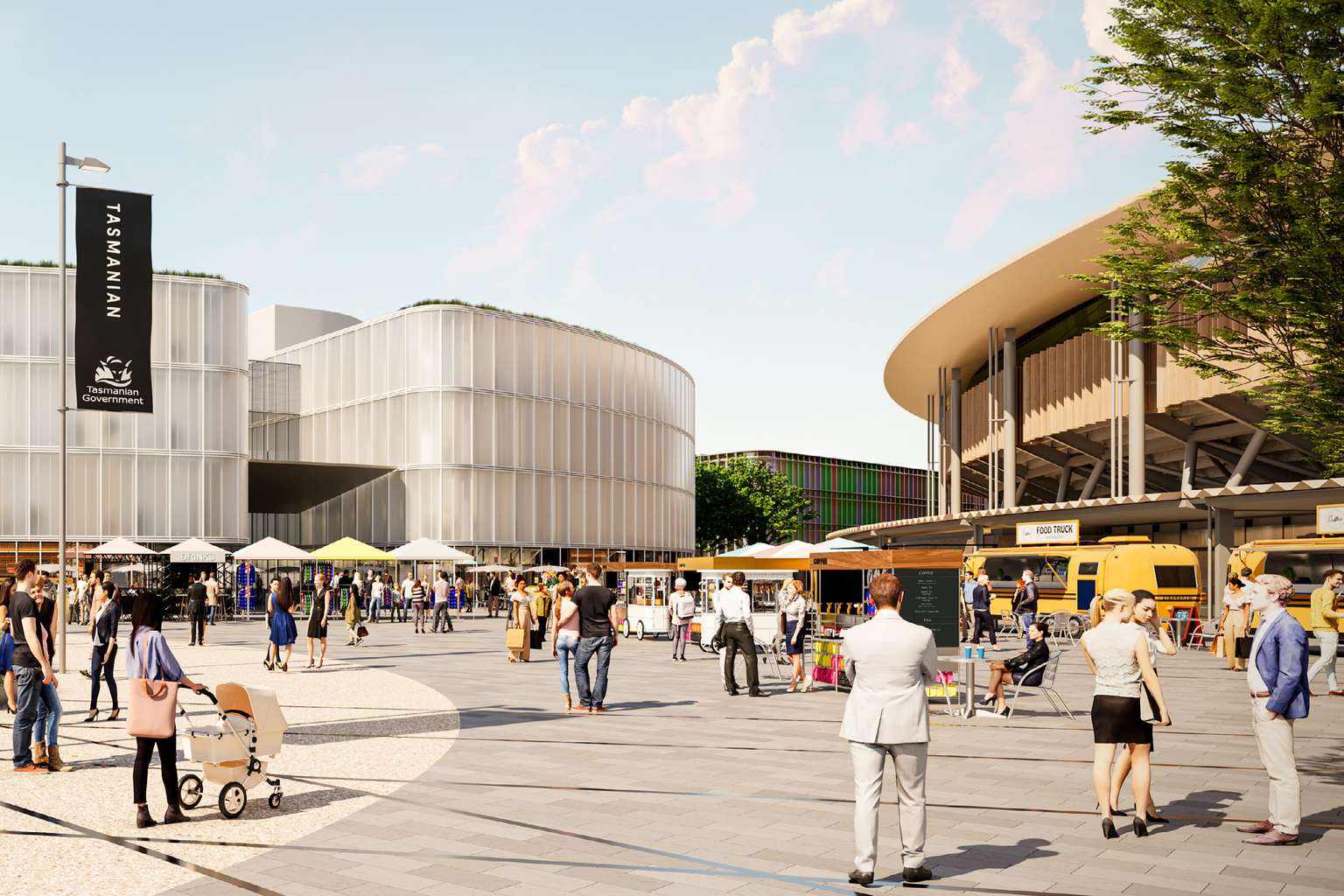
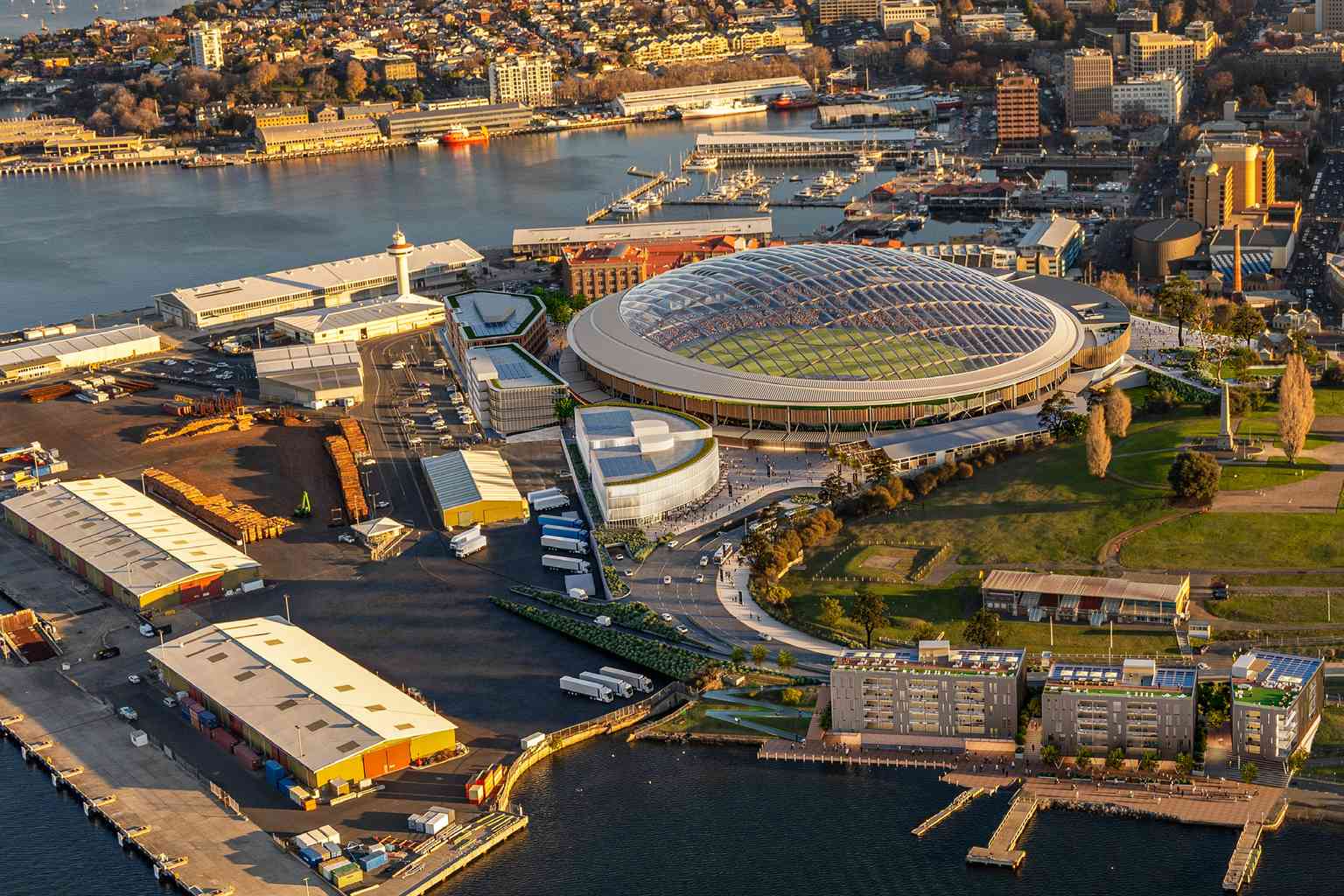
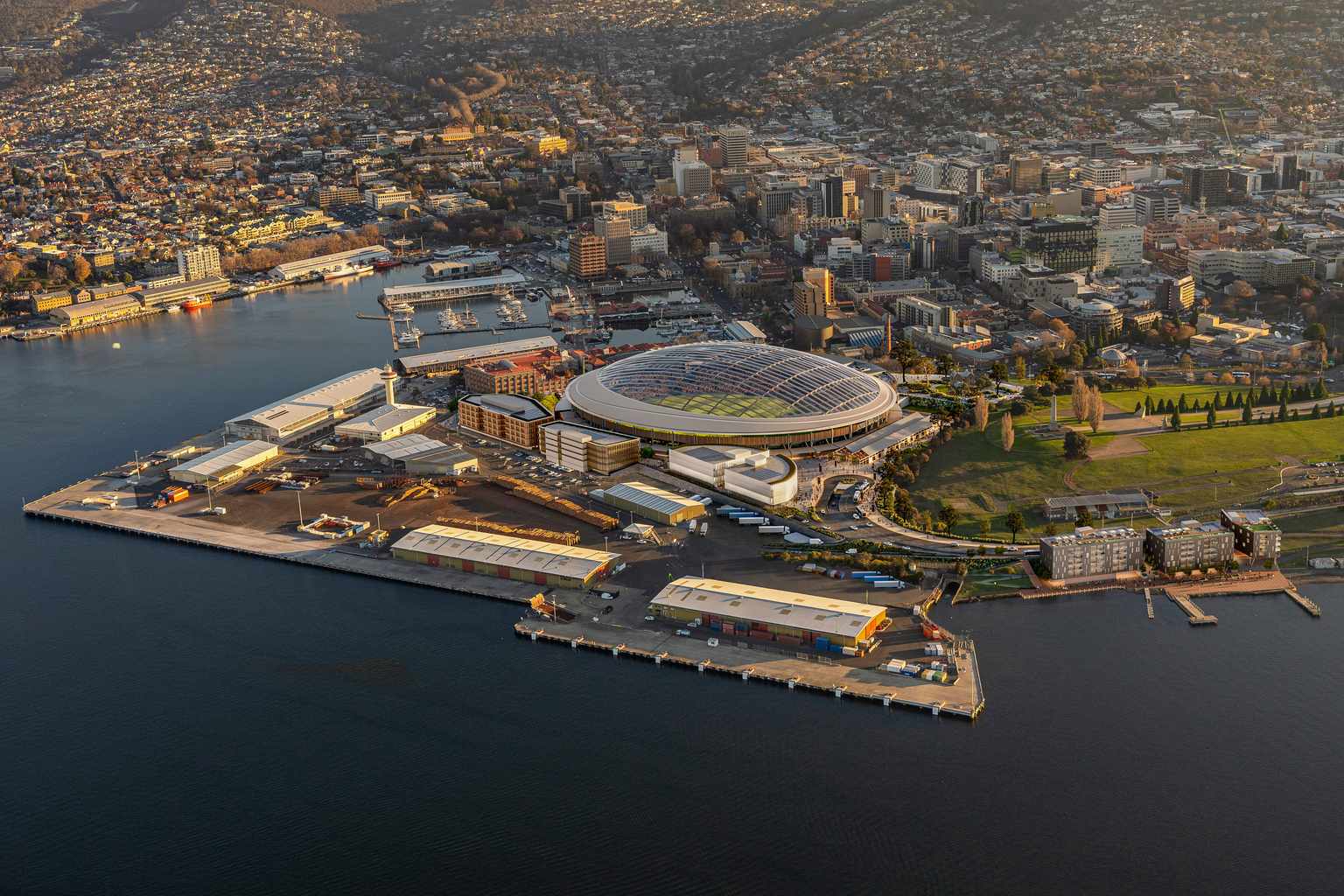
The Tasmanian government has released its master plan for the 10-hectare Macquarie Point site, setting up a major shake-up of the planning rules that have governed the site for nearly three decades.
The master plan replaces an earlier ‘Macquarie Point Reset Master Plan’ and lays out a strategic framework for transforming the former industrial site on the edge of the CBD.
It divides the precinct into four zones: a multi-purpose stadium, an eastern commercial precinct, an Aboriginal culturally informed zone and a residential foreshore development at Regatta Point.
The release follows the federal government’s formal acceptance of the master plan and a separate housing plan in March, locking in Canberra’s $240 million contribution.
The plan will support an amendment carving the Mac Point site out of the Sullivans Cove Planning Scheme, which has shaped Hobart’s waterfront character since 1997 and replacing it with bespoke Macquarie Point controls in the Hobart Local Provisions Schedules.
The Hobart City Council will act as the planning authority for the amendment, which will go to public consultation.
Macquarie Point Urban Renewal Minister Eric Abetz said the precinct would benefit the entire state.
“This holistic master plan brings together jobs, housing, construction, residential and retail offerings and everything in between,” Abetz said.
“It demonstrates how each component will work together, how it will provide employment for Tasmanians and how this industrial wasteland will be transformed.”
The master plan estimates the precinct could support up to 1,800 jobs and 27,000 square metres of commercial floor space at full build-out.
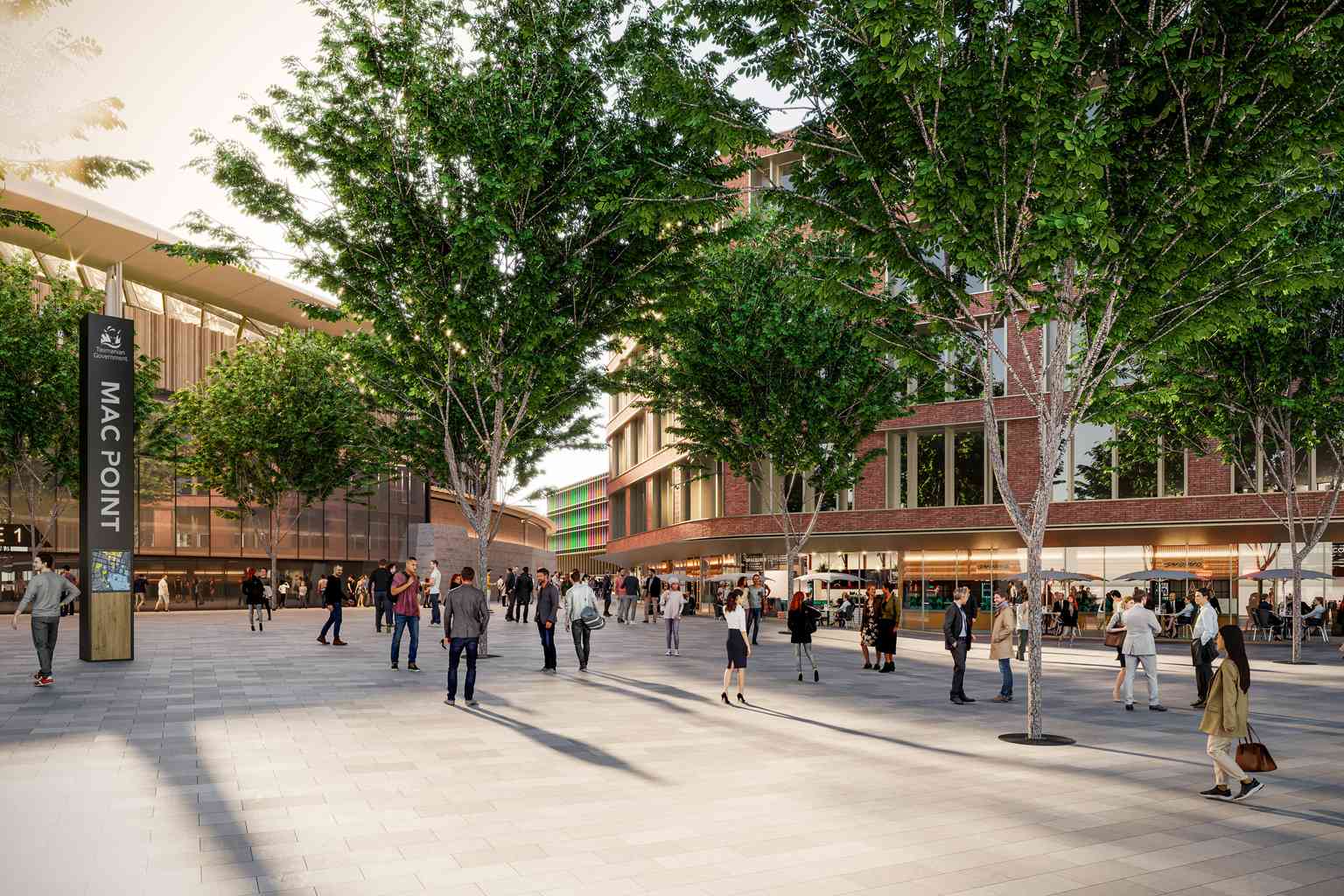
The residential foreshore zone has capacity for roughly 100 dwellings, with a portion earmarked for affordable and essential worker housing.
Maximum building heights vary across the precinct, with most non-stadium development capped at an RL24 envelope.
Delivery will be staged across three overlapping phases, the master plan states.
The first stage covers the stadium, an underground car park and a new northern access road with an event bus plaza.
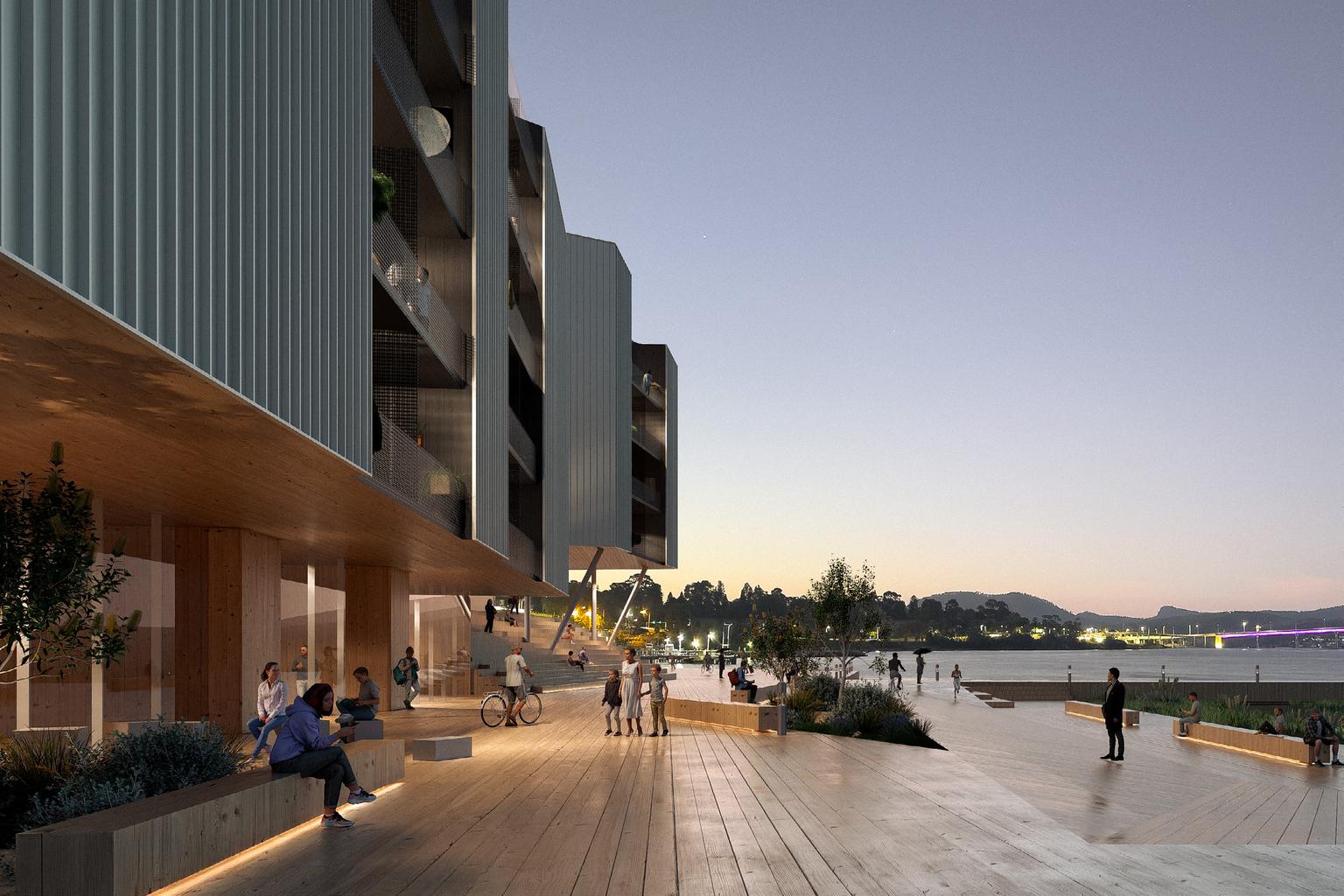
The second stage delivers the Aboriginal culturally informed zone and the foreshore housing, while the third stage completes the eastern commercial precinct and remaining transport infrastructure.
The stadium alone now carries a price tag of $1.13 billion, up from $715 million when the project was first announced in 2022.
The total cost of the broader precinct – including the housing, commercial and cultural zones in stages two and three – has not been publicly disclosed.
Construction is not expected to finish until late 2030, with matches unlikely before the 2031 AFL season.
The planning scheme submission is expected in the second half of the year.