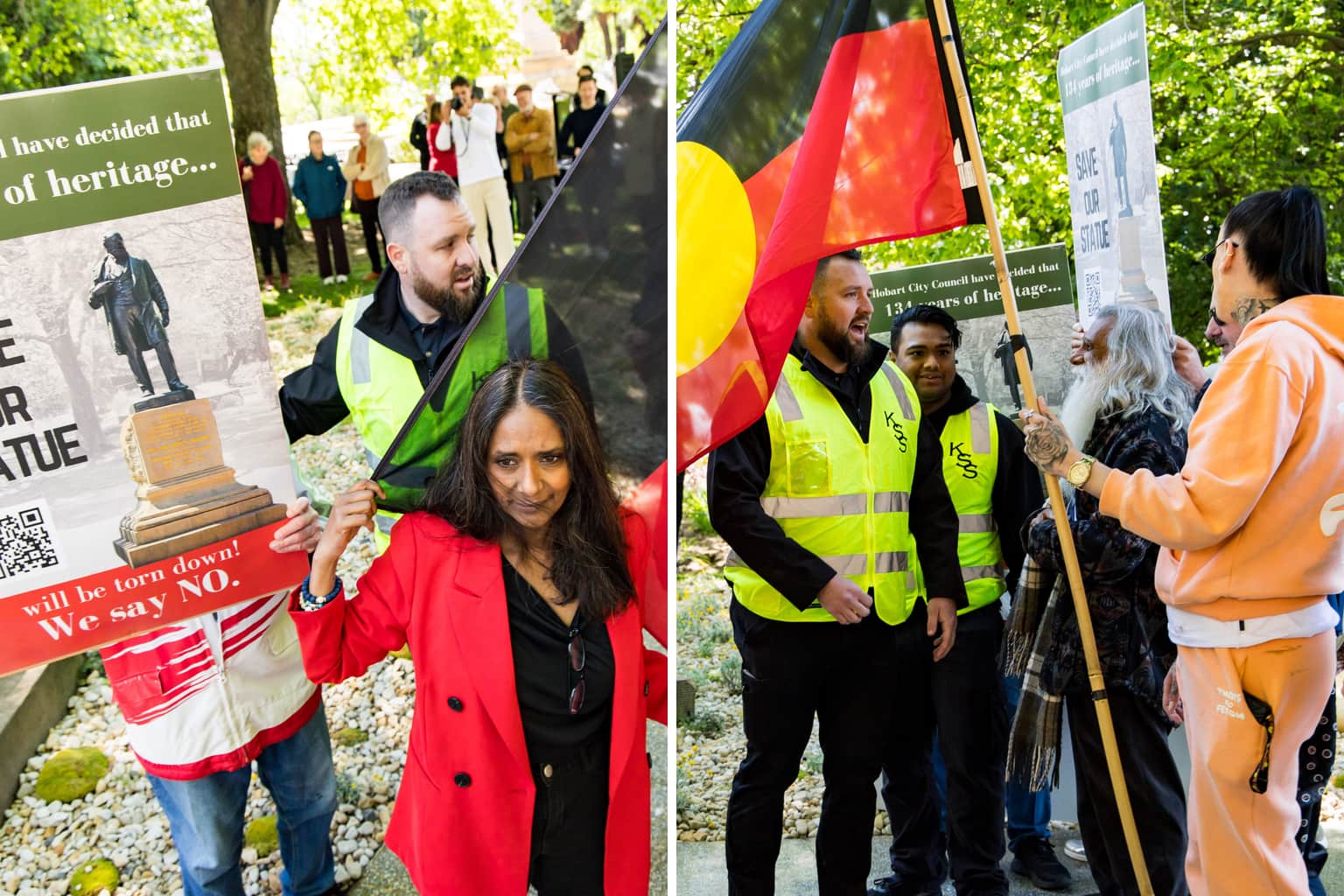
The unveiling of a new installation where Hobart’s William Crowther statue once stood has been met with protest this morning, with Aboriginal community members confronting those opposed to the project.
The Hobart City Council unveiled the final stage of a five-year project to reinterpret the site where a statue of former Tasmanian premier William Crowther once stood in Franklin Square.
The bronze statue of Crowther, a surgeon and former premier, was cut down by vandals in May 2024.
Crowther removed the skull of Tasmanian Aboriginal man William Lanne after his death in 1869.
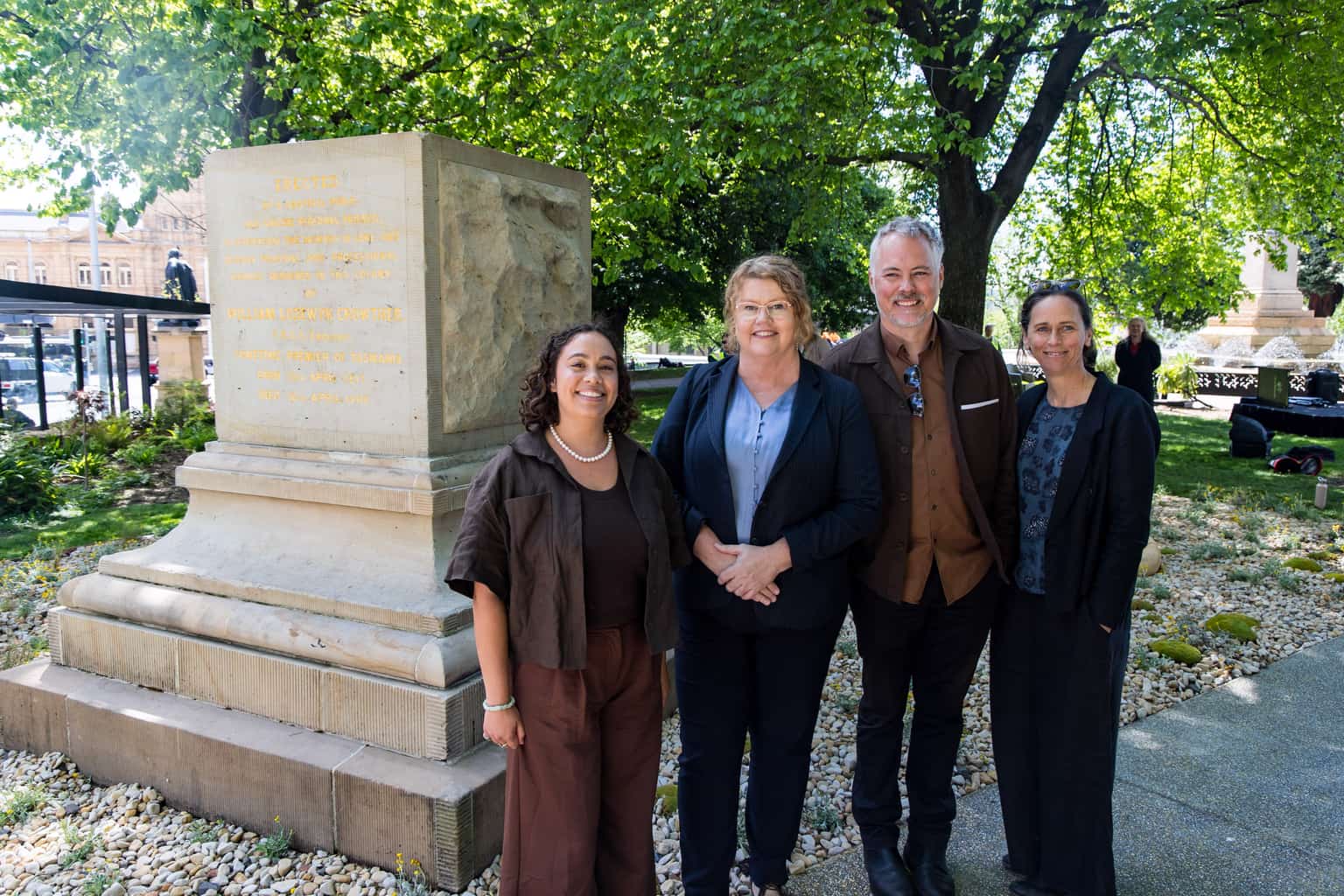
The new installation, unveiled on today, features a bronze ring surrounding a garden of endemic plants beside the statue’s original sandstone plinth.
The ring features text by writers Nunami Sculthorpe-Green, Alison Alexander and Andrew Harper, with more material available online.
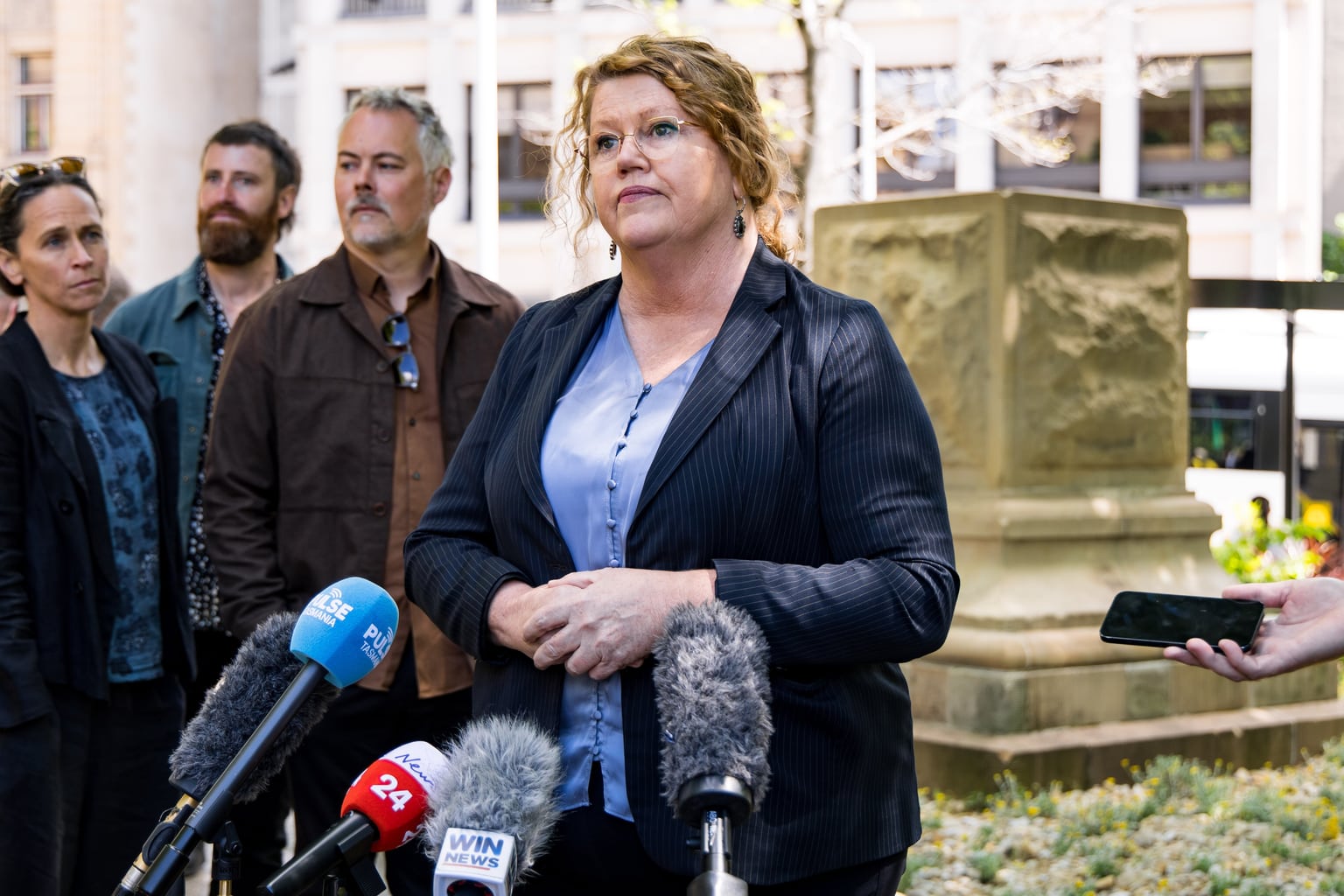
Lord Mayor Anna Reynolds said the project was the result of years of consultation and formal approvals.
“It’s not about erasing history, but rather providing even more information, context and a broader range of perspectives that have often been absent from public spaces,” Reynolds said.
She said other councils could learn from Hobart’s approach to the statue.
“There’s a lot of lessons that can be learned in places all around Australia from this project,” she said.
“We did go through so many steps along the way and led to a very broad conversation about the history and the legalities of removing a statue.”
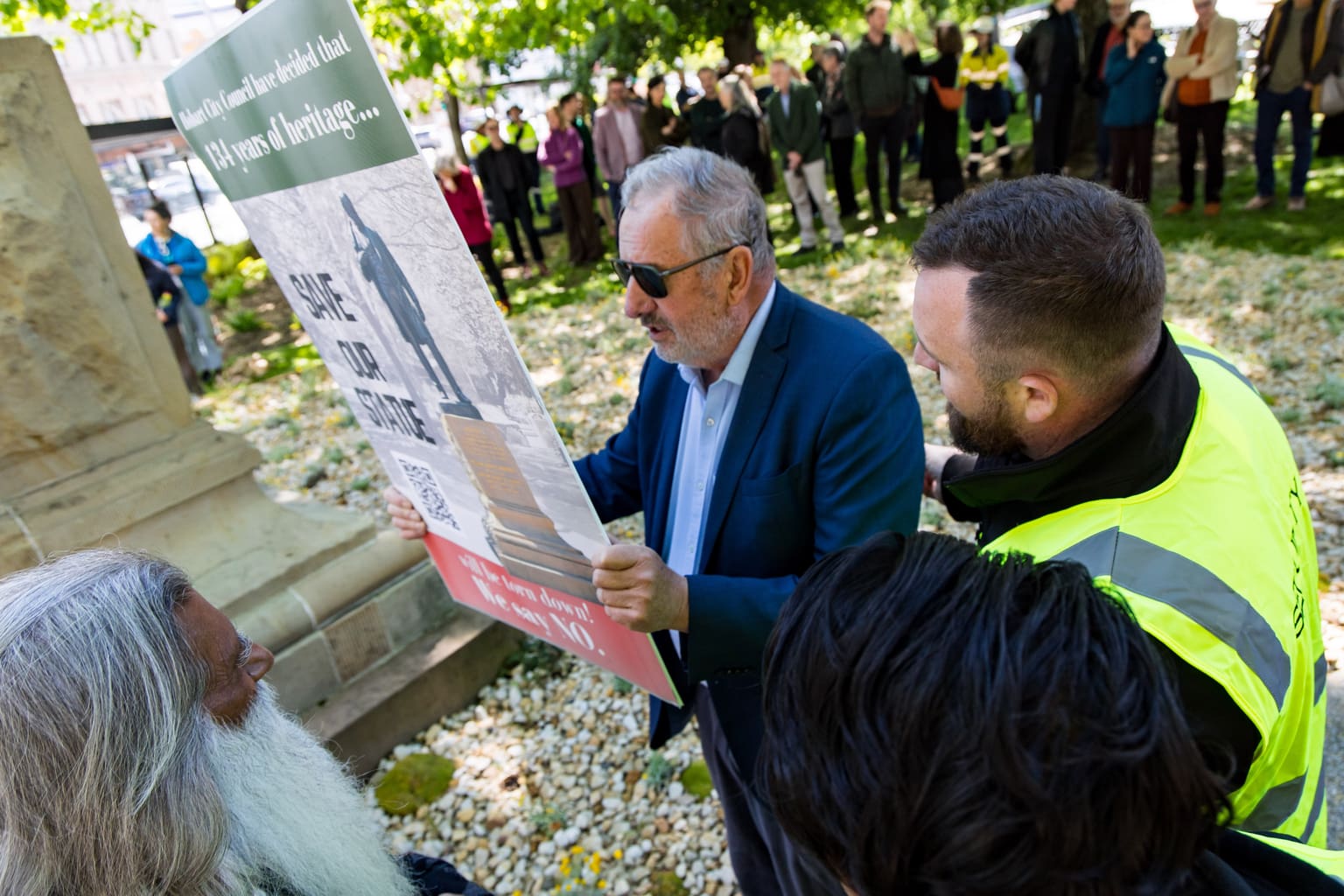
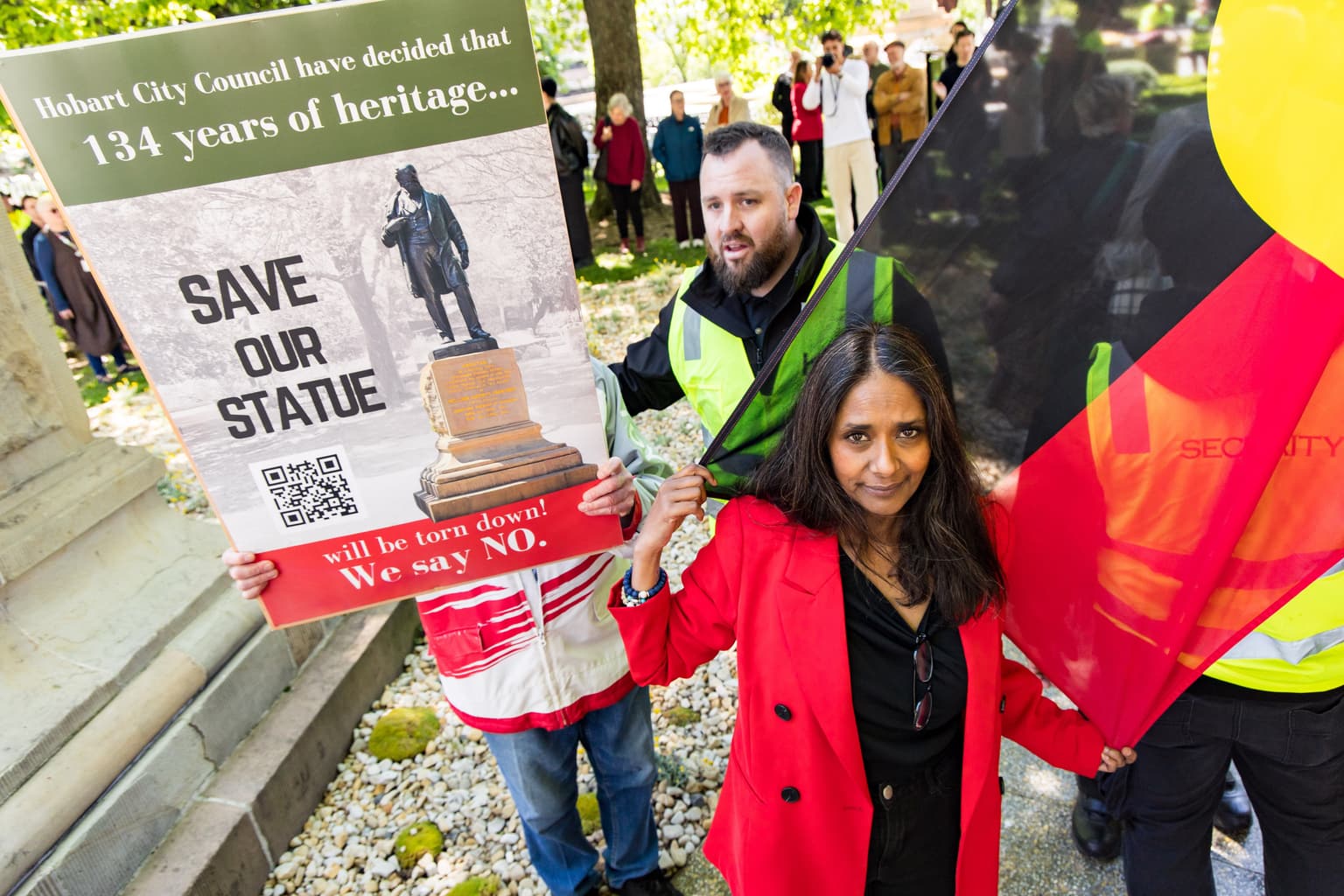
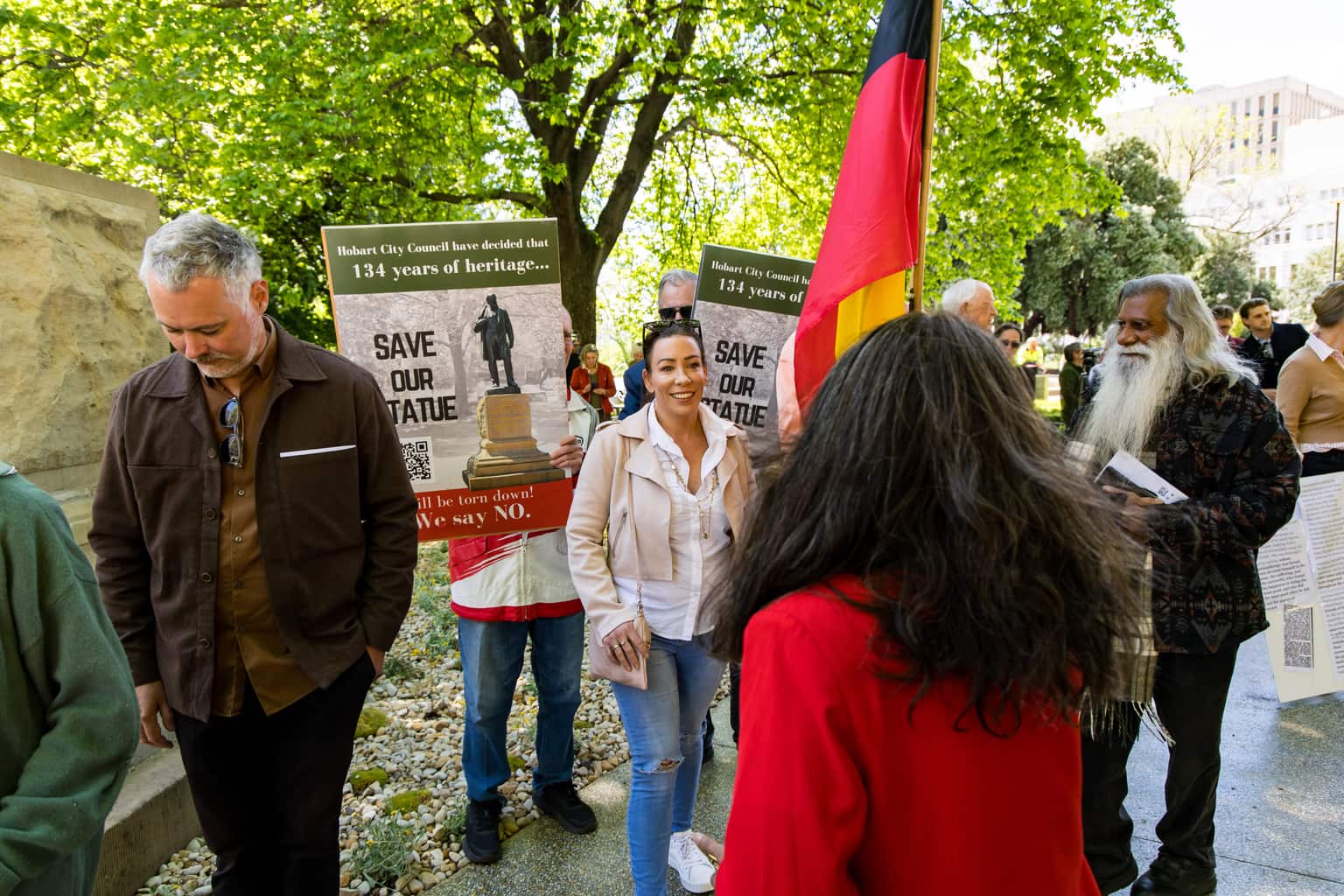
Shortly after the unveiling in Franklin Square, Hobart councillor Louise Elliot and former councillor Jeff Briscoe held up signs, drawing a loud response from members of the Aboriginal community.
Nala Mansell of the Tasmanian Aboriginal Centre shouted at the pair, while another Aboriginal advocate draped an Aboriginal flag over Elliot.
When Elliot later held a press conference, Mansell shouted throughout, including chants of “always was, always will be Aboriginal land”.
Sculthorpe-Green, a palawa writer, said the statue had caused hurt to the Tasmanian Aboriginal community for decades.
“It was important to me to re-centre the life of William Lanne in this story,” she said.
Speaking at the unveiling, she said she had welcomed the statue being cut down.
“Like many others, I celebrated when it was torn down and applauded those who did it,” she said.
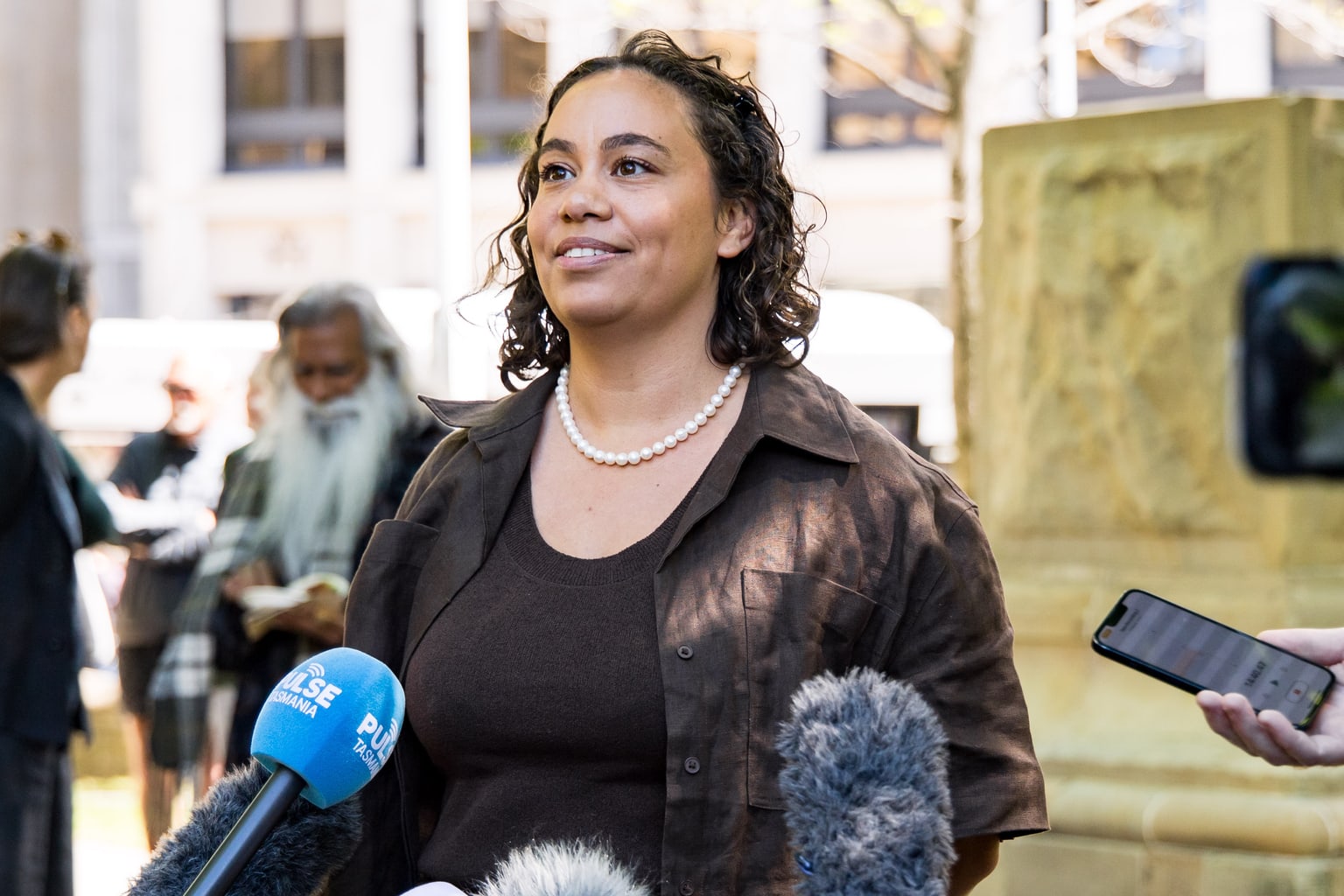
Asked about the protest, she said people who used projects like this “for political division” were “really just trying to deny the right of our people to be offended and deny our humanity”.
Architect Mat Hinds said a letter Crowther wrote to the Royal College of Surgeons in London came to light while the design team was working on the project.
In the letter, Crowther wrote that he had “as good a right as anybody to the body of that man” and had “obtained the head”.
“He admitted to it multiple times,” Hinds said.
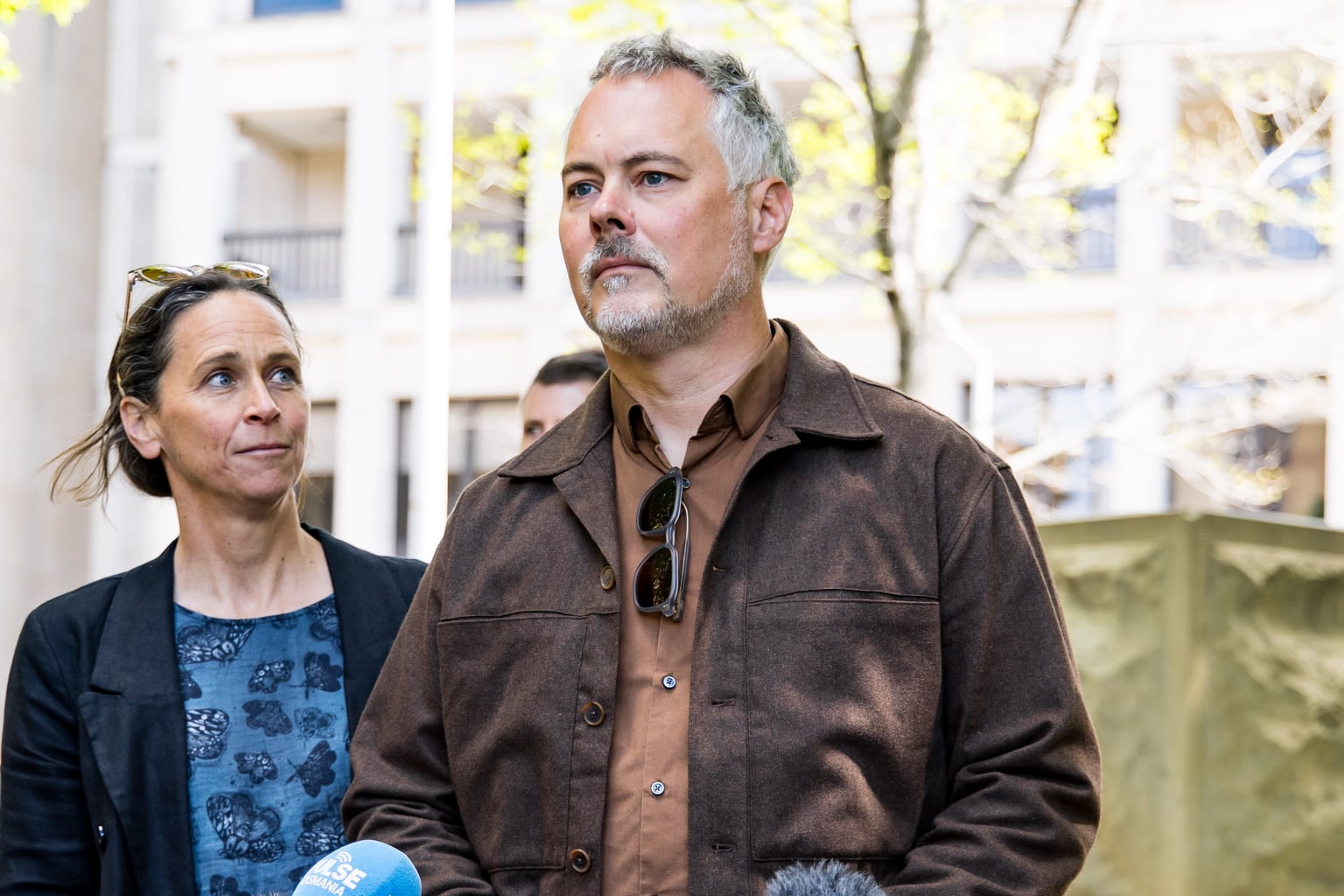
Hinds said the letter reflected a wider practice of taking Aboriginal remains within Hobart’s medical community at the time.
“This whole process has just been about surfacing the reality of that and understanding that Aboriginal people have known about that for a very long time and it’s about time that the rest of the community catches up with that truth,” he said.
Elliot opposed the project and called it “the crescendo of a $300,000 project in a cost-of-living crisis that has left the community more divided than ever before”.
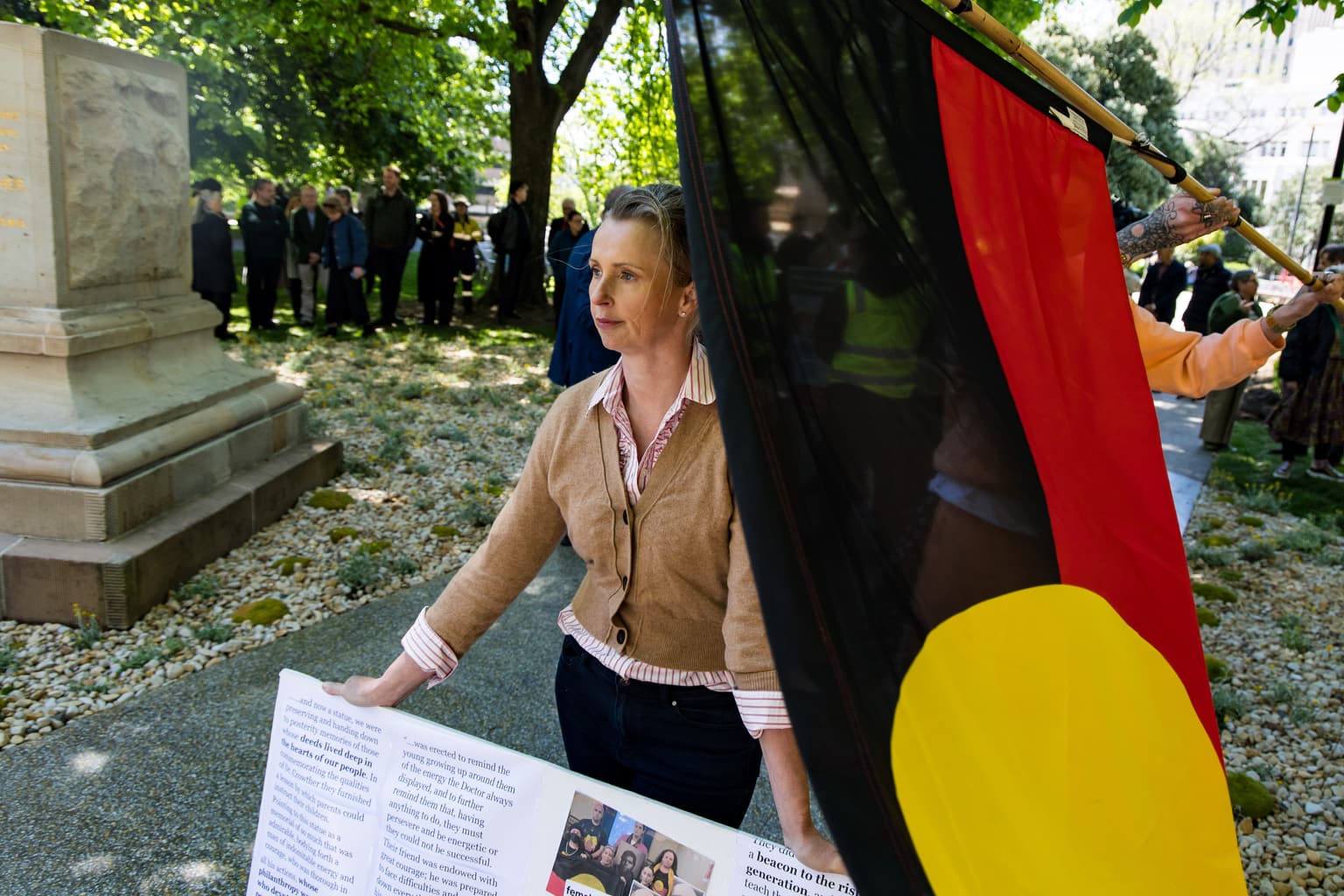
Elliot said Crowther had been widely respected in his time, with hundreds of people making small donations to pay for the original monument.
She said she supported adding historical context to the site, but not removing the statue.
“I believe in additions to our cultural heritage, not deletions,” she said.
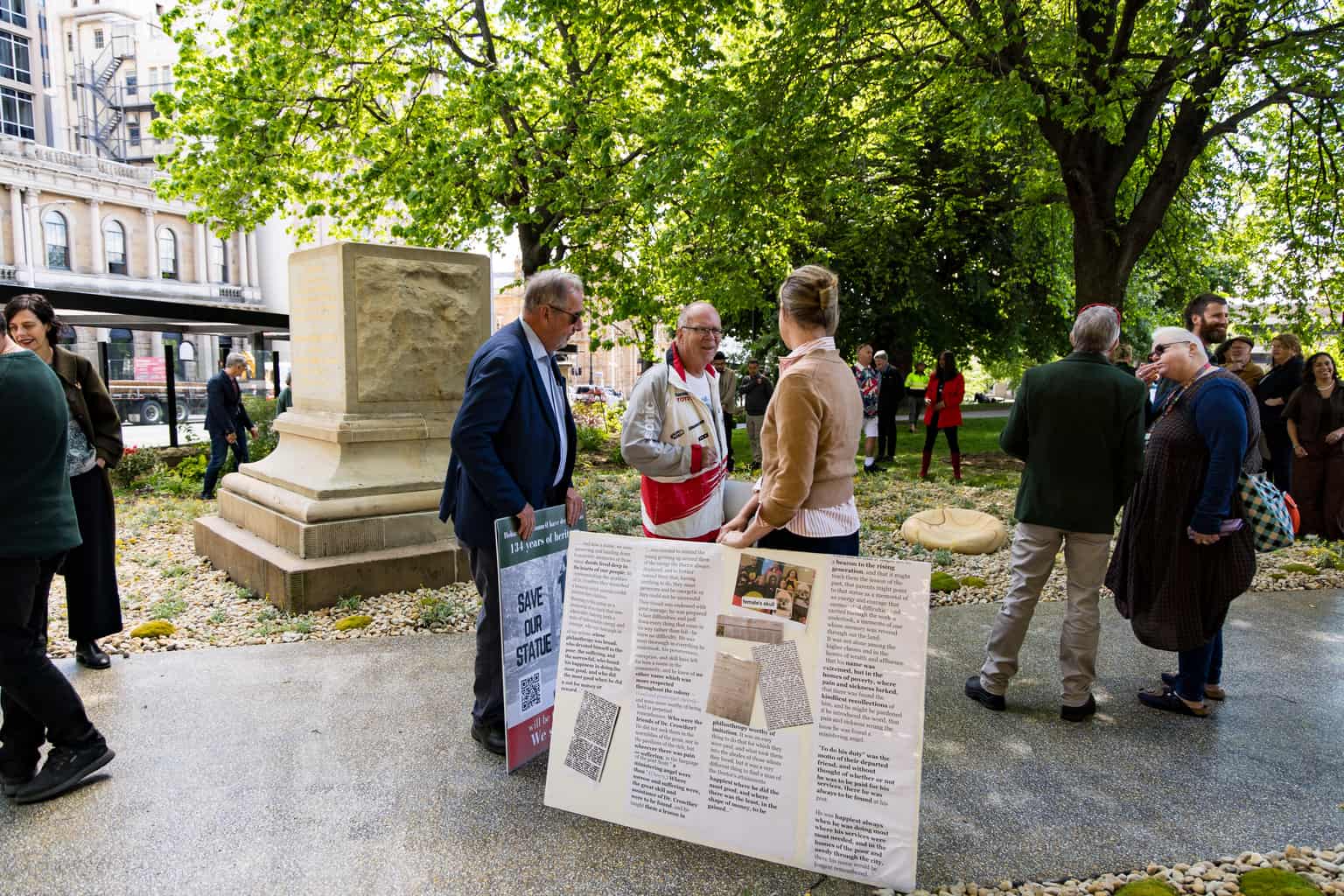
Elliot said the council had “set a precedent” that could affect other colonial monuments, including the statue of John Franklin in the same square.
She said she wanted the Crowther statue displayed somewhere safer, such as the Town Hall or a museum.
The project began in 2019 and included four temporary artworks responding to the statue in 2021.
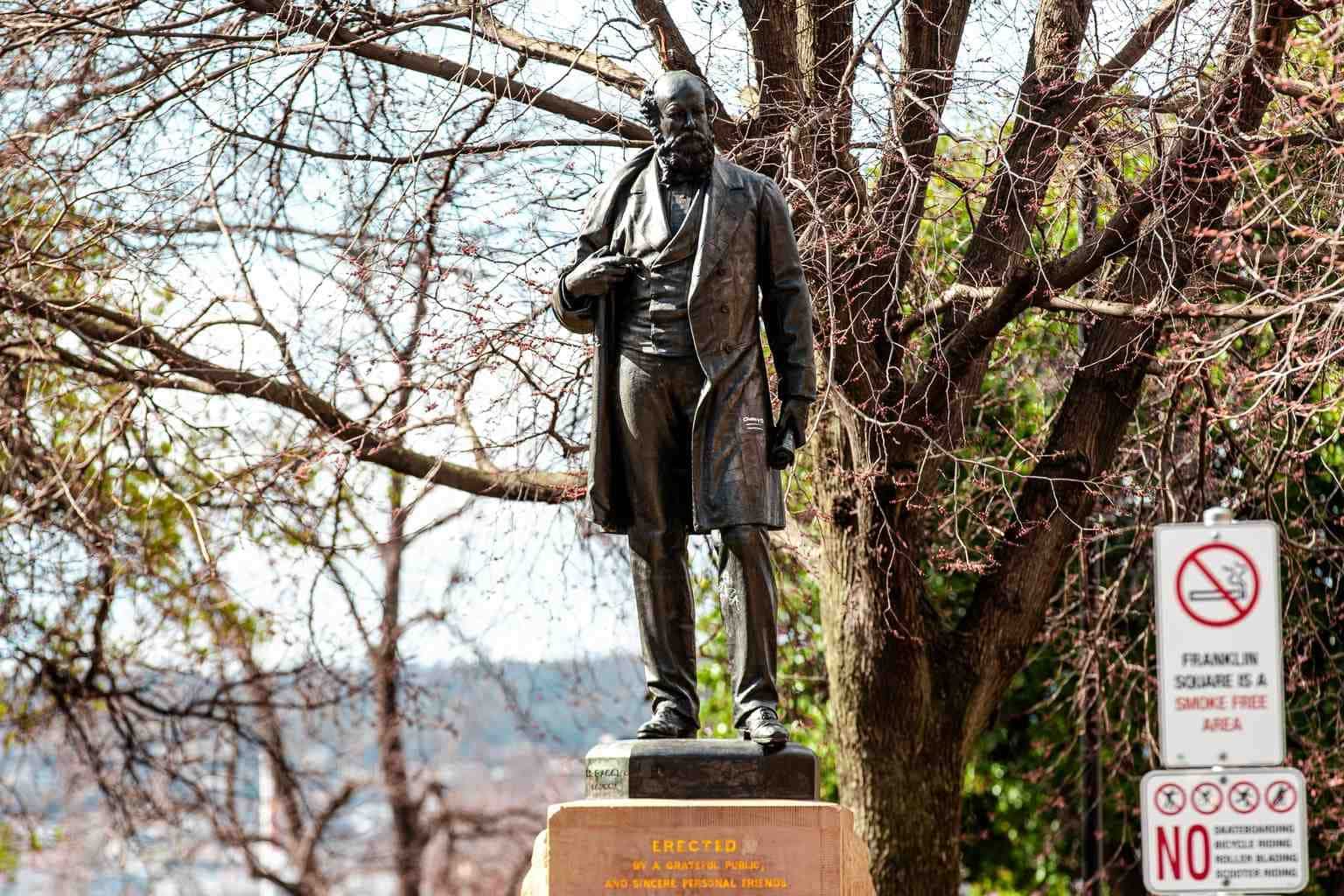
In 2022, the council voted to remove the bronze figure but keep its sandstone plinth.
Briscoe appealed that decision to the Tasmanian Civil and Administrative Tribunal (TASCAT).
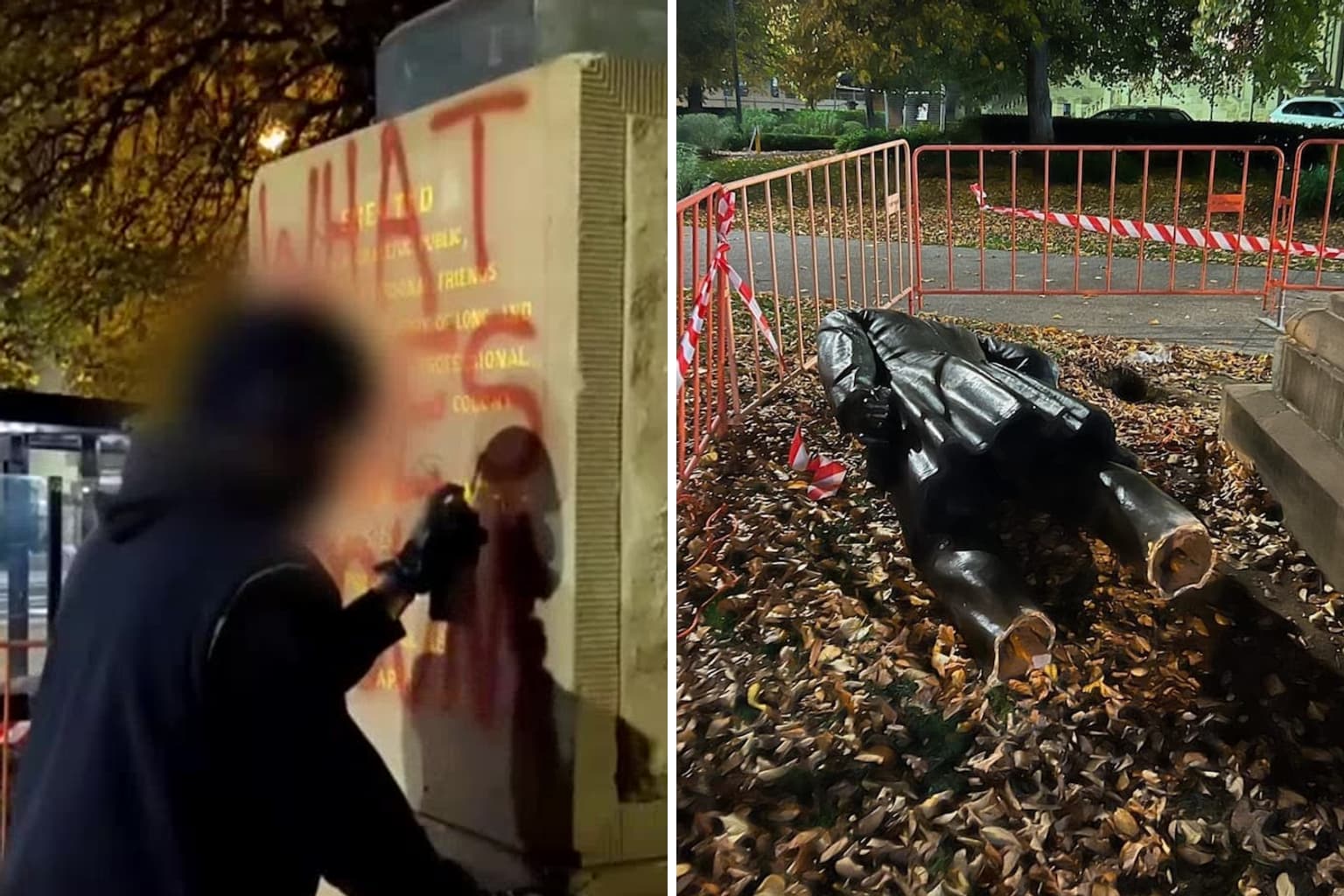
The statue was cut down by vandals the night before the tribunal dismissed the appeal.
Reynolds said the statue had since been restored and was being kept in the council’s collection.
She said members of the public could ask the council for permission to view it.