Tasmania’s net debt will climb to almost $10 billion before it starts falling, under a budget that relies on $1.47 billion in public sector savings and the loss of around 1,700 jobs to repair the bottom line.
Treasurer Eric Abetz handed down the 2026-27 budget on Thursday, with net debt tipped to climb from $6.82 billion in mid-2026 to a peak of $9.98 billion by mid-2029, before easing back to $9.47 billion a year later.
The budget runs a $596.7 million operating deficit in 2026-27, down from a $923.3 million deficit this year.
A $192.8 million surplus is forecast for 2027-28, growing to $622 million by 2029-30.
Tasmanian budget 2026-27: What’s in it for you
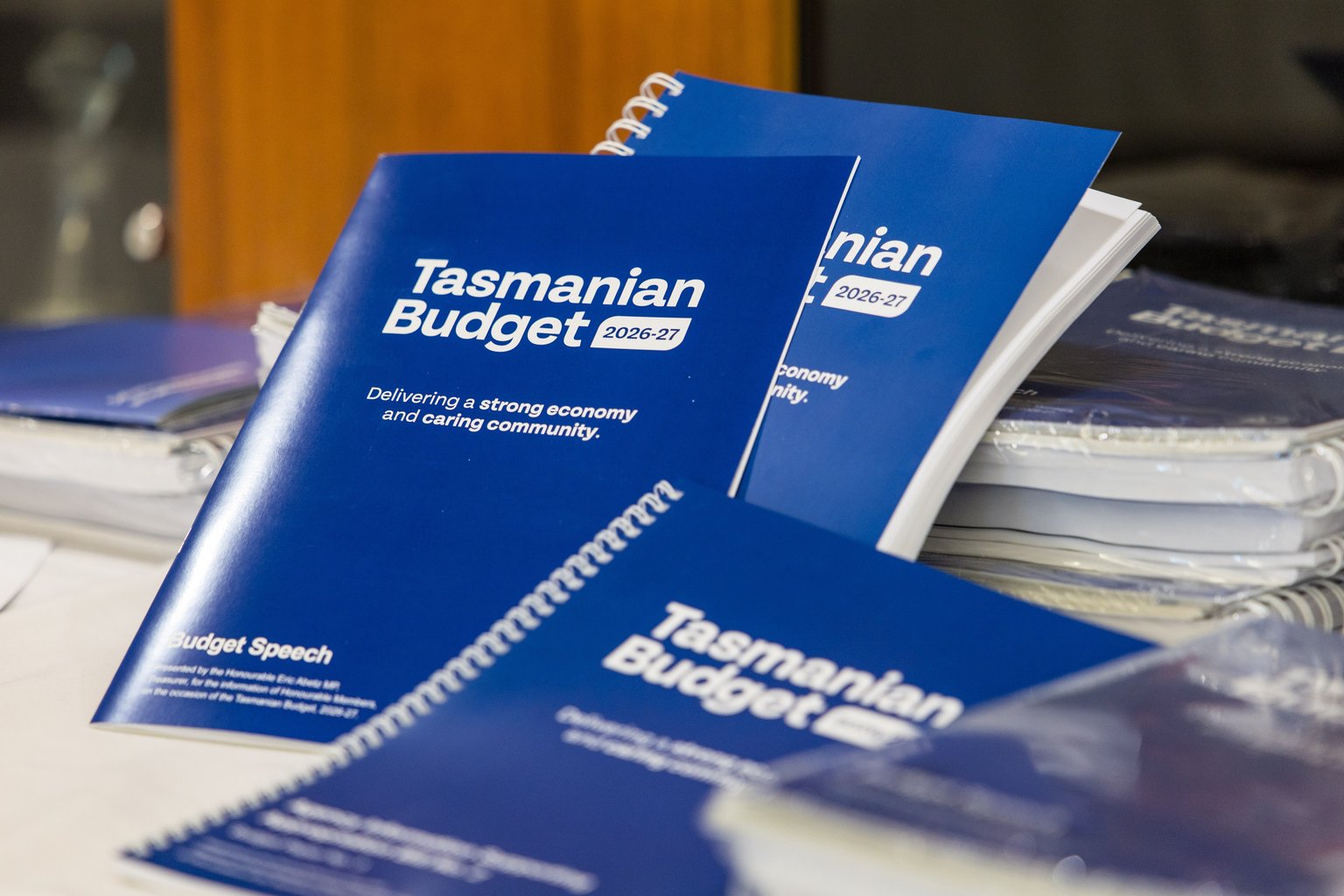
The fiscal balance, which includes infrastructure spending, runs a $972.7 million deficit in 2026-27 before reaching a $635.2 million surplus by 2029-30. There are no new state taxes.
Instead, the government is banking on what it calls “operational efficiencies” worth $215.9 million in 2026-27, rising to $379.6 million in 2027-28, $429.9 million in 2028-29 and $441.5 million in 2029-30.
All up, that adds up to about 1,700 full-time jobs gone by 2029-30.
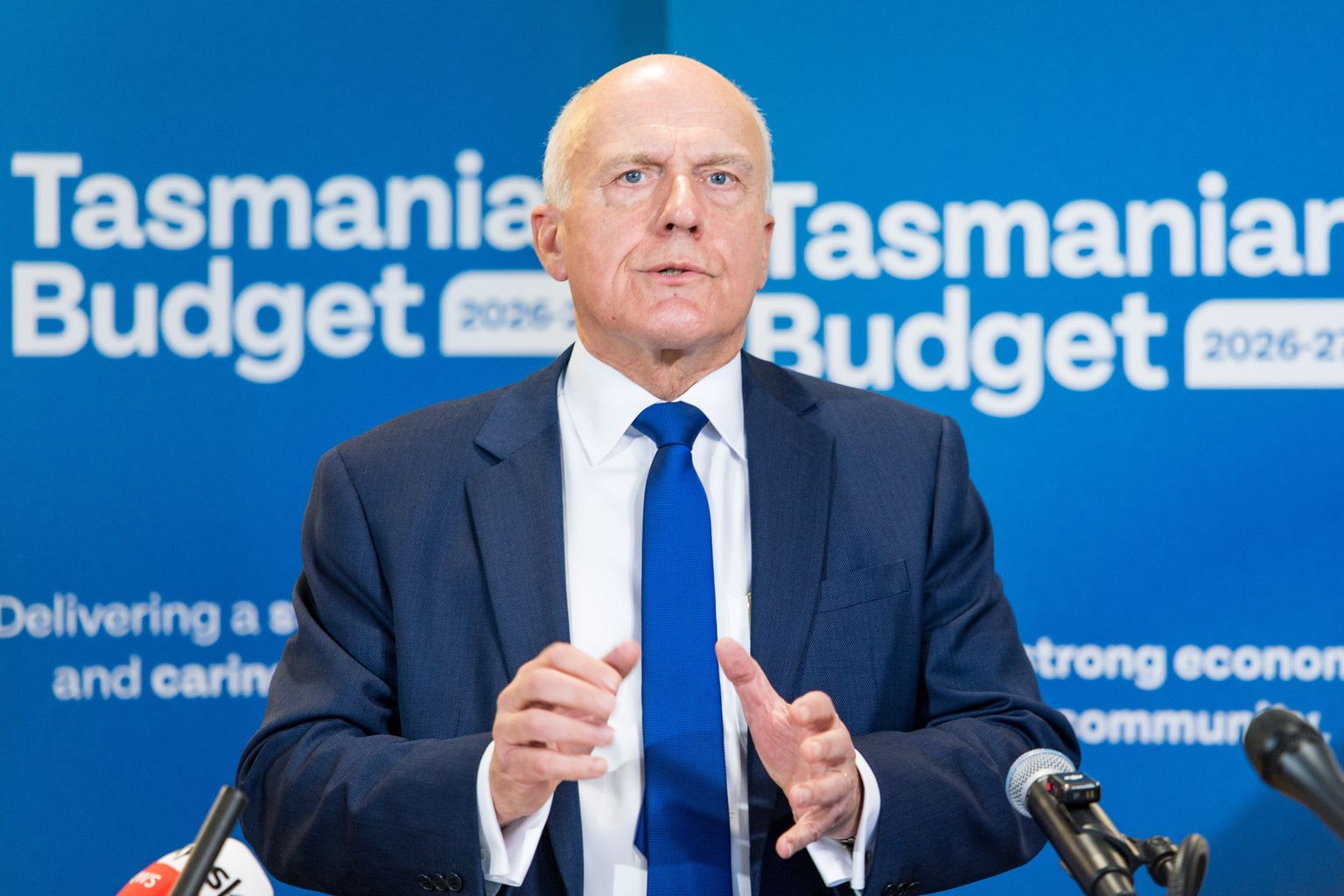
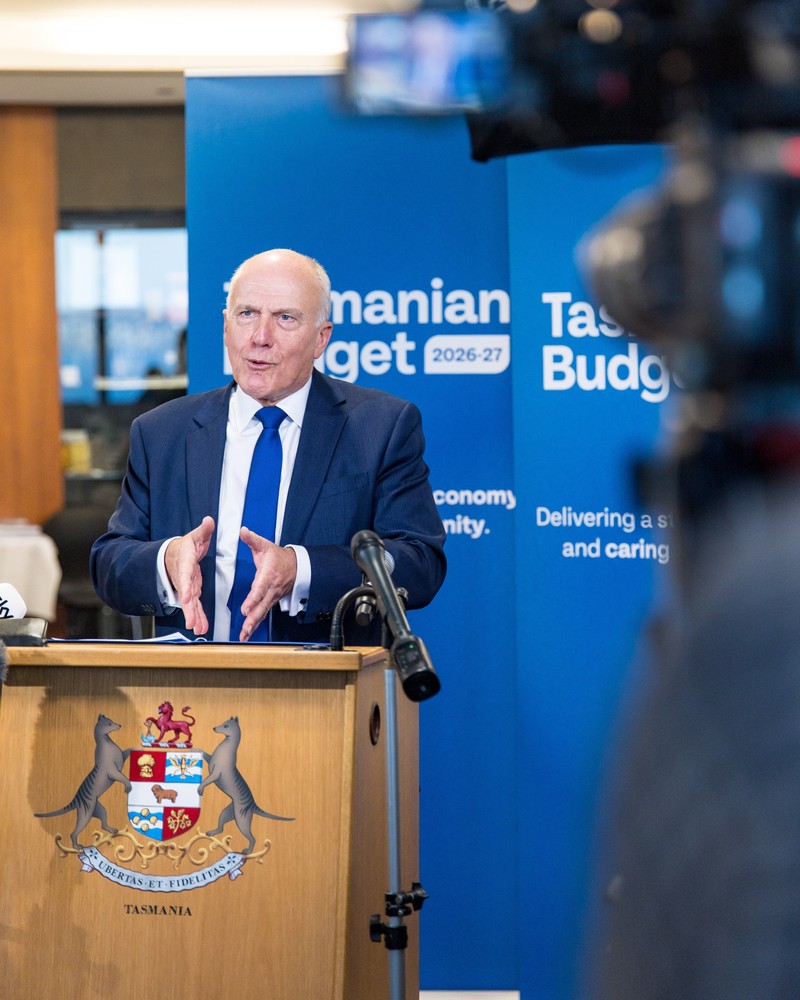
“This budget has no new taxes and, in the forward estimates, has surpluses and the commencement of paying down debt,” Abetz told reporters.
The Department of Health will deliver $131.4 million in savings in 2026-27, rising to $186.7 million in 2027-28, $191 million in 2028-29 and $193.4 million in 2029-30.
The Department for Education, Children and Young People will deliver $25 million in savings next financial year, growing to $50 million, then $75 million and $78.2 million across the forwards.
The Department of State Growth, which is being scrapped as part of a shake-up of government agencies, has been set a target of $21.2 million in 2026-27, climbing to $88.6 million by 2029-30.
The Department of Police, Fire and Emergency Management is up for $8.1 million in cuts next year, growing to $25.8 million.
The Department of Justice has been allocated $7.4 million in savings rising to $21.3 million, while the Department of Natural Resources and Environment Tasmania carries $4.9 million growing to $20.1 million.
Abetz said the savings would come from back-office functions, not services.
“The frontline services are what we are concentrating on to ensure that they continue to be delivered for the people of Tasmania,” he said.
“But I think most people will accept that there is a substantial bureaucracy in the health department that can be right-sized.”
The budget papers state agencies will give “consideration” to “minimising impacts” on frontline services.
Abetz also ruled out forced redundancies, saying they “aren’t on the agenda at all”.
He pointed to the Department of Premier and Cabinet, which has already shed 82 positions – 12% of its staff – as proof it can be done.
Of the 250 jobs going at the Department of State Growth, Abetz said 148 staff had already put their hands up for voluntary redundancy.
The budget sets three new targets to hit by 2028-29. They are to reach peak net debt, cut government business debt by $500 million and cap infrastructure spending plus equity injections at $1 billion a year.
Asked if the cap would hold if major projects blew out, Abetz pinned the promise on former Huon MP Dean Harriss, who negotiated it with the government.
“We will honour our commitment to Dean Harriss,” he said.
Total infrastructure spending drops off sharply across the forward estimates – $1.47 billion in 2026-27, $1.49 billion the year after, then $1.29 billion and just $705 million by 2029-30.
Spending on government-run projects alone drops from $992.2 million in 2026-27 to $639.1 million by 2029-30.
The budget includes a $506 million bailout for TT-Line, with $375 million of that earmarked to pay down the ferry operator’s existing debt and $131 million for permanent berthing infrastructure at Devonport.
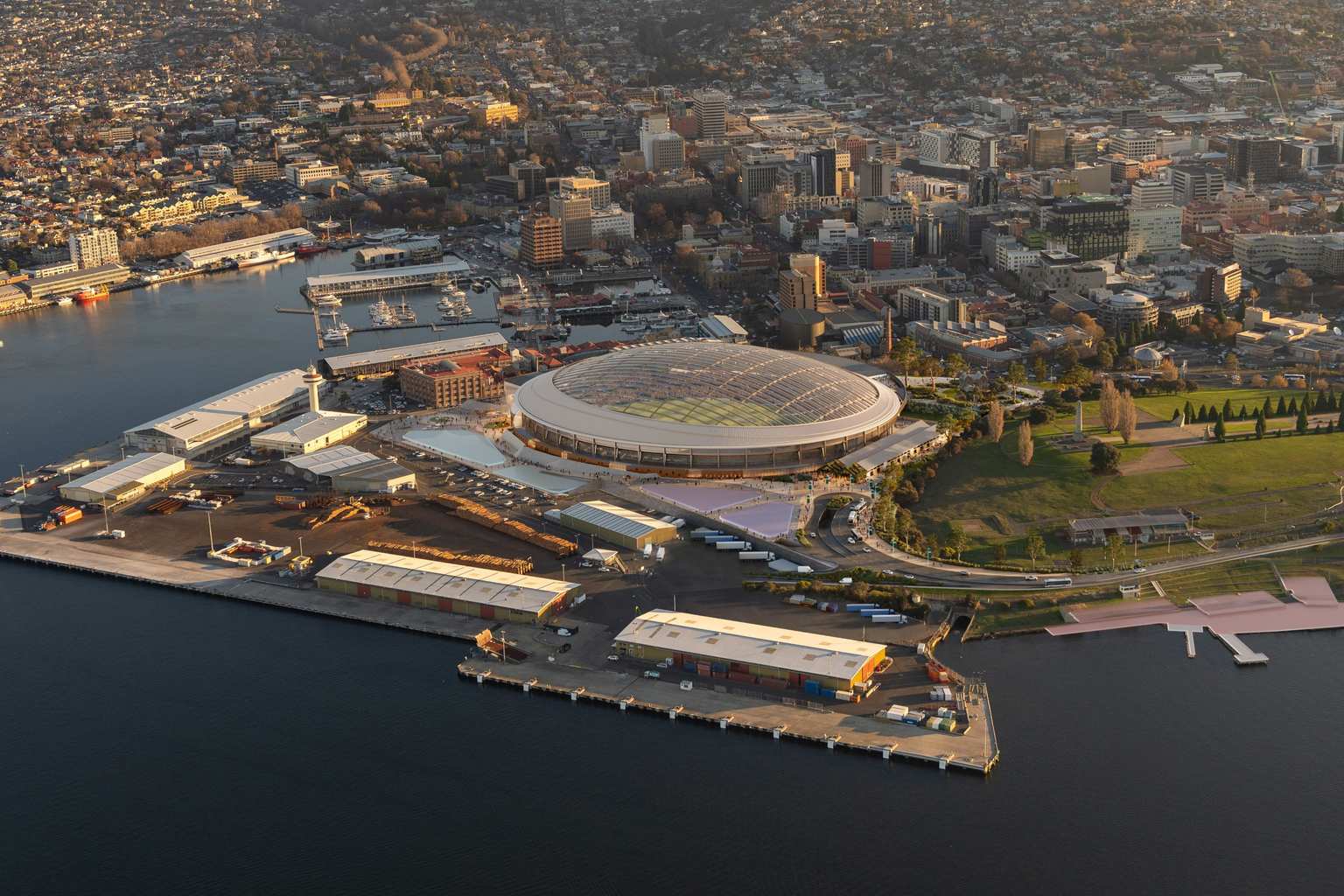
Another $567.8 million is committed to the Macquarie Point urban renewal project, including the planned multi-purpose stadium.
The funding combines $375 million from the state, $240 million from the Commonwealth and $15 million from the AFL.
The Royal Hobart Hospital redevelopment carries a $469.2 million total cost, while a new $240 million Northern Health Complex is planned for the Launceston General Hospital, completing in 2032.
The Launceston General Hospital Northern Heart Centre is budgeted at $120 million, and a $118.4 million expanded Stage 2 at the Royal Hobart Hospital is due for completion in 2030.
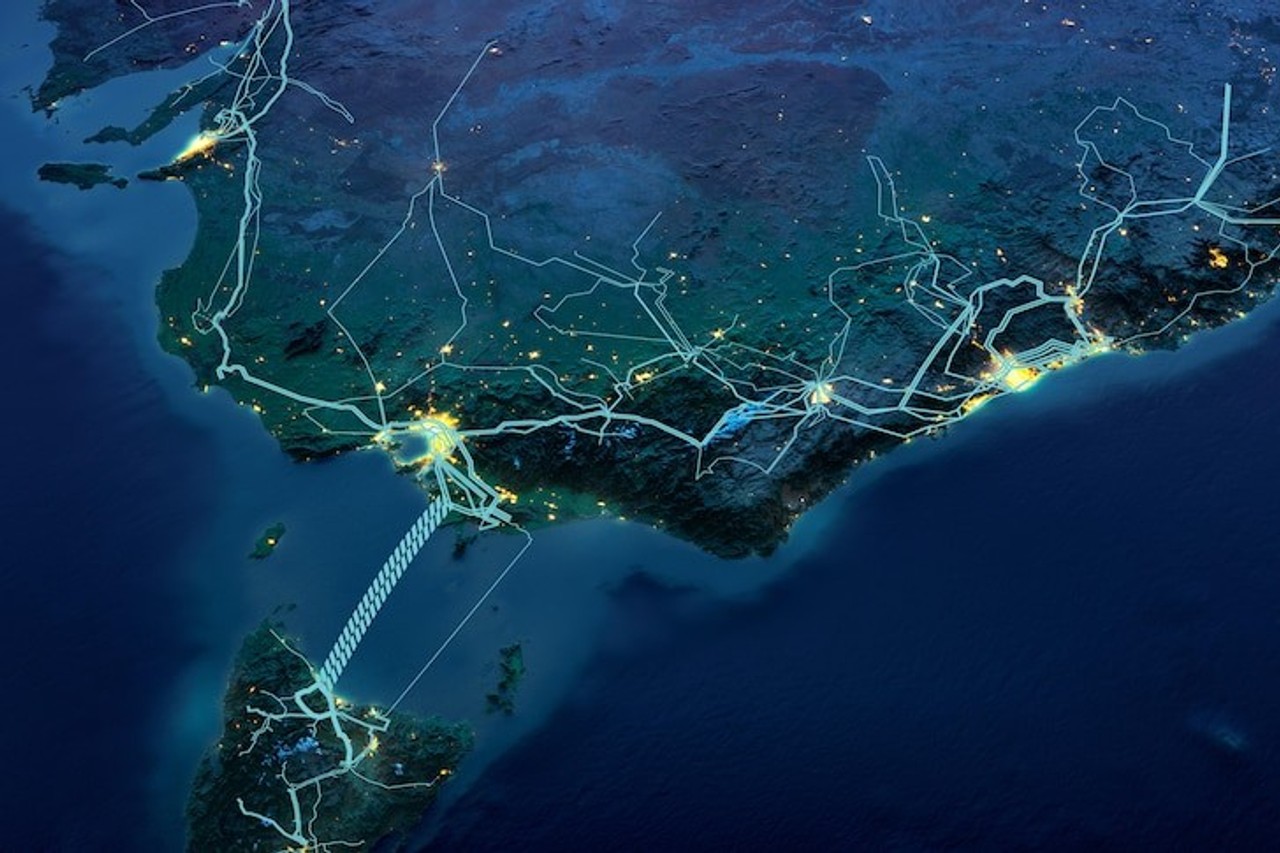
Asked what would happen if the stadium or the Marinus Link power project ran over budget, Abetz called it a hypothetical question.
“If things, to use your terminology, blow out, well, then you’ve got to reconsider and reflect and determine priorities,” he said.
Tasmania is still leaning heavily on Canberra, with two-thirds of state revenue coming from the federal government.
GST alone accounts for 40% of all revenue, worth $4.1 billion in 2026-27, with other Commonwealth payments contributing a further $2.65 billion.
Total state revenue is forecast at $10.19 billion, against expenses of $10.79 billion.
Health makes up 34% of all spending at $3.67 billion, followed by Education at $2.44 billion and public order and safety at $1 billion.
The budget was locked in before the federal budget, so any boost to Tasmania’s GST share isn’t reflected in the numbers.
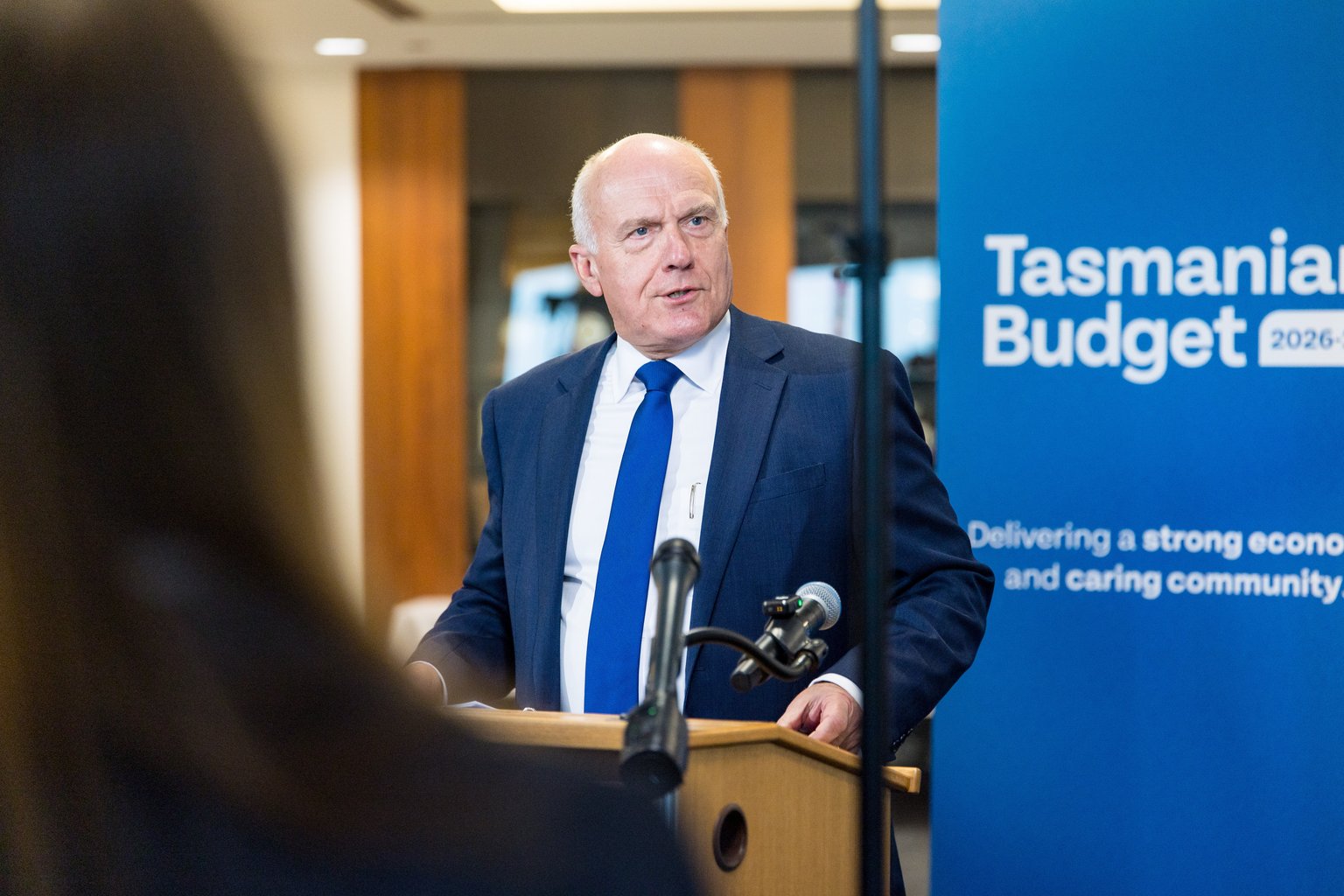
“I’m one of these people that would like to consider any uplift when it’s actually in the bank,” Abetz said.
Reporters asked why the government had not considered new revenue measures such as higher royalties on salmon farms or mining.
Mineral royalties are forecast at $68 million in 2026-27, declining to $59.5 million by 2029-30.
Abetz said Tasmanian mining royalties sat “roughly in the middle” of the states and the salmon industry was already paying $10 million a year toward regulation.
“We’ve got to ensure that we still remain a viable place for mining companies to invest,” he said.
The government has also announced a review of fees and charges, which Abetz said would correct cost-recovery rates that had not moved in some cases for 15 years.
He would not say when the review would report or which fees might rise.
Both Moody’s and S&P Global downgraded Tasmania’s credit rating in 2025. The government says it is hoping to hang onto its current ratings while it works through the repair job.
Abetz framed the budget as both conservative and ambitious.
“It is a conservative budget because it does rein in expenditure, but it’s also ambitious because we have no doubt about the task that’s ahead of us,” he said.