Airbnb has hit back at the Hobart City Council’s plan to ban new whole-home short stay rentals, lodging a formal submission that argues the move is legally flawed and will not fix the city’s housing crisis.
The council endorsed a draft planning change on June 10 that would stop whole dwellings being converted to short stay accommodation across its inner residential, general residential and low density residential zones.
An Airbnb spokesperson said the company opposes the amendment because “it will not address Hobart’s housing challenges”.
“The amendment would restrict a vital segment of accommodation while failing to address Hobart’s restrictive planning rules and lack of new homes being built, which are the real drivers of Hobart’s housing problem,” the spokesperson said.
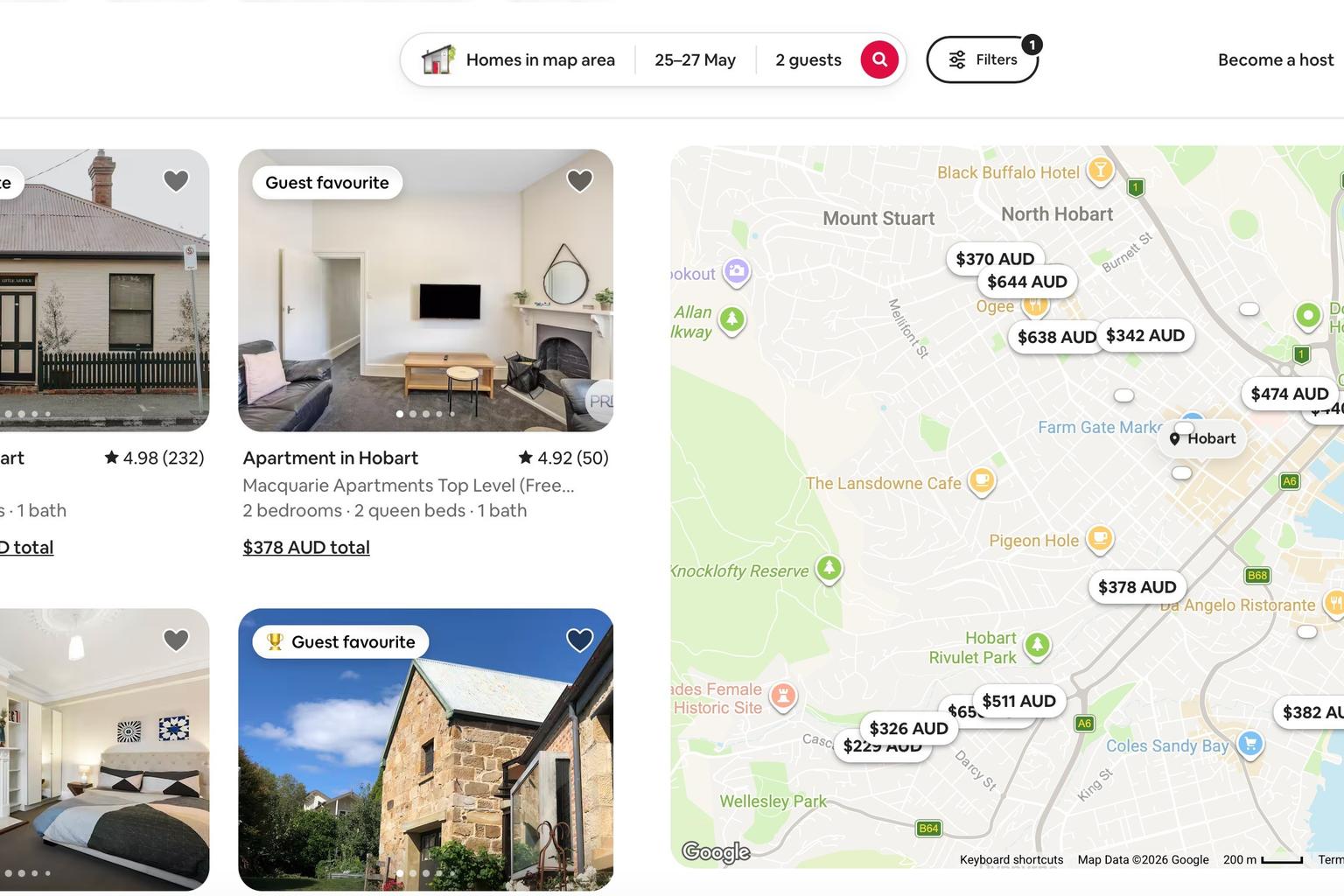
“Over 80% of Hobart hosts share just one home and over half say the income helps them stay in their own home amid cost-of-living pressures.”
The spokesperson pointed to other cities where bans had failed, saying that in New York “two years after an effective ban, city-wide rents climbed more than 8%, vacancy fell and hotel prices were 12.6% higher”.

In its submission, Airbnb argues the proposed specific area plan does not meet mandatory criteria under the Land Use Planning and Approvals Act.
It said the plan was “inconsistent” with planning rules in neighbouring councils such as Clarence, Glenorchy and Kingborough.
The Housing Industry Association (HIA) has also lodged a submission opposing the restrictions.
HIA executive director Benjamin Price said restricting short stay accommodation targets the wrong lever.

“Taking a property off the short-stay market doesn’t build a single new home,” he said.
“It just shuffles the same housing stock around while adding cost and complexity for owners.”
Price said new housing supply brings rents down “while restricting short-stay barely moves the needle”.
Acting Premier Guy Barnett said the state already had one of the most “consistent and clear planning systems when it comes to short stay accommodation”.
“What’s important to us is increasing housing supply and that’s why we’re investing heavily to do so,” he said.
Lord Mayor Anna Reynolds has previously said the rules are needed because Hobart’s rental vacancy rate sits at just 0.5% to 0.7%, with up to 840 entire homes used for short stays.
The submissions will be reviewed by the council before a decision is made on whether to send the amendment to the Tasmanian Planning Commission.
A similar ban was knocked back by the commission in 2022.