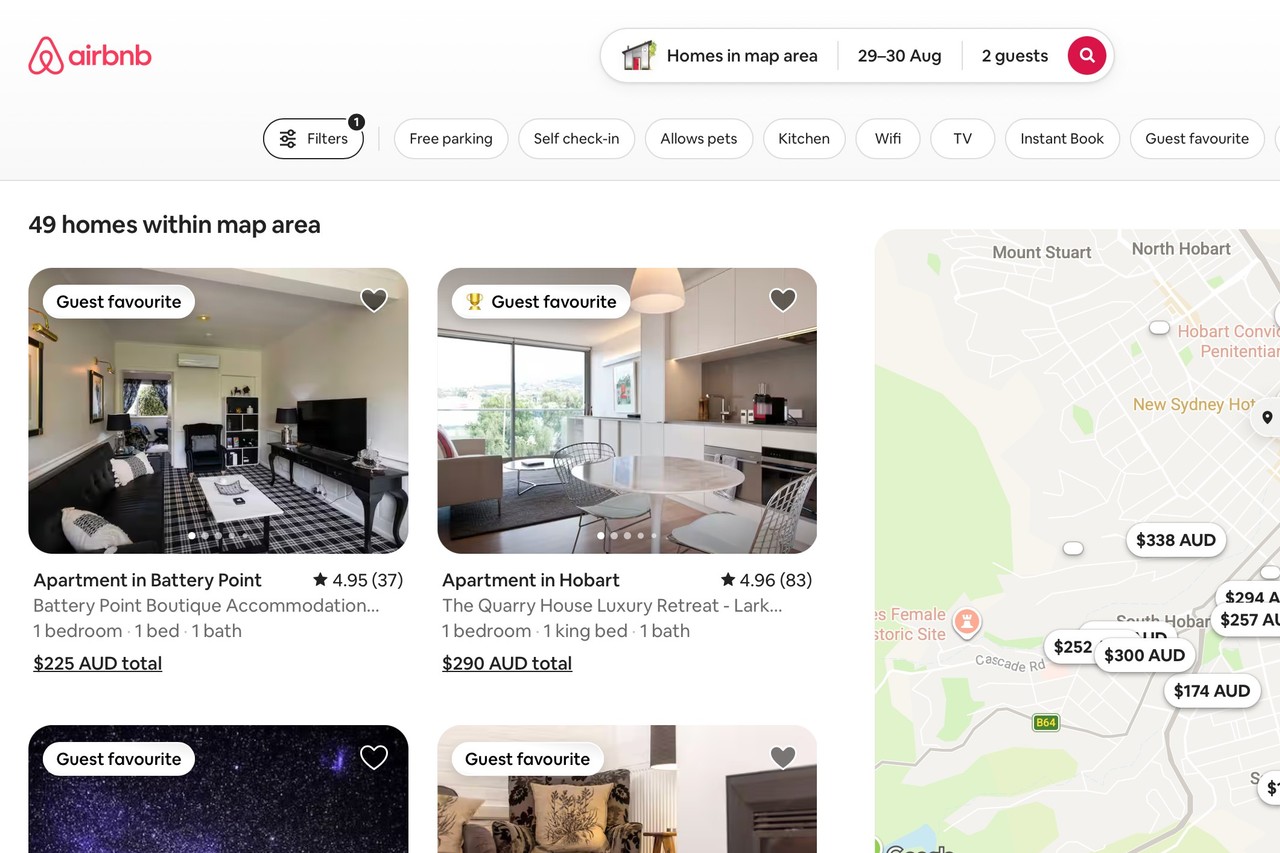
The Hobart City Council has endorsed a draft planning change to stop new whole-home short-stay rentals in the city’s residential areas, but councillors remain split on whether it will do anything to ease the rental crisis.
The council’s planning authority voted on Wednesday to send amendment PSA-25-3 to the Tasmanian Planning Commission for the next stage of assessment.
The vote followed a lengthy and at times heated debate.
Lord Mayor Anna Reynolds said cities around the world were grappling with a rise in short-term rentals while housing supply fell short of demand.
“We have been attempting to manage this unregulated – largely unregulated – market for at least eight years,” she said.
“… It has got to a stage where it’s having a very significant impact on our rental market.”
“We are losing young people to other parts of Hobart because they can’t get rentals here.”
Councillor Ben Lohberger said whole-home short-stay rentals had filled some streets with “mini hotels”.
“I do agree that people should have the right to do what they want with their home. And as a result, I support in-home Airbnb. I think it’s a fabulous addition to that sector,” he said.
“But whole home Airbnb, in my view, the owner of that property is not living there. It’s not their home. It’s an investment property.”
Alderman Marti Zucco said the move would not help solve the housing crisis.
“We can blame the short-stay market for the rental crisis for the housing shortage,” he said.
“But I think this council also has got a lot to answer for in respect of what we didn’t do many years ago and let these applications lapse and the developers decide to go and invest their dollars in the Gold Coast.”
“I don’t think there’s a real big housing shortage up on the Gold Coast, I assure you, because they’re building like anything else.”
The change would limit new whole-dwelling visitor accommodation in the general residential, inner residential and low density residential zones.
It would not affect existing permits, hosted stays, granny flats or people renting out their homes while they are away.
Commercial and mixed-use areas would not be affected, while Battery Point would remain exempt because it already has its own limits.
Airbnb community leader Merrydith Callegari, who runs the Tasmanian Airbnb Host Club, urged the council to work with hosts rather than restrict them.
“I think this amendment is a mistake not just for hosts but for the city,” she told the meeting.
“Please let’s build, not ban and let’s work together to make Hobart a wonderful city that welcomes travellers in many different ways.”
The council says the change will help protect housing for long-term residents.
Hobart has one of the lowest rental vacancy rates in the country, at around 0.6%.
A total of 52 representations were considered during the public exhibition period.
Independent consultants Era Advisory reviewed them and found no reason to change their earlier finding that the amendment meets planning criteria.
The Tasmanian Planning Commission will now assess the amendment and is expected to hold a public hearing.