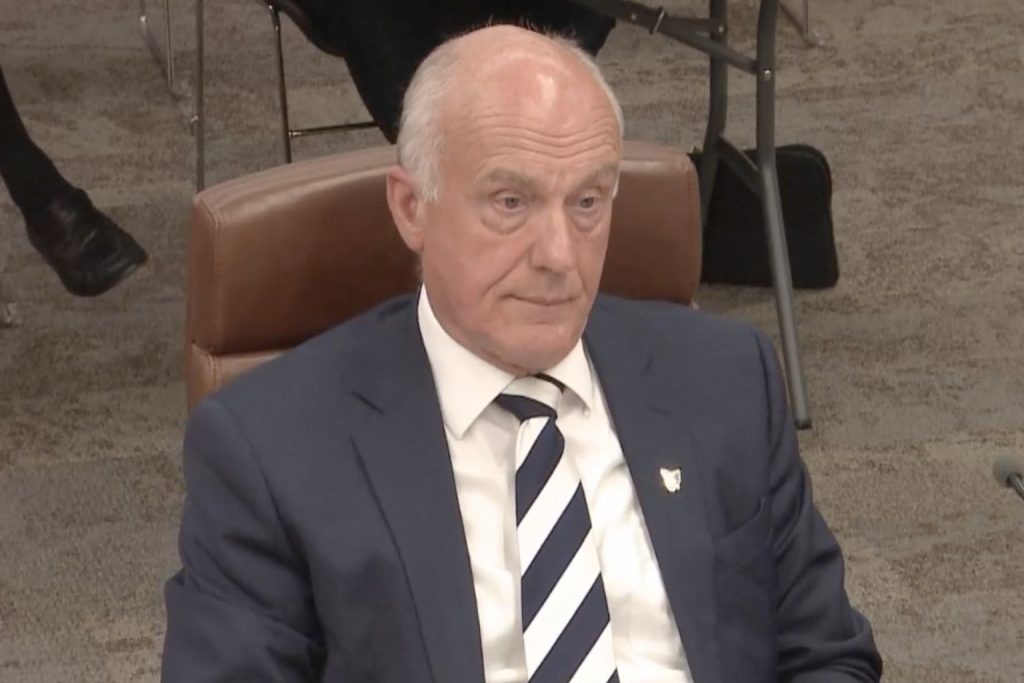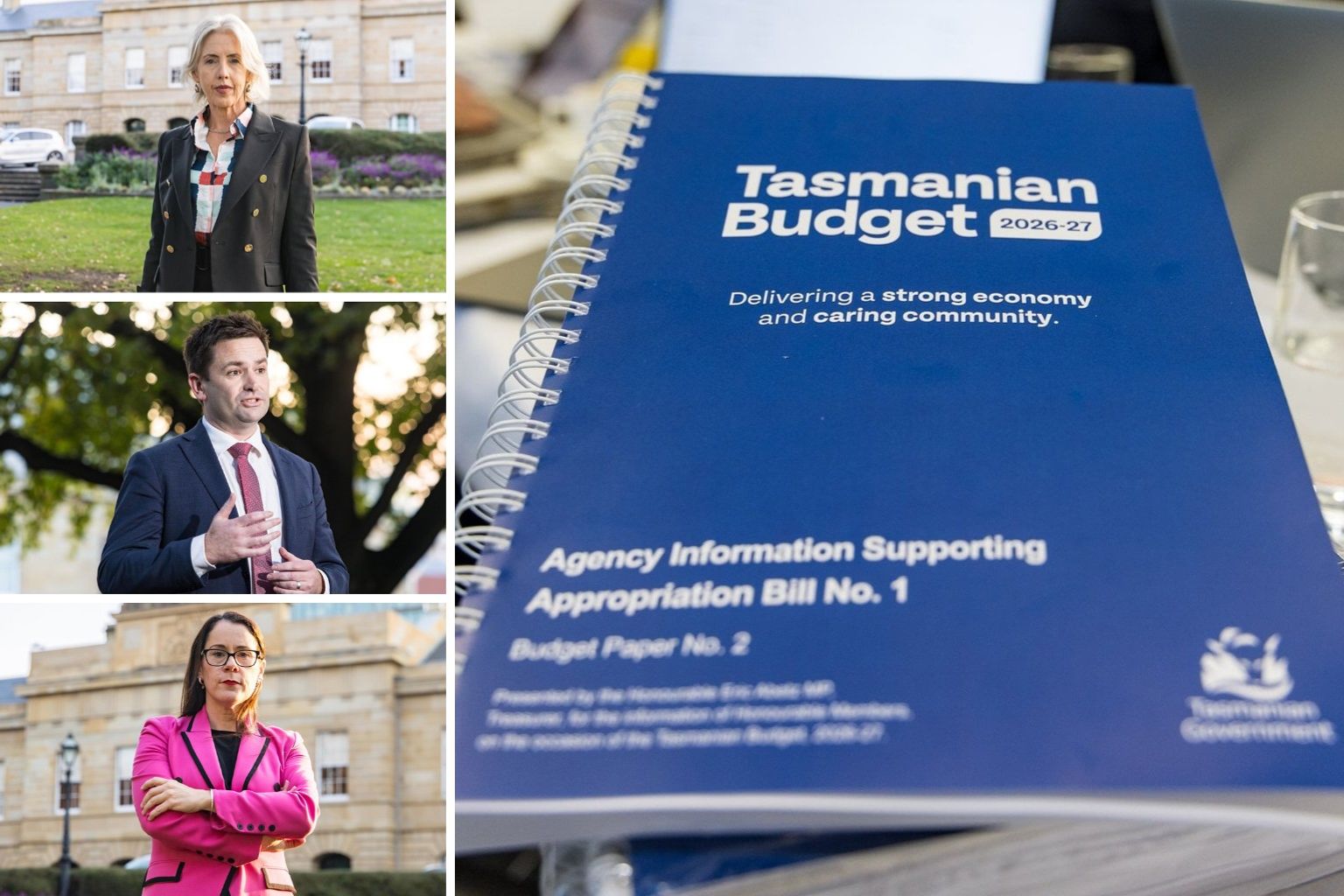
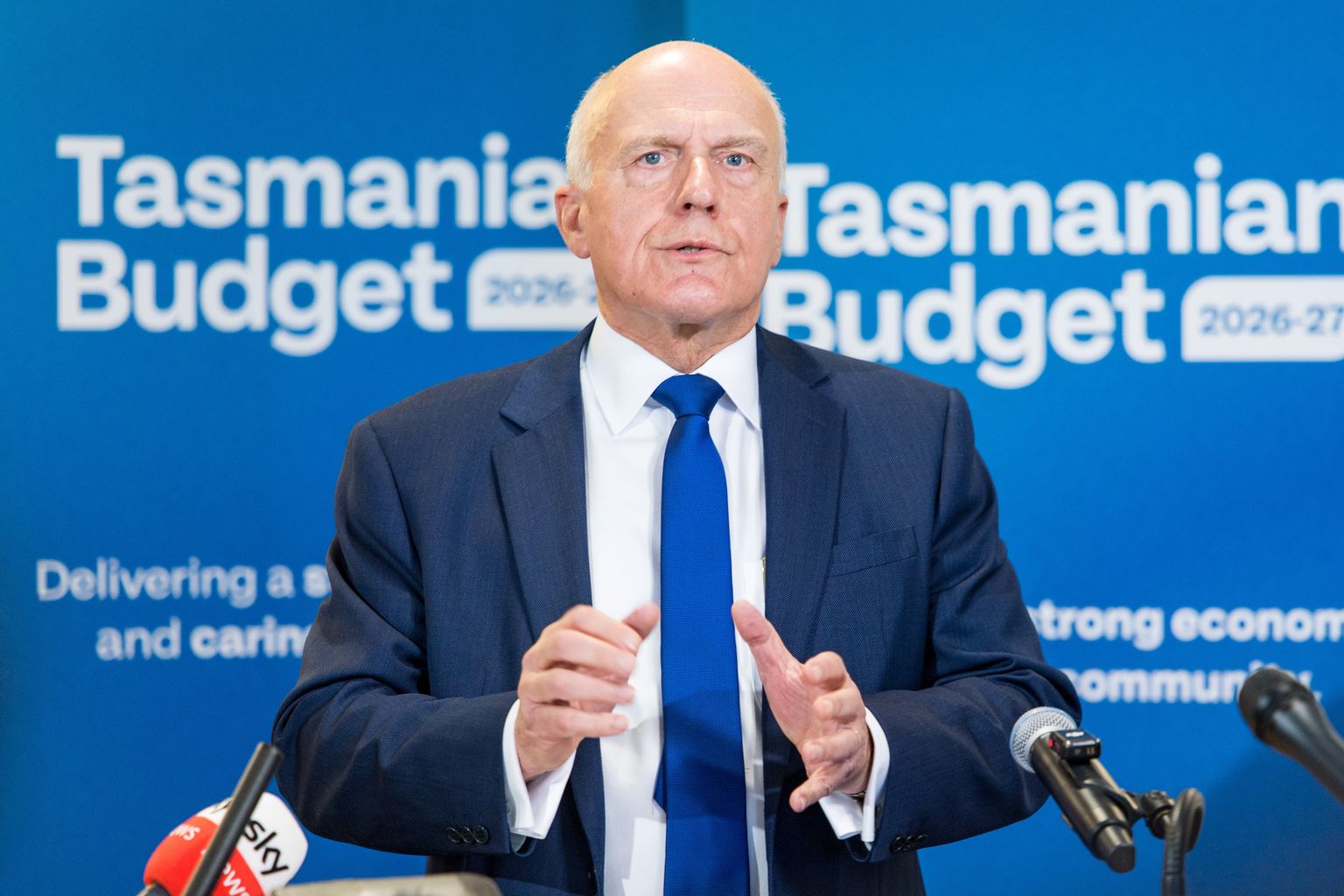
Unions, Labor and the Greens have condemned the Tasmanian government’s latest budget, branding Treasurer Eric Abetz the worst in the state’s history and accusing him of taking a chainsaw to the public sector.
The 2026-27 state budget, handed down on Thursday, banks on $1.47 billion in public sector savings and the loss of around 1,700 jobs by 2029-30.
Abetz defended the budget as both tough and necessary.
“It is a conservative budget because it does rein in expenditure, but it’s also ambitious because we have no doubt about the task that’s ahead of us,” he said.
Tasmanian Chamber of Commerce and Industry (TCCI) acting chief executive Colleen Reardon backed the budget, saying business supported the push for surplus.
“The TCCI strongly supports the treasurer’s intent and ambition to balance the state budget and we acknowledge that the government has delivered on its promise of no new taxes,” Reardon said.
Unions Tasmania secretary Jess Munday said ordinary Tasmanians were being made to pay for the government’s failings.
“A few years ago, I called treasurer Michael Ferguson the worst treasurer we’ve ever had, but actually that mantle now rests squarely with Eric Abetz,” Munday said.
“It is absolutely inconceivable that our state can suffer $1.5 billion in public service cuts and still continue to function.”
Munday demanded Abetz spell out where the axe would fall.
“Which school is it, Eric? Which hospital, which park, which service that we rely on?” she said.
Community and Public Sector Union Tasmanian secretary Thirza White rejected the government’s distinction between frontline and back-office staff.
“Anyone who watches sport knows that a successful team includes a frontline and a back line,” she said.
“This idea that you can cut the back line and have efficient and effective public services is nonsense.”
Australian Nursing and Midwifery Federation (ANMF) Tasmanian branch secretary Emily Shepherd said the budget papers were “simply horrifying” for health workers and patients.
Shepherd said three-quarters of a billion dollars was being stripped from the health budget over the next four years.
“This is a health system that is already under enormous strain. It’s under-resourced and understaffed,” she said.
“To suggest that three-quarters of a billion can be removed from an already broken system is simply outrageous.”
She also predicted a surge in psychological workers’ compensation claims.
“The treasurer wants to look out, because there will be a tsunami of claims coming,” she said.
Australian Education Union (AEU) Tasmanian branch president David Genford said the $250 million in education cuts over four years was unrealistic.
“This treasurer is living in a dreamland,” Genford said.
The budget targets 155 back-office jobs in the Department for Education, Children and Young People in the first year, with the union told that figure could grow to 300 across the forward estimates.
“These are people that provide support to schools,” Genford said.
He also criticised the capital works program, which adds just two new schools.
TasCOSS chief executive Adrienne Picone said it was a mixed budget for community service organisations.
Picone said the budget delivered some positives for individual programs in health, mental health and neighbourhood houses, but lacked sustained investment in prevention and early intervention.
“We didn’t see any additional investment in cost-of-living measures apart from an extension of free bus fares, which is pleasing obviously,” she said.
“But what we need to do is to ensure that all Tasmanians have access and are able to afford the basics.”
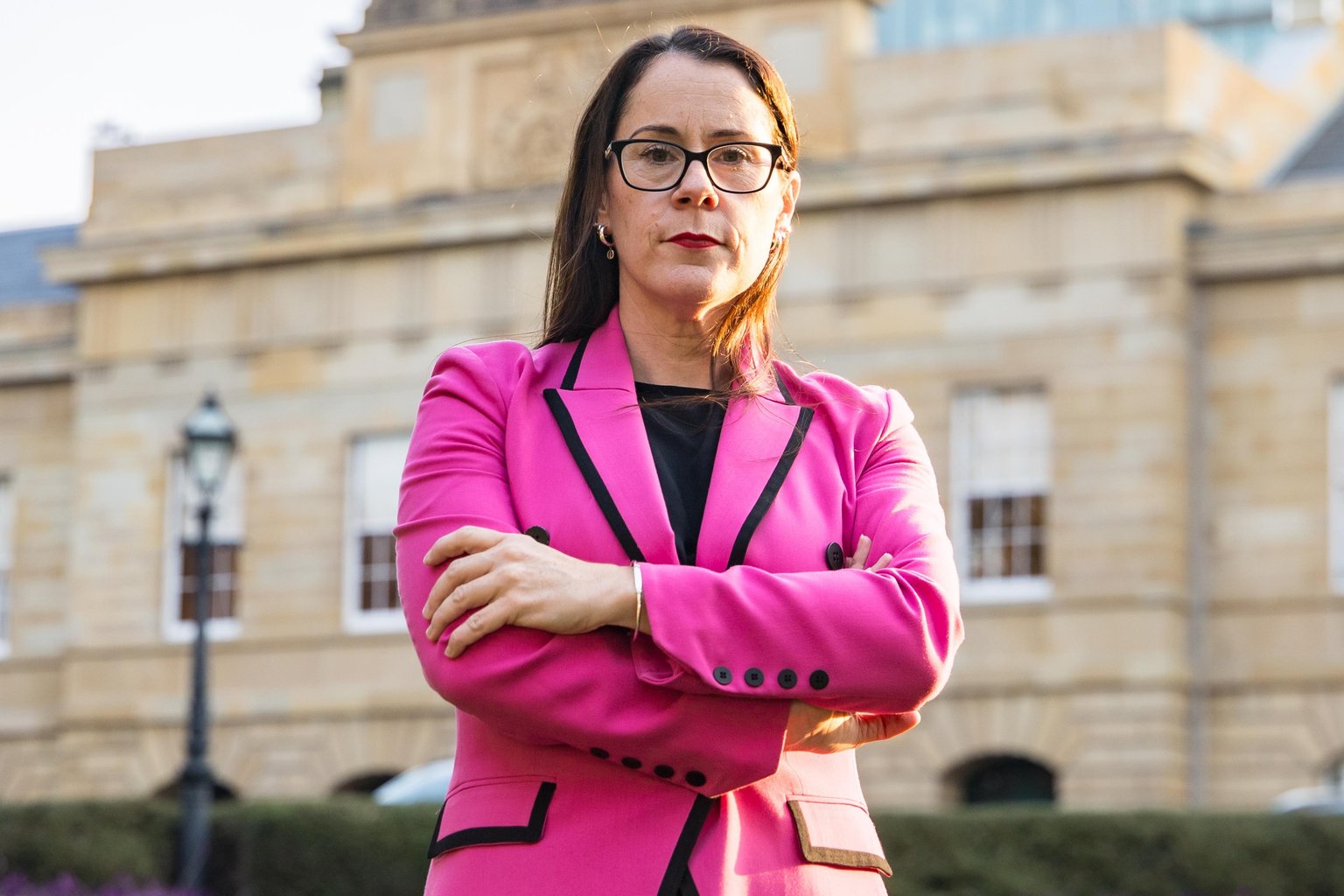
Labor, through shadow treasurer Dean Winter, labelled it “Abetz’s chain saw massacre” and said the cuts were paying for 13 years of “Liberal waste”.
Winter said the $131.4 million in health savings next year alone was the equivalent of “sacking three nurses a day for the entire year”.
He also pointed to budget language stating “consideration will be given to minimising impacts on frontline services” as a tacit admission services would be hit.
Greens leader Rosalie Woodruff said the treasurer had “squandered a generational opportunity” by refusing to raise revenue.

“Eric Abetz had options,” Woodruff said. “He could have spared Tasmanians these sweeping cuts by making big corporations pay their fair share and stopping the stadium.”
Woodruff said pushing ahead with the Macquarie Point stadium was “the single most cold-hearted and cruel budget decision in decades”.
“It’s like buying a fancy car when you can’t feed your kids,” she said.
Abetz rejected calls to raise revenue, arguing the budget challenge was one of expenditure rather than income.
“We as a government believes that, especially with the cost of living pressures as they are, that we should seek to quarantine the people of Tasmania from new taxes,” he said.
He has ruled out forced redundancies and insists savings will come from back-office functions.
“The frontline services are what we are concentrating on to ensure that they continue to be delivered for the people of Tasmania,” he said.