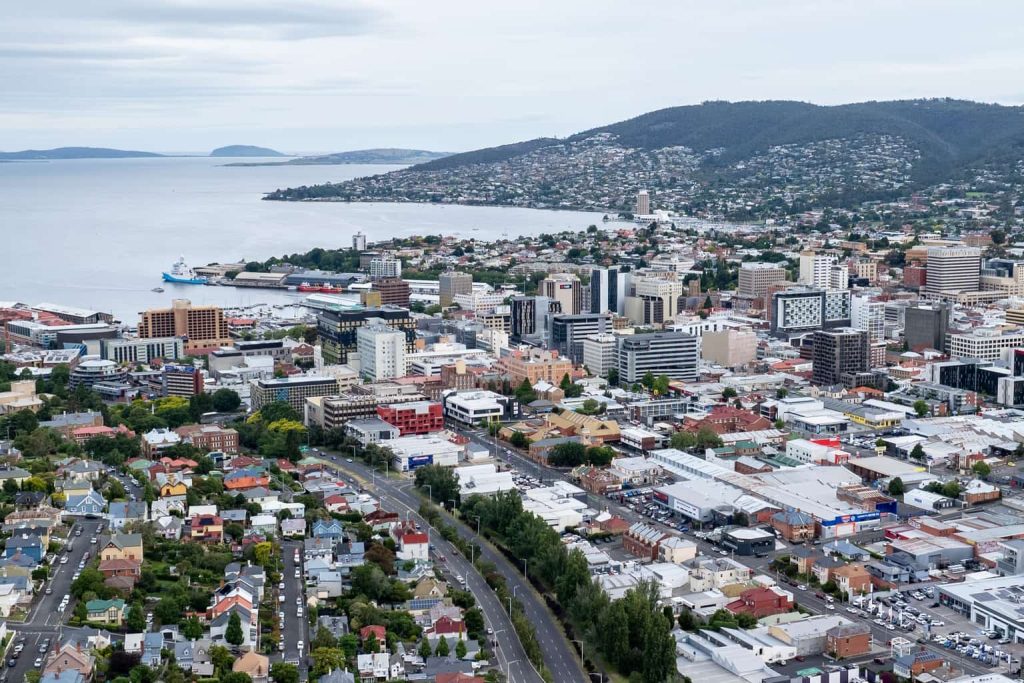
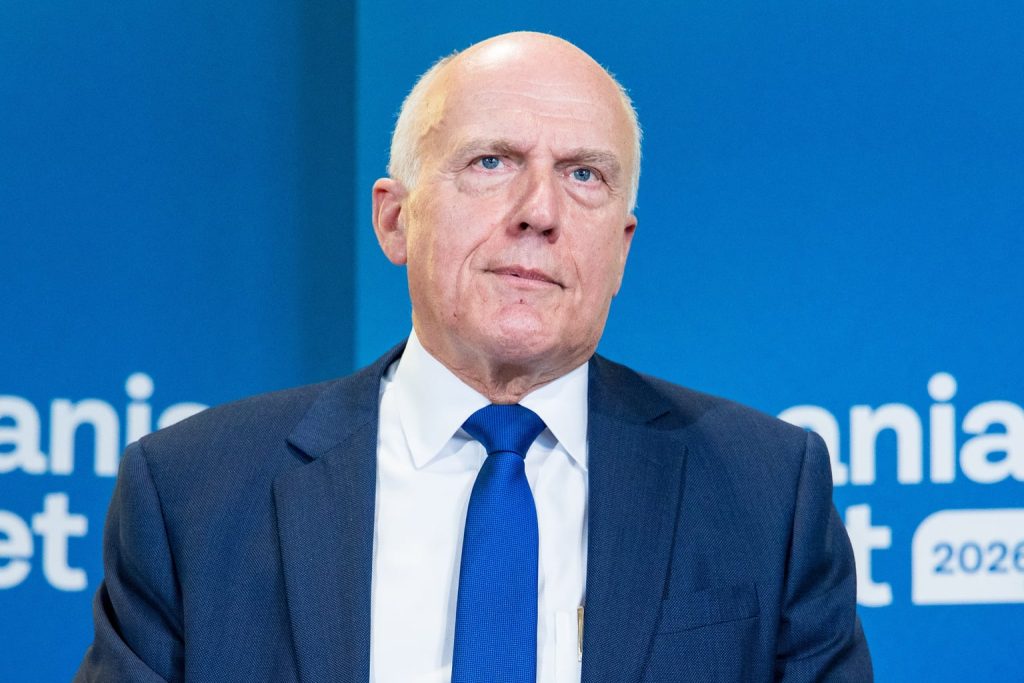
Charles Wooley will run for lord mayor of Hobart, promising to put local residents ahead of politics and end what he calls “petty partisan spats” at the council.
The former deputy mayor of Sorell announced on Friday he would contest October’s Hobart City Council election for both lord mayor and councillor as an independent, under the slogan “Hobart for Hobartians”.
Wooley, who spent more than 25 years reporting for the Nine Network’s 60 Minutes, said he was standing to run the city for the people who live in it.
“I’m not a politician and I’m not a bureaucrat,” Wooley said.
“I have no party, no ideology and no interest in using this job as a stepping stone to somewhere else. I’m standing for one reason – to run Hobart for Hobartians.”

Wooley said he wanted to add a “fourth R” to the council’s traditional focus on roads, rubbish and rates – “reason”.
He said the council had “spent too long consumed by ideological feuding” over issues such as bike lanes, which he argued had an “obvious middle ground”.
Wooley said Hobart had “so many better stories” to tell than what he described as “vindictive and petty partisan spats” between councillors.
“Whomever we return to our currently chaotic and divided city council, this time round I hope we might strive for the rational rather than the doctrinaire,” he said.
“I would prefer a Hobart City Council that was quietly reasonable and sensible rather than one so often on the front pages and television news for the wrong reasons.”

“If that sounds boring so much the better.”
There will be no incumbent in the race, with Lord Mayor Anna Reynolds announcing earlier this year that she would not seek re-election after eight years in the role.
Sitting councillors Marti Zucco, Bill Harvey, John Kelly, Ryan Posselt, Mike Dutta and Louise Bloomfield have also confirmed they will run for lord mayor.
Tiffany Ashdown has also announced her candidacy, alongside former Hobart City Mission chief executive Harvey Lennon.

On the new Macquarie Point stadium, Wooley said the council should work constructively with the project rather than continue fighting it.
“The multi-billion-dollar stadium, the biggest project in this city, is going to go ahead regardless of what many might want,” he said.
“It is in the heart of our city, not where most experts would have preferred, but realistically it looks like we are going to have to live with it.”
Wooley also backed making it easier and cheaper for people to downsize, including by removing stamp duty and planning barriers.
He said heritage rules should not stand in the way of “sensible and reasonable” medium-density housing, pointing to Italian cities where existing buildings had been converted into flats without losing their streetscapes.
He said empty inner-city office blocks could also be turned into housing to bring more people back into the CBD.
On tourism, Wooley said Hobart needed to balance a strong visitor economy with the wellbeing of residents.
He said he did not want the city to become “a cheap holiday” or for locals to be pushed out to make room for tourists.

Wooley pointed to Barcelona, which he said was moving to phase out all short-term rentals by 2028, as a warning about “over-tourism”.
He said Hobart had not reached that point, but some regulation of its roughly 1,500 short-term rental and Airbnb listings was warranted.
Wooley said he would not spend his term trying to win another if elected.
“Four years is a long time and I promise I won’t waste my term and your time planning how to get another one,” he said.
The number of elected members at the Hobart City Council will shrink from 12 to nine at the October election as part of a statewide reduction in councillor numbers.